

Ozempic Face: What It Is, Why It Happens & How to Treat It | Dr. Troell
Published June 22, 2026 · By Dr. Robert J. Troell, Board-Certified Facial Plastic Surgeon
Dr. Robert J. Troell, MD, FACS
The short answer: "Ozempic face" is the hollow, gaunt, prematurely-aged look that can follow the rapid weight loss from GLP-1 medications (Ozempic, Wegovy, Mounjaro, Zepbound). It happens because the face loses its supportive fat pads faster than skin and collagen can adapt. It is not dangerous — and it is highly treatable, with options ranging from fillers and stem-cell fat grafting to facial implants, skin tightening, and a deep-plane facelift for advanced cases. Below, Dr. Robert J. Troell explains what it is, why it happens, and how he treats it.
GLP-1 medications — semaglutide (Ozempic, Wegovy) and tirzepatide (Mounjaro, Zepbound) — have made dramatic weight loss achievable for millions. But many patients notice an unwelcome trade-off in the mirror: a face that looks hollow, gaunt, and older than it did before. If that's you, you're not imagining it, and you're not alone — "Ozempic face" became one of the most-searched cosmetic concerns of 2025–2026.
The good news is that it is one of the more treatable cosmetic side effects of weight loss. This guide covers what Ozempic face is, why it happens, who's most at risk, how to prevent it, and the full range of treatments — from a surgeon who has spent his career on facial volume restoration. (If your concern is loose skin on the body after weight loss, that's covered separately in body contouring after major weight loss.)
What this article covers: what Ozempic face is & its signs · the science of why it happens · who's most at risk · Ozempic face vs. normal aging · 6 ways to prevent it · the full treatment menu (fillers, fat grafting, implants, skin tightening, facelift) · the emotional side · what happens if you stop the medication · FAQ.
What Is Ozempic Face? Signs & Symptoms
"Ozempic face" refers to the facial volume loss and gaunt, prematurely-aged appearance that can develop in some people taking semaglutide or other GLP-1 receptor agonists. The term was coined by New York dermatologist Dr. Paul Frank, who noticed a pattern among patients on these medications. It is descriptive shorthand, not a diagnosis — and it can follow any rapid weight loss, not just Ozempic specifically.
Common signs include:
- Sunken or hollow cheeks
- Deepened nasolabial folds (smile lines) and marionette lines
- Hollowed temples
- Loss of volume under the eyes (tear troughs)
- Sagging skin along the jawline, sometimes with persistent jowls
- An overall tired, aged appearance
The condition isn't dangerous — but for many patients it creates real distress: caught between celebrating the weight loss and feeling unhappy with how their face now looks.
Why Does Ozempic Cause Facial Volume Loss?
When you lose weight rapidly — from GLP-1 medications, surgery, or any method — the body loses fat everywhere, including the face. The facial fat pads play a structural role, keeping the skin lifted and smooth. As they deflate, the overlying skin doesn't always snap back, leaving laxity and apparent excess skin.
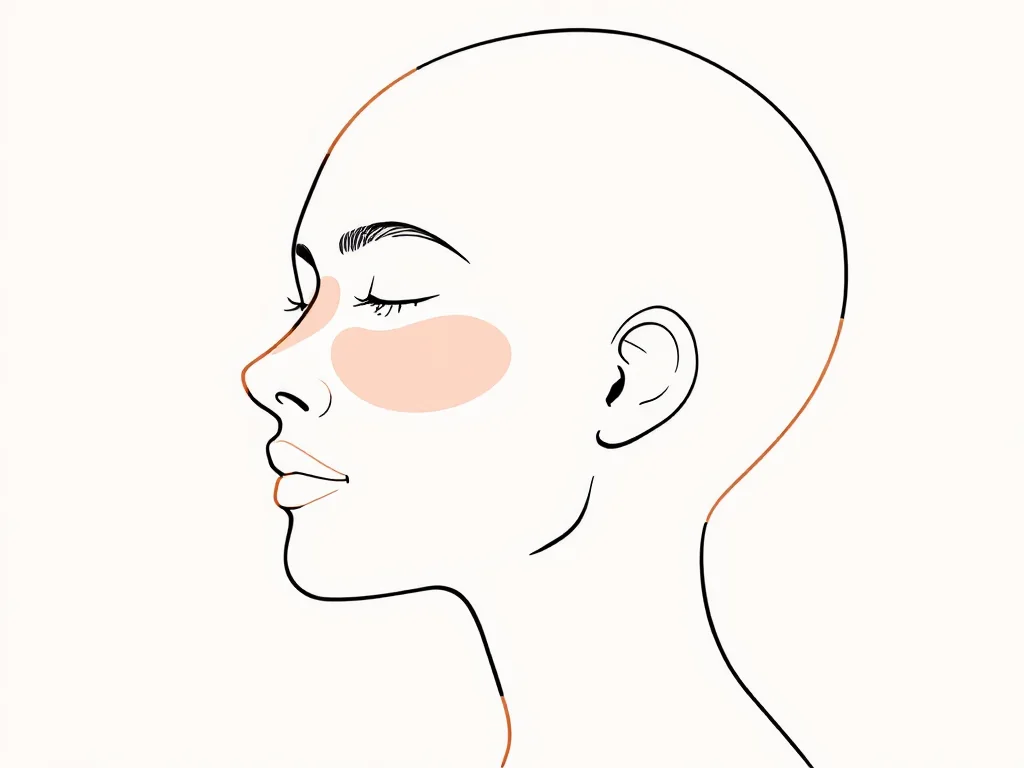
Facial fat is not one uniform cushion. It sits in two distinct layers — a superficial set of compartments just under the skin (the orbital, cheek, and nasolabial pads) and a deeper set closer to bone (the sub-orbicularis oculi fat, the deep medial cheek pads, and Ristow’s space). Ordinary aging tends to drain the deep layer gradually, over decades, which is part of why it creeps up on people slowly. Rapid GLP-1 weight loss tends to take the superficial layer as well, and it does so in months rather than years. That difference — in which layer empties, and how fast — is a large part of why the change can feel so abrupt.
The problem with GLP-1 weight loss specifically is speed: the body can't produce collagen and elastin fast enough to compensate for the sudden drop in volume. The result is loose, sagging skin and a more aged appearance. A 2025 Vanderbilt University study published in Otolaryngology–Head and Neck Surgery measured a median 9% loss of midface volume in patients on GLP-1 medications — roughly 7% for every 10 kg (about 22 lbs) lost — confirming clinically what surgeons had been seeing.
There may also be more at work than fat loss alone. GLP-1 receptors have been identified in skin tissue, raising the possibility that these medications influence the facial skin itself and not only the fat beneath it. That research is still early and far from settled — it should not be read as established mechanism — but it is one more reason the facial changes seen with GLP-1 medications can look different from ordinary weight-loss aging.
This is not unique to Ozempic. Wegovy, Mounjaro, Zepbound, and any significant rapid weight loss can produce the same effect; "Ozempic face" has simply become the umbrella term.
Because this is such a new phenomenon, no formal medical-society guideline for treating it exists yet. Care draws on long-established facial-rejuvenation principles — volume replacement and skin tightening — applied to the specific pattern of loss that rapid weight change produces.
Who Is Most at Risk?
Not everyone on a GLP-1 develops noticeable facial change. Risk rises with:
- Age — from about 30 onward, less baseline skin elasticity means more pronounced sagging.
- Amount of weight lost — more total loss, more facial volume loss.
- Speed of loss — rapid loss gives skin less time to adjust.
- Starting skin quality — pre-existing laxity accelerates the effect.
- Nutrition — inadequate protein or dehydration during weight loss worsens skin quality.
- Genetics — collagen-production rates vary significantly between individuals.
Ozempic Face vs. Normal Aging
The most disorienting part is the speed: normal aging is gradual; Ozempic face can feel sudden.
| Feature | Normal Aging | Ozempic Face |
|---|---|---|
| Speed of onset | Years to decades | Weeks to months |
| Primary cause | Collagen loss + gravity | Rapid fat-volume loss |
| Areas affected | Diffuse, whole face | Cheeks, temples, under-eyes, jawline |
| Treatable? | Yes — gradual interventions | Yes — highly treatable, multiple options |
| Reversible? | Partially, with treatment | Yes — fillers, fat grafting, implants, or surgery |
How to Prevent Ozempic Face: 6 Strategies
- Slow the weight loss. Work with your prescriber to titrate the dose and aim for gradual loss (1–2 lbs/week) so skin has time to adapt.
- Prioritize protein. Most experts recommend 1.2–1.6 g of protein per kg of body weight during active weight loss to preserve muscle and support collagen.
- Stay hydrated. Hydration directly affects skin plumpness — aim for at least 8 cups of water daily, more if active.
- Strength train. Resistance training preserves lean muscle, which supports facial structure.
- Support collagen topically. Retinoids, vitamin C, and peptide skincare help — start early, don't wait until after the weight is gone.
- See a facial plastic surgeon proactively. Increasingly the advice is to consult during the weight-loss journey, not after — early planning produces better outcomes for both skin laxity and volume change.
How Is Ozempic Face Treated? Fillers to Surgery
Ozempic face is one of the more treatable side effects of GLP-1 weight loss. Dr. Troell's approach addresses two distinct problems — lost volume and skin laxity — and often combines them. His depth here is unusual: he is one of only three surgeons worldwide who regularly teach Implantech's hands-on facial-implant cadaver course, and he has personally taught 23 courses on high-definition liposuction combined with facial fat grafting. For a side-by-side look at how these volume tools compare, see Can fat transfer replace dermal fillers?
1. Volume replacement
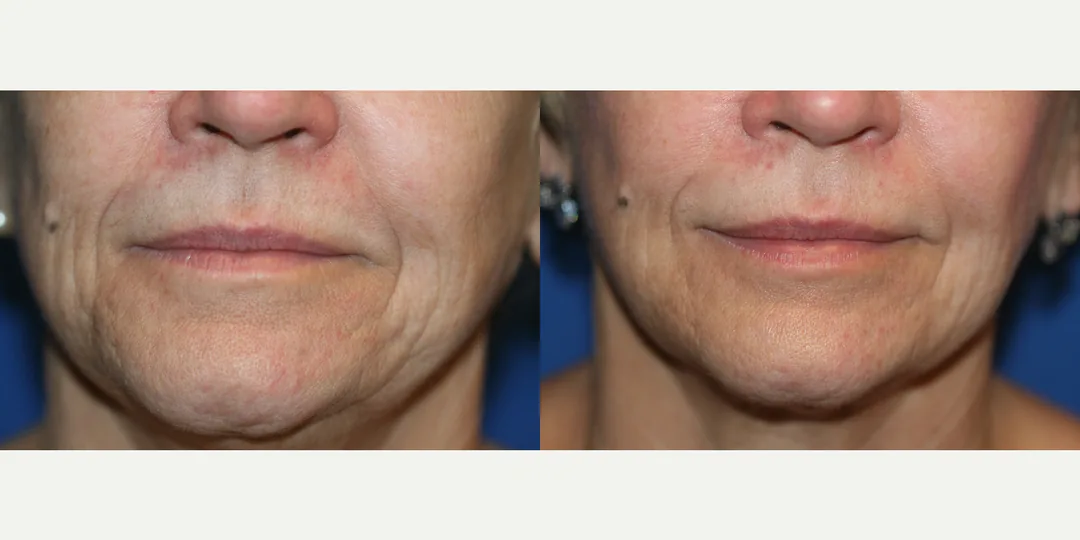
- Hyaluronic-acid fillers (Juvederm, Restylane) restore the cheeks, temples, tear troughs, and jawline — immediate but temporary (about 4–13 months).
- Biostimulatory fillers (Sculptra, Radiesse) prompt your own collagen over time; Bellafill — the only FDA-approved permanent collagen biostimulator — is an excellent long-term option.
- Stem cell–enriched fat grafting uses your own purified fat to rebuild volume durably — the technique behind Dr. Troell's 15-year published fat-grafting outcomes.
- Facial implants (midface and temporal shell implants) give permanent, structural volume where deflation is deepest — see midface volume options and temple hollowing.
2. Skin tightening & resurfacing
- CO2 laser resurfacing boosts collagen and elastin, improving tone, texture, and fine wrinkles, with some tightening — a strong complement to volume work.
- Microneedling radiofrequency tightens skin externally during facial contouring (typically three sessions, a month apart).
- Minimally invasive internal tightening — VASER ultrasound combined with Renuvion helium plasma, under local anesthesia — suits mild-to-moderate laxity.
3. Surgery for advanced cases
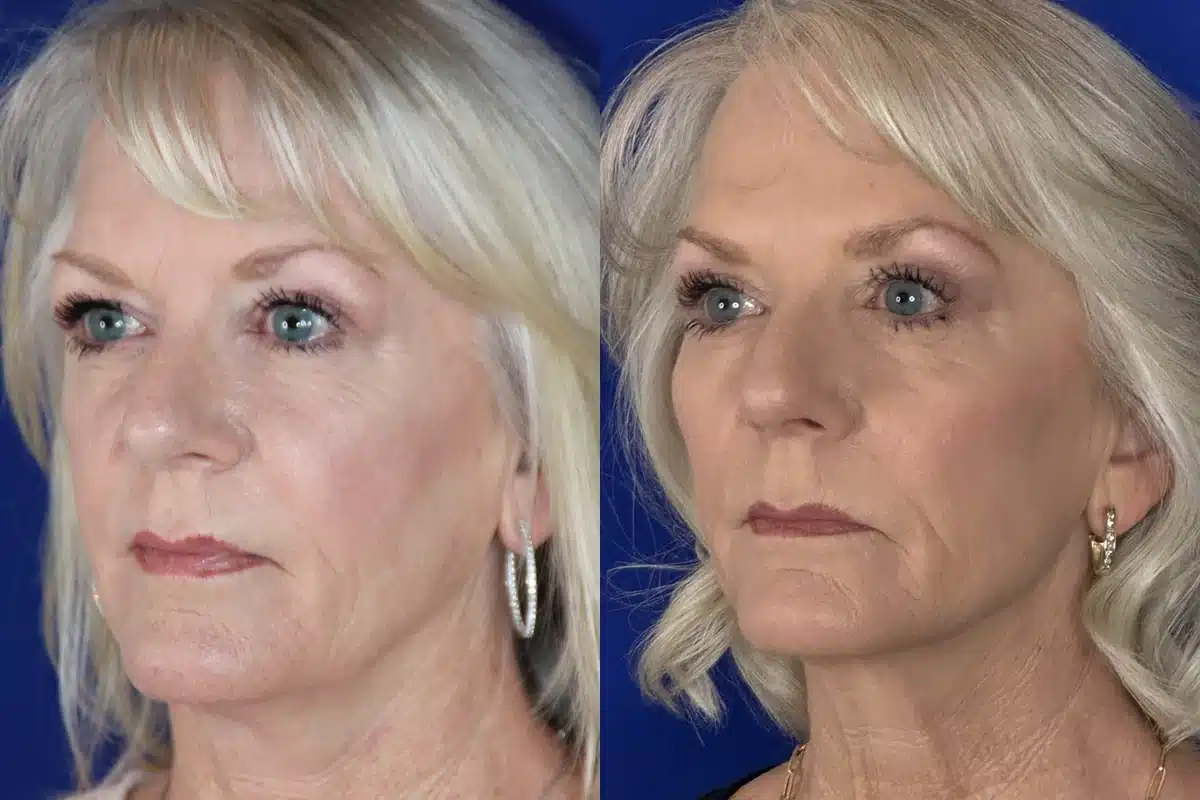
For significant skin laxity, a deep plane facelift (with an anterior neck lift / platysmaplasty when needed) is the operation that repositions the descended structural layer rather than only tightening the skin over it — often paired with a midface implant that both restores lost volume and lifts the middle face. Facelift timing is best after the weight-loss journey is complete.
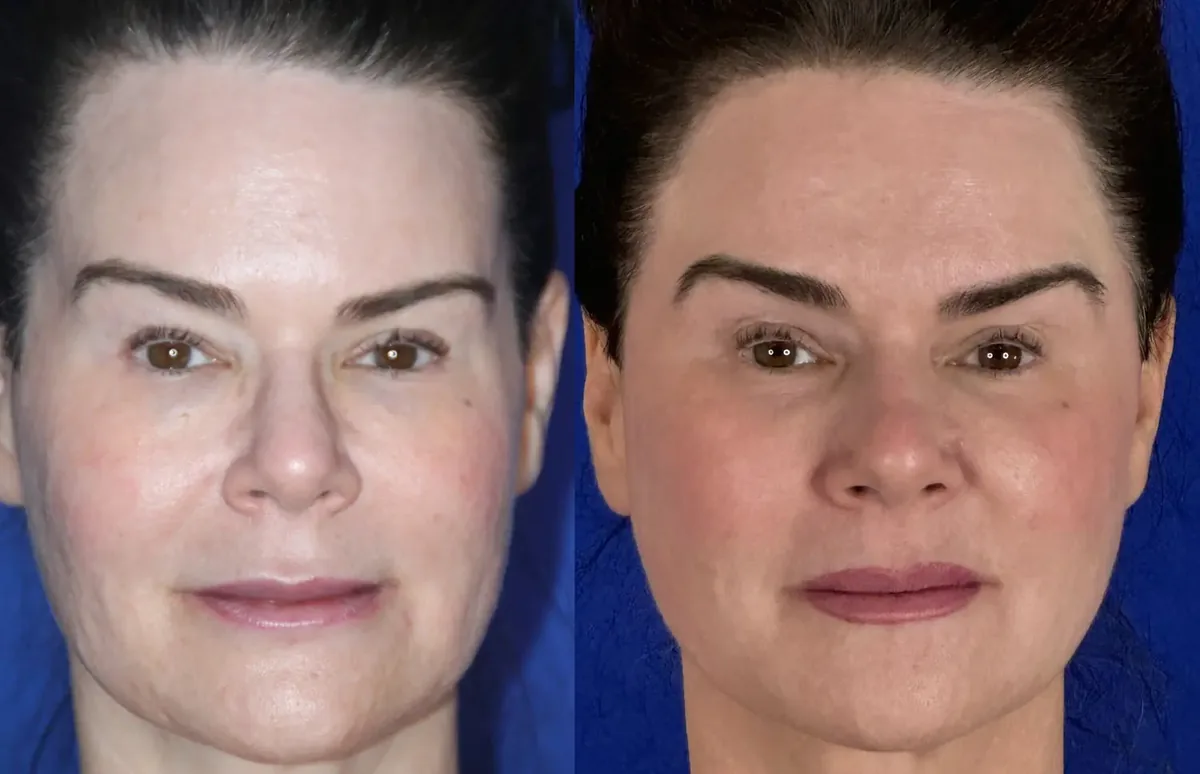
To see what this looks like in practice, read Dr. Troell’s deep plane facelift case study of a patient who lost 80 pounds on Ozempic — her twelve concerns in her own words, the surgical plan built around them, and her week-by-week recovery through the final before-and-after result.
The Emotional Side of Ozempic Face
The psychological impact is real and under-discussed. Many patients feel conflicted — proud of a hard-won weight-loss milestone, yet distressed by a face that looks older or less like themselves. As GLP-1 use has grown, the concern has driven a documented surge in cosmetic procedures — fillers, fat transfer, and facelifts — sought specifically to restore the volume lost to rapid weight loss.
You don't have to choose between your health goals and feeling like yourself. Dr. Troell brings an unusual perspective to this: alongside being a board-certified facial plastic surgeon, he served five years as a Clinical Professor in a Department of Psychiatry and Behavioral Sciences — so the emotional weight of these changes is something he takes seriously, not dismisses.
What Happens If You Stop Taking Ozempic?
Stopping a GLP-1 often leads to weight regain, which can partially restore facial volume — but this is not a reliable or recommended "treatment." Weight cycling carries its own health risks, regained fat doesn't always redistribute evenly, and without lasting lifestyle change the regain typically unfolds over about 18 months. If facial changes have you considering stopping, talk to your prescribing doctor first — dose adjustments or combination approaches may be worth exploring, and continuing the medication alongside good nutrition, exercise, and hormone management is usually the safer long-term path. Restoring the face is a cosmetic problem with cosmetic solutions; it shouldn't drive a medical decision.
The Published Work Behind These Treatments
The science of Ozempic face and Dr. Troell's facial-volume approach are grounded in peer-reviewed research — an independent study plus his own published work:
- Independent study: Sharma RK, et al. Radiographic Midfacial Volume Changes in Patients on GLP-1 Agonists. Otolaryngology–Head and Neck Surgery. 2025;173(2):360–366. doi:10.1002/ohn.1209
- Troell R. Permanent Composite Midface Volume Replacement: PMMA, Silastic Implants, and Stem Cell–Enriched Fat Grafting. Am J Cosmetic Surgery. 2026.
- Troell R, Eppley BL. Aesthetic Silastic Temporal Implants: Surgical Technique & Clinical Experience. Am J Cosmetic Surgery. 2026.
- Troell RJ. Peri-Orbital Aesthetic Rejuvenation: Surgical Protocol & Clinical Outcomes. Am J Cosmetic Surgery. 2017;34(2):81–91.
- Troell R, Javaheri S. Combining third-generation ultrasound liposuction with helium-based plasma skin tightening of the face and neck. Am J Cosmetic Surgery. 2026;43(2):170–177.
- Troell RJ. My Theory of Facelift Surgery. In: The Art and Science of Facelift Surgery (Niamtu J, ed.), 2nd ed., Elsevier, 2024: ch. 9.
Ozempic Face: Common Questions
How quickly does Ozempic face develop?
It can begin appearing within 3–6 months of starting the medication, typically during periods of rapid weight loss.
Does Ozempic face go away on its own?
Not usually. Skin doesn't automatically regain volume lost through fat reduction. Cosmetic treatment — or weight regain, which isn't recommended for this purpose — is typically what restores a fuller appearance.
Is Ozempic face permanent?
It doesn't have to be. Options range from volume replacement (fillers, Bellafill, stem cell–enriched fat grafting, and silastic implants) to skin tightening and resurfacing (CO2 laser, microneedling RF, VASER + Renuvion) to a deep plane facelift for significant excess skin — all of which can restore a more youthful, balanced face.
Can younger people get Ozempic face?
Yes, though it tends to be more noticeable in older adults. Younger patients with good skin elasticity are more resilient, but significant rapid weight loss can cause visible facial changes at any age.
Does Wegovy (or Mounjaro) cause the same thing as Ozempic?
Yes. Ozempic and Wegovy both contain semaglutide, and any GLP-1 receptor agonist that produces rapid weight loss — including tirzepatide (Mounjaro, Zepbound) — can cause similar facial changes.
Should I get treated while still losing weight, or wait?
Both can be appropriate, but it depends which treatment. Temporary fillers and skin support can begin during the journey to soften the changes as they appear. Fat grafting is less predictable while your weight is still moving — transferred fat behaves like the rest of your body fat, so the result can shift if your weight later does — and surgical skin-removal procedures like a facelift are best timed after your weight has stabilized. A consultation maps the sequence to your situation.
How do I know if I need filler or a facelift?
It depends on whether the problem is lost volume, loose skin, or both. If the main issue is hollowing without much laxity, filler or fat grafting is often enough on its own. If you are also seeing sagging along the jawline or neck, a facelift generally gives a more complete and longer-lasting result — and the two are frequently combined, since refilling a frame that also needs lifting only solves half the problem.
Do I need to stop my GLP-1 medication before getting treated?
No. Facial volume treatments do not require pausing Ozempic, Wegovy, Mounjaro, or any other GLP-1 therapy. What matters is the timing of treatment relative to where you are in your weight loss — not stopping the medication itself.
Patient education. This article explains a cosmetic concern for a general audience and is not a substitute for an in-person consultation, an individualized assessment, or informed consent from a treating surgeon. Treatments carry real risks, and outcomes vary by patient.
- Last medically reviewed: 2026-06-22 by Robert J. Troell, MD, FACS
- Disclosure: This article describes treatments offered by Troell Cosmetic Surgery & Facial Plastic Clinic and references Dr. Troell's published work. The practice has a direct interest in patients considering the treatments described.

Begin Your Journey with Dr. Troell
Schedule a complimentary consultation with Dr. Troell to discuss your goals, explore your options, and receive an honest, expert assessment. No obligation, no pressure.
Mon–Fri, 8:30 AM – 5:00 PM