

Breast Implant Removal in Las Vegas
Explant surgery on your terms — removal alone, removal with a lift, or natural restoration with your own fat, from a surgeon who has published on all three
What is Breast Implant Removal?
Breast implant removal — explant surgery — takes out a saline or silicone implant, along with any capsule tissue that should come with it. For some patients it's a medical decision; for many others it's simply a life decision: the implants have done their time.
Requests for explant surgery have grown steadily — a trend Dr. Troell examines in his published breast surgery algorithm in The American Journal of Cosmetic Surgery (2025). The 2019 FDA recall of textured breast implants raised awareness, even though the FDA and ASPS recommend that women with textured implants who have no symptoms do not need them removed. And since 2021, the FDA requires every implant surgery consultation to include a discussion of breast implant illness (BII) — a collection of symptoms some patients associate with implants, whose exact cause remains unknown and which major reviews have not established as a distinct disease. Dr. Troell walks through this evidence honestly at consultation — what's known, what isn't, and what it means for your decision.
Common reasons patients choose explant
- Capsular contracture — the most common implant complication — causing firmness, distortion, or pain
- Implant rupture or saline deflation
- Symptoms the patient associates with the implants (the BII conversation)
- A change in aesthetic preference — wanting a smaller, more natural look
- Aging implants the patient prefers to remove rather than exchange
Three Paths After Implant Removal
The removal itself is only half the decision. What happens next is where planning matters — and where Dr. Troell's published work on post-explant restoration sets his approach apart.
Removal Alone
The implant and, when indicated, the capsule are removed. Skin with good elasticity often settles naturally; Dr. Troell is honest at consultation about when it won't.
Removal + Breast Lift
When years with an implant have stretched the tissue, a mastopexy at removal restores shape and position — one surgery, one recovery.
Fat-Transfer Restoration
Once tissues heal, your own enriched fat restores soft, natural volume — 16 of the 118 patients in Dr. Troell's published 15-year series took this path. See fat transfer breast augmentation.
Considering a replacement implant instead of removal? That's a different operation with its own planning — covered on our breast implant revision & exchange page.
What Explant Surgery Involves
Every explant starts with why. The reason for removal determines what happens to the capsule — the natural scar tissue your body formed around the implant — and that's the part of the operation that requires real judgment.
- Implant removal — typically through the original incision when possible, so no new scars are added
- Capsule management — leaving a thin, healthy capsule alone; removing part or all of it (capsulectomy) when it's thickened, contracted, calcified, or when the implant has ruptured
- Culture when indicated — if infection or inflammation is suspected, bacterial cultures guide targeted treatment, an evidence-based step from Dr. Troell's published algorithm
- Simultaneous lift or staged restoration — planned up front, so the sequence works with your tissue rather than against it
For patients with painful Grade IV capsular contracture, Dr. Troell's published algorithm also reviews evidence that fat grafting after explant can treat the pain itself — one cited series reported pain improvement in 81% of patients, with 73% achieving complete relief.
Wondering What Your Explant Should Include?
Whether a capsulectomy is needed — and whether a lift or fat transfer belongs in the same plan — is an anatomy-specific decision. Free consultations for patients throughout Las Vegas, Henderson, and Summerlin.
Why Choose Dr. Troell for Implant Removal
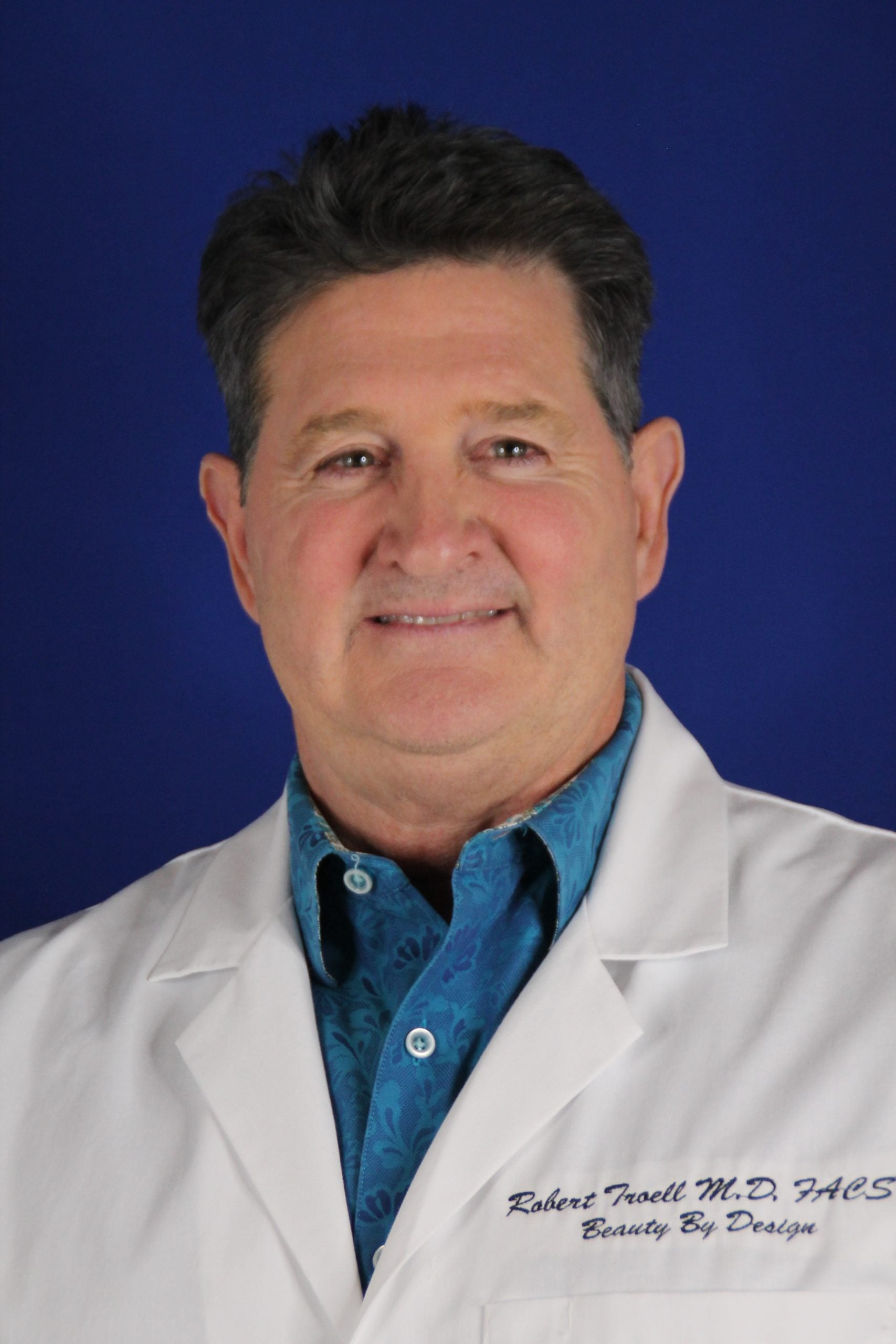
Explant patients deserve a surgeon who neither talks them out of removal nor sells them a replacement — just an honest map of the options. Dr. Troell literally wrote one: his published breast surgery algorithm covers primary augmentation, explant, and every restoration path in between, and his 15-year fat grafting study documents what post-explant restoration actually achieves.
What Our Explant Patients Say
"I was being very careful looking for the right doctor to do two major surgeries on me since my doctor had retired and luckily I found Dr. Troell who has performed buttocks removal and fat transfer as well as Breast Implants removal and fat transfer. It has been two years since my surgeries and I feel healthy and I look great thanks to Dr. Troell … I call Dr. Troell a perfectionist."
Breast Implant Removal & Fat Transfer · Verified Google review · Apr 2022How Much Does Breast Implant Removal Cost in Las Vegas?
Explant surgery is quoted as a single, all-inclusive price at consultation. The main variables:
- Capsule work — simple removal versus partial or total capsulectomy
- What's done at the same time — removal alone, removal with lift, or staged fat-transfer restoration
- Anesthesia choice — awake (oral + IV sedation) or general
- Implant condition — an intact saline implant versus a ruptured silicone device requiring more meticulous cleanup
Troell Cosmetic Surgery is a self-pay specialty surgical practice and does not bill insurance — deliberately. No insurance-imposed restrictions on technique, surgical time, anesthesia choice, or technology. Consultations are free, quotes are transparent, and financing options are available.
Recovery Timeline
Immediate Post-Op
Mild to moderate soreness, managed with a supportive bra and oral medication. Light walking is encouraged from day one.
Early Recovery
Swelling and bruising improve steadily. Most patients return to desk work within a week — sooner after removal alone than removal with a lift.
Tissue Settling
The breast begins settling into its new shape. Exercise restrictions lift progressively as healing is confirmed.
The Restoration Window
For patients choosing fat-transfer restoration, tissues are typically ready once fully healed — timed at follow-up so the graft goes into a stable, well-vascularized breast.
Request a Consultation
Breast Implant Removal FAQs
Will my breasts look deflated after implant removal?
It depends on your skin elasticity, the implant size, and how long you've had them. Some patients settle naturally into an attractive smaller shape; others benefit from a lift at the time of removal or fat-transfer restoration afterward. Dr. Troell tells you honestly which group your anatomy puts you in.
Do I need my capsule removed too?
Not always. A thin, healthy capsule can often be safely left in place. Removal (capsulectomy) is indicated when the capsule is thickened, contracted, calcified, or associated with a ruptured silicone implant. The decision is made from your exam, imaging, and the findings at surgery.
Do I have to remove textured implants?
No. The FDA and the American Society of Plastic Surgeons recommend that women with recalled textured implants who have no symptoms do not need them removed. If you have symptoms, or simply prefer removal for peace of mind, that is a valid choice Dr. Troell will support with an honest discussion of the evidence.
What about breast implant illness?
BII describes a collection of symptoms — fatigue, joint pain, brain fog, and others — that some patients associate with their implants. Its exact cause is unknown, and major medical reviews haven't established it as a distinct disease, but the FDA requires every surgeon to discuss it before implant surgery. If your symptoms are the reason you want your implants out, Dr. Troell will walk through the evidence with you and respect your decision either way.
Can I have fat transfer at the same time as removal?
Restoration is usually staged: removal first, fat grafting once the tissues have healed. Staging lets the graft go into a stable, well-vascularized breast, which supports fat survival. In Dr. Troell's published series, post-explant patients achieved natural, soft restoration this way.
Do you take insurance for explant surgery?
Troell Cosmetic Surgery is a self-pay specialty surgical practice and does not bill insurance. That model is deliberate: no insurance-imposed restrictions on technique, surgical time, anesthesia choice, or technology. Consultations are free, pricing is transparent, and financing options are available.
Explore Related Procedures
Fat Transfer Breast Augmentation
Natural restoration after explant, using your own enriched fat
Breast Implant Revision & Exchange
Replacing rather than removing — including SIEF
Breast Augmentation
The full overview of implant and fat-transfer options
Breast Reduction
Going smaller — reduction mammoplasty for neck, shoulder and back symptoms
Breast Lift
Mastopexy — position without a change in size
Proudly Serving the Las Vegas Valley
Dr. Troell’s practice at 5375 S Fort Apache Rd in Las Vegas sees breast implant removal patients from Spring Valley and Summerlin South, Enterprise, and across the valley to Henderson and North Las Vegas. Las Vegas gets 85 percent of its possible sunshine, about 3,782 hours a year, by NOAA climate normals, so the American Academy of Dermatology’s advice matters here: a broad-spectrum sunscreen of SPF 30 or higher whenever clothing won’t cover a scar.

Ready to Talk About Your Explant Options?
No pressure in either direction — just an honest conversation about your implants, your symptoms or goals, and the three paths forward.