

Blepharoplasty in Las Vegas
Restore a refreshed, youthful appearance with expert eyelid surgery
What is Blepharoplasty?
Blepharoplasty, also called eyelid surgery or an eyelid lift, is a surgical procedure that rejuvenates the appearance of the eyes by addressing excess skin, fat, and muscle in the upper and/or lower eyelids. Whether performed for cosmetic improvement or to restore obstructed vision caused by drooping upper lids, blepharoplasty is one of the most commonly performed facial procedures. Lifting the brow itself can also help tired-looking upper eyelids; see the Bellafill Browlift, which pairs well with eyelid surgery.
- Remove excess skin from upper and/or lower eyelids
- Eliminate or reposition puffy fat deposits
- Tighten loose eyelid muscles and tissue
- Improve peripheral vision blocked by drooping upper lids
- Restore a more alert, refreshed, youthful eye appearance
Why People Choose Blepharoplasty
Aging, genetics, and sun exposure cause the delicate skin around the eyes to lose elasticity, resulting in hooded upper lids, under-eye bags, and a tired or aged appearance. Blepharoplasty can address these changes, helping patients look as rested and vibrant as they feel. In some cases, severely drooping upper lids can impair peripheral vision, making blepharoplasty both a cosmetic and functional procedure.
Is an Eyelid Lift the Same as Blepharoplasty?
Yes. Eyelid lift, eye lift, and eyelid surgery are the everyday names for blepharoplasty, and they describe the same operations covered on this page. An upper eyelid lift is an upper blepharoplasty, which removes the excess skin and fat that hood the upper lid. A lower eyelid lift is a lower blepharoplasty, which treats under-eye bags, excess skin, and hollowing beneath the eye. Having both done in a single session is a four-lid blepharoplasty.
One distinction is worth knowing before a consultation. Some people say eye lift when the heaviness comes from a brow that has descended rather than from the eyelid skin itself, and that is corrected by a brow lift, which is a different operation. At Troell Cosmetic Surgery in Las Vegas, Dr. Robert J. Troell examines the eyelids and the brow together at the consultation, so the name you arrived with matters less than what the examination shows.
Blepharoplasty Surgery Explained
Dr. Troell explains upper and lower eyelid surgery — what it addresses, the surgical approach, and what to expect during recovery.
Technique Decision Matrix
| Condition | Recommended Approach |
|---|---|
| Excess upper lid skin causing hooding | Upper blepharoplasty with skin excision |
| Under-eye bags with visible fat herniation | Lower blepharoplasty — transconjunctival (no visible scar) |
| Lower lid skin laxity with wrinkles | Lower blepharoplasty — transcutaneous with skin pinch |
| Upper and lower lid aging combined | Four-lid blepharoplasty for comprehensive rejuvenation |
| Epicanthal fold modification desired | Asian blepharoplasty with crease creation |
Types of Blepharoplasty
Dr. Troell customizes each blepharoplasty to address the specific concerns of each patient. The right approach depends on your anatomy, degree of aging, and desired outcome.
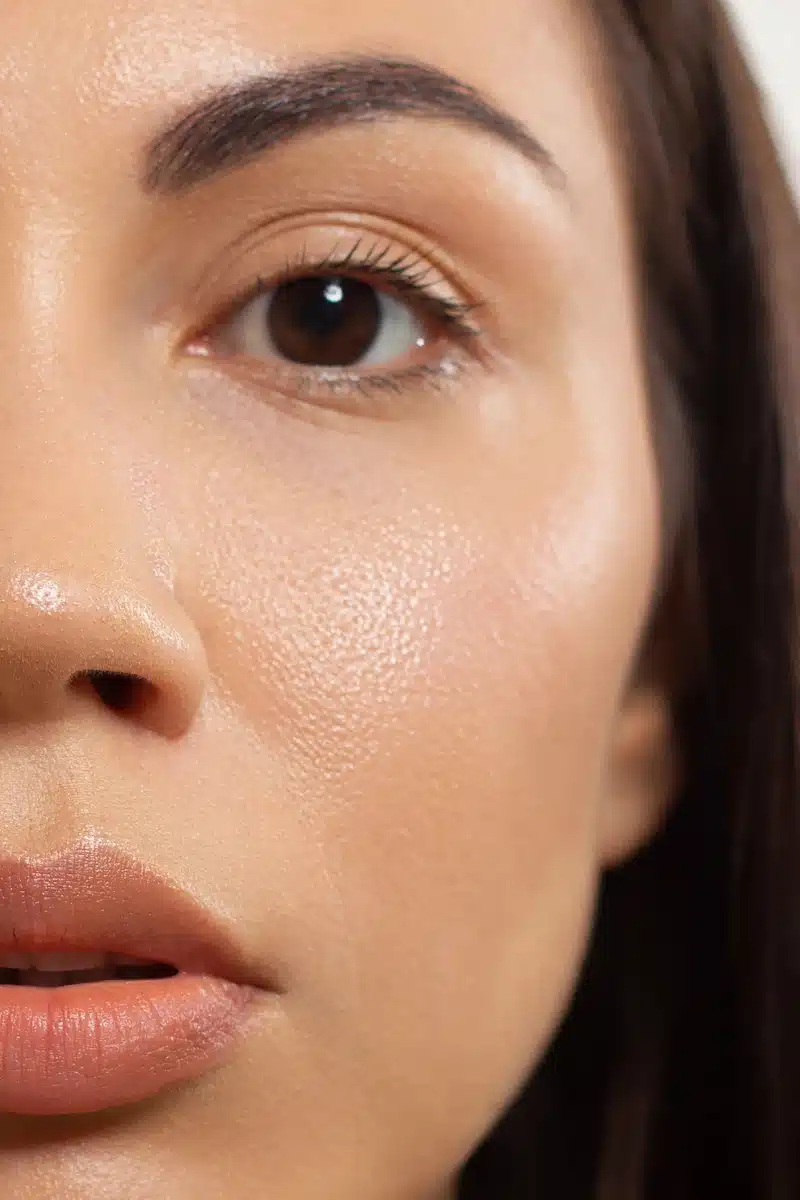
Upper Blepharoplasty
Removes excess skin and fat from the upper eyelids to eliminate hooding and restore a more open, youthful eye appearance. Incisions are hidden within the natural eyelid crease. Can also improve peripheral vision obstructed by drooping skin.
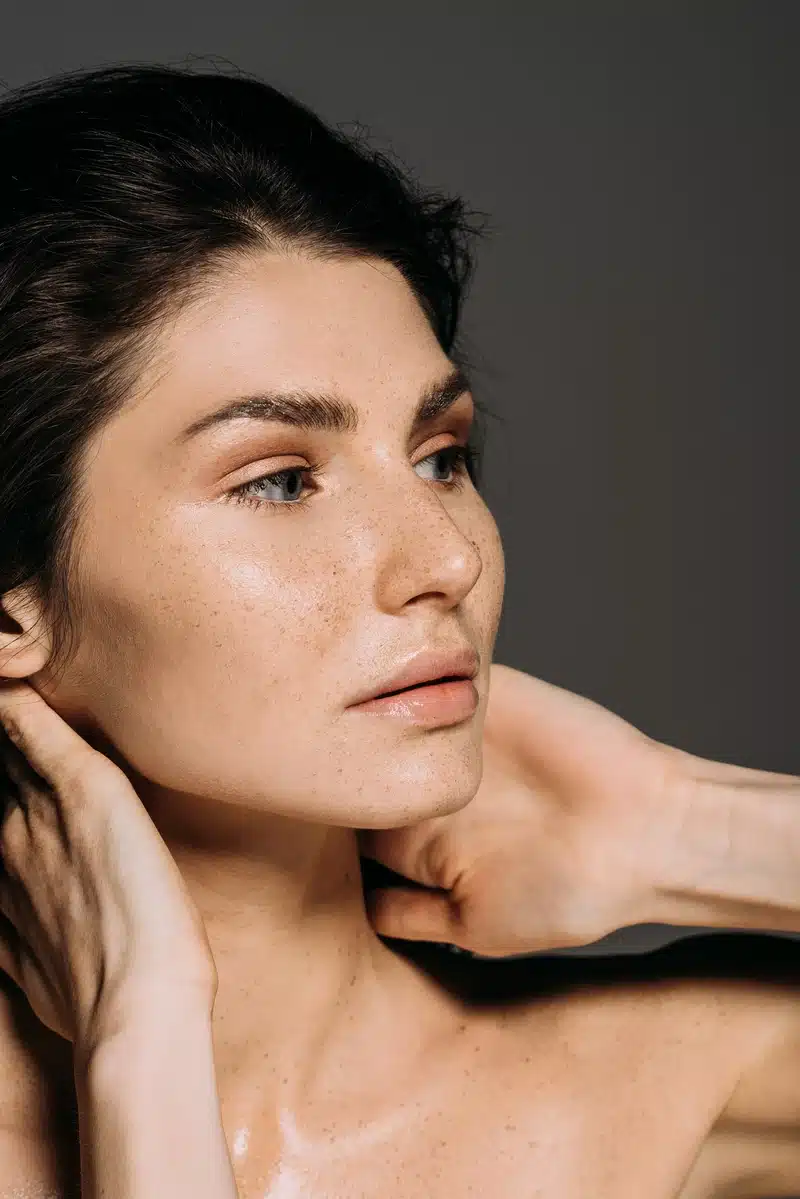
Lower Blepharoplasty
Addresses puffy under-eye bags, excess skin, and hollowing beneath the lower lids. Can be performed via a transconjunctival approach (incision inside the eyelid, no visible scar) or transcutaneous approach (incision just below the lash line).
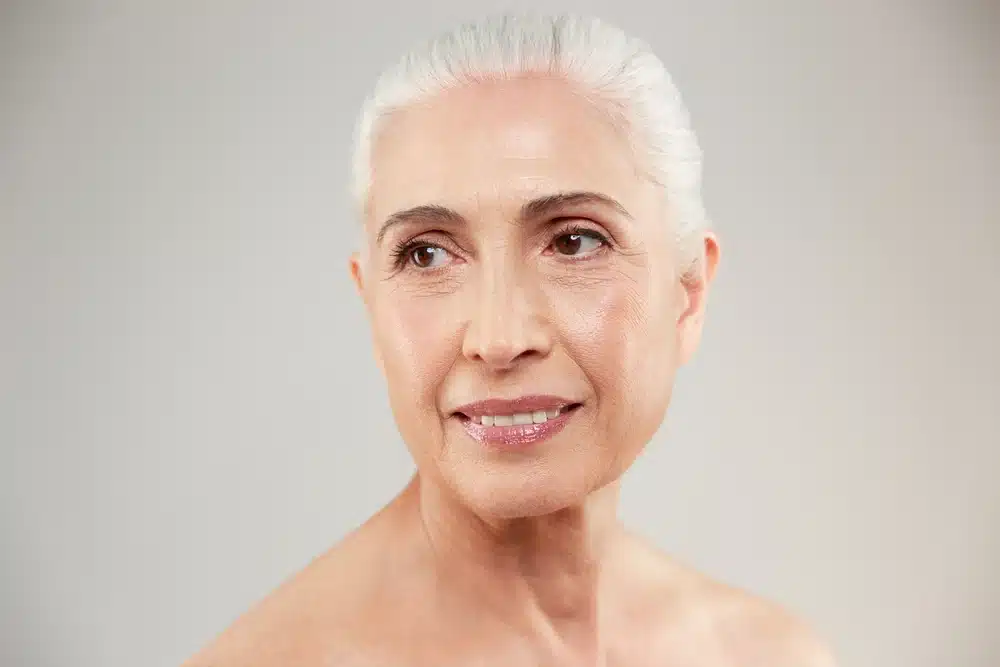
Four-Lid Blepharoplasty
Combines upper and lower eyelid surgery in a single procedure for comprehensive periorbital rejuvenation. Addresses both hooded upper lids and lower lid bags simultaneously for the most dramatic overall eye rejuvenation.

Asian Blepharoplasty
A specialized double eyelid surgery that creates or enhances the supratarsal crease in patients of Asian descent. This technique requires deep understanding of ethnic aesthetic preferences and periorbital anatomy to deliver natural, culturally sensitive results.
Upper Eyelid Surgery, Lower Eyelid Surgery, or Both at Once?
Most patients who come to the Las Vegas office arrive asking for one of the four operations above by name. Dr. Troell frames the decision more simply. In a short video from the practice’s Instagram (@roberttroell) he puts it in his own words: “Probably the most impactful aesthetic procedure that we do is eyelid surgery, either the upper, the lower, or both simultaneously.” His point is that a change of a few millimeters at the eyelids is read across the whole face, which is why he describes the periorbital area as the place where rejuvenation shows most.
Which of the three it is gets decided at the examination, not in advance: hooding of the upper lid points to an upper blepharoplasty, bags or hollowing below the eye to a lower blepharoplasty, and aging at both levels to the combined four-lid operation done in a single session. In Dr. Troell’s published peri-orbital series of 456 procedures, described further down this page, 203 were upper, 75 lower, and 89 combined upper-and-lower cases, nearly all performed under oral sedation and local anesthesia. The video includes a brief before-and-after; individual results vary.
Compare Blepharoplasty Techniques
| Technique | Best For | Incision | Scarring | Recovery |
|---|---|---|---|---|
| Upper Lid Excision | Excess skin, hooding, obstructed vision | Within eyelid crease | Hidden in crease — virtually invisible | 7-10 days |
| Transconjunctival Lower | Fat bags without excess skin | Inside lower eyelid | No visible scar | 5-7 days |
| Transcutaneous Lower | Fat bags with excess skin | Just below lash line | Minimal — fades with time | 7-10 days |
| Four-Lid Combined Most Comprehensive | Complete periorbital rejuvenation | Upper crease + lower approach | Minimal to hidden | 10-14 days |
Why Choose Dr. Troell for Blepharoplasty
Eyelid surgery demands exceptional precision — the margin for error around the eyes is measured in millimeters. As a board-certified facial plastic surgeon with over 30 years of experience, Dr. Troell has the specialized training and surgical skill to deliver natural-looking blepharoplasty results that enhance the eyes without altering their essential character.
Who sees you after eyelid surgery
At Troell Cosmetic Surgery in Las Vegas, every blepharoplasty follow-up visit is with Dr. Robert J. Troell, the surgeon who performed the operation, in the same South Fort Apache Road office. He holds hospital privileges at Summerlin Hospital Medical Center for any complication that needs hospital care, and whether a revision is appropriate is decided case by case at those visits, never promised in advance. How a concern after eyelid surgery is evaluated and priced is explained in our guide to revisions after cosmetic surgery.


The Protocol Behind This Page Is Published Research
Most eyelid-surgery pages describe an approach. This one is documented: Dr. Troell published his complete peri-orbital rejuvenation protocol — screening, technique selection, and outcomes — in The American Journal of Cosmetic Surgery (“Peri-Orbital Aesthetic Rejuvenation: Surgical Protocol and Clinical Outcomes,” 2017; DOI 10.1177/0748806817700534), a retrospective review of 367 consecutive patients and 456 blepharoplasty procedures — 203 upper, 75 lower, and 89 combined upper-and-lower (“quad”) cases.
The reported outcomes in that series: 99.5% of patients (365 of 367) were satisfied with their result, 94.0% met the study’s stricter definition of a fully successful outcome (goal met, no complication, no revision needed), the complication incidence was 2.5%, and revision surgery ran 3% for upper and 1.8% for lower blepharoplasty. Nearly all procedures were performed comfortably under oral sedation and local anesthesia.
The protocol’s judgment calls are as important as its numbers, and they shape every consultation on this page:
- Dry-eye screening before anything else — patients with dry-eye symptoms are referred to an ophthalmologist first, and skin excision is deliberately more conservative (about 2 mm less) in those eyes.
- The lower lid gets a technique chosen for its anatomy — a scarless transconjunctival (inside-the-eyelid) approach when herniated fat is the problem, a fine subciliary skin-muscle approach when excess skin needs removal, and a lateral canthopexy to reinforce a weak lower lid identified by the snap test.
- Fat is repositioned, not just removed — where hollowing under the eye is part of the problem, lower-eyelid fat transposition moves the patient’s own fat into the tear trough instead of discarding it; conservative central-fat retention avoids the hollowed, skeletonized look.
- Festoons get honest options — mid-facelift, radiofrequency skin treatment, or an ultrasound-energy adaptation, matched to the cause rather than a one-size answer.
- Heritage is preserved by default — in Asian patients without a double eyelid crease, the existing crease anatomy is maintained unless the patient explicitly chooses otherwise; the operation is confirmed against your goals, never a template.
Where the peri-orbital analysis shows the brow or midface is contributing, the published protocol pairs blepharoplasty with the right adjacent procedure — brow lift, mid-facelift, laser skin resurfacing, or volume restoration — the same menu documented in the paper. You can read the study itself via the DOI above, and his broader published work on his publications page.
Am I a Candidate for Blepharoplasty?
Blepharoplasty candidates typically notice visible changes around the eyes that make them look tired, older, or less alert than they feel. Candidacy is based on eyelid anatomy, skin quality, overall health, and aesthetic goals. If you are still working out whether you are a candidate for eyelid surgery, that guide walks through the baseline criteria and the exam findings that decide which operation applies.
- Excess or drooping upper eyelid skin (hooding)
- Puffy bags beneath the lower eyelids
- Dark circles or hollowing under the eyes
- Impaired peripheral vision from drooping upper lids
- Fine wrinkles and excess skin on the lower eyelids
- Desire for a more alert, rested eye appearance
What Can Blepharoplasty Achieve?
Eliminate hooding and puffiness for a more open, refreshed eye appearance.
Restore peripheral vision obstructed by drooping upper eyelid skin.
Incisions hidden within the natural eyelid crease or inside the lid.
Most patients return to normal activities within 7-10 days.
Blepharoplasty Before & After Photos
These images represent actual patients of Dr. Troell who provided written consent. The fourth case combined an upper blepharoplasty with submalar cheek implants in one operation — the upper lids were the eyelid half of the plan, the midface volume the implant half; both of her views are filed as Patient 5 among the cheek implant results. The fifth case is an upper blepharoplasty; the same patient appears with eyes open and eyes closed as Patient 17 in the full gallery. The sixth case is an upper blepharoplasty for hooded upper lids, filed as Patient 8 in the full gallery; she wears lash extensions in the before photograph only.


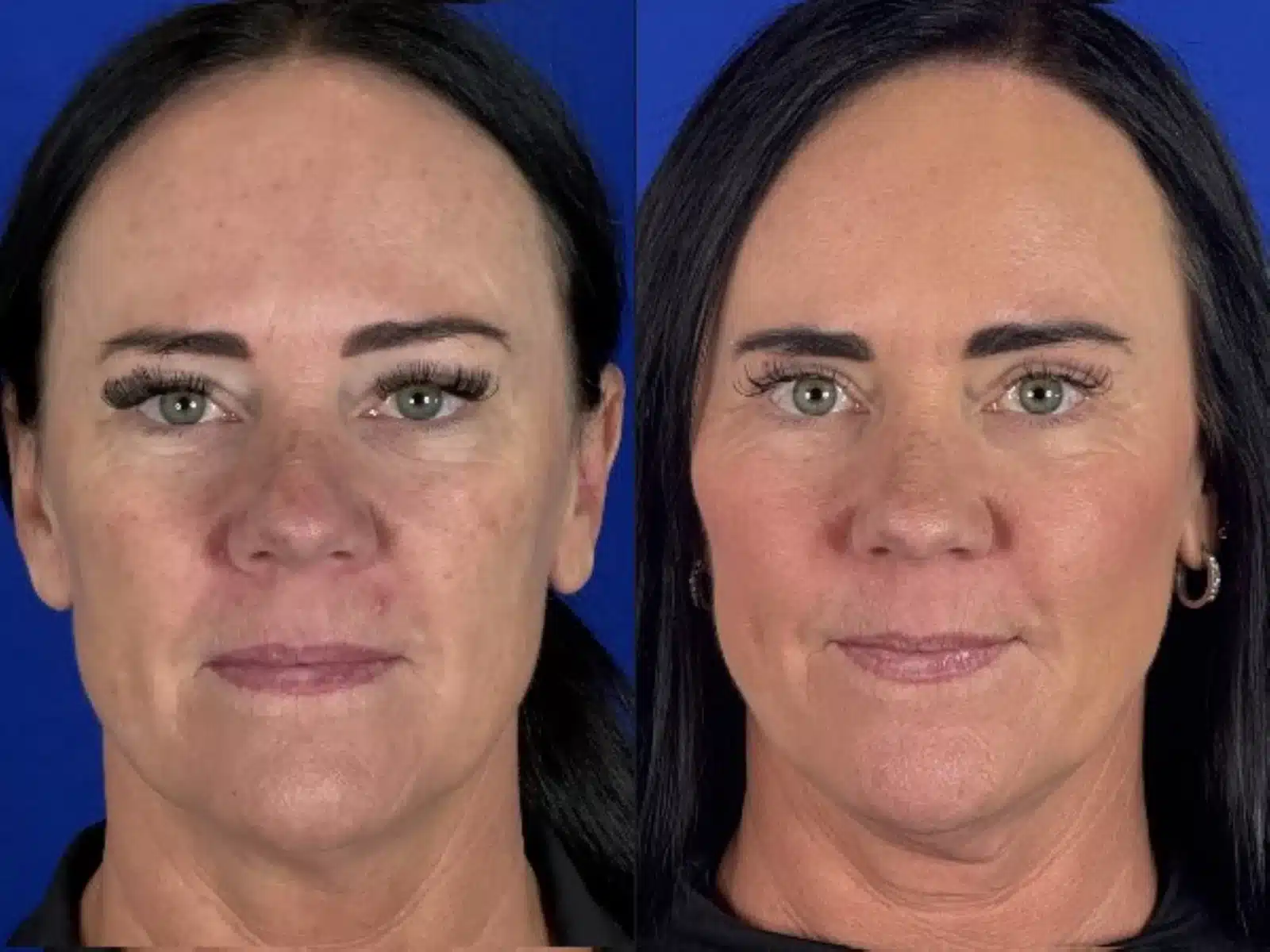
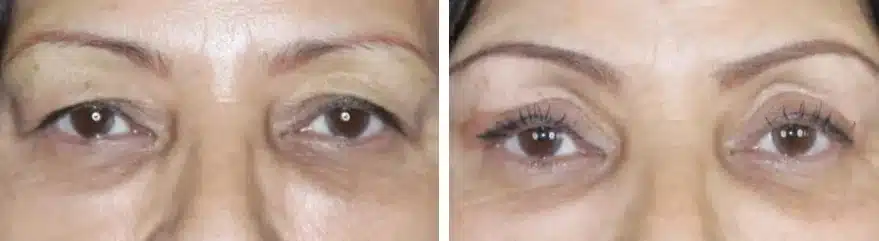
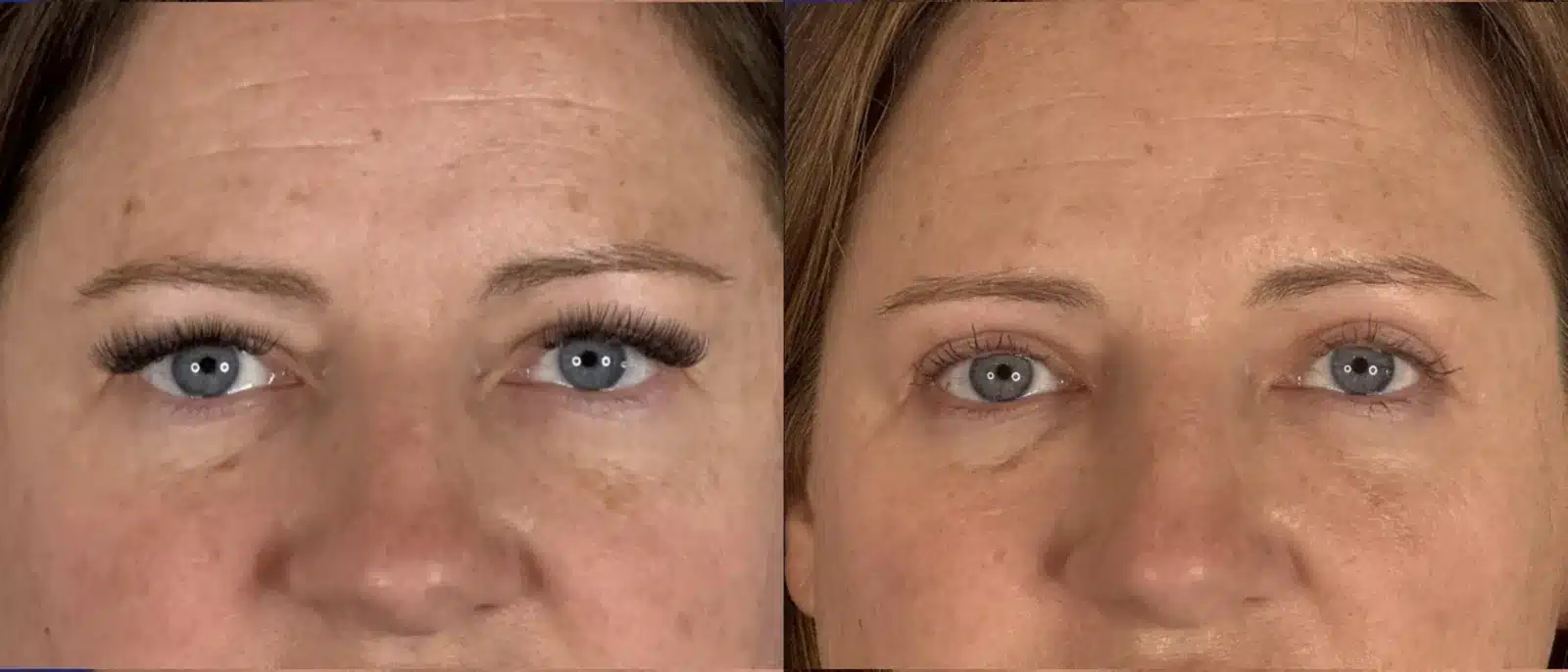
All before and after photographs are of actual patients who have provided written consent. Photos have not been digitally altered except for cropping and color correction. Results shown are not guaranteed and vary from patient to patient.
What Our Eyelid Surgery Patients Say
"Dr. Troell and his team are professional, experienced and caring. The Troell Cosmetic Surgery Clinic is impressive. Dr. Troell understood my goals to enhance a crease in my upper eyelid. The lower lid enhancement was an additional bonus. … Highly recommend!"
Upper & Lower Eyelid · Verified Google review · Jan 2026"I recently went through an upper eyelid surgery to remove some excess skin. This was my first experience with a cosmetic procedure and I was a bit apprehensive. … The care, expertise and nurturing you receive has more than met my expectations. They are detailed, thorough and professional."
Upper Eyelid Surgery · Verified Google review · Jun 2024"A couple years ago I started having eyelid problems. After searching for a professional doctor that I could trust to do my eye surgery with, I found Dr. Robert Troell. … It's been about nine months now and I'm very happy. I could not be more thankful for the results I have."
Eyelid Surgery · Verified Google review · Sep 2022Every procedure on this page is performed by facial plastic surgeon Dr. Robert Troell. Dr. Troell is a Diplomate of the American Board of Cosmetic Surgery and board-certified in facial plastic & reconstructive surgery, with 30+ years of surgical experience. Residency and fellowship at Stanford University; Doctor of Medicine from the University of South Florida College of Medicine. See notable achievements.
Prefer to stay awake? For suitable candidates this procedure can be performed under local anesthesia with IV sedation rather than general anesthesia — avoiding the added risks of general anesthesia, with a faster recovery and often a lower cost.
$500 Off Upper Eyelid Surgery
For a limited time, save $500 on upper eyelid surgery (upper blepharoplasty) performed by Dr. Troell. Schedule your complimentary consultation to learn more and secure your special pricing.
Request a Consultation
Blepharoplasty Recovery Timeline
The five phases below summarize the practice’s aftercare timeline. For the same arc one day at a time — including makeup, contact-lens, screen, and exercise clearances and the signs that warrant a call — read the day-by-day blepharoplasty recovery guide.
Immediate Post-Op
Apply cold compresses to minimize swelling. Eyes may feel tight, watery, or sensitive to light. Keep head elevated. Use prescribed eye drops and ointment. Avoid straining, bending, or lifting.
Early Recovery
Sutures typically removed at day 5-7. Bruising and swelling peak around day 3-4 then begin improving. Avoid wearing contact lenses. Light reading and screen use may resume gradually.
Return to Normal
Most patients return to work and social activities. Makeup can be applied around the eyes. Bruising largely faded. Continue sun protection with sunglasses and SPF.
Refinement
Exercise can resume gradually. Residual swelling continues to resolve. Scars begin to mature and fade. Contact lenses can be worn again.
Final Results
All swelling resolved. Incision lines continue to refine and fade. Final results fully visible with a natural, refreshed eye appearance.
Pre-Op Checklist
Stop blood-thinning medications (aspirin, ibuprofen, fish oil) 2 weeks before surgery. Arrange for someone to drive you home. Prepare cold compresses and prescribed medications at home. No smoking for at least 2 weeks before and after surgery.
Post-Op Checklist
Use prescribed eye drops and ointment as directed. Sleep with head elevated on 2-3 pillows for the first week. Wear dark sunglasses outdoors. Avoid rubbing or touching the eyes. Keep all follow-up appointments with Dr. Troell.
Risks and Potential Complications
Common Post-Operative Effects
- Swelling and bruising around the eyes
- Temporary dryness or watery eyes
- Light sensitivity
- Temporary blurred vision
Potential Complications
- Infection
- Bleeding or hematoma
- Difficulty closing the eyes (temporary)
- Ectropion (lower lid pulling away)
- Dry eye syndrome
Cosmetic Outcomes
- Asymmetry between eyelids
- Visible scarring
- Under- or over-correction
- Hollowed appearance from excess fat removal
General Surgical Risks
- Adverse reaction to anesthesia
- Persistent numbness
- Need for revision surgery
- Vision changes (very rare)
Blepharoplasty Cost in Las Vegas
- Pre-operative consultation and planning
- Surgeon's fee
- Anesthesia fees (local or sedation)
- Facility fees
- Surgical supplies
- Post-operative follow-up visits


For a real-world example, see our detailed blepharoplasty cost case study in Las Vegas — a full periorbital rejuvenation plan with an itemized price breakdown, recovery timeline, and results.
Blepharoplasty FAQs
I look tired even when I'm rested — is eyelid surgery the fix?
Often the tired look is hooded upper lids or under-eye bags rather than fatigue — and an examination distinguishes true eyelid skin excess from a descended brow, which changes the operation entirely. Dr. Troell examines both at a free consultation in Las Vegas; upper eyelid surgery is typically performed under local anesthesia with sedation using the pricing published on this page. The full picture of what eyelid surgery can and cannot fix is in Eyelid Surgery for Tired Eyes.
Is blepharoplasty painful?
Most patients report minimal pain after blepharoplasty. The procedure is typically performed under local anesthesia with sedation, and post-operative discomfort is usually described as mild tightness or soreness, easily managed with prescribed or over-the-counter pain medication.
How long do blepharoplasty results last?
Upper blepharoplasty results typically last 7-15 years or longer. Lower blepharoplasty results are often considered long-lasting as well, though natural aging continues. Many patients never need a repeat procedure.
Will I have visible scars?
Upper blepharoplasty scars are hidden within the natural eyelid crease and become virtually invisible once healed. Lower blepharoplasty using the transconjunctival approach leaves no visible external scar at all.
Can blepharoplasty be covered by insurance?
No. Troell Cosmetic Surgery is a self-pay specialty surgical practice and does not bill insurance for any procedure, including upper eyelid surgery for hooding that another practice might submit as medically indicated. Cosmetic blepharoplasty is not covered by any health plan in the first place, and there is no coverage pathway to pursue here for a functional case either. If insurance participation is essential to your decision, you are better served by a practice that participates with your plan, and we would rather you know that before booking a consultation. For patients who proceed on a self-pay basis, the fee is quoted in writing after a free consultation with Dr. Robert J. Troell in Las Vegas, and CareCredit and Alphaeon Credit financing are available for monthly payments.
What is the difference between upper and lower blepharoplasty?
Upper blepharoplasty addresses excess skin and fat on the upper eyelids (hooding), while lower blepharoplasty targets puffy bags and excess skin beneath the eyes. They can be performed separately or together as a four-lid blepharoplasty.
Is an eyelid lift or eye lift the same as blepharoplasty?
Yes. Eyelid lift and eye lift are everyday names for blepharoplasty, the surgery that removes or repositions excess eyelid skin and fat. An upper eyelid lift is an upper blepharoplasty for hooded upper lids, a lower eyelid lift is a lower blepharoplasty for under-eye bags, and the two can be combined as a four-lid blepharoplasty. At Troell Cosmetic Surgery in Las Vegas, Dr. Robert J. Troell examines the eyelids and the brow at a free consultation, because a descended brow can look like a heavy lid and is corrected by a different operation.
Can blepharoplasty be combined with other procedures?
Yes, blepharoplasty is commonly combined with a brow lift, facelift, or skin resurfacing for comprehensive facial rejuvenation. Dr. Troell will discuss the best combination approach during your consultation.
How soon can I wear makeup after blepharoplasty?
Most patients can resume wearing eye makeup approximately 10-14 days after surgery, once sutures are removed and the incision areas have healed sufficiently. Dr. Troell will provide specific guidance during your follow-up visits.
Will blepharoplasty fix my crow's feet?
Blepharoplasty primarily addresses the eyelid skin and fat, not the fine lines at the outer corners of the eyes (crow's feet). However, removing excess lid skin can improve the overall appearance. For crow's feet specifically, Dr. Troell may recommend complementary treatments such as skin resurfacing.
Am I too young or too old for blepharoplasty?
There is no strict age limit for blepharoplasty. Some patients notice eyelid changes in their 30s due to genetics, while others may not seek treatment until their 60s or 70s. Candidacy is based on anatomy and overall health rather than age alone.
What should I avoid before blepharoplasty?
Avoid blood-thinning medications (aspirin, ibuprofen, fish oil supplements) for 2 weeks prior to surgery. Stop smoking at least 2 weeks before and after. Avoid alcohol for 48 hours before surgery. Dr. Troell will provide a complete pre-operative instruction sheet.
If one lid still looks heavier than the other once the swelling settles, or I still look tired after eyelid surgery, who decides whether I need a revision — and what would it cost me?
It is the right question to settle before surgery, because eyelids declare their result slowly: bruising and swelling peak around day 3 to 4, sutures come out at day 5 to 7, and the residual swelling that can make two lids look uneven takes weeks more to resolve, which is why this page lists asymmetry between the eyelids, under- or over-correction, and the need for revision surgery among the outcomes worth discussing. At Troell Cosmetic Surgery in Las Vegas, the person judging each of those stages is the surgeon who did the operation: Dr. Robert J. Troell is the sole surgeon here, and his patients' follow-up visits happen in the same South Fort Apache Road office where the consultation and the surgery took place. He holds hospital privileges at Summerlin Hospital Medical Center should a complication ever need hospital-level care. Whether a revision is appropriate, and what a revision would cost you, is decided case by case at those follow-ups once the lids have settled; no surgeon can honestly promise that in advance, and individual results vary.
Medical Disclaimer
This information is for educational purposes only and is not a substitute for professional medical advice, diagnosis, or treatment. All surgical procedures carry inherent risks, and individual outcomes vary based on anatomy, health status, and adherence to pre- and post-operative instructions. Always consult with a qualified, board-certified surgeon to evaluate your individual case.
Proudly Serving the Las Vegas Valley
Dr. Troell’s practice at 5375 S Fort Apache Rd in Las Vegas sees eyelid surgery patients from Spring Valley and Summerlin South, Enterprise, and across the valley to Henderson and North Las Vegas. Las Vegas gets 85 percent of its possible sunshine, about 3,782 hours a year, by NOAA climate normals, so the American Academy of Dermatology’s advice matters here: a broad-spectrum sunscreen of SPF 30 or higher whenever clothing won’t cover a scar, especially while new incision scars mature.

Ready for Brighter, More Youthful Eyes?
A consultation with Dr. Troell is the first step. No obligation, no pressure — just an honest conversation about your goals.
Mon–Fri, 8:30 AM – 5:00 PM