

Hip Implants in Las Vegas
Custom, patient-specific hip implants for structural hip dips — from the surgeon who co-authored the published literature on aesthetic hip augmentation
What Are Cosmetic Hip Implants?
A hip implant — also called hip augmentation or a custom hip implant — is a soft solid silicone implant designed to fill a structural hip dip and complete the hourglass line between the waist and the thigh.
Most hip dips are soft-tissue depressions, and most can be smoothed with enriched fat grafting designed alongside the whole gluteal frame. But some hip dips are structural: the depression is driven by the underlying bony anatomy, and there is a limit to how much a soft-tissue graft can fill a bony concavity. For those patients, fat alone may improve the contour without fully correcting it — and that's where a custom implant becomes the definitive answer.
Aesthetic hip augmentation with implants is a niche within a niche. Dr. Troell co-authored both of the peer-reviewed papers that define this procedure in the literature — on patient evaluation and implant fabrication, and on evolving clinical experience — with Dr. Barry Eppley, and the implants themselves are custom-designed and fabricated to each patient's anatomy by Implantech, the only FDA-cleared company producing patient-specific body implants.
Three Ways to Treat a Hip Dip
Dr. Troell is honest about the hierarchy: for most hip dips, fat comes first. The implant is the tool for the cases fat can't fully fix.
1. Enriched Fat Grafting
The first choice when the deficit is primarily soft-tissue — your own tissue, no implant to maintain, and the whole gluteal frame addressed in one session. Covered in depth in our hip dip fat grafting guide.
2. Custom Hip Implant
The definitive correction for a deep, bony hip dip — a patient-specific silastic implant designed to your individual anatomy.
3. Composite Augmentation
An implant for the structural deficit combined with fat grafting to blend and refine the surrounding frame — often paired with VASER contouring of the waist.
Which option fits is a consultation decision — based on photographs, palpation, the depth and origin of the dip, how much donor fat you have, and your goals. A surgeon who only offers fat grafting can only give a fat-grafting answer; correcting a structural hip dip well requires the implant option to be on the table.
Am I a Candidate for Hip Implants?
Hip implants are typically the right tool for a specific set of patients:
- Deep, structural hip dips where the bony anatomy drives the depression and fat grafting alone would under-correct
- Thin patients without enough donor fat for meaningful grafting
- Patients after significant weight loss (GLP-1 medications or bariatric surgery) with depleted fat reserves
- Transgender patients seeking hip feminization, who often have less fat pad volume available for grafting
- A previous fat-grafting result that improved but didn't fully correct the contour
Candidacy also depends on skin and soft-tissue quality, overall health, and realistic goals — all assessed at your consultation, where Dr. Troell will tell you plainly if fat grafting serves you better.
Custom Design: How a Patient-Specific Hip Implant Is Made
Unlike breast implants, there is no shelf of standard hip implants that fits every body. The published approach Dr. Troell co-authored centers on patient evaluation and implant fabrication: your anatomy is measured and photographed, the dip's dimensions and depth are mapped, and a custom silastic implant is designed and fabricated to your individual contour by Implantech Associates.
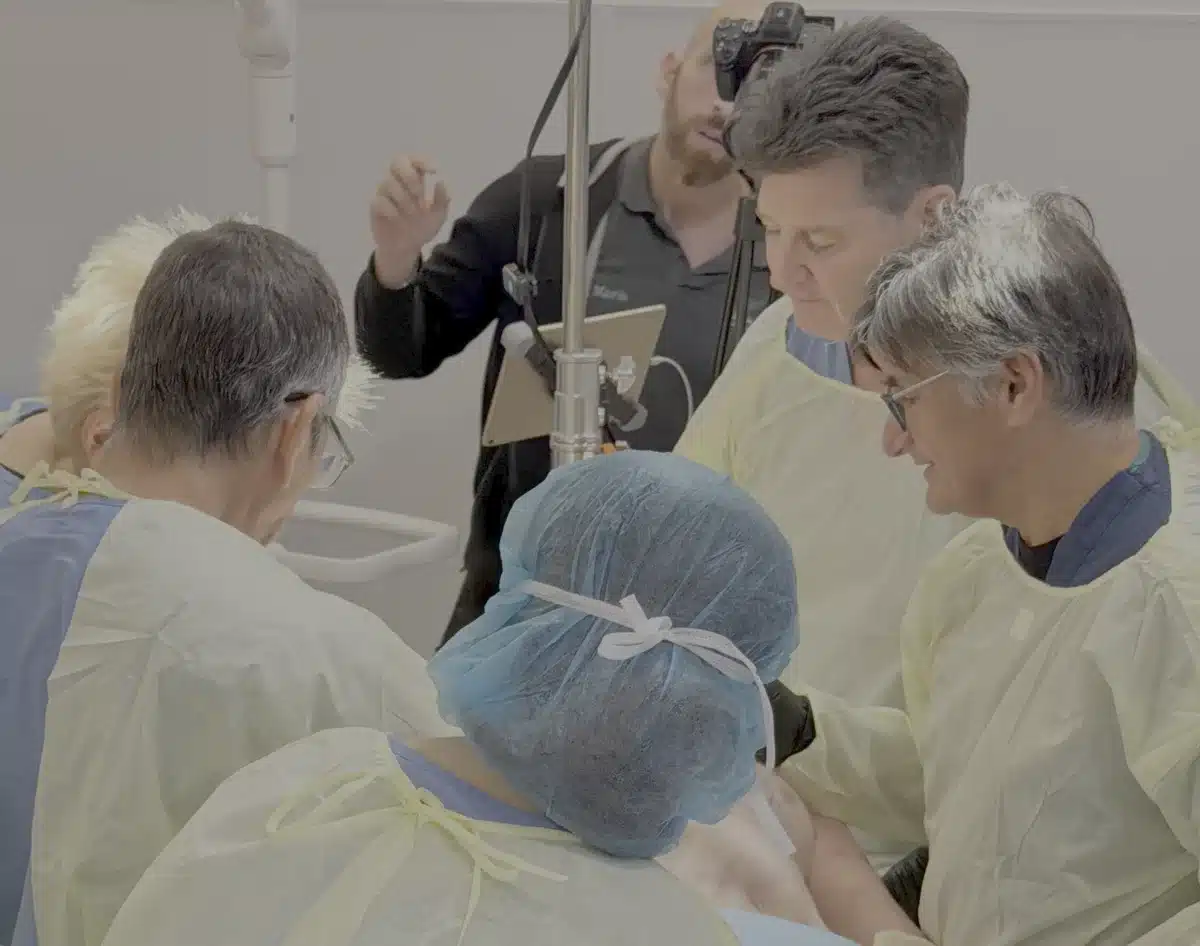
That design step is where this procedure is won or lost — an implant that matches the true shape of the deficit sits naturally, blends into the frame, and reads as your own anatomy rather than an addition. It's the same design discipline behind Dr. Troell's role teaching body implant placement to other surgeons in hands-on cadaver courses, where the hip and gluteal anatomy that governs safe placement is dissected directly.

How Much Do Hip Implants Cost in Las Vegas?
Hip augmentation is quoted as a single, all-inclusive price at consultation. Because the implants are custom-fabricated, the variables differ from off-the-shelf procedures:
- Custom implant design and fabrication — patient-specific implants are individually designed and manufactured (custom body implants run about $5,300 for the design-and-fabricate step)
- One side or both — most patients treat both hips for symmetry
- Combined procedures — composite plans adding VASER waist contouring or fat grafting change surgical time
- Anesthesia and facility time
Troell Cosmetic Surgery is a self-pay specialty surgical practice and does not bill insurance — deliberately. No insurance-imposed restrictions on technique, surgical time, anesthesia choice, or technology. Consultations are free, quotes are transparent, and financing options are available.
Recovery After Hip Implant Surgery
Immediate Post-Op
Soreness at the implant sites managed with a support garment and oral medication. Walking is encouraged early.
Early Recovery
Swelling improves steadily; most patients return to desk work within one to two weeks. Pressure directly on the implant areas is limited per Dr. Troell's instructions.
Settling In
The implants settle as tissues heal around them. Activity restrictions lift progressively on individual clearance.
Final Result
Swelling fully resolved — the new hip line is stable and permanent. Solid silastic implants don't reabsorb, rupture, or need scheduled replacement.
Request a Consultation
Hip Implant FAQs
Hip implants or fat grafting — how do I know which I need?
It comes down to what's causing the dip. Soft-tissue depressions respond well to enriched fat grafting; deep, bony (structural) dips have a limit to what fat can fill, and a custom implant corrects them definitively. The exam — photographs, palpation, and donor-fat assessment — tells Dr. Troell which category you're in, and he'll tell you honestly if the simpler option serves you better.
What are hip implants made of?
Soft solid silicone (silastic) — the same implant family used in gluteal augmentation. Because they're solid rather than gel-filled, they can't rupture or leak, and they're custom-fabricated to your anatomy by Implantech, the only FDA-cleared company producing patient-specific body implants.
Why does the published research matter for this procedure?
Aesthetic hip augmentation is rare enough that most surgeons have never performed one. The two peer-reviewed papers that define the procedure — covering patient evaluation, implant fabrication, and clinical outcomes — were co-authored by Dr. Troell with Dr. Barry Eppley. Choosing a surgeon who helped write the literature means the technique isn't being improvised on your anatomy.
Can hip implants be combined with a BBL or liposuction?
Yes — composite augmentation is common: the implant corrects the structural deficit while VASER liposuction narrows the waist and fat grafting blends the surrounding frame. The whole silhouette is designed together, not piece by piece.
How long do hip implants last?
Solid silastic implants are considered permanent — they don't reabsorb, rupture, or carry a scheduled replacement requirement. Revision is possible if goals change, but there's no expiration date.
Do you take insurance for hip augmentation?
Troell Cosmetic Surgery is a self-pay specialty surgical practice and does not bill insurance. That model is deliberate: no insurance-imposed restrictions on technique, surgical time, anesthesia choice, or technology. Consultations are free, pricing is transparent, and financing options are available.
Explore Related Procedures
Proudly Serving the Las Vegas Valley
Dr. Troell’s practice at 5375 S Fort Apache Rd in Las Vegas sees hip implant patients from Spring Valley and Summerlin South, Enterprise, and across the valley to Henderson and North Las Vegas. Las Vegas gets 85 percent of its possible sunshine, about 3,782 hours a year, by NOAA climate normals, so the American Academy of Dermatology’s advice matters here: a broad-spectrum sunscreen of SPF 30 or higher whenever clothing won’t cover a scar.
The Published Research Behind This Page
- Troell RJ, Eppley B, Javaheri S. Concepts in Hip Implant Body Contouring: Patient Evaluation & Implant Fabrication. Am J Cosmet Surg. 2022;40(4):263–274. doi:10.1177/07488068221101229
- Troell RJ, Eppley B, Javaheri S. Evolving Clinical Experiences in Aesthetic Hip Implant Body Contouring. Aesthet Surg J. 2022;42(8):NP516–NP530. doi:10.1093/asj/sjac064
- Troell RJ. Gluteal & Hip Stem Cell Enriched Fat Grafting (Brazilian Butt Lift): Optimizing Outcomes While Minimizing Complications. Medical Research Archives. 2026;14(4). doi:10.18103/mra.v14i4.7467

Fat, Implant, or Both? Ask the Surgeon Who Wrote the Papers.
Bring your goals — Dr. Troell will map your frame, tell you what's soft tissue and what's structural, and give you a straight answer.