

Temporal implants Long Term Volume Replacement
Published February 25, 2026 · By Dr. Robert J. Troell, Board-Certified Facial Plastic Surgeon
Dr. Robert J. Troell, MD, FACS

The short answer: Temporal (temple) implants are a soft, permanent way to restore volume to hollow temples — a roughly one-hour procedure under local anesthesia, placed through a hidden incision near the hairline. Unlike filler (temporary) or fat grafting (partial take), a soft Silastic implant gives a stable, reversible result. Below: how they work, standard vs. extended styles, candidacy, and recovery.
What Is Temple Hollowing (Temporal Volume Loss)?
The “temple” region is the area on the side of the forehead above the cheekbone and outside the outer corner of
the eye. Some people naturally have a concave temple shape, while others notice increasing hollowing over time.
When the temple area looks more indented, it can change how light reflects across the upper face and may make
the face look less balanced from the front or in three-quarter views.
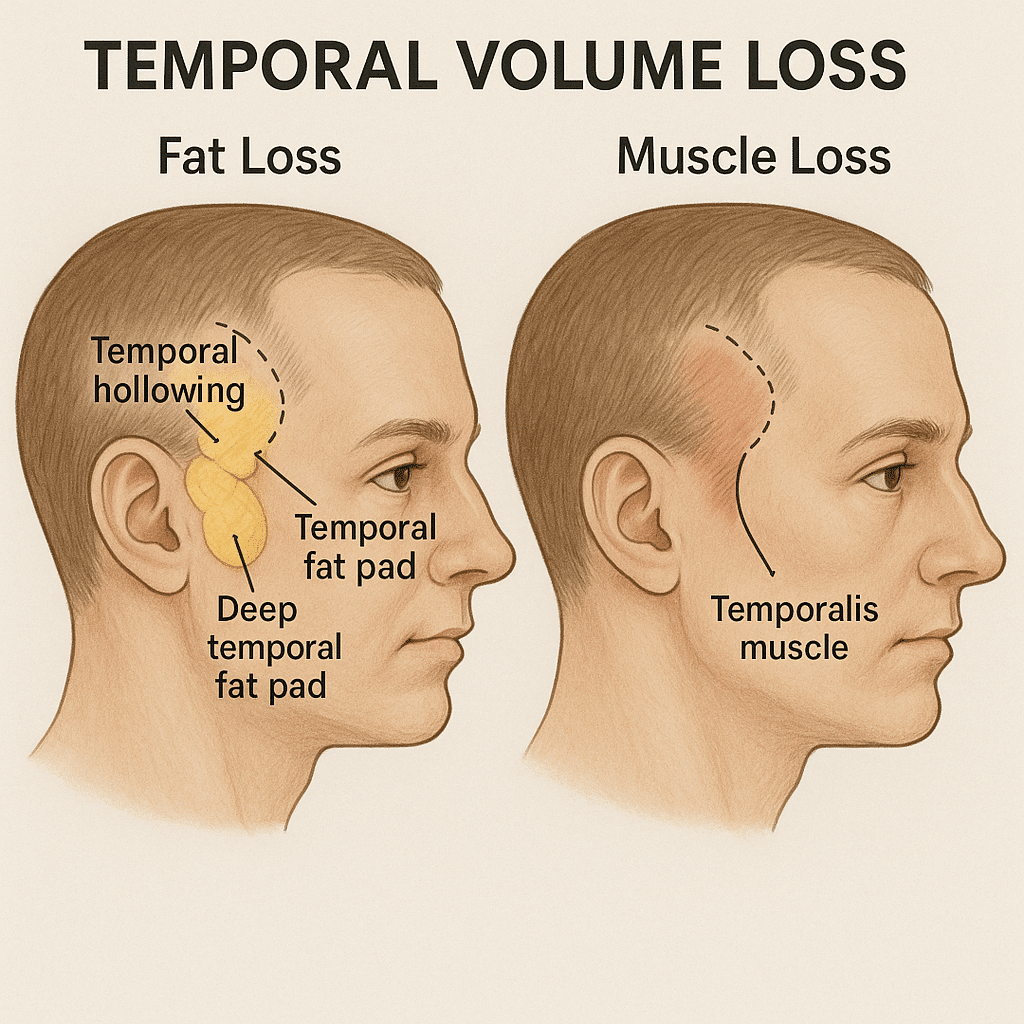
Temple hollowing is not always the same from person to person. The right approach depends on anatomy, skin
quality, and how the temple contour relates to the cheek and brow.
Why Injectable Fillers Are Commonly Used for Temple Volume
A common first step for temple volume replacement is injectable hyaluronic acid (HA) filler. HA fillers are
widely used because they can add volume without surgery and allow for stepwise changes over time.
Because temples have important vascular anatomy, treatment should be performed by a qualified, experienced
provider with strong anatomical training and a plan for recognizing and managing complications.
Limitations and Considerations with Repeat HA Filler
Many patients do well with HA filler and choose to maintain results with periodic treatments. Others eventually
ask about longer-term options—often for practical and preference-based reasons:
- Maintenance: results are temporary and typically require repeat treatments over time.
- Short-term side effects: swelling, tenderness, and bruising can occur after each visit.
-
Rare but serious risks: published reviews describe vascular complications such as ischemia,
skin necrosis, and—rarely—blindness
[3]
[4]. -
Envelope limitations in some patients: scarred or tight tissue may limit how “expansible” the
area feels with injectables (this is individualized and should be evaluated in person). - Long-term cost considerations: repeat treatments can add up over years.
If you use fillers, it’s reasonable to ask your provider how they minimize risk, what products they select for
the temple region, and what their plan is if a vascular complication is suspected.
Longer-Term Volume Replacement Options
Patients who prefer an option designed to last longer than HA fillers may discuss one or more of the following:
-
Facial fat grafting: uses your own tissue to restore volume. Longevity varies, and some early
volume change is expected. Learn more:
Facial fat grafting for volume restoration. -
Bellafill: an FDA-approved PMMA/collagen filler indicated for nasolabial folds and certain
atrophic, distensible acne scars on the cheek—not a temple-specific FDA indication
[5].
(A qualified clinician can discuss whether a product is appropriate for a specific area.) -
Facial implants: can provide structural or soft-tissue augmentation in specific zones.
See:
Facial implants overview.
The key is matching the method to your anatomy and goals—especially in the temple region, where safety and plane
selection matter.
Temporal (Temple) Implants: How They Work
Temporal implants (often called “temporal shell” implants) are soft silicone implants designed to restore
volume in excessively concave or sunken temples. Manufacturer materials describe them as soft-tissue implants
placed under the temporalis fascia and on top of the temporalis muscle
[1]
[2].
A common surgical approach uses an incision that can be camouflaged within the hairline. The implant is then
positioned in a defined anatomical plane to recreate a smoother, more youthful temple contour.
Why patients explore temporal implants
- They want an option designed to be long-lasting, rather than scheduling repeat filler visits over time.
- They want a predictable structural/contour change in a specific anatomic zone.
- They prefer a surgical correction that does not depend on filler maintenance schedules.
Best-practice language: implants are intended to be long-lasting, but no outcome is guaranteed. Healing,
individual anatomy, and natural aging can influence how results look over time.
Standard vs Extended Temporal Implants
Manufacturer descriptions commonly reference two coverage patterns:
-
Standard temporal shell: described as matching typical skeletal borders of the temple region,
with thickness where augmentation is commonly needed
[1]. -
Extended temporal shell: described for patients seeking broader volume up the entire side of
the forehead/temple region
[1]
[6].
Which design is appropriate depends on your hollowing pattern, desired contour, and overall facial proportions.
Your consultation should include mirror-based planning (and ideally photo review) so goals are clear.
Who May Be a Fit for Temporal Implants?
In general, temporal implants may be discussed for patients who have temple hollowing that affects facial
balance and who want a longer-term option than repeat filler sessions.
-
May be a fit: patients with noticeable concavity who want structural soft-tissue augmentation
in a defined zone. -
Discuss carefully: patients with significant scarring or complex anatomy, or those combining
multiple procedures (because sequencing and surgical planning matter). -
Combination planning: some patients may discuss combining approaches (e.g., implant plus fat
grafting) depending on whether goals include both contour blending and structural restoration.
If you’ve had temple filler previously, ask how that affects timing and planning.
Recovery and Refinement (Best-Practice, Non-Prescriptive)
Recovery depends on the incision approach, the exact pocket/plane used, and whether the implant procedure is
combined with other facial surgery. Swelling is expected early on, and contour becomes clearer as swelling
resolves. Your surgeon will provide individualized aftercare, follow-up, and activity guidance based on your
plan.
If you are comparing implants with injectables, it’s reasonable to discuss how surgical recovery compares to
repeated short recoveries after filler sessions.
Questions to Ask at Your Consultation
- “Is my temple concern primarily volume deficiency, contour shape, or both?”
- “Which option fits my anatomy best—HA filler, fat grafting, Bellafill, or a temporal implant—and why?”
- “Would I need a standard or extended implant based on my hollowing pattern?”
- “Where is the incision placed, and how is it camouflaged within the hairline?”
- “How do you minimize risk in this area, and what is your plan if a complication is suspected?”
- “If I’ve had temple filler before, does that change planning or timing?”
- “What does recovery typically look like for someone like me?”
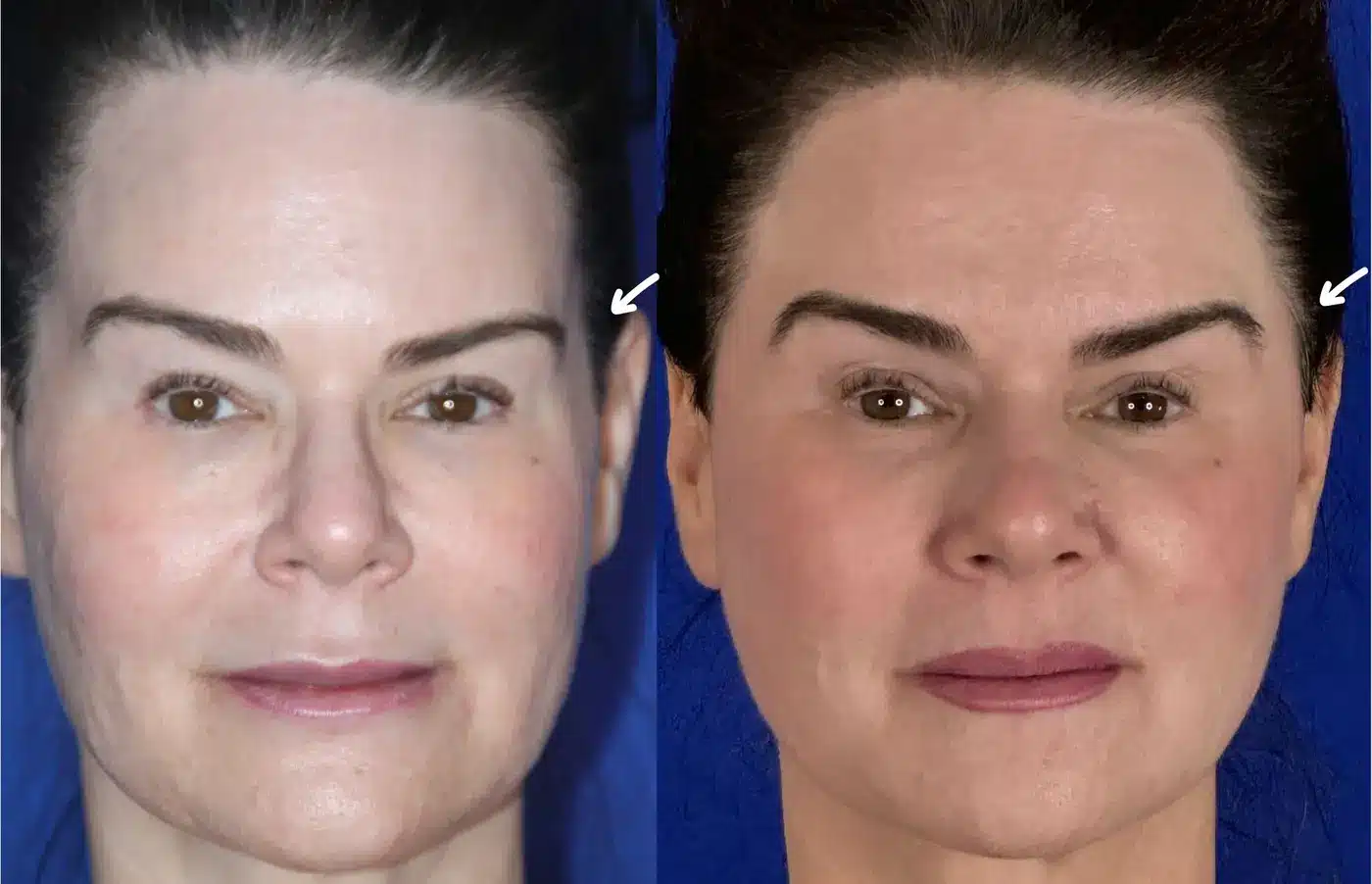
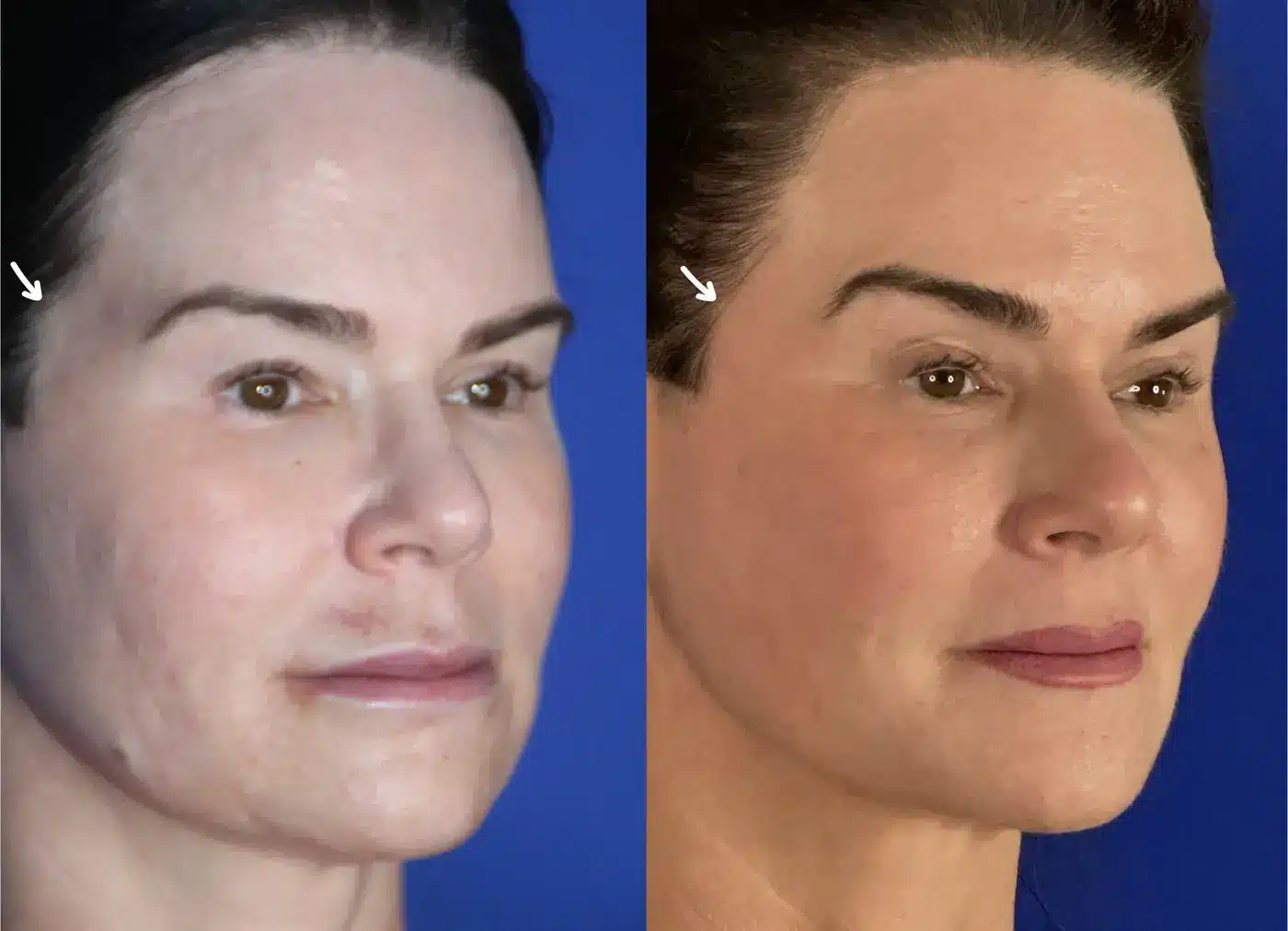
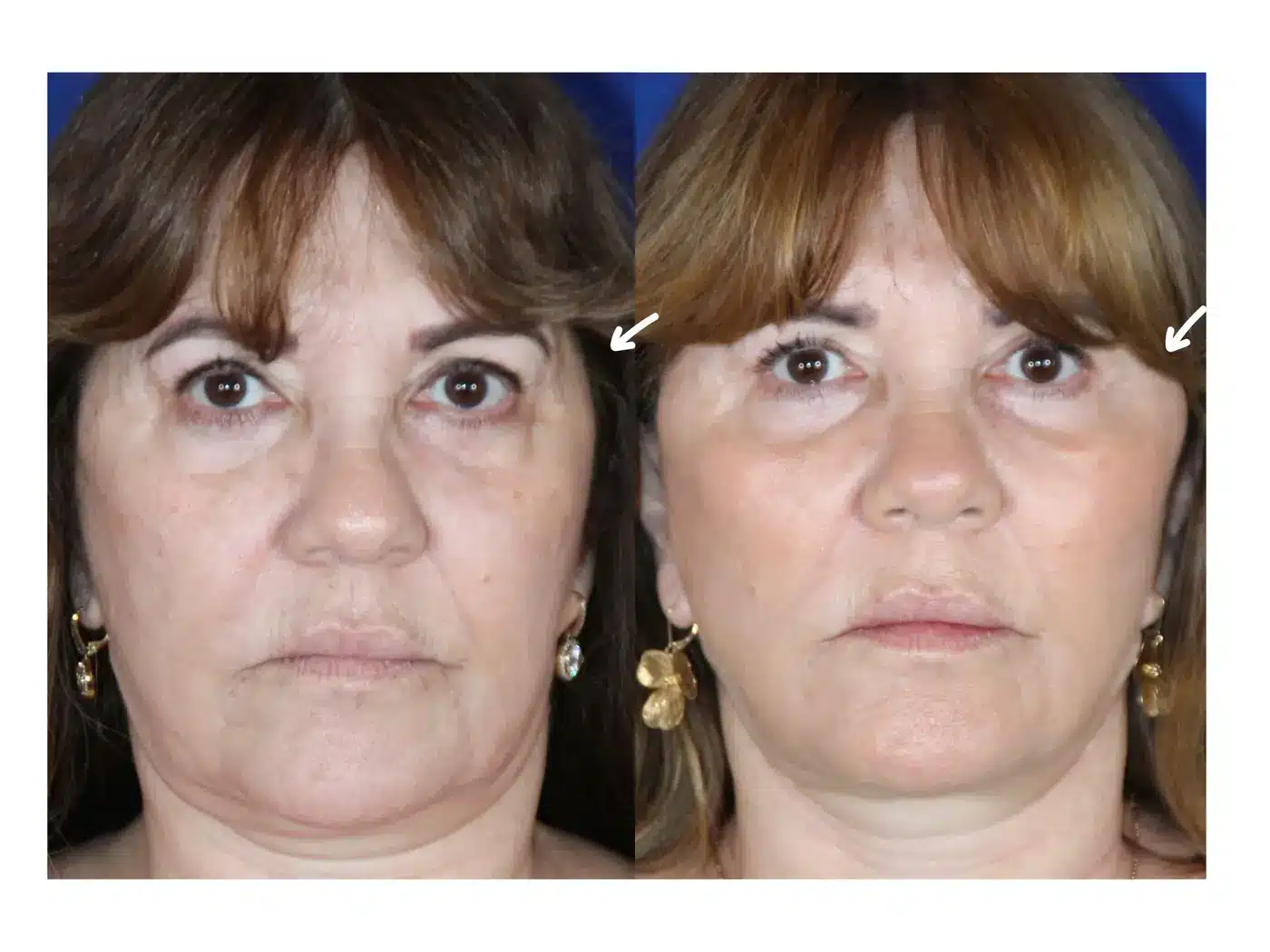
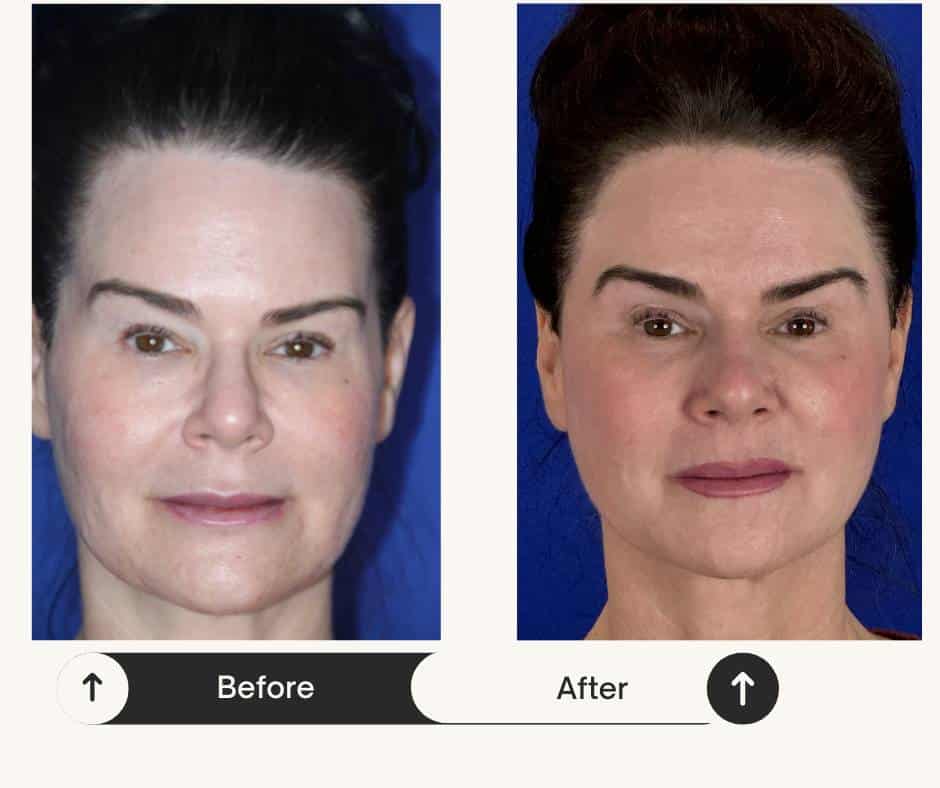
Temporal Implant Before & After Gallery
Real temporal implant results from Dr. Troell’s practice — restoring temple and midface volume. Individual results vary; actual patients who provided consent.
Where to See Results Safely
If you want to view before-and-after examples, use the practice’s official galleries where consent and
disclaimers are provided. Photos are educational; individual results vary and are not guaranteed.
- Photo Gallery hub
- Before & after face procedure gallery
- Temporal implant cases in the volume restoration gallery
You can also browse additional educational posts here:
Read more from our blog.
Next Steps
If temple hollowing is affecting how you feel in photos or in the mirror, a consultation is the best next step
to identify what’s driving the change and which option fits your anatomy and goals.
Frequently Asked Questions
Are temporal implants “permanent”?
Temporal implants are intended to be long-lasting and are designed for stable augmentation in a specific anatomical zone.
However, no surgical result can be guaranteed, and long-term outcomes depend on anatomy, healing, and goals.
Your surgeon can explain what “long-term” means in your case.
Why do some people look beyond HA filler for temples?
Many patients maintain temple volume with HA filler. Others prefer an option designed to last longer or want fewer repeat
treatments. Published medical reviews describe rare but serious vascular complications, which is why injector expertise and
a safety plan matter.
What’s the difference between standard and extended temporal implants?
Standard designs are described as matching typical temple boundaries, while extended designs are described for broader
temple/forehead-side coverage. Your surgeon recommends the design that matches your hollowing pattern and contour goals.
Is Bellafill FDA-approved for temples?
Bellafill’s FDA indications include nasolabial folds and certain atrophic, distensible acne scars on the cheek.
It does not have a temple-specific FDA indication. Your clinician can discuss what is appropriate for your anatomy and
treatment area.
Citations
-
Implantech “Temporal Shell” flyer (ultrasoft silicone; placed under fascia on top of temporalis muscle; standard vs extended description).
Source (PDF): https://www.implantech.com/wp-content/uploads/2016/03/Implantech_Temporal_Shell_Flyer_09-16.pdf -
Implantech “Temporal Shell Implant Surgical Technique” (describes implant and surgical approach/plane in technique document).
Source (PDF): https://www.implantech.com/wp-content/uploads/2016/03/Temporal_Shell_Implant_Surgical_Technique_March-2013.pdf -
Hong et al. “Adverse Effects Associated with Dermal Filler Treatments” (2024) (discusses vascular complications including ischemia, necrosis, and severe outcomes like blindness).
Source (PMC): https://pmc.ncbi.nlm.nih.gov/articles/PMC11276034/ -
Tran et al. “Vision Loss and Blindness Following Fillers” (2021) (review focused on vision loss complications and prevention/management concepts).
Source (PMC): https://pmc.ncbi.nlm.nih.gov/articles/PMC8294333/ -
FDA PMA listing for Bellafill — indications include correction of nasolabial folds and certain atrophic, distensible facial acne scars on the cheek.
Source (FDA): https://www.accessdata.fda.gov/scripts/cdrh/cfdocs/cfpma/pma.cfm?id=350569 -
Implantech product page “Temporal Shell – Extended” (describes extended design coverage).
Source (text): https://www.implantech.com/product/temporal-shell-extended/
Note: Citation URLs are shown as plain text for reference. Bracketed citations in the article link to this
on-page citation list.