
Deep Plane Facelift After Ozempic Weight Loss: A Real Patient Case Study
Published July 15, 2026 · By Dr. Robert J. Troell, Board-Certified Facial Plastic Surgeon
Dr. Robert J. Troell, MD, FACS
She Lost 80 Pounds on Ozempic. Her Face Told a Different Story.
A 65-year-old woman, recently retired, had lost almost 80 pounds on Ozempic. She was thrilled with her body — and ready for her face to catch up. This is a step-by-step look at the comprehensive facial rejuvenation protocol she chose, with a deep plane facelift as its centerpiece.
Weight-loss medications — semaglutide (Ozempic, Wegovy, Rybelsus), tirzepatide (Mounjaro, Zepbound), and dulaglutide (Trulicity) — have transformed how patients lose significant weight. But rapid fat loss doesn't stop at the waistline. The face can become hollowed, gaunt, or older-looking than before the weight loss — the phenomenon now widely known as "Ozempic face."
She was referred by another patient who'd undergone a deep plane facelift with Dr. Troell. Recently retired, she'd decided the timing was finally right to heal and convalesce with her husband by her side. What follows is her actual consultation, surgical plan, operation, recovery, and result — shared with her written consent.
Considering Facial Rejuvenation After Weight Loss?
Every plan starts with an unhurried consultation. Free consultations for patients throughout Las Vegas, Henderson, and Summerlin.
The Consultation: Twelve Concerns, In Her Own Words
The initial aesthetic consultation lets the patient voice every concern without interruption or judgment. Hers, in the order she raised them:
- The inner part of her brow sat low, making her look angry
- Excess skin on the upper eyelids
- Hooding at the outer corners of the upper eyelids
- Mild drooping of the outer brow
- A bulging fat appearance under the lower eyelids
- Volume loss just below the lower eyelids (tear troughs)
- Significant midface volume loss and drooping
- Lower-face drooping with jowl formation
- Vertical bands on the neck under the chin
- Excess skin on the lower face and neck
- A wish for a better-defined jawline
- Sun-damaged skin
Several of these are classic signatures of rapid facial volume loss after GLP-1 weight loss — the same pattern covered in our guide to body contouring after major weight loss. Each surgical plan is tailored to the individual patient's anatomy and voiced goals; nothing here was off-the-shelf.
Building the Plan: The "Ten Commandments of Beauty"
Dr. Troell maps every custom treatment plan against his "Ten Commandments of Beauty" — the aesthetic proportions and relationships that read as naturally youthful. Here's how her twelve concerns translated into a surgical plan:
- Restore midface volume and cheekbone height (lost to Ozempic-face volume loss) — submalar silastic midface implant, placed through the mouth with no visible incision
- Raise and reshape the inner brow — Bellafill browlift, using the only FDA-approved permanent dermal filler, placed along the top of the brow to lift
- Remove excess upper-eyelid skin and the inner fat bulge — upper blepharoplasty
- Camouflage the tear troughs and lower-lid fat pads — Bellafill long-term filler to the area below the lower eyelids
- Reduce the jowls — VASER ultrasound liposuction with skin tightening along the jawline
- Sharpen the neck angle — anterior neck lift (cervicoplasty) with the vertical neck muscles sutured together (platysmaplasty)
- Lift the drooping middle and lower face and remove excess skin — the deep plane facelift itself
- Smooth sun-damaged skin — DEKA CO2 laser resurfacing with topical exosomes
Just as telling is what she didn't need: no rhinoplasty, and no lip augmentation or lip lift — she was happy with both, and a good surgical plan leaves well enough alone.
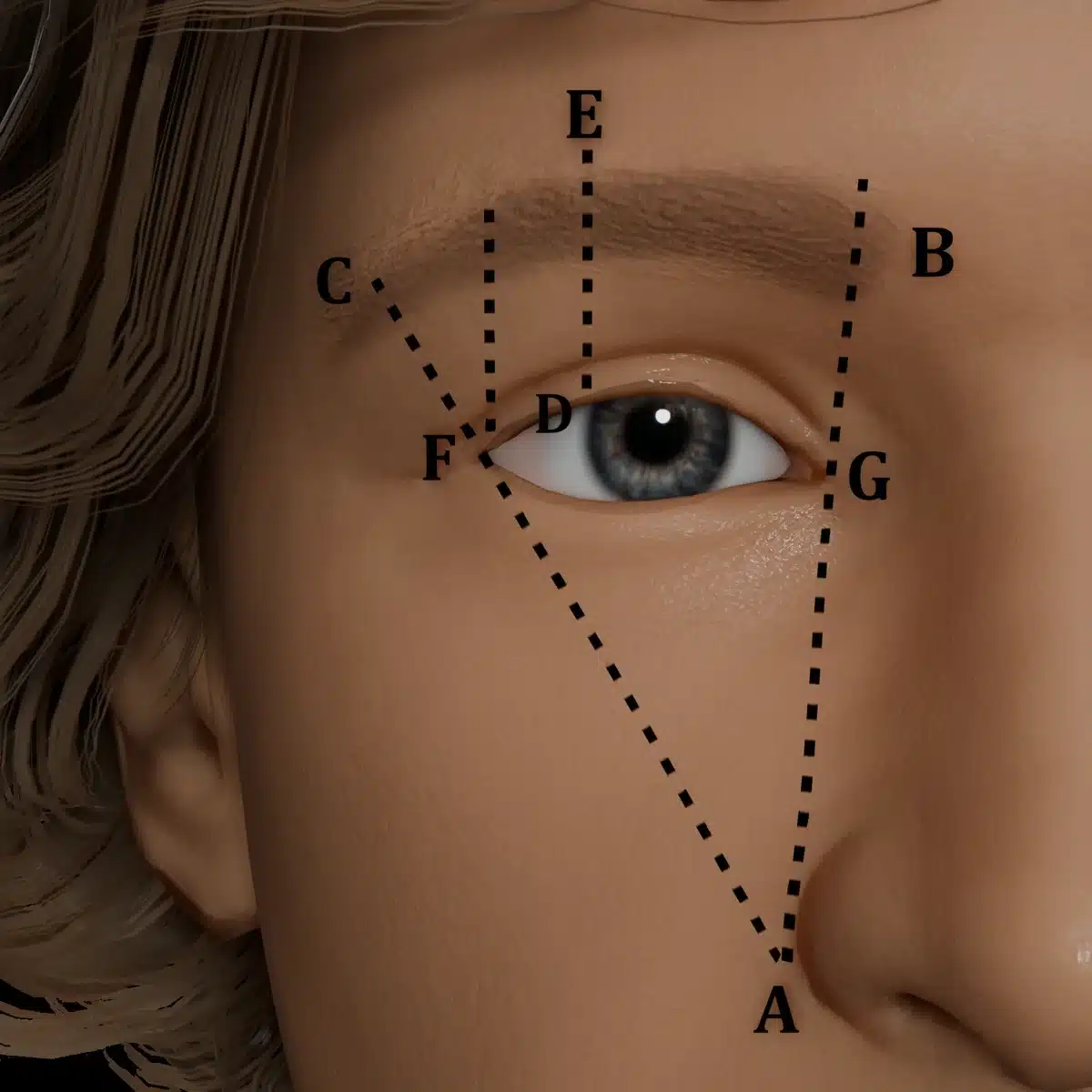
During the evaluation, digital photo morphing let her preview the estimated result of adding midface volume before committing to anything. For facial volume deficiency generally, the options include hyaluronic acid fillers, Bellafill, stem cell–enriched fat grafting, or silastic implants — her plan used the implant-plus-Bellafill combination for its permanence. If you're weighing these trade-offs yourself, our guide to facelift vs. skin tightening vs. fat grafting walks through how surgery is matched to how a face ages.
Seven Procedures, One Session — Fully Awake
Safety and comfort came first: she chose conscious sedation — oral and IV sedation in the office operating suite, no general anesthesia. Most surgeons perform a facelift of this scope only under general anesthesia; Dr. Troell's experience teaching these techniques to surgeons internationally allows patients to choose the awake, sedated method — or general anesthesia if they prefer.
Once she was relaxed and comfortable, every anatomic landmark was marked: the jawline, nerve locations, the amount of upper-eyelid skin to remove, filler placement sites, the midface implant position, facelift incision lines, the under-chin incision for the neck lift, and the deep plane entry line.
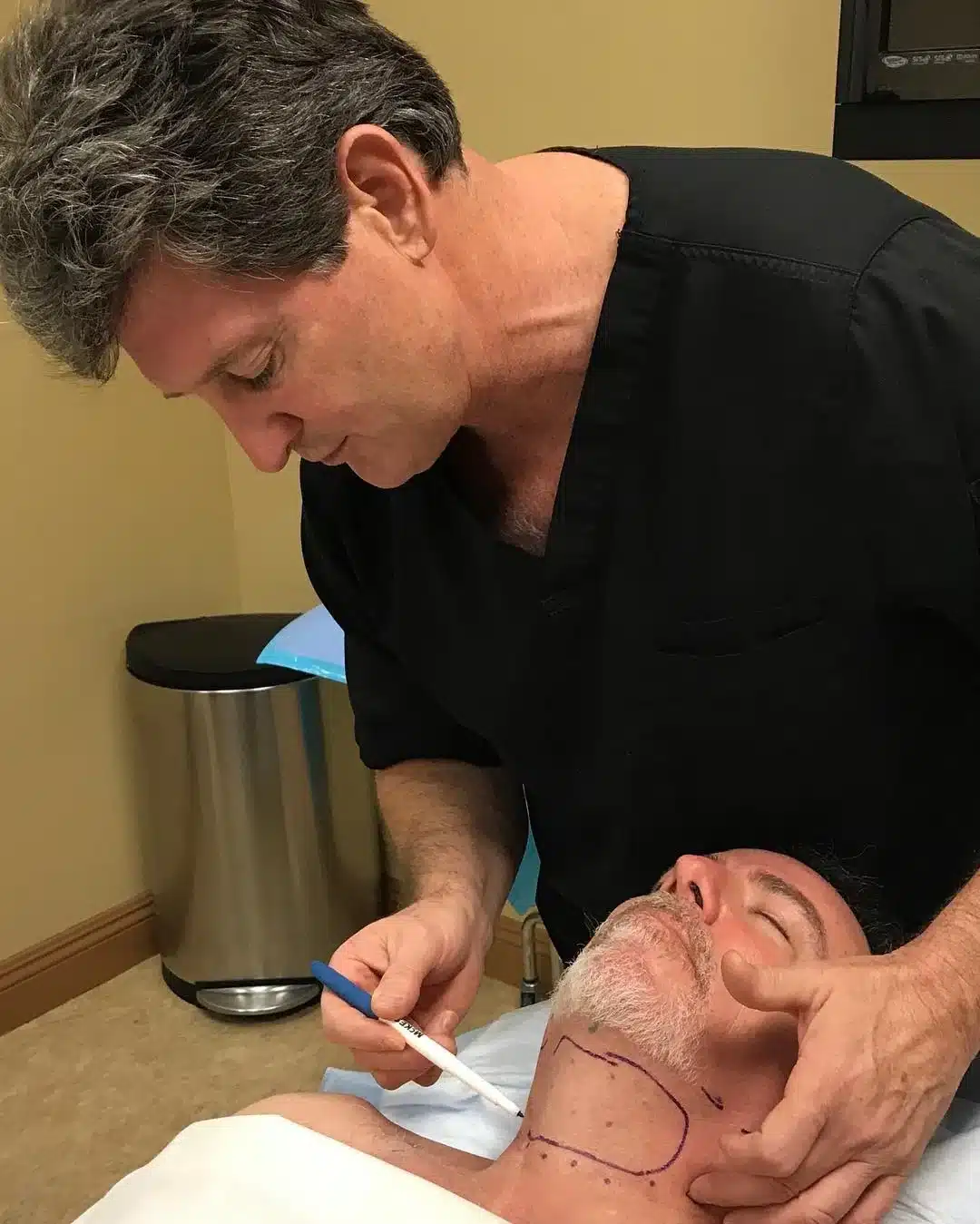
The protocol, in standard order
- Bellafill browlift to the inner, drooping portion of the brow
- Bellafill to the tear troughs below the lower eyelids
- Upper blepharoplasty (cosmetic eyelid surgery)
- Anterior neck lift, releasing the deep retaining ligaments along the jaw
- VASER ultrasound liposuction and skin tightening of the jowls and lower face
- Deep plane facelift — one side, then the other
- Full-face and neck CO2 laser resurfacing with topical exosomes
Her Recovery, Week by Week
Recovery was more comfortable than she expected — by design. Bruising was minimized with an initial compression dressing (removed the next morning), IV tranexamic acid at the start of the case, strict avoidance of aspirin, fish oil, and NSAIDs beforehand, and cold compresses (the classic frozen-corn-in-a-Ziploc trick) for the first three days.
| Recovery Milestone | What She Experienced | How Long It Lasted |
|---|---|---|
| Discomfort | Moderate the first night (5–6 out of 10), then mild (2–3) for several days | About 5 days |
| Bruising | Mild — mostly behind the ears and upper neck | Resolved in 10–14 days |
| Swelling | Peaked the morning of day 3 — moderate in the midface, mild at the upper eyelids | 80% gone by day 10 |
| Return to work | Face sutures removed at one week; comfortable recovery | Back within 7–14 days |
A lighter dressing replaced the surgical one for two days — after which she could shower and wash her hair — followed by a soft Velcro garment for five more days. One expectation worth setting honestly: the final cosmetic result of an upper blepharoplasty takes about 5 months to fully settle, and a facelift about 9 months.
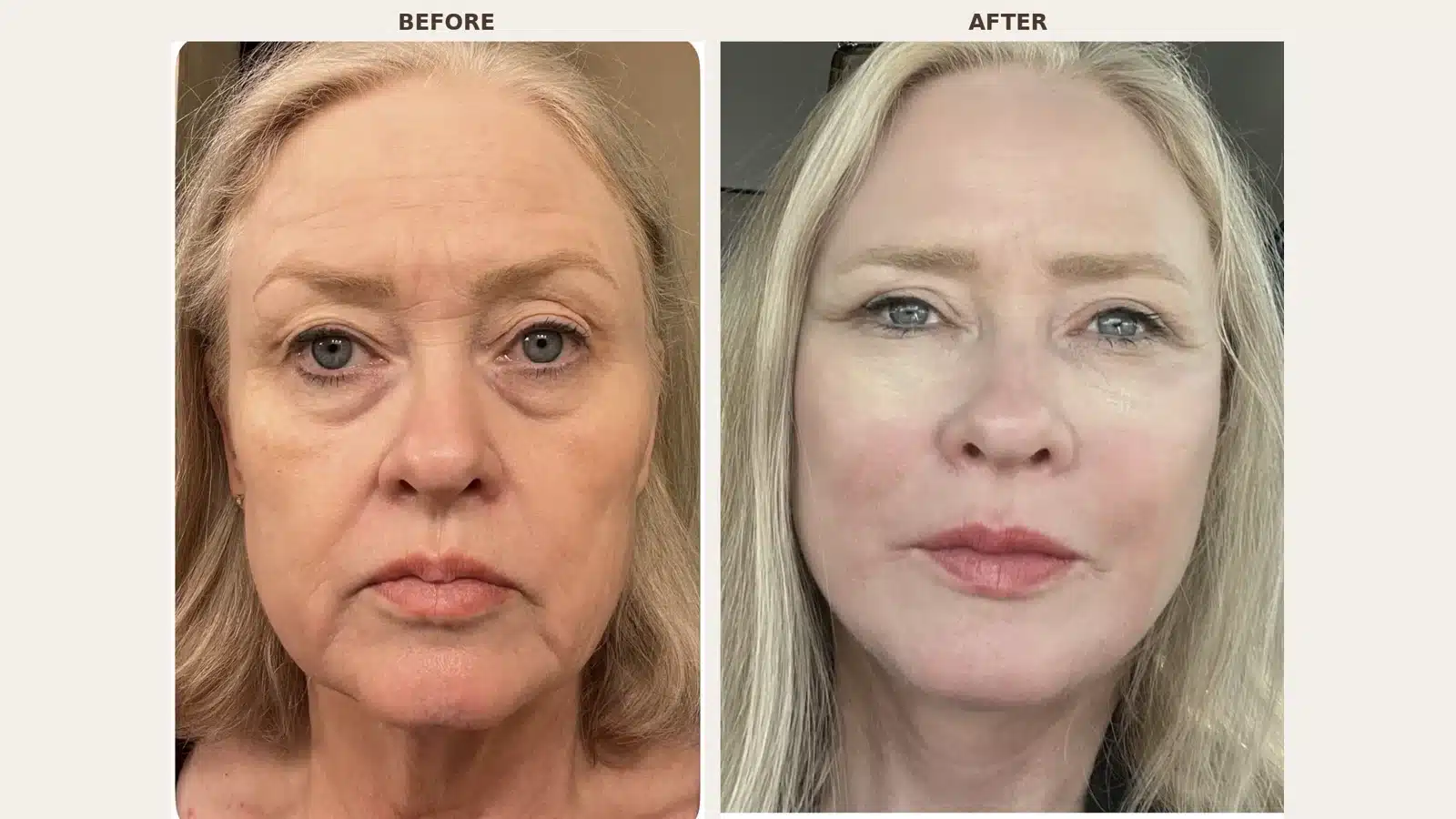
Before & After: What the Protocol Achieved
Her result reflects several of the "Ten Commandments" restored at once: high cheekbones, a clean jawline, an acute neck angle, and a naturally feminine brow and eyelid shape — without a single feature looking "done."
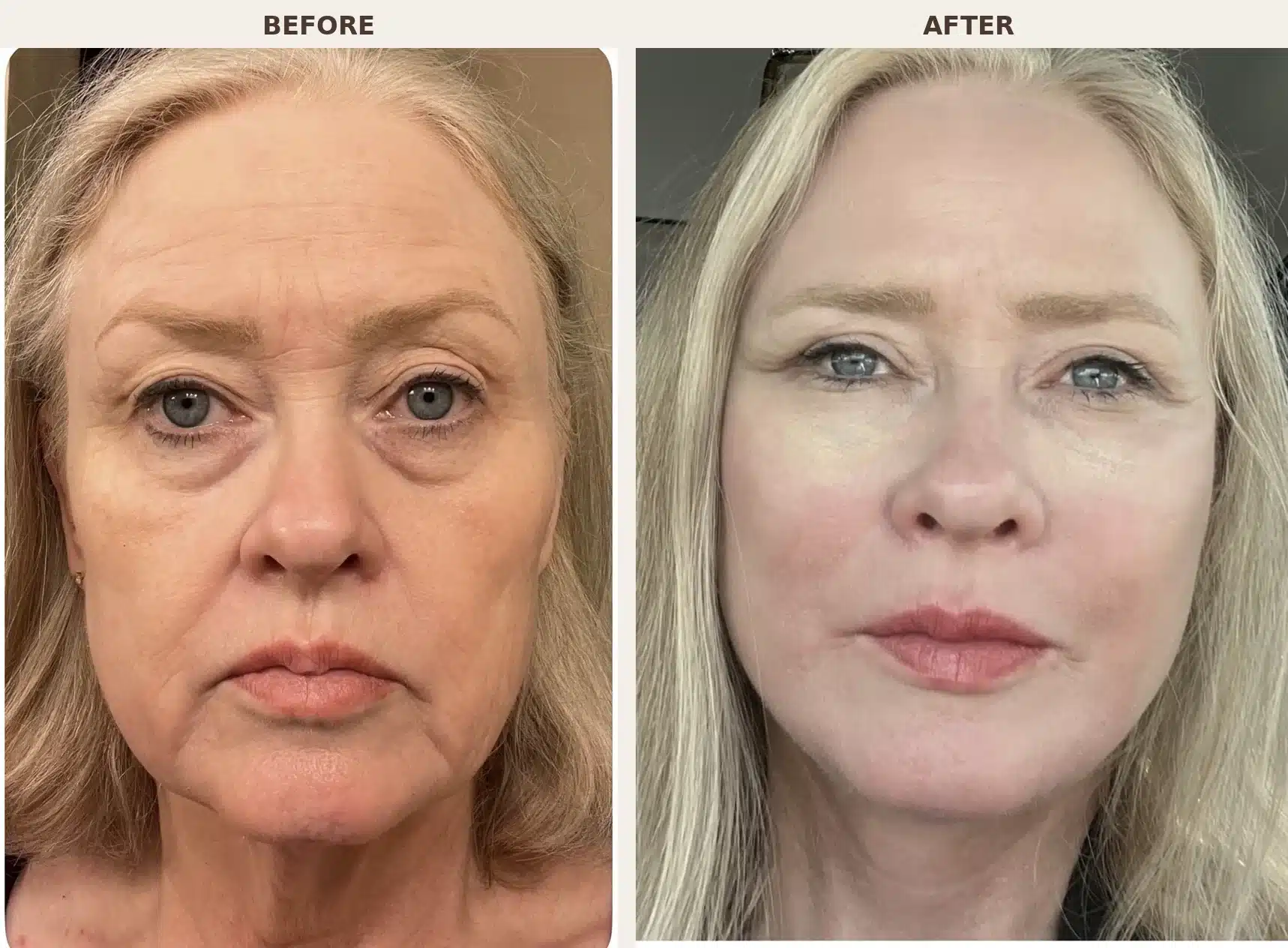
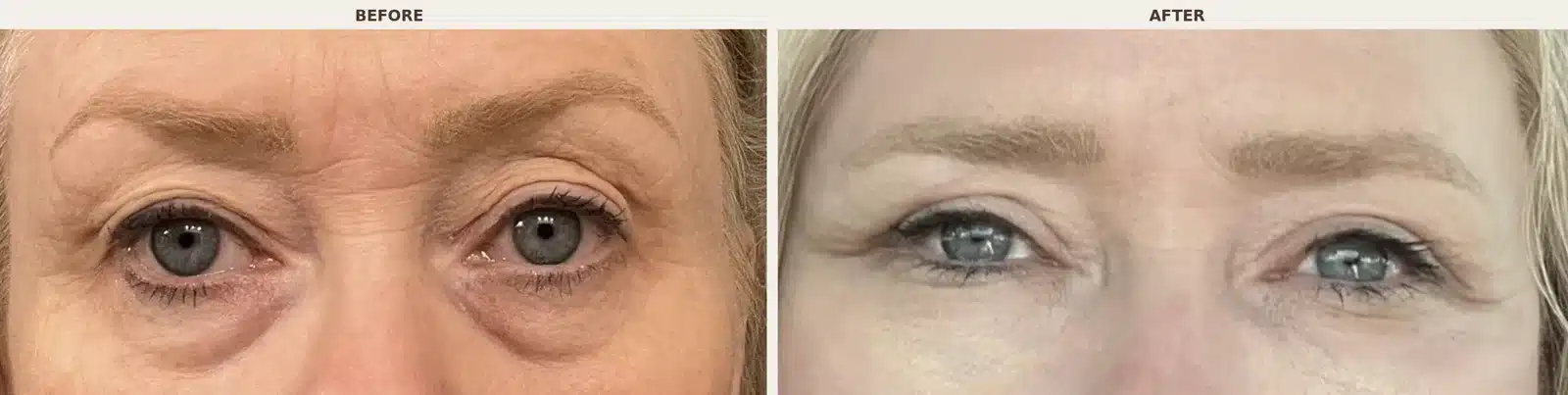
Individual results vary — that isn't a legal footnote, it's the entire point of a custom protocol. Her plan was built for her anatomy and her twelve concerns; yours would be built for yours.
Curious What a Custom Protocol Would Look Like for You?
Bring your concerns in your own words — the plan starts from what you see, not from a menu. Free consultations for Las Vegas area patients.
Risks, Limitations, and Who This Isn’t For
A case study shows you one patient’s outcome — it should never read as a promise. Every facelift, deep plane or otherwise, is real surgery with real risks, and the informed-consent conversation covers them long before the operating room. The ones Dr. Troell reviews with every facelift patient include:
- Bleeding and hematoma — a collection of blood under the skin that can require prompt drainage
- Infection — uncommon with proper sterile technique and aftercare, but never zero
- Nerve changes — temporary numbness or weakness along facial nerve pathways; persistent changes are rare but possible
- Scarring and hairline changes — incision lines are designed to hide in natural creases, but individual healing varies
- Asymmetry, prolonged swelling, or the need for a revision procedure
Performing the protocol fully awake under sedation removes the risks specific to general anesthesia, but sedation is still anesthesia — it demands the same monitoring, candidacy screening, and respect.
There are also limits to what one documented case can tell you. This is a single patient with her own anatomy, healing biology, and goals; a different face starts from a different place and ends at a different place. And no facelift stops aging — it resets the clock, then the clock keeps running.
Finally, this surgery isn’t for everyone. Nicotine users face significantly higher wound-healing complications and are asked to stop well before surgery. Patients still actively losing weight are better served waiting until their weight stabilizes — operating mid-journey means revising the result later. And patients whose medical conditions aren’t well controlled, or whose expectations no honest surgeon could meet, are told so at the consultation — that candor is part of the job.
Frequently Asked Questions
Is a deep plane facelift the right fix for Ozempic face?
Often it's part of the answer, but rarely all of it. Rapid weight loss causes both volume loss and skin excess — a facelift repositions and removes loose tissue, while implants, Bellafill, or fat grafting restore the lost volume. This patient's protocol combined both, which is typical for significant GLP-1 weight loss.
Can a facelift really be done without general anesthesia?
Yes. Dr. Troell performs deep plane facelifts — including multi-procedure protocols like this one — under conscious sedation (oral and IV medication) in an office operating suite. Patients who prefer general anesthesia can choose it, but most are more comfortable avoiding it when given the option.
Why combine so many procedures in one session?
One session means one recovery, one course of sedation, and procedures that reinforce each other's results — the midface implant supports the facelift's lift; the laser finishes what the lift can't reach. Combining is only appropriate when the patient's health and the surgical plan support it, which is assessed at consultation.
How long do deep plane facelift results last?
A deep plane facelift repositions the deeper tissue layer rather than just pulling skin, so a deep plane result typically holds for about 10 to 15 years, compared with roughly 5 to 10 years for a traditional SMAS facelift — you'll continue to age, but from a dramatically better starting point. The permanent elements of her protocol (the midface implant and Bellafill) don't wear off.
Do you take insurance for facelift surgery?
Troell Cosmetic Surgery is a self-pay specialty surgical practice and does not bill insurance. That model is deliberate: it means no insurance-imposed restrictions on technique, surgical time, anesthesia choice, or technology. Consultations are free, pricing is transparent, and financing options are available.
About Dr. Robert J. Troell, MD, FACS
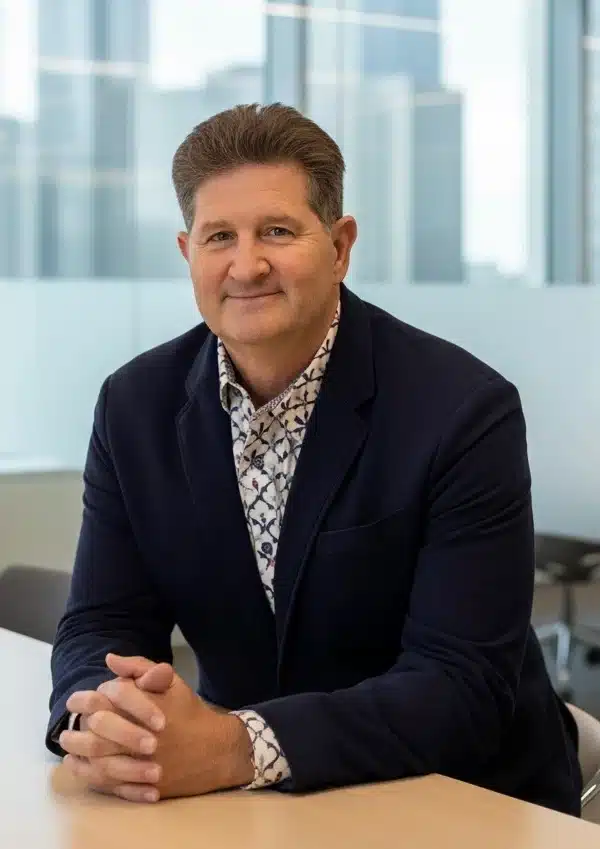
Dr. Troell is board-certified in facial plastic & reconstructive surgery and otolaryngology–head & neck surgery, and is a Diplomate of the American Board of Cosmetic Surgery. He completed residency and fellowship training at Stanford University and served there as a Clinical Professor for approximately seven years. He has performed more than 800 facelifts, authored 58+ peer-reviewed publications — including published research on peri-orbital rejuvenation, midface volume replacement, and the Bellafill browlift used in this case — and wrote the "My Theory of Facelift Surgery" chapter in Elsevier's The Art and Science of Facelift Surgery. He serves Las Vegas, Henderson, and Summerlin from Troell Cosmetic Surgery.
References
- Troell RJ. Peri-Orbital Aesthetic Rejuvenation: Surgical Protocol & Clinical Outcomes. Am J Cosmet Surg. 2017;34(2):81–91. doi:10.1177/0748806817700534
- Troell RJ, Javaheri S. Combining Third-Generation Ultrasound Liposuction With Helium-Based Plasma Technology Skin Tightening in the Face and Neck. Am J Cosmet Surg. 2025. doi:10.1177/07488068251330030
- Troell RJ. My Theory of Facelift Surgery. In: Niamtu J, ed. The Art and Science of Facelift Surgery. 2nd ed. Elsevier; 2024.
- Troell RJ. Permanent Composite Midface Volume Replacement: Artefill, Silastic Implants, and Stem Cell Enriched Fat Grafting. Am J Cosmet Surg. 2026. doi:10.1177/07488068261440417
- Troell RJ, Berrios-Rolon AS. Bellafill Brow Lift: Nonsurgical, Immediate, and Long-Lasting. Am J Cosmet Surg. 2026. doi:10.1177/07488068261460675
Dr. Troell's study of carbon dioxide laser resurfacing protocols is currently under peer review.
Photos shown are an actual patient of Dr. Troell who has given written consent for their use. Individual results vary. This article is for general educational purposes only and does not constitute medical advice. Please schedule a consultation for an evaluation specific to your anatomy and goals. Contact the office: (702) 242-6488.

Begin Your Journey with Dr. Troell
Schedule a complimentary consultation with Dr. Troell to discuss your goals, explore your options, and receive an honest, expert assessment. No obligation, no pressure.
Mon–Fri, 8:30 AM – 5:00 PM