

Facelift, Skin Tightening, or Fat Grafting? Matching the Surgery to How Your Face Ages
Published June 14, 2026 · By Dr. Robert J. Troell, Board-Certified Facial Plastic Surgeon
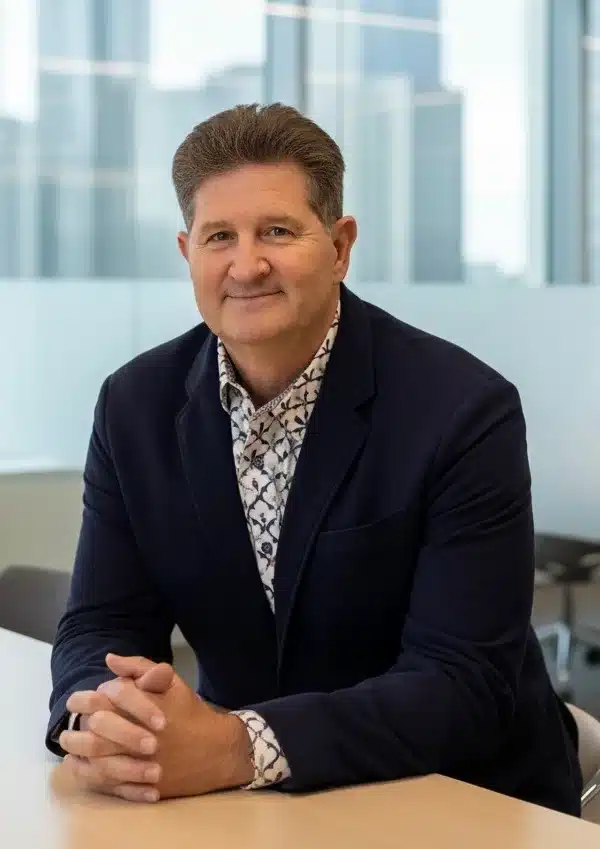
Dr. Robert J. Troell, MD, FACS
The short answer: A face ages in three independent ways — tissue descent (sagging that creates jowls and a heavy neck), skin laxity (crepey, thinning surface quality), and volume loss (hollow temples, flat cheeks, a gaunt look). Each has its own fix: a deep plane facelift repositions descended tissue, skin tightening firms lax skin and stimulates collagen, and facial fat grafting replaces lost volume. Most faces show some of all three, so the best plan usually combines them. Below: how to tell which kind of aging you have, and which procedure matches each.
One of the most common reasons a cosmetic result looks “off” is a mismatch between the problem and the procedure. Someone who has lost volume is given a facelift that pulls a deflated face tighter. Someone whose tissue has truly descended is given filler that adds weight to an already-heavy jawline. The skin gets blamed when the real issue is structure underneath — or vice versa.
The fix starts with a clear idea of how your face is aging. This article breaks facial aging into its three underlying mechanisms, explains the procedure matched to each, and shows how Dr. Robert J. Troell sorts out the right combination at our Las Vegas practice.
The Three Independent Ways a Face Ages
It is tempting to think of facial aging as a single thing — “getting older” — that one procedure can undo. In reality, three separate processes are happening at once, often at different speeds in the same person:
- 1. Descent (sagging). The deeper layers of the face — muscle, the SMAS layer, and the fat compartments — loosen and slide downward with gravity and time. This is what creates jowls along the jawline, deep folds beside the mouth, and a loose, banded neck. No amount of skin care or surface treatment lifts tissue that has structurally fallen.
- 2. Skin laxity and quality. Separately, the skin itself loses collagen and elastin. It becomes thinner, looser, and more crepey, with fine lines and a duller surface. Skin can be lax even when the deeper structure is still reasonably supported — and tight, healthy structure can sit under poor-quality skin.
- 3. Volume loss (deflation). The fat pads that give a young face its soft fullness shrink and migrate. Temples hollow, cheeks flatten, the under-eye becomes shadowed, and the face can look gaunt or tired. Volume loss is the mechanism most often mistaken for “sagging,” because a deflated face also looks fallen — but the fix is the opposite of pulling tighter.
The reason this matters is simple: each mechanism has a different solution, and the wrong solution can make the face look worse. Pulling a deflated face tight makes it look more skeletal. Adding volume to a heavy, descended face makes it look heavier. Resurfacing the skin does nothing for tissue that has fallen. Matching the procedure to the mechanism is the entire game.
Sagging Tissue → A Facelift
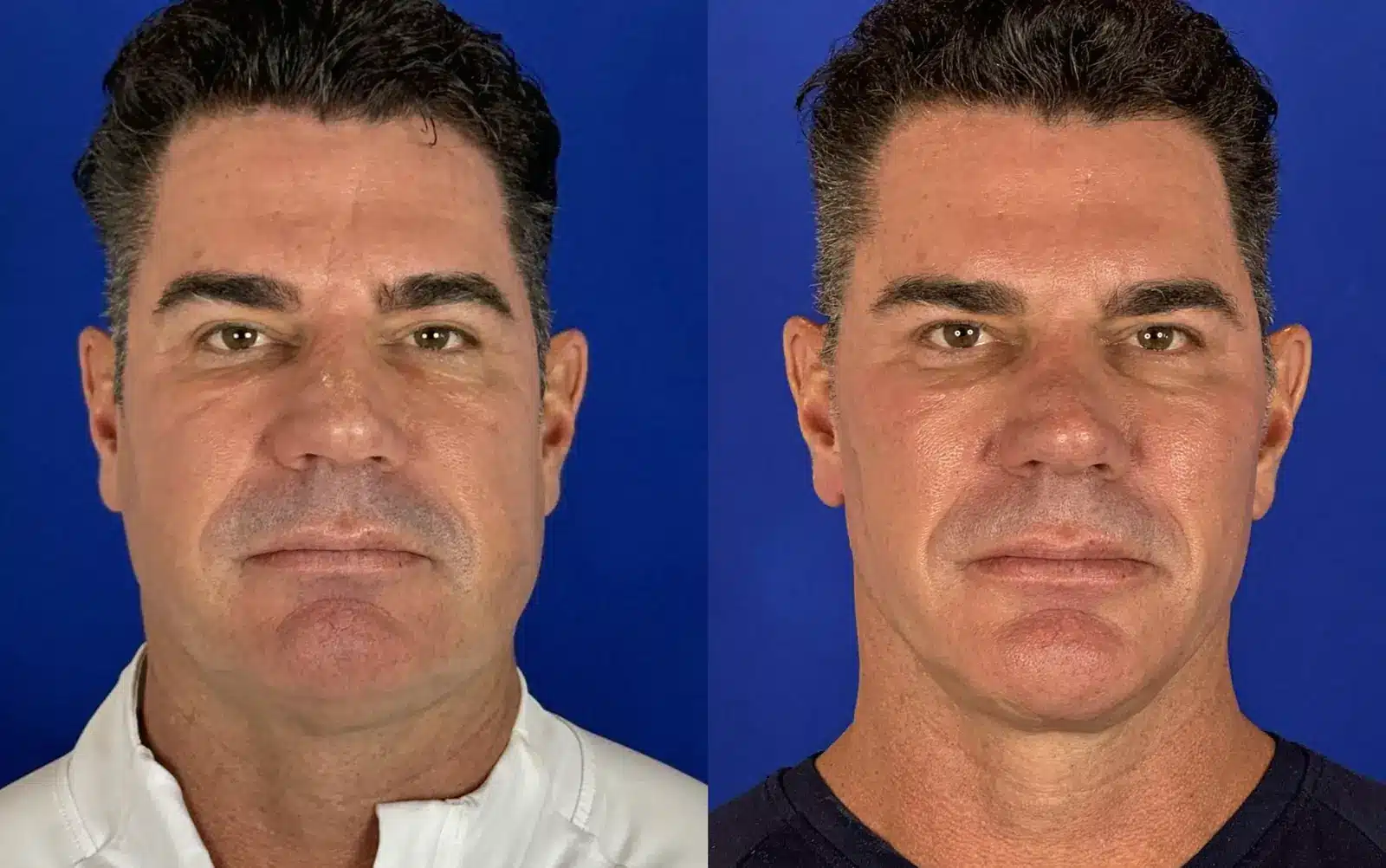
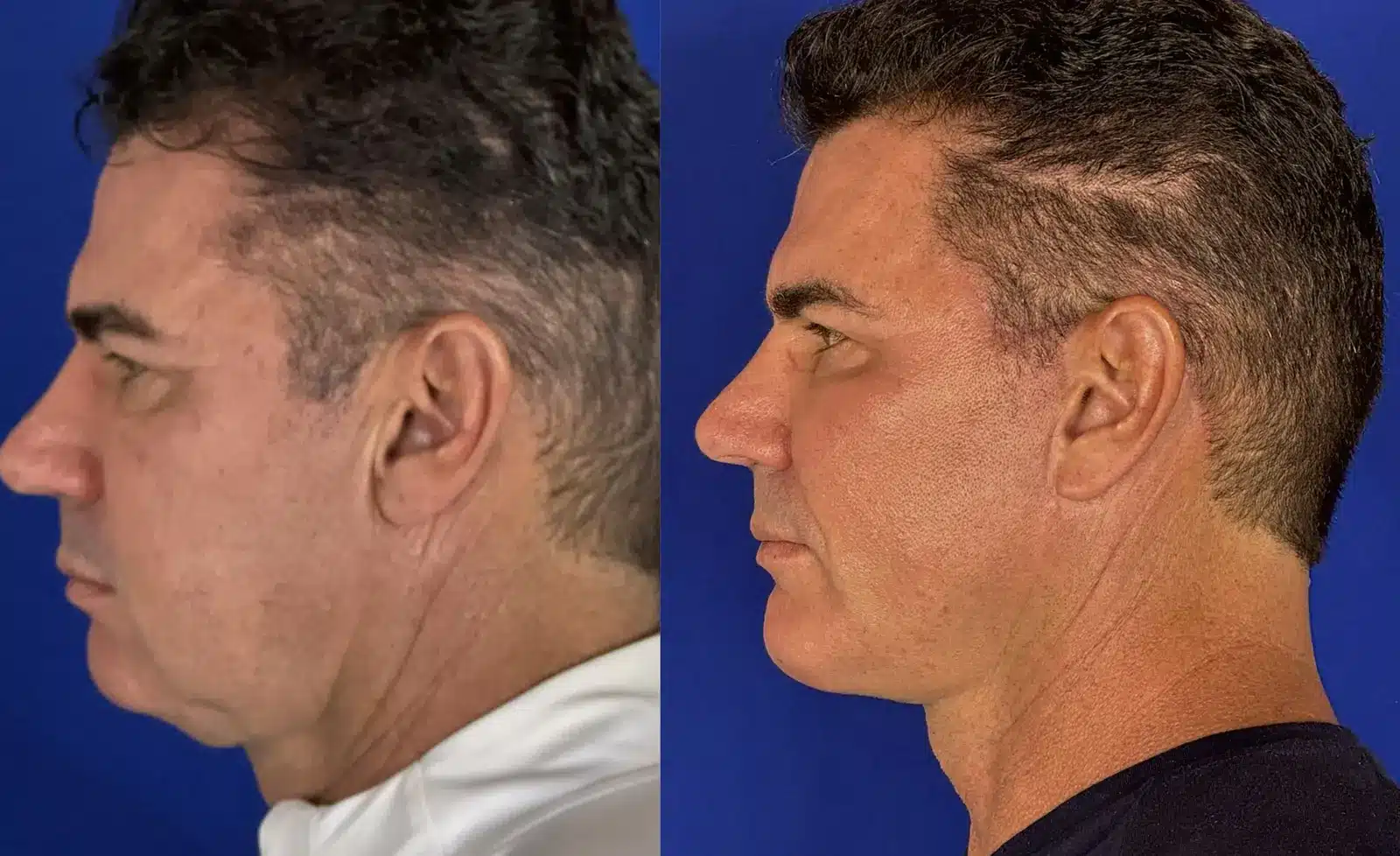
When the problem is genuine descent — jowls hanging below the jawline, deep nasolabial and marionette folds, a loose neck with vertical bands — the only durable answer is to reposition the deeper tissue surgically. That is what a facelift in Las Vegas does, and it is the one mechanism no non-surgical treatment can truly correct.
Modern facelifting is not about pulling skin. A skin-only lift creates the tight, “windblown” look people fear, and it relapses quickly because skin alone cannot hold the weight of the face. The current standard repositions the structural layer beneath the skin — the SMAS and the deep fat compartments — so the skin is re-draped over a lifted foundation with no tension.
Why the deep plane technique matters. In a deep plane facelift, the surgeon releases and lifts the SMAS layer and the underlying ligaments as one unit, rather than tightening skin over a stitched-down layer. Because the lift happens at the structural level, the result moves naturally, lasts longer, and avoids the over-pulled appearance — which is exactly what today’s patients mean when they ask for a result that looks like them, not like surgery.
Descent below the jawline and in the neck is often addressed at the same time with a neck lift, since the two regions age together. The signature of true descent — and the cue that a facelift, not a surface treatment, is the right tool — is that gently lifting the cheek and jowl tissue upward and back in the mirror restores a younger contour. If lifting helps, the problem is descent.
Lax, Crepey Skin → Skin Tightening
Skin laxity is a different problem from descent, and it responds to a different tool. Here the deeper structure may be reasonably supported, but the skin envelope itself has loosened — thin, crepey skin on the lower face and neck, fine surface wrinkling, and a general loss of the firm “snap” that young skin has.
Energy-based skin tightening addresses this layer by heating the deep skin in a controlled way, which contracts existing collagen immediately and stimulates the body to build new collagen over the following months. Technologies such as helium-plasma (Renuvion) skin tightening can be used through tiny incisions to firm the skin of the lower face and neck — either on its own for the right candidate, or alongside surgery.
The honest limit. Skin tightening firms and improves skin quality, but it does not lift tissue that has structurally descended. A patient with heavy jowls who is hoping a tightening device will substitute for a facelift is usually disappointed. Tightening shines when skin laxity is the main issue, or as the finishing layer that improves skin quality after the deeper structure has been repositioned.
Lost Volume → Facial Fat Grafting
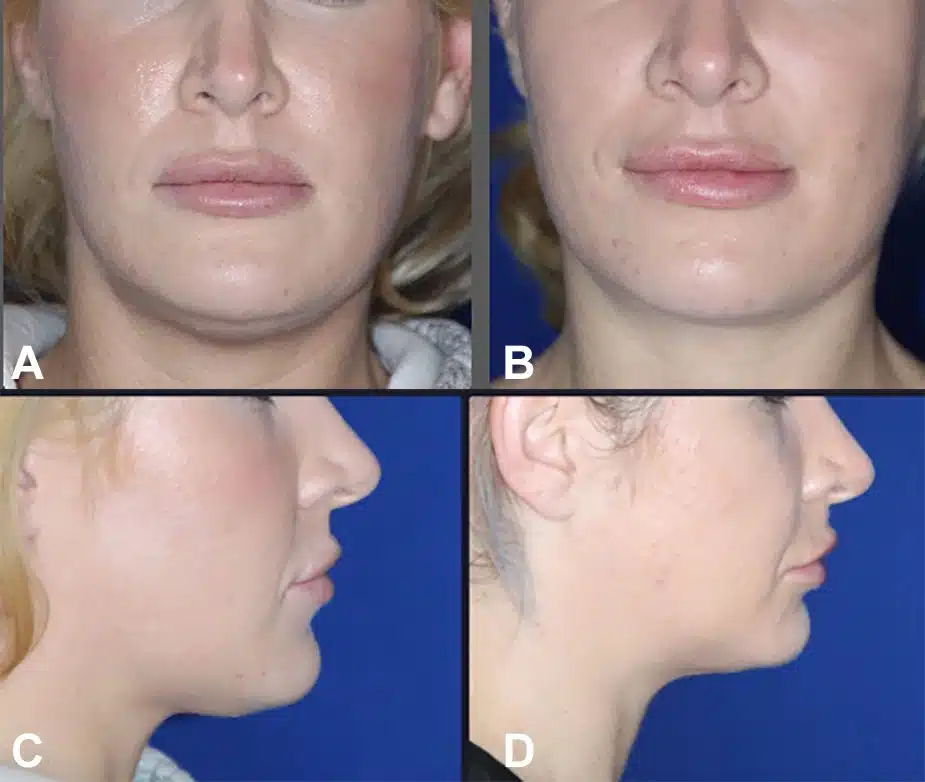
The third mechanism is deflation. The fat pads that round out a young face shrink with time, leaving hollow temples, flat cheeks, shadowed under-eyes, and a tired, drawn appearance. The solution is not to pull — it is to replace the lost volume. The most natural and durable way to do that is with facial fat grafting, which transfers a patient’s own purified fat from elsewhere on the body back into the face.
Fat has an advantage no synthetic filler can match. Because it is living tissue rich in the patient’s own adipose-derived stem cells, transferred fat does more than add volume — it can improve the quality and texture of the overlying skin over time, a regenerative benefit that fillers do not provide. Dr. Troell’s long clinical experience with stem-cell-enriched fat grafting is documented in his fifteen-year case series (Troell RJ, J Clin Med 2025;14(16):5607. DOI 10.3390/jcm14165607).
Why technique decides the result. The old knock on fat grafting was unpredictable survival — older methods retained only 30–40% of the transferred fat. Dr. Troell reports that with careful, low-trauma harvesting, gentle processing, and stem-cell and PRP enrichment, a much higher share of the grafted fat survives as a permanent result. The fat that takes in the first months behaves like the rest of the body’s fat from then on, which is why a stable weight helps preserve the outcome.
Specific hollows have specific solutions within this category. For the temples and midface, see our companion articles on restoring hollow temples and long-term midface volume options. The cue for volume loss is the reverse of the descent test: if lifting the tissue in the mirror does not help — but pressing fullness back into a hollow cheek or temple does — the problem is deflation, and the answer is to add volume, not to lift.
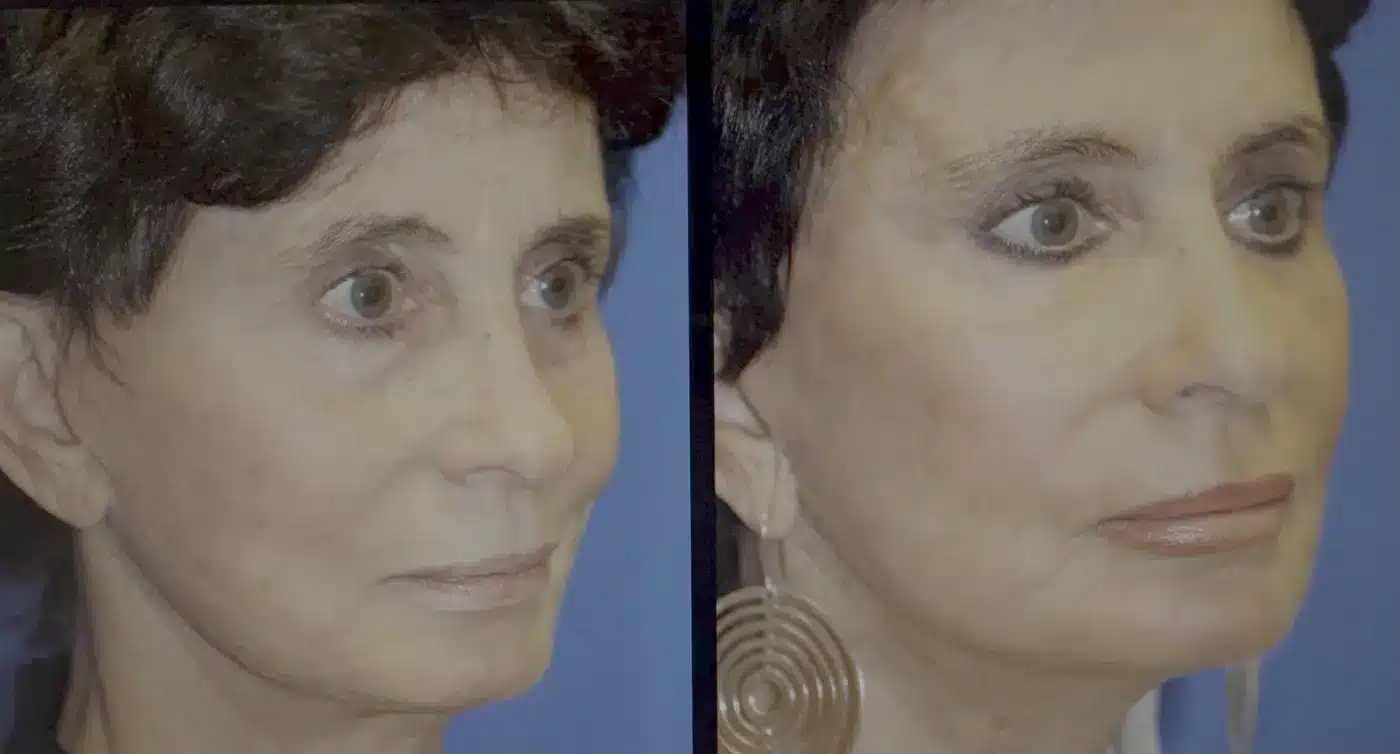
Why Filler Alone Is Not a Facelift
Dermal filler is an excellent tool for early, targeted volume loss, and it is quick and non-surgical. But filler addresses only one of the three mechanisms — volume — and it cannot lift descended tissue or firm lax skin. The trouble starts when filler is used to chase a problem it cannot solve. Dr. Troell walks through when fat transfer can take over from repeated filler in this dedicated fat-vs-filler volume guide.
When someone with real descent keeps adding filler to “fill the sag,” the face grows progressively heavier and wider — the over-filled, pillowy look that the current preference for natural, undetectable results firmly rejects. The face ends up looking different rather than younger. A board-certified facial plastic surgeon’s job is partly to say when filler is the right answer and when it is quietly making the underlying problem worse.
How to Tell Which Mechanism You Have
None of this replaces an in-person evaluation, but a few simple checks in front of a mirror can tell you which mechanism is driving most of what bothers you:
- The lift test (for descent). Place a finger on the jowl or outer cheek and gently lift the tissue up and back. If that restores a sharper jawline and a younger contour, descent is a major factor — a facelift is in the conversation.
- The pinch test (for skin laxity). Gently pinch the skin of the lower cheek or neck and release. If it is thin and crepey and settles back slowly, skin quality is a significant part of the picture — skin tightening is relevant.
- The fill test (for volume loss). Look at the temples, the front of the cheeks, and under the eyes. If these areas read as hollow or shadowed, and gently pressing fullness back into them looks better than lifting, volume loss is leading — fat grafting is the matched tool.
Most people will find that more than one test is positive. That is normal — and it is why the best plans are rarely a single procedure.
Most Faces Need a Combination
Because the three mechanisms progress together, the most natural-looking rejuvenation usually addresses more than one at a time. A common, elegant plan repositions descended tissue with a deep plane facelift, restores lost fullness in the same setting with fat grafting, and finishes the skin envelope with tightening — each tool doing the one job it is best at.
Combining procedures in a single surgical setting is often more efficient and gives a more harmonious result than treating each problem piecemeal over years. It also means one recovery instead of several. The right combination — and the order in which things are done — depends on your anatomy, your goals, and which mechanism is dominant, which is exactly what the consultation is for.
Are You a Candidate?
Good candidates are healthy non-smokers (or willing to stop well before surgery) with realistic expectations who want to look like a refreshed version of themselves rather than a different person. Beyond that, the right procedure tends to track with the dominant mechanism:
- Mostly volume loss, skin still firm — often a fat-grafting candidate, sometimes with filler for fine-tuning, and a facelift may not be needed yet.
- Mostly skin laxity, structure still supported — a candidate for skin tightening, on its own or as a finishing step.
- Clear descent with jowls and neck laxity — a facelift and/or neck lift candidate, usually with volume restoration to avoid a pulled, deflated look.
Age is a guide, not a rule. Some patients in their forties benefit from early volume work; others are better served waiting until descent is established before a lift, so the result lasts. An honest evaluation will sometimes recommend doing less than a patient expected — or waiting — which is itself a sign of sound judgment.
Recovery & Longevity at a Glance
The three tools differ in downtime and in how long results last — another reason the right match matters.
- Deep plane facelift — the most involved recovery (roughly one to two weeks of social downtime, with swelling and bruising resolving over several weeks), and the longest-lasting result, typically many years.
- Skin tightening — less downtime than a facelift; collagen improvement builds gradually over months. Durable, though skin continues to age, so results are not permanent.
- Facial fat grafting — moderate swelling for a few weeks while the graft settles; the fat that survives the first few months is a long-term, often permanent result.
When procedures are combined, the recovery is generally governed by the most involved step rather than added together — one of the practical advantages of treating multiple mechanisms in a single setting.
Why Dr. Troell for Facial Rejuvenation
Matching the procedure to the mechanism only works if your surgeon performs all three at a high level — otherwise every face tends to get the one operation that surgeon happens to favor. Dr. Robert J. Troell is a board-certified facial plastic surgeon (American Board of Facial Plastic & Reconstructive Surgery) and a Diplomate of the American Board of Cosmetic Surgery, trained at the University of South Florida and at Stanford University — where he later served as a Clinical Professor — and brings three decades of experience across facelifting, energy-based skin tightening, and fat grafting.
Depth in the volume layer. Fat grafting depends as much on how the fat is harvested and processed as on how it is placed. Dr. Troell’s published fifteen-year experience with autologous stem-cell-enriched fat grafting (J Clin Med 2025;14(16):5607), combined with his liposuction expertise, means the harvesting, processing, and enrichment that determine graft survival are handled by a surgeon who has studied the problem formally — not delegated as an afterthought. Surgery is performed at an AAAASF-accredited surgical center.
Facial Aging: Common Questions
Do I need a facelift or just filler?
It depends on whether your main problem is descent or volume loss. If gently lifting the cheek and jowl in the mirror restores a younger contour, your tissue has descended and a facelift is the matched tool — filler will only add weight. If the issue is hollow temples or flat cheeks and lifting does not help, volume restoration (filler or fat grafting) is the right answer. Many faces have both, which is why the two are often combined rather than treated as either/or.
Can skin tightening replace a facelift?
Only when skin laxity is the main issue and the deeper structure has not significantly descended. Energy-based skin tightening firms the skin and stimulates collagen, but it cannot lift tissue that has structurally fallen. For established jowls and a loose neck, a facelift is the durable solution; skin tightening then works well as a finishing layer to improve skin quality.
What is the difference between a facelift and fat grafting?
They solve opposite problems. A facelift repositions sagging, descended tissue — it lifts. Fat grafting replaces lost volume — it fills. A face that is both fallen and deflated needs both: lifting alone on a deflated face can look skeletal, and filling alone on a descended face looks heavy. Used together, the lift restores contour while the graft restores youthful fullness.
At what age should I consider a facelift versus skin tightening?
Age is a guide, not a rule — the right procedure tracks with the mechanism, not the birthday. Younger patients with firm structure but early volume loss or mild skin laxity are often better served by fat grafting or skin tightening. A facelift is generally most worthwhile once descent is clearly established, so the result has something to hold and lasts longer. A consultation matches timing to your actual anatomy.
Can these procedures be combined in one surgery?
Yes, and they frequently are. A deep plane facelift, fat grafting, and skin tightening address three different layers and combine naturally in a single setting — often with a more harmonious result and a single recovery rather than treating each problem separately over years. The combination and sequence are tailored to which mechanism is dominant for you.
Will a facelift fix hollow or sunken areas?
Not by itself. A facelift repositions tissue but does not add volume, so hollow temples, flat cheeks, and shadowed under-eyes can remain — or even look more pronounced — after a lift that is not paired with volume restoration. That is why facelifts are commonly combined with fat grafting: the lift restores contour, and the graft restores fullness.
How long does each result last?
A deep plane facelift typically lasts many years because it works at the structural level. The fat that survives the first few months of a fat-grafting procedure is generally a long-term, often permanent result, helped by a stable weight. Skin tightening produces durable collagen improvement, but because skin keeps aging it is the least permanent of the three. Combining procedures does not change each tool’s longevity — it just addresses more of the picture at once.
Does fat grafting also improve skin quality?
It can. Transferred fat is living tissue rich in the patient’s own adipose-derived stem cells, and beyond adding volume it may improve the texture and quality of the overlying skin over time — a regenerative effect that synthetic fillers do not provide. Dr. Troell’s fifteen-year clinical experience with stem-cell-enriched fat grafting is published in J Clin Med (2025;14(16):5607).
Individual results may vary. This article is educational and is not a substitute for an in-person consultation, an individualized risk assessment, or informed consent obtained directly from a treating surgeon. Brand and device names are referenced for identification only.
Patient education. This article explains the three mechanisms of facial aging — descent, skin laxity, and volume loss — and the procedures matched to each. It is not a substitute for an in-person consultation or individualized medical advice.
- Last medically reviewed: 2026-06-14 by Robert J. Troell, MD, FACS
- Conflict-of-interest disclosure: This article describes procedures performed at Troell Cosmetic Surgery & Facial Plastic Clinic. The practice has a direct interest in patients considering the treatments described.

Begin Your Journey with Dr. Troell
Schedule a complimentary consultation with Dr. Troell to discuss your goals, explore your options, and receive an honest, expert assessment. No obligation, no pressure.
Mon–Fri, 8:30 AM – 5:00 PM