
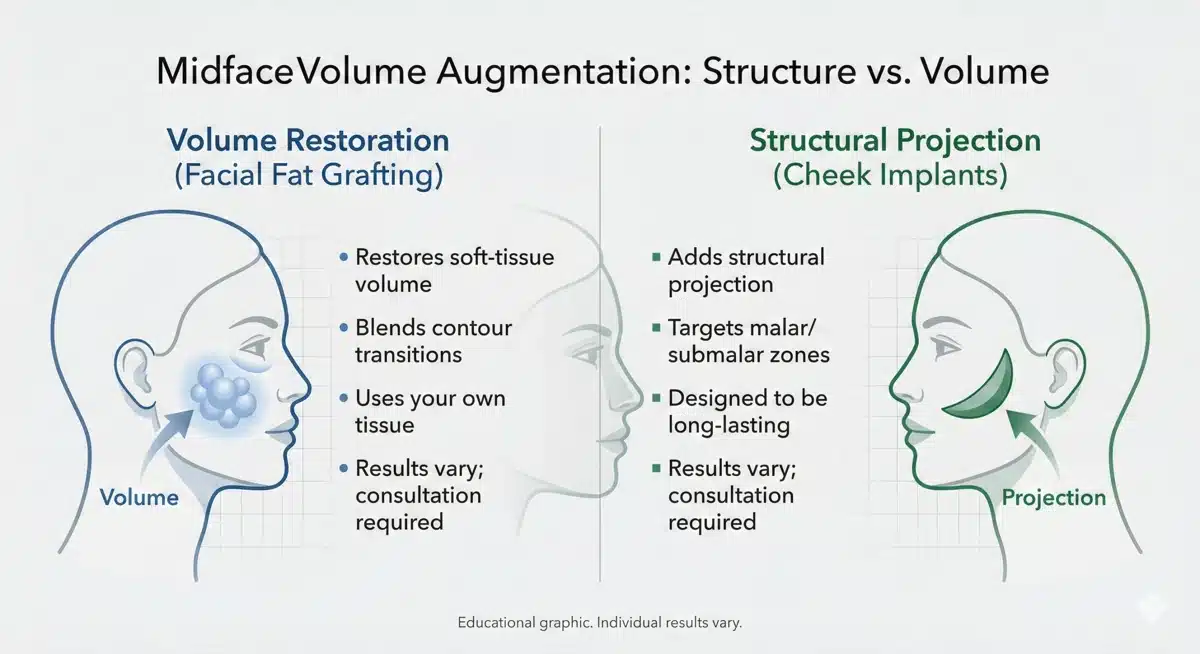
Midface Volume Augmentation
Published February 19, 2026 · By Dr. Robert J. Troell, Board-Certified Facial Plastic Surgeon
Dr. Robert J. Troell, MD, FACS

The short answer: Midface (cheek) volume loss flattens the face and deepens the smile lines and under-eye hollows. It can be restored temporarily with filler, with your own fat (fat grafting), or permanently with a soft Silastic midface implant placed under local anesthesia. Below: how each long-term option works, who each suits, and what to expect.
Key Takeaways
- Midface changes may involve volume loss, tissue descent, or both—so the plan should be anatomy-based.
- Two commonly discussed long-term strategies include:
- Facial fat grafting (soft-tissue volume restoration using your own fat)
- Cheek implants (structural projection/support in specific zones)
- “Permanent” can be misleading in medical marketing. Implants are designed to be long-lasting, and fat grafting can be long-lasting when graft takes, but outcomes vary and aging continues.
- Fat transfer outcomes depend heavily on technique at every stage—harvesting, processing, and placement.
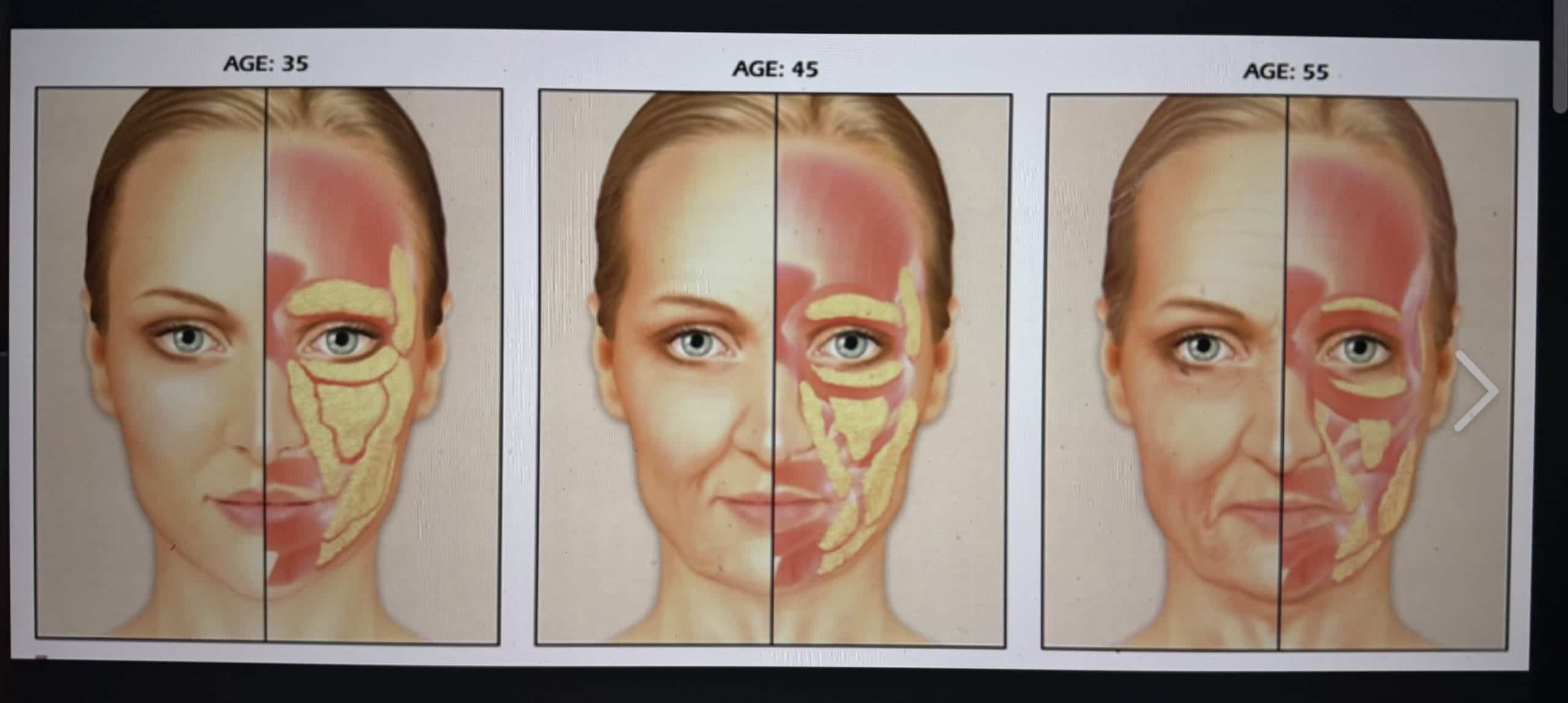
What Midface Volume Loss Can Look Like
Patients describe midface volume change in different ways. These are common concerns that can reflect many anatomical patterns:
- Cheeks look flatter in photos
- Under-eye hollowing looks more noticeable
- The face looks “tired” even after good sleep
- Smile lines look deeper because nearby areas look less supported
Important: These descriptions are not diagnoses. The right approach depends on what’s driving the change—volume, position, skin quality, skeletal projection, or a combination.
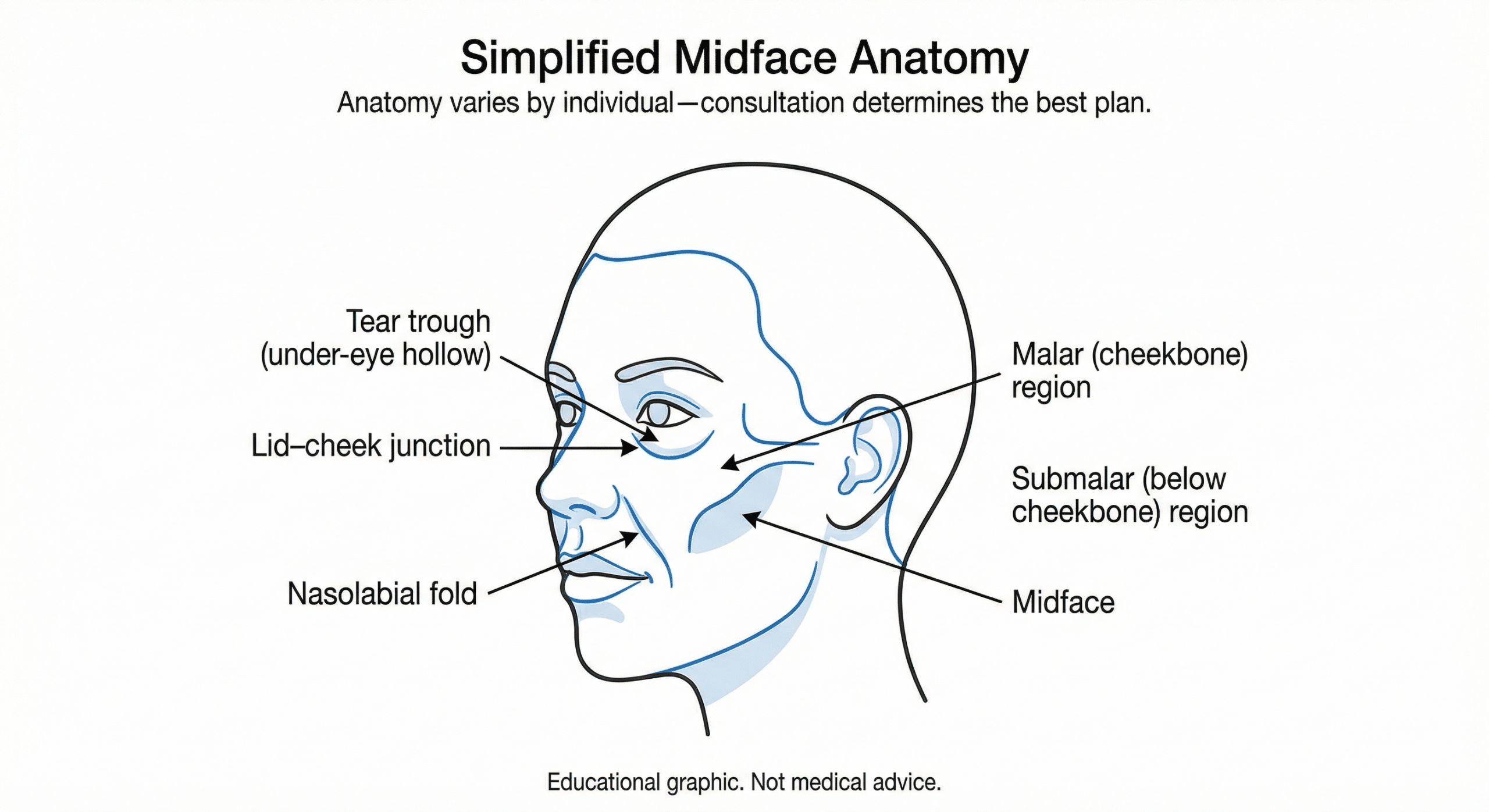
Midface Anatomy: Key Areas That Influence Cheek and Under-Eye Contour
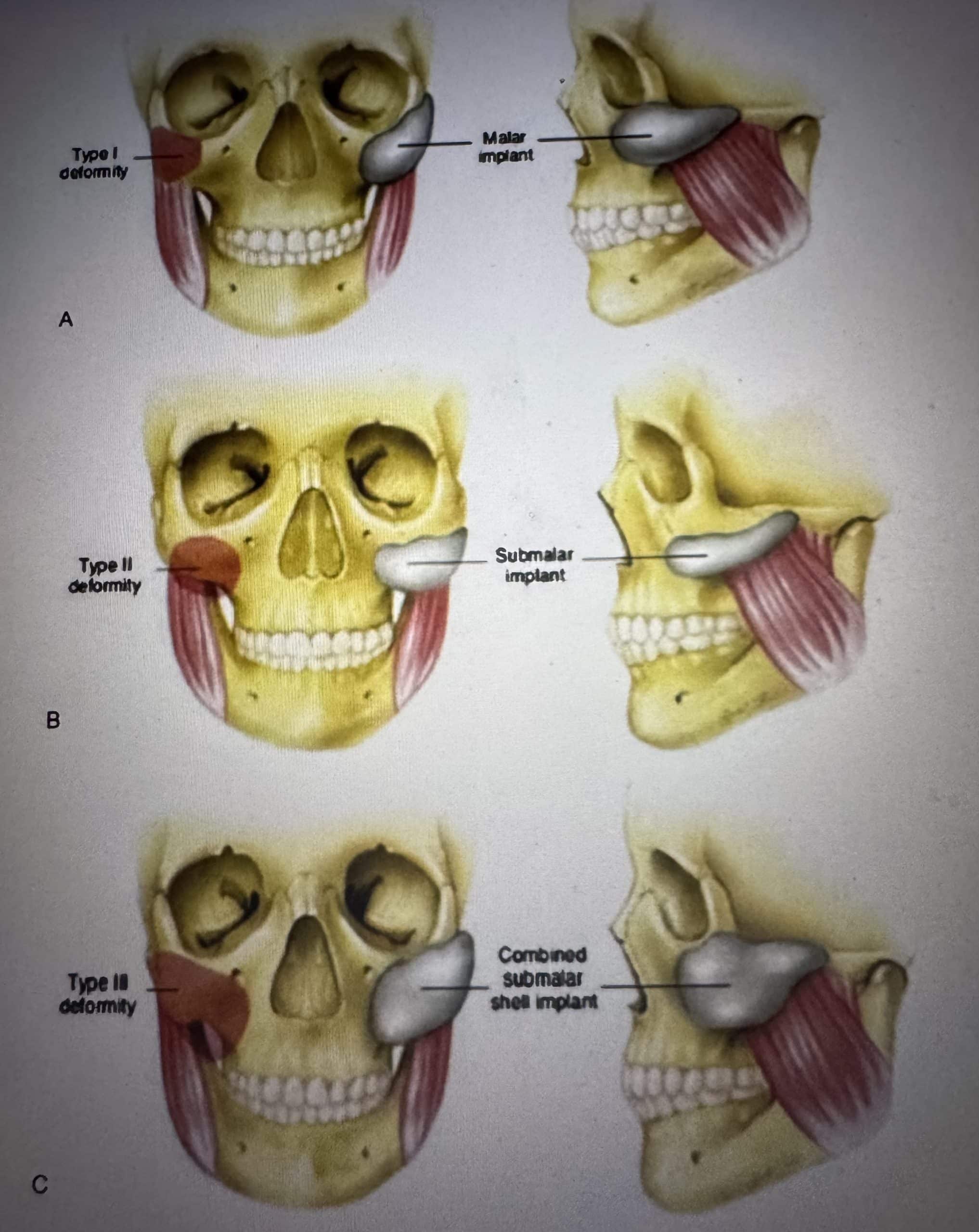
Midface planning often considers multiple zones at once—especially the malar (cheekbone) region, the submalar (below cheekbone) region, and the lid–cheek junction. Your surgeon evaluates how these areas relate to your facial proportions and skin quality.
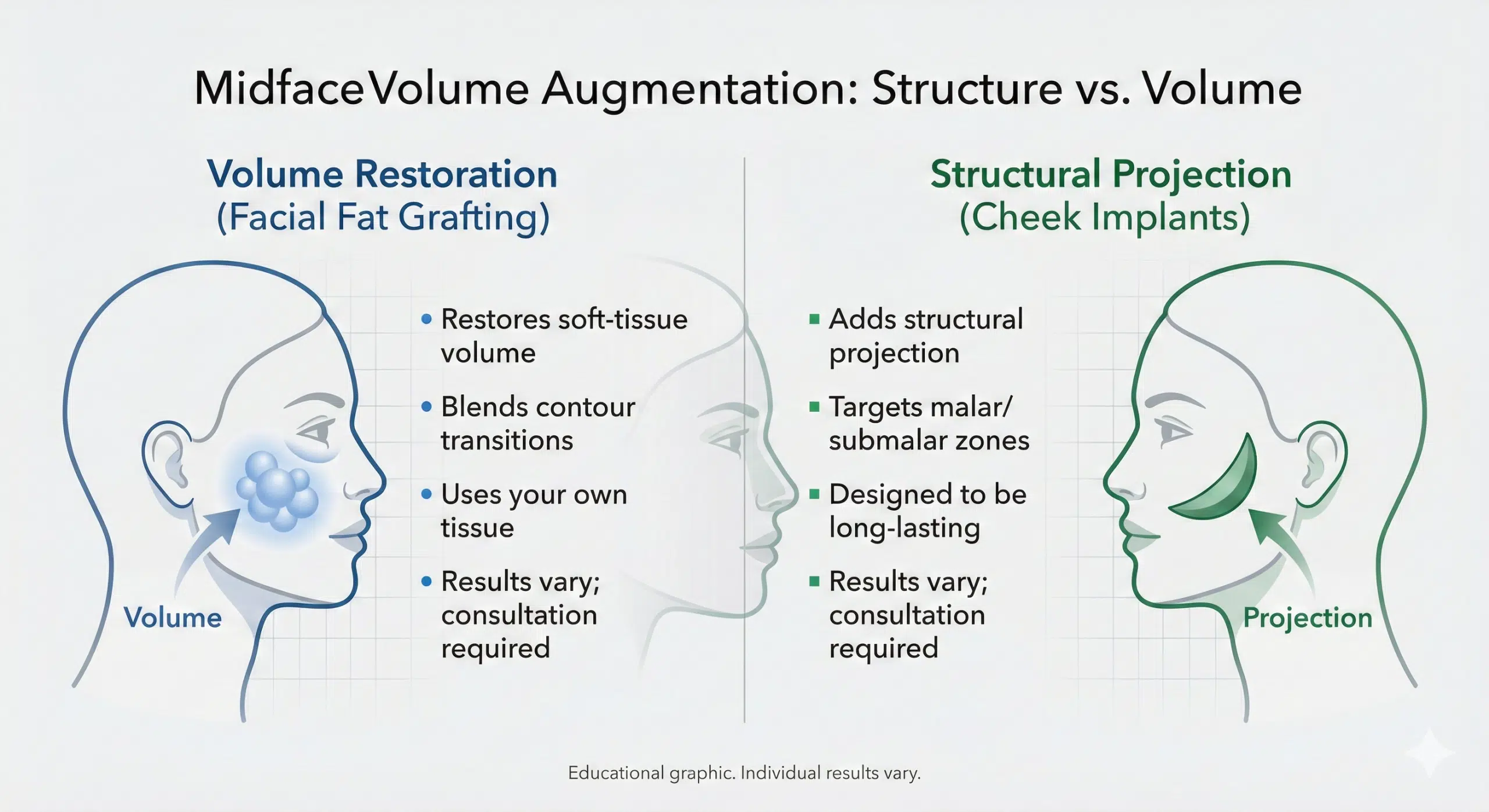
Two Approaches to Midface Volume Augmentation
On this site, midface volume restoration is typically discussed in two broad categories:
- Volume restoration using your own tissue (facial fat grafting)
- Structural projection using an implant to support shape in a specific zone
Either approach may be discussed alone or alongside other procedures when appropriate.
Option A: Facial Fat Grafting (Volume Restoration)
Facial fat grafting (also called fat transfer or lipofilling) uses your own fat to restore volume. The goal is to rebuild soft-tissue fullness and improve contour transitions in a way that looks natural and balanced.
Learn more: Facial Fat Grafting
Why this option appeals to many patients
- Uses your own tissue (autologous fat)
- Can be tailored by depth and goal (support vs contour blending)
- Often discussed as part of broader facial rejuvenation planning when volume loss is a key driver
Clinical reasoning: tailoring fat to anatomy
Surgeons may tailor fat placement strategy to the anatomical layer and the desired effect. A commonly discussed concept is adjusting fat “parcel” size and consistency to match the target tissue plane:
- Deeper layers: may receive larger parcels intended to support shape and foundation (sometimes described as “milli-fat”).
- More superficial layers: may use finer parcels to refine contour and address skin-quality goals (sometimes described as “nano-fat”).
Technique matters: the success of facial fat transfer depends heavily on technique at every stage—harvesting, processing, and placement.
Processing methods: what’s realistic to say
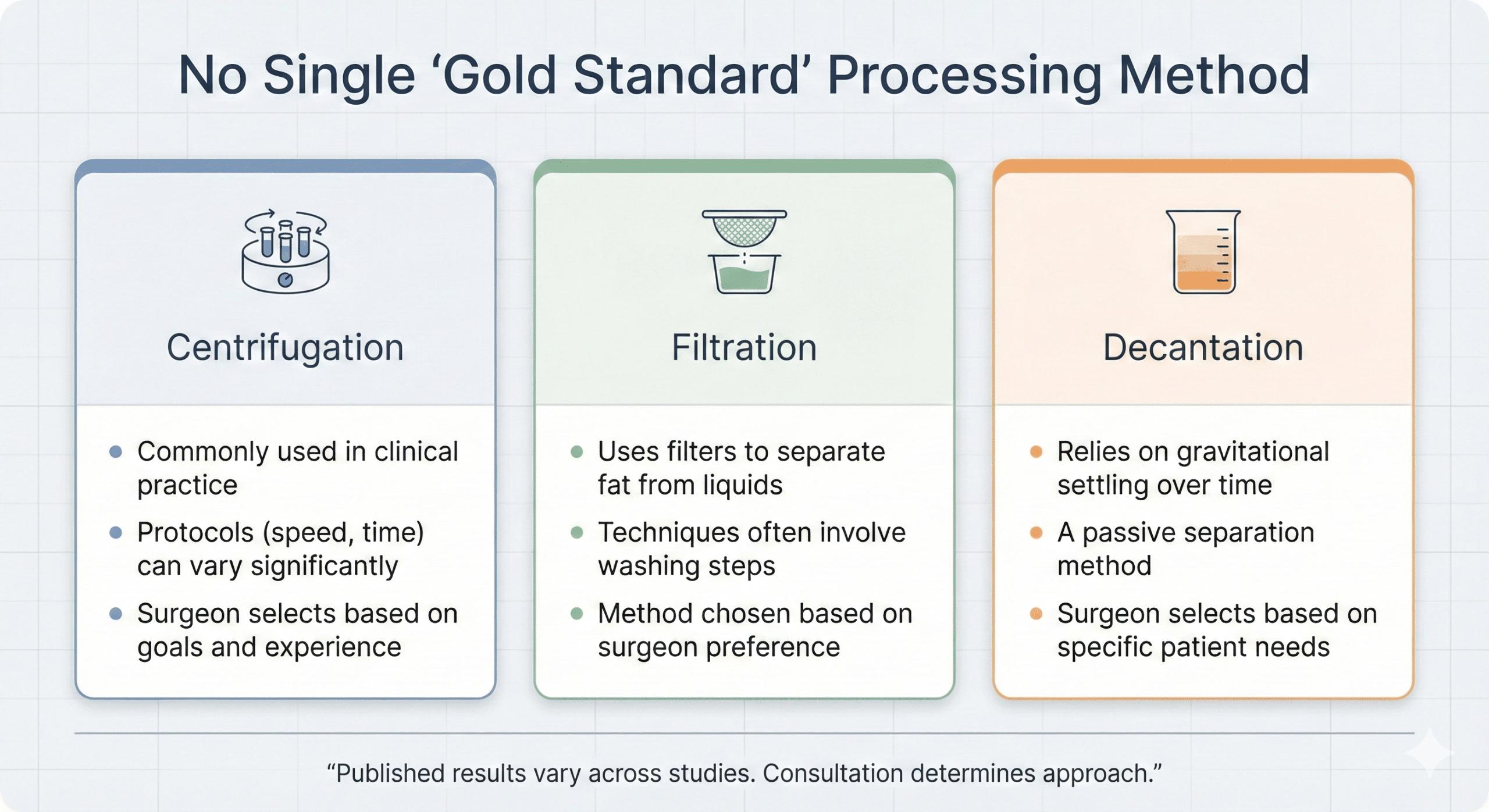
There is no single universally accepted “gold standard” fat processing method. Centrifugation, filtration, and decantation are all used in practice, and published results vary across studies.
Longevity
Fat grafting can be long-lasting when transferred fat establishes a blood supply, but early volume change is expected and retention varies between individuals. Your surgeon should discuss realistic expectations for your anatomy, including whether staged treatment is sometimes considered.
Who may be a fit (and who may need caution)
- May be a fit: patients with midface deflation (soft-tissue volume loss) who want natural contour restoration and blending.
- Discuss carefully: patients who smoke or use nicotine products, have unstable weight goals, or have limited donor fat—since these factors may affect planning and outcomes.
Safety approach
As with any procedure, risks exist. Surgeons may use measures designed to reduce risk—such as blunt cannulas, careful plane selection, and slow, low-pressure placement—based on facial anatomy and the planned treatment area.
Option B: Cheek Implants (Structural Midface Support)
Cheek implants are designed to enhance midface structure by adding projection in specific anatomical zones. This approach differs from fat grafting: implants primarily address framework/projection, while fat grafting primarily restores soft-tissue volume and contour transitions.
Learn more: Facial Implants · cheek and submalar implants in detail
When the deficiency runs along the bony rim beneath the eye rather than the cheek prominence, a patient-specific design is often the better tool — see our guide to custom infraorbital rim implants.
Why patients explore this option
- They want structural projection/definition in the midface
- They prefer a structure-first approach when the concern is primarily projection or skeletal contour
- They want a predictable projection change in a targeted anatomical zone
Longevity
Implants are intended to be long-lasting, but no surgical result can be guaranteed. Long-term outcomes depend on implant selection, placement, healing, and whether the procedure is combined with others.
How to Choose the Right Midface Plan
A useful way to think about the decision is to match the approach to the primary anatomical driver:
- If the primary issue is deflation/soft-tissue volume loss, fat grafting may be part of the conversation.
- If the primary issue is structure/projection, implants may be part of the conversation.
- If the concern is both volume and position, lifting plus volume restoration may be discussed in an individualized plan.
If lifting is part of your plan, see: The Facelift

Which Midface Augmentation Option Actually Lifts the Face?
In the short video below, from the practice’s Instagram (@roberttroell), Dr. Troell runs through the four ways facial volume is replaced and what separates them. Temporary dermal filler adds soft-tissue volume and is repeated every 6 to 18 months. Bellafill, a collagen-stimulating filler whose results can last up to five years, stretches that interval considerably. Fat grafting restores soft-tissue volume with your own tissue and, once the graft takes, can be long-lasting. A midface implant is the only one of the four that sits against bone rather than in the soft tissue, so it changes projection instead of padding, which is why, in his words, an implant placed in the midface “is the only method of volume replacement that lifts your face.” It is the same comparison his 2026 paper in The American Journal of Cosmetic Surgery works through, cited in the questions below.
The same logic runs the chin. A standard anterior chin implant, or a custom wrap-around jawline implant that spans the chin and both jaw angles, adds bony projection that neither filler nor grafted fat creates. Which option fits you comes down to whether the shortage is bone or soft tissue, and that is the examination question the rest of this guide is built around.
Healing and Refinement
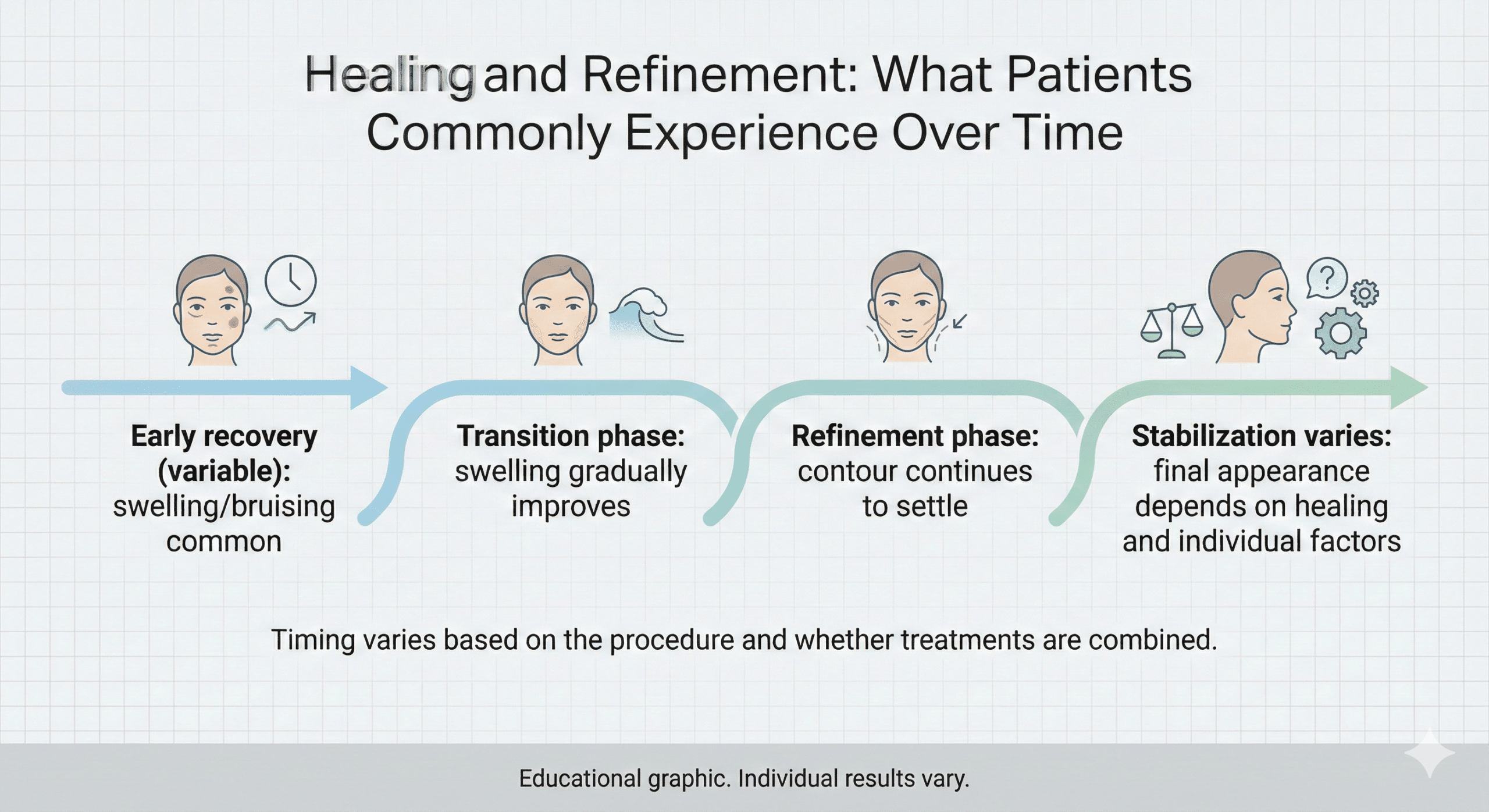
Recovery and refinement vary based on the procedure and whether it’s combined with others. Swelling and bruising are common early on, and the appearance can continue to refine as healing progresses. Your surgeon will provide individualized aftercare and timeline guidance based on your plan.
Real-World Examples
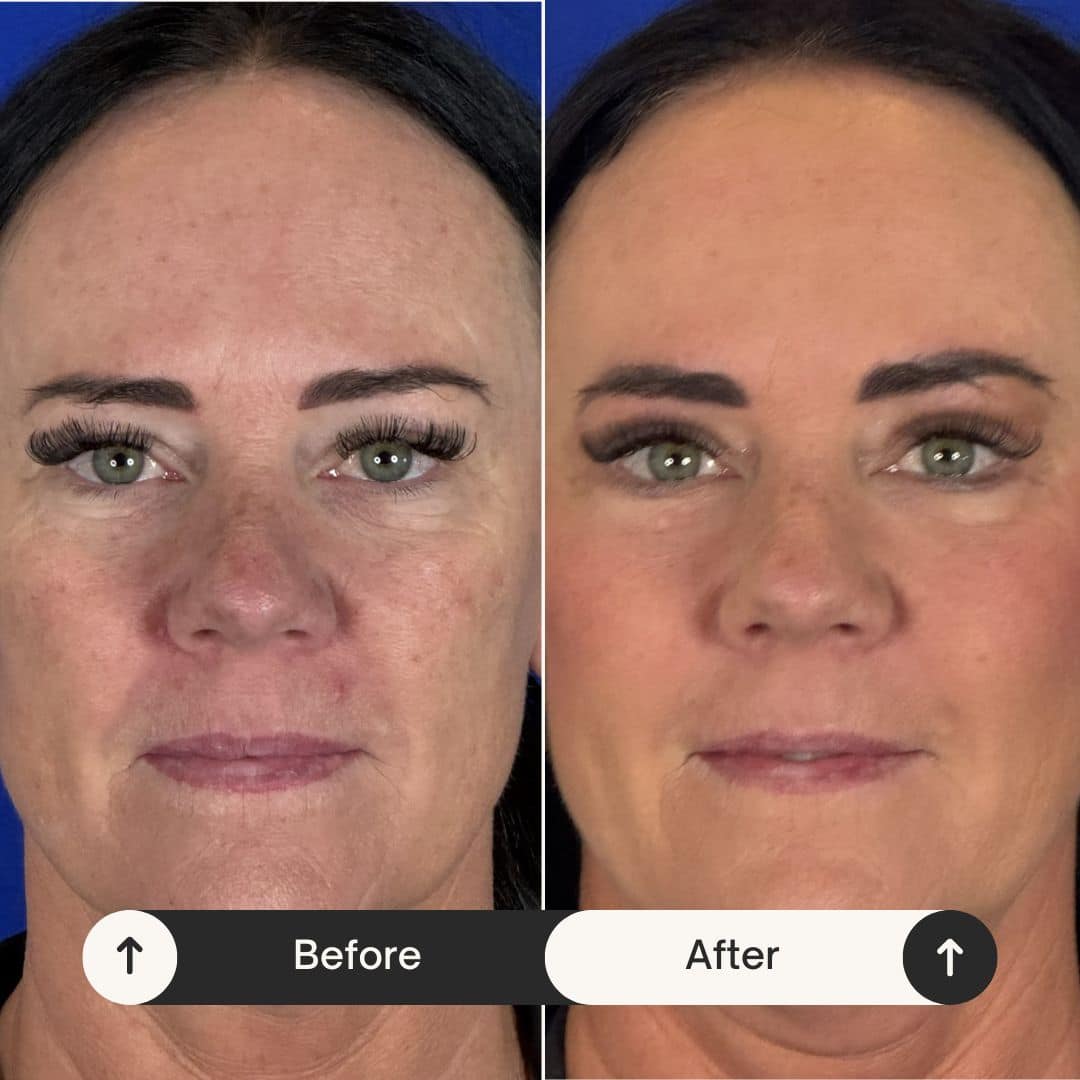
Before-and-after photos should be viewed in the practice’s official gallery hubs, where consent and disclaimer language is presented. Photos are educational; individual results vary and are not guaranteed.
Questions to Ask at Your Consultation
- “Is my midface concern mainly volume loss, position change, or both?”
- “If we add volume, what approach best matches my anatomy—fat grafting, implants, or another option?”
- “If lifting is part of my plan, do you recommend combining lifting with volume restoration?”
- “How should I think about longevity and maintenance for each option?”
- “What does recovery typically look like for someone with my anatomy and goals?”
Check the surgeon off-site before you choose. Dr. Robert J. Troell of Troell Cosmetic Surgery in Las Vegas can be checked off-site: Nevada medical license 9816 on the state board register, Diplomate status on the American Board of Facial Plastic and Reconstructive Surgery lookup, his 2026 midface volume replacement paper under ORCID 0000-0002-0775-533X, and patient reviews on the practice's Google Business Profile, which the practice cannot edit.
Frequently Asked Questions
Is facial fat grafting “permanent”?
Surgeons often describe fat grafting as long-lasting when transferred fat establishes a blood supply, but retention varies and some early volume change is expected. The face continues to age over time, so no result can be guaranteed permanent. A consultation is the best way to discuss expectations for your anatomy.
How do implants differ from fat grafting?
Cheek implants primarily change projection and structure in a targeted zone. Fat grafting primarily restores soft-tissue volume and contour transitions. Some patients may discuss combining approaches when both projection and volume contribute to the appearance.
What should I expect for recovery?
Recovery varies depending on the procedure and whether it is combined with others. Swelling and bruising are common early on, and contour can continue to refine as healing progresses. Your surgeon will provide individualized aftercare guidance based on your plan.
Can midface volume restoration help the under-eye area?
In some cases, restoring midface volume can improve contour transitions near the lid–cheek junction and reduce shadowing. Whether it is appropriate depends on anatomy and should be determined during an in-person evaluation. For the bigger picture, our guide to matching the right procedure to how your face is aging compares fat grafting with a facelift and skin tightening.
How do I verify this surgeon's cheek implant and fat grafting credentials myself instead of taking the website's word for it?
That is the right instinct, and it applies to this page as much as to any other: a practice website can show staff who left years ago, a video from another decade, and a wall of five-star quotes you cannot trace, so before you let anyone place a permanent midface implant or graft fat that will settle over months, weigh only the claims you can check somewhere the practice does not control. For Dr. Robert J. Troell, four checks take about ten minutes. His Nevada medical license, number 9816, has been active since 2001 and is on the Nevada State Board of Medical Examiners public register. His Diplomate status with the American Board of Facial Plastic and Reconstructive Surgery, the board most relevant to cheek implants and facial fat grafting, is on that board's own certified-surgeon lookup, with a primary certification date in 1996. His research is listed under his ORCID record, 0000-0002-0775-533X, and indexed on Scopus, Google Scholar, and PubMed; the entry that matters for this decision is his 2026 paper in The American Journal of Cosmetic Surgery, Permanent Composite Midface Volume Replacement: Artefill, Silastic Implants, and Stem Cell Enriched Fat Grafting, DOI 10.1177/07488068261440417, a peer-reviewed treatment of the same implant-versus-fat question this article compares. And his patient reviews are on Troell Cosmetic Surgery's Google Business Profile in Las Vegas, which the practice cannot edit or delete. Everything this page says about him can be checked off-site, and what that gives you is a surgeon whose license, board standing, and published midface work you have read for yourself before you choose between an implant and a graft, rather than a claim you took on faith.
Can filler or fat grafting lift the midface the way an implant does?
Not in the same way. Dermal filler and grafted fat add volume to the soft tissue over the bone: filler is temporary and is repeated every 6 to 18 months, Bellafill is a collagen-stimulating filler whose results can last up to five years, and fat grafting uses your own tissue and can be long-lasting once the graft takes. A cheek implant sits against the bone itself and adds fixed projection, which is why Dr. Troell describes a midface implant as the one volume-replacement method that lifts the face. If the cheekbone is flat or low, grafted fat follows the contour it is given rather than creating a new edge, so an implant is usually the structural answer; if the bone is fine and the padding over it is thin, fat grafting or filler may be the better fit. That judgement is made at an in-person examination, and an implant can be removed or replaced later if that is ever needed. Individual results vary.

Begin Your Journey with Dr. Troell
Schedule a complimentary consultation with Dr. Troell to discuss your goals, explore your options, and receive an honest, expert assessment. No obligation, no pressure.
Mon–Fri, 8:30 AM – 5:00 PM