
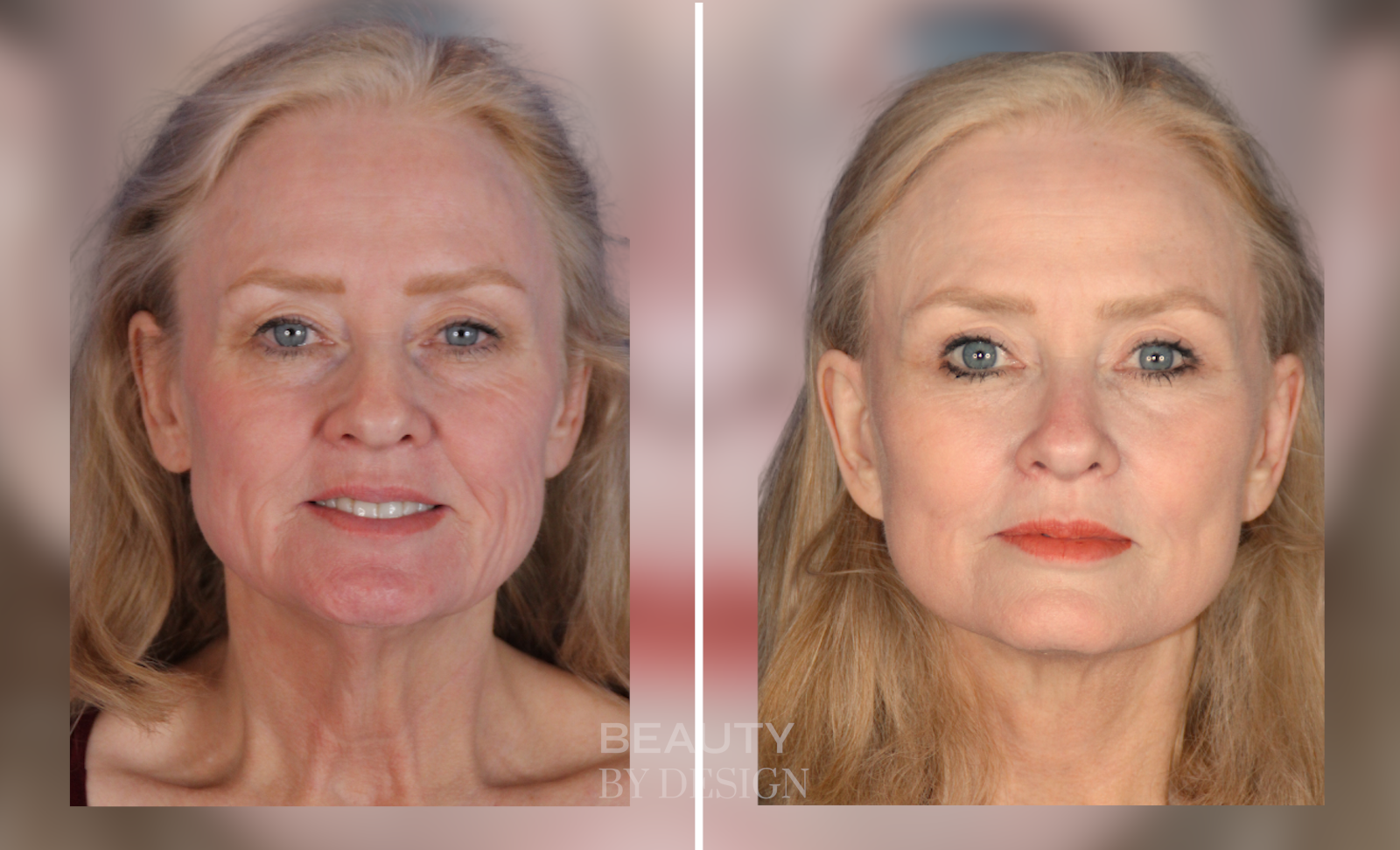
Deep Plane vs SMAS Facelift: What the Evidence Actually Shows
Published December 3, 2025 · By Dr. Robert J. Troell, Board-Certified Facial Plastic Surgeon
Dr. Robert J. Troell, MD, FACS

The short answer: A deep plane facelift releases and repositions the deeper facial ligaments and the SMAS as one unit — rather than just pulling skin — so it lifts the midface and jawline more naturally, avoids a pulled or wind-swept look, and lasts longer than a traditional SMAS-plication or skin-only facelift. Below: how it differs from other techniques, who it suits, and what recovery involves.
Deep Plane vs SMAS Facelift: What the Evidence Actually Shows
By Dr. Robert J. Troell, M.D., FACS, FAAFPRS
Diplomate, American Board of Facial Plastic and Reconstructive Surgery
Diplomate, American Board of Cosmetic Surgery
The evolution of facelift surgery has brought significant advances in how surgeons restore youthfulness, structure, and balance to the aging face. Among the various methods available today, the deep plane facelift is one of two well-studied approaches, alongside the SMAS facelift, and the one Dr. Troell favours for its anatomical reach. A 2025 systematic review of 21 studies and 2,896 patients reported patient satisfaction of 94.4% (95% CI 84.8–99.7) for the deep plane technique and 87.8% (95% CI 84.3–91.3) for SMAS — intervals that overlap, in a one-arm meta-analysis that did not statistically compare the two. The same review reported a higher overall complication rate for the deep plane approach, 17.2% versus 10.3%, and its authors conclude that both techniques provide robust, long-term outcomes with high patient satisfaction.1
The deep plane approach uniquely addresses the true anatomical causes of facial aging, allowing the face to be lifted, reshaped, and volumized in a way that looks both refined and natural—avoiding the “windswept” or overtightened appearance that older techniques sometimes produced.2
Understanding Facial Aging: Why Most Patients Need More Than Surface Correction
Facial aging varies significantly from patient to patient, and not everyone requires a full facelift. In fact, only about 15–20% of patients are ideal candidates for an isolated anterior neck lift or platysmaplasty alone. This limited approach works well when aging is isolated to the central neck and involves:3 Matching the operation to the problem starts with knowing which kind of facial aging you have — descent, skin laxity, or volume loss.
- A small incision beneath the chin
- Separation of the skin from underlying structures
- Suturing of the platysma muscle if it has begun to split or band
However, for patients experiencing sagging jowls, midface descent, deeper nasolabial folds, or generalized facial laxity, a neck-only surgery will not achieve comprehensive rejuvenation. Research confirms that facial sagging is most visible at the lateral facial areas, such as the jowls and cheeks, requiring intervention at deeper anatomical levels.2
The Triple Threat of Facial Aging
Understanding why faces age reveals why the deep plane technique outperforms surface-level approaches:
- Collagen and Elastin Loss: Production slows significantly beginning in the thirties, weakening the skin’s natural support structure.2
- Volume Redistribution and Loss: Youthful facial fat pads thin and descend, causing tissue pooling at the jawline, creating jowls.2
- Ligament Laxity: Retaining ligaments loosen and the SMAS stretches, allowing soft tissue descent.4
What Makes the Deep Plane Facelift Different
The deep plane facelift goes beyond tightening the skin or plicating the SMAS. Instead, it lifts at the deeper anatomical levels where aging actually occurs. The deep plane facelift, originally described by Sam Hamra in 1990, utilizes a plane of dissection below the superficial muscular aponeurotic system (SMAS) of the midface, allowing for direct lysis of key facial retaining ligaments and maximum mobilization of the superficial soft tissue.2 This technique lifts as a unified composite:
- The SMAS and platysma muscle layer
- Deep facial fat pads
- Facial retaining ligaments
- Descended midface tissues
By working beneath these structures, the deep plane facelift restores youthful contours from the inside out—repositioning the entire facial framework rather than simply pulling the skin tighter.2
The Anatomy Behind the Deep Plane Technique
Recent anatomical research has changed our understanding of why extensive-release techniques outperform minimal interventions. The deep fascia of the face consists of multilayered sheets that support soft tissues against gravity while allowing certain mobility for facial expression.5
When tissues are lifted without surgical release—as in thread lifts, minimal access lifts, or skin-only procedures—the fibers are dragged into an “upward-pulled” position that eliminates their natural antigravitational support function. This places the entire weight of the lifted tissues on fixation sutures, causing early recurrence as sutures stretch or cut through tissue.5
In contrast, the deep plane technique releases retaining ligaments and repositions tissues to a higher level, allowing them to reattach in their new position with preserved antigravity architecture—explaining why results last significantly longer.5
The Key: Releasing Osteocutaneous Ligaments
True elevation requires releasing major retaining ligaments that prevent deeper tissues from lifting when only superficial layers are addressed. The retaining ligaments of the face are important in understanding concepts of facial aging and rejuvenation. They are located in constant anatomic locations where they separate facial spaces and compartments.4
The extended deep plane technique releases four key retaining ligaments in the face and neck:6
- Zygomatic cutaneous ligaments (cheek region) — the strongest of all facial retaining ligaments
- Masseteric cutaneous ligaments (jawline)
- Mandibular cutaneous ligaments (lower face)
- Cervical retaining ligaments (neck)
Why Ligament Release Matters
Releasing these ligaments allows the surgeon to:4,6
- Mobilize the midface effectively without tension
- Elevate the cheek and nasolabial folds as a unified unit
- Improve jawline definition naturally
- Achieve upward rejuvenation following natural vectors
This step is why deep plane facelifts outperform SMAS-plication or skin-only lifts, which can look tight or short-lived. Their main significance relates to their surgical release in order to achieve the desired aesthetic outcome.4
Natural, Tension-Free Results
By placing tension only at the level of the fascia, the deep plane technique creates a tension-free skin closure and ensures long-term results.2 The skin is not responsible for holding the lift—deeper tissues are. The skin is redraped without tension, creating:
- Softer, natural facial expressions
- No windswept look
- Thinner, nearly invisible incisions
- Results lasting 10–15 years1
Measured Outcomes
A 2025 systematic review and one-arm meta-analysis pooled satisfaction and complication rates for both techniques. It did not test the two against each other, and the satisfaction intervals overlap — so the figures below are what each technique reported, not a demonstrated win for either:1
| Outcome Measure | Deep Plane Facelift | SMAS Facelift |
|---|---|---|
| Patient satisfaction1 | 94.4% (95% CI 84.8–99.7) | 87.8% (95% CI 84.3–91.3) |
| Overall complication rate1 | 17.2% | 10.3% (95% CI 6.20–14.4) |
| Subjective reduction in apparent age | 11.9 years, range 0–27.57 | not measured in that study |
| Superior Midface Rejuvenation | Yes8 | Limited8 |
Why Volume Restoration Matters
Facial aging involves more than sagging—it includes loss of volume in the cheeks, temples, jawline, and midface. Volume loss includes fat, muscle, and bone loss, which contributes to the overall aging appearance.2 Volume placement during a deep plane facelift is essential for optimal outcomes.
Volume Enhancement Options
Facial Implants (Most Predictable & Long-Lasting)
Implants provide permanent, precise improvement to:9
- Cheek projection
- Chin and jawline definition
- Mandibular angle sculpting
Research shows submalar implant augmentation with facelift achieves a 95.7% satisfaction rate with minimal complications.10
Fat Transfer (Autologous Fat Grafting)
Uses the patient’s own fat for natural volume restoration. Autologous fat transfer contains stem cells and growth factors that may improve skin quality over time while providing volume restoration that integrates naturally with existing tissues.11
Dermal Fillers
Ideal for refinement but results are temporary (6–18 months), requiring ongoing maintenance treatments.9
A Comprehensive Rejuvenation Strategy
The deep plane facelift is a full rejuvenation system that may include:6
- Platysmaplasty (when the neck muscles require tightening)
- Facial implants for structural enhancement
- Fat transfer for volume restoration
- Comprehensive neck contouring
- Midface elevation with ligament release
Many patients also pair a facelift with a brow lift or eyelid surgery (blepharoplasty) in the same session — the brow and eyelids age on the same timeline as the midface, and combining procedures means one recovery period instead of two. Fat grafting complements a facelift by restoring lost volume, but it does not release or lift the retaining ligaments; the two address different mechanisms of aging and are frequently combined for that reason.
Why Traditional Approaches Fall Short
Traditional facelifts treat only surface issues. The deep plane technique addresses every layer of aging—skin, muscle, fat, ligaments, and structure.
Mini Facelift Limitations
Mini facelifts primarily target only the skin, with results typically lasting approximately 5–7 years. They cannot adequately address significant midface descent, deep nasolabial folds, or substantial jowling.12
SMAS Plication Limitations
While SMAS plication represents an improvement over skin-only techniques, it typically lifts in a more lateral or diagonal direction without fully releasing underlying retaining ligaments—sometimes resulting in a tight or unnatural appearance.13
Are You a Candidate for a Deep Plane Facelift?
Most facelift candidates are generally healthy adults between roughly 35 and 75 whose primary concern is descended tissue — sagging cheeks, deepening jowls, or loose neck skin — rather than volume loss alone. Signs that you may be a strong candidate include:
- Visible descent: jowling along the jawline, deepening folds around the mouth, or a softening neck contour that skin care and nonsurgical treatments no longer address.
- Stable weight: significant future weight change alters the result, so candidates should be at or near a weight they can maintain.
- Good general health: no uncontrolled medical conditions, and the ability to pause nicotine, which impairs healing.
- Realistic expectations: a facelift repositions descended tissue for a natural, rested version of your own face — not a different face.
One increasingly common indication is loose facial skin after rapid GLP-1 weight loss — so-called Ozempic face. When rapid fat loss leaves the skin envelope behind, a deep plane facelift addresses the laxity that fillers and skin treatments cannot.
Anesthesia: Conscious Sedation Instead of General
Most facelifts in Dr. Troell's practice can be performed under conscious IV sedation rather than general anesthesia. Patients breathe on their own throughout, typically wake more quickly, and experience less post-anesthesia grogginess and nausea — while remaining completely comfortable during surgery. Dr. Troell's awake cosmetic surgery approach explains how conscious sedation works, who it suits, and when general anesthesia remains the better choice.
Recovery and Expectations
Recovery from facelift surgery involves predictable stages:14,15
Week 1–2: Peak swelling occurs around days 3–5, with bruising that gradually resolves. Most patients describe discomfort rather than severe pain, manageable with prescribed medication. Adequate pain medication is necessary, as patients often report mild peri-incisional pain for three to four days postoperatively.2
Week 2–3: 50–60% swelling resolved; return to light activities. Expect bruising and swelling to go away in approximately two to three weeks.15
Month 1–3: 85–90% swelling resolved; contour refinement continues.
Month 6+: Full sensation return and final results. It could take two to three months before your face feels “back to normal.”14
To see these stages in a real patient’s timeline, read Dr. Troell’s deep plane facelift case study — a comprehensive facial rejuvenation performed fully awake under sedation, documented from the consultation through week-by-week recovery and the final before-and-after results.
Why Expert Surgeons Prefer the Deep Plane Technique
A properly executed deep plane facelift can produce dramatic and sustainable rejuvenation to the lower face and the midface.2 Surgeons who specialize in this advanced technique recognize its distinct advantages:
- Stronger lifting power through composite flap mobilization
- Predictable, natural results without the pulled look
- Longer-lasting outcomes (10–15 years versus 5–10 years)
- Improved midface volume and cheek contour through fat pad repositioning
- Better jawline sculpting with ligament release
- Minimal skin tension and reduced scarring
- Ability to integrate implants or fat transfer as needed
Addressing Common Patient Concerns
Will I Look Overdone?
No. The deep plane facelift specifically avoids the overtightened or “windswept” appearance by placing tension on the deeper SMAS layer rather than stretching the skin. Patients retain their unique facial expressions while reversing sagging and folds.2
How Painful Is Recovery?
Mild to moderate discomfort rather than severe pain is typical. The tightness sensation that occurs represents healing and gradually diminishes.14
Are Results Permanent?
While your face will continue to age naturally, the structural repositioning achieved is permanent. Deep plane facelift results typically remain evident for 10–15 years before patients may consider additional intervention—and even then, you’ll never return to your pre-surgical appearance.1,2
Conclusion: The Modern Standard for Facial Rejuvenation
The case for the deep plane technique is anatomical rather than statistical: it addresses ageing at its structural root. By releasing retaining ligaments, lifting deeper tissues as a composite unit, and restoring volume, it produces natural and long-lasting results. The biomechanical principle is clear: no-release lifting techniques place the entire weight of lifted tissues on fixation sutures, leading to early recurrence. The deep plane approach releases tissues and allows them to reattach in a higher position with preserved structure—explaining superior longevity.5
For patients seeking meaningful rejuvenation—and for surgeons committed to excellence—the deep plane facelift is a well-supported option whose advantage rests on what it releases and repositions, not on a " "satisfaction gap the evidence has not established.1
References
- Aesthetic Plastic Surgery. “The Deep Plane versus SMAS Facelift: A Systematic Review and Meta-Analysis.” Aesthetic Plast Surg. 2025. MEDLINE, EMBASE, Web of Science systematic review of 21 studies with 2,896 patients. PMID: 40801931.
- Raggio B, Patel B. “Deep Plane Facelift.” StatPearls [Internet]. Treasure Island (FL): StatPearls Publishing; 2023. National Library of Medicine/NCBI Bookshelf. NBK545277.
- “Platysmaplasty Facelift.” StatPearls [Internet]. Treasure Island (FL): StatPearls Publishing; 2023. National Library of Medicine/NCBI Bookshelf. NBK563291.
- Alghoul M, Codner MA. “Retaining ligaments of the face: review of anatomy and clinical applications.” Aesthet Surg J. 2013 Aug 1;33(6):769-82. PMID: 23855010.
- Cotofana S, et al. “Anatomy of the Facial Glideplanes, Deep Plane Spaces, and Retaining Ligaments.” Plast Reconstr Surg. 2023. PMC11195933.
- Jacono A, Bryant LM. “Extended Deep Plane Facelift: Incorporating Facial Retaining Ligament Release and Composite Flap Shifts to Maximize Midface, Jawline and Neck Rejuvenation.” Clin Plast Surg. 2018 Oct;45(4):527-554. PMID: 30268241.
- Swanson E. “Outcome analysis in 93 facial rejuvenation patients treated with a deep-plane face lift.” Plast Reconstr Surg. 2011 Feb;127(2):823-834. PMID: 20966814. (Single-arm series; the 11.9-year figure is a subjective reduction in apparent age reported by these patients, not a comparison against SMAS.)
- Annals of Plastic Surgery. “Comparing the Safety and Efficacy of Superficial Musculoaponeurotic System and Deep Plane Facelift Techniques: A Systematic Review and Meta-analysis.” Ann Plast Surg. 2025. 47 studies involving 10,766 patients. PMID: 40600822.
- American Academy of Facial Plastic and Reconstructive Surgery. “Facial Implants.” AAFPRS Patient Education. www.aafprs.org.
- Delaney S, Kridel RWH. “Enhancing Facelift With Simultaneous Submalar Implant Augmentation.” Aesthet Surg J. 2019 Mar 14;39(4):351-362. PMID: 29846508.
- Sinno S, et al. “Autologous Fat Transfer for Facial Rejuvenation: A Systematic Review on Technique, Efficacy, and Satisfaction.” Plast Reconstr Surg Glob Open. 2017 Nov;5(11):e1606. PMC5889440.
- Safety and Effectiveness of Limited Incision Facelifts: A Systematic Review and Meta-analysis. Aesthet Surg J Open Forum. 2023;5(Suppl 1). PMC10320643.
- Evolution of Superficial Muscular Aponeurotic System Facelift Techniques and Complications: A Review of 6,086 Patients. J Craniofac Surg. 2023. PMC10819192.
- Cleveland Clinic. “Facelift (Rhytidectomy): What Is It, Recovery & What to Expect.” Cleveland Clinic Health Library. my.clevelandclinic.org/health/treatments/11023-facelift.
- Mayo Clinic. “Face-lift.” Mayo Clinic Patient Care & Health Information. www.mayoclinic.org/tests-procedures/face-lift/about/pac-20394059.
- American Board of Cosmetic Surgery. “Dr. Robert J. Troell – Diplomat of the American Board of Cosmetic Surgery.” www.americanboardcosmeticsurgery.org/doctors/robert-j-troell/

Begin Your Journey with Dr. Troell
Schedule a complimentary consultation with Dr. Troell to discuss your goals, explore your options, and receive an honest, expert assessment. No obligation, no pressure.
Mon–Fri, 8:30 AM – 5:00 PM