
Temple Hollowing (Temporal Atrophy): Causes & Cosmetic Treatments
Published June 11, 2026 · By Dr. Robert J. Troell, Board-Certified Facial Plastic Surgeon
Dr. Robert J. Troell, MD, FACS
The short answer: Hollow temples come from soft-tissue volume loss — shrinking fat pads, and sometimes the temporalis muscle, not the bone — driven by aging, genetics, and weight loss (including GLP-1 medications like Ozempic). Three treatments restore the volume: dermal fillers (quick, mostly temporary), fat grafting (your own tissue, long-lasting), and silicone temple implants (permanent, under local anesthesia). Below: what causes it, how each option works, and how to choose. For the bigger picture on GLP-1 facial changes, see our Ozempic face guide.
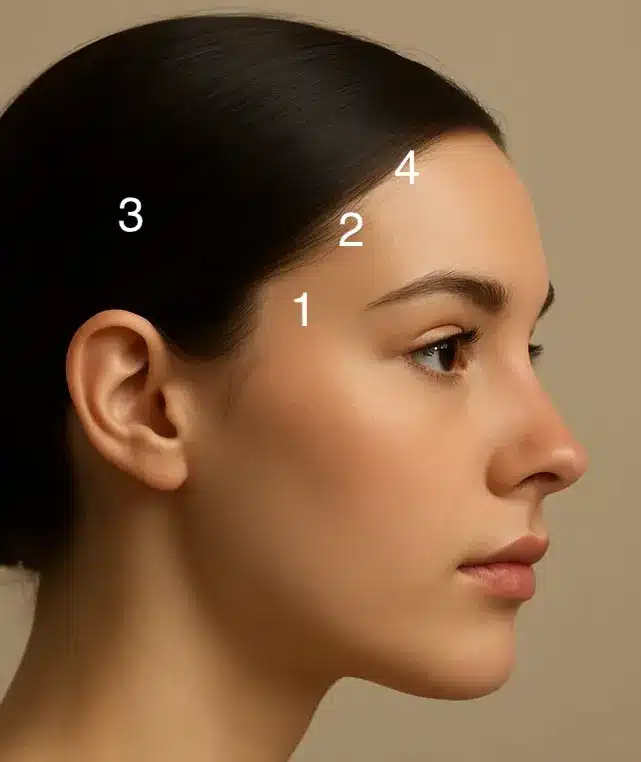
The temples are the flat areas on the sides of the head, just above the cheekbones and beside the eyes. When you are young, this area is naturally full and rounded. As people age, the temples can become sunken — a change called temporal hollowing (or temporal atrophy). It gives the face a “pinched” look, lets the brow drop, and can make someone look older and more tired than they are.
Restoring volume to hollow temples brings back a more youthful, balanced appearance. This article explains why temples hollow out, what each cosmetic option actually does, and how Dr. Robert J. Troell approaches the decision at our Las Vegas practice.
Why the Temples Hollow — It Is Soft Tissue, Not Bone
The temple is built in layers: skin, fat pads, muscle, and bone. When the fat and muscle shrink, the area caves in. A common assumption is that the skull itself thins with age — but the evidence points the other way.
Dr. Troell’s clinical insight. A research study of 49 human skulls confirmed that the bone of the temple does not change with age — only the soft tissue (the fat pads and, less often, the temporalis muscle) is responsible for the hollow look. That matters for treatment: because the deficit is soft-tissue volume, the fix is to replace soft-tissue volume — with filler, your own fat, or a soft implant — not to rebuild bone.
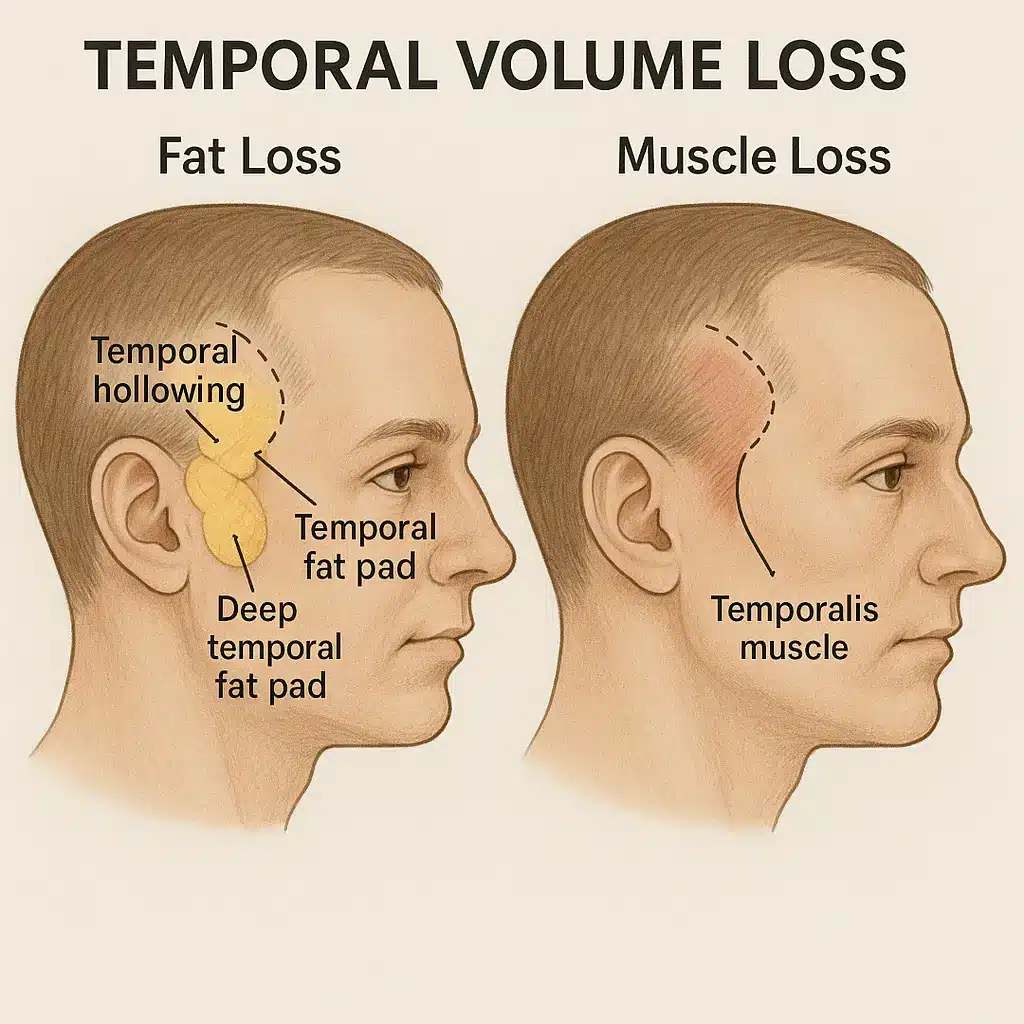
Clinically, the hollowing comes from one of three patterns:
- Fat loss — the most common cause. The shallow and deep fat pads under the skin slowly shrink over time.
- Muscle wasting (atrophy) — much less common; the temporalis muscle can thin in some cases.
- A combination of fat and muscle loss.
Common reasons the volume disappears include aging (most common), genetics, significant weight loss, trauma or injury, radiation therapy, and previous surgery in the area. Volume loss is just one of the ways a face ages; see the three mechanisms of facial aging and the procedure matched to each.
The GLP-1 connection. Many patients on GLP-1 weight-loss medications — Ozempic, Wegovy, Rybelsus, Trulicity — notice new hollowing in the face, including the temples. Rapid or significant weight loss can pull fat out of the face faster than from the rest of the body, which is why “Ozempic face” so often shows up first at the temples and cheeks.
Three Ways to Restore Hollow Temples
There are three main ways to put volume back into hollow temples — facial fillers, fat grafting, and silicone (Silastic) implants. They sit on a spectrum from quick-and-temporary to surgical-and-permanent, and they are often combined. The right choice depends on how much correction you need, how long you want it to last, and your anatomy and budget.
Facial Fillers
Fillers are substances injected into the temple to add volume — a quick, in-office option with no surgery. They come in temporary and long-lasting forms.
Temporary fillers. Hyaluronic acid (HA) fillers — brands such as Juvéderm, Restylane, Versa, RHA, Belotero, and Evolysse — last roughly 4 to 13 months, then dissolve on their own. Sculptra, a collagen stimulator, works by prompting your body to build its own collagen and can last 18 months to 2 years. The advantages: done in a single visit, no general anesthesia, results visible right away. The trade-offs: they are not permanent, carry a small risk of skin or (very rarely) vision problems if filler enters a blood vessel, and may need touch-ups to get the amount of correction right.
Long-lasting filler: Bellafill. The only FDA-approved permanent filler, Bellafill contains collagen microspheres that stimulate your body to build durable natural support over time.
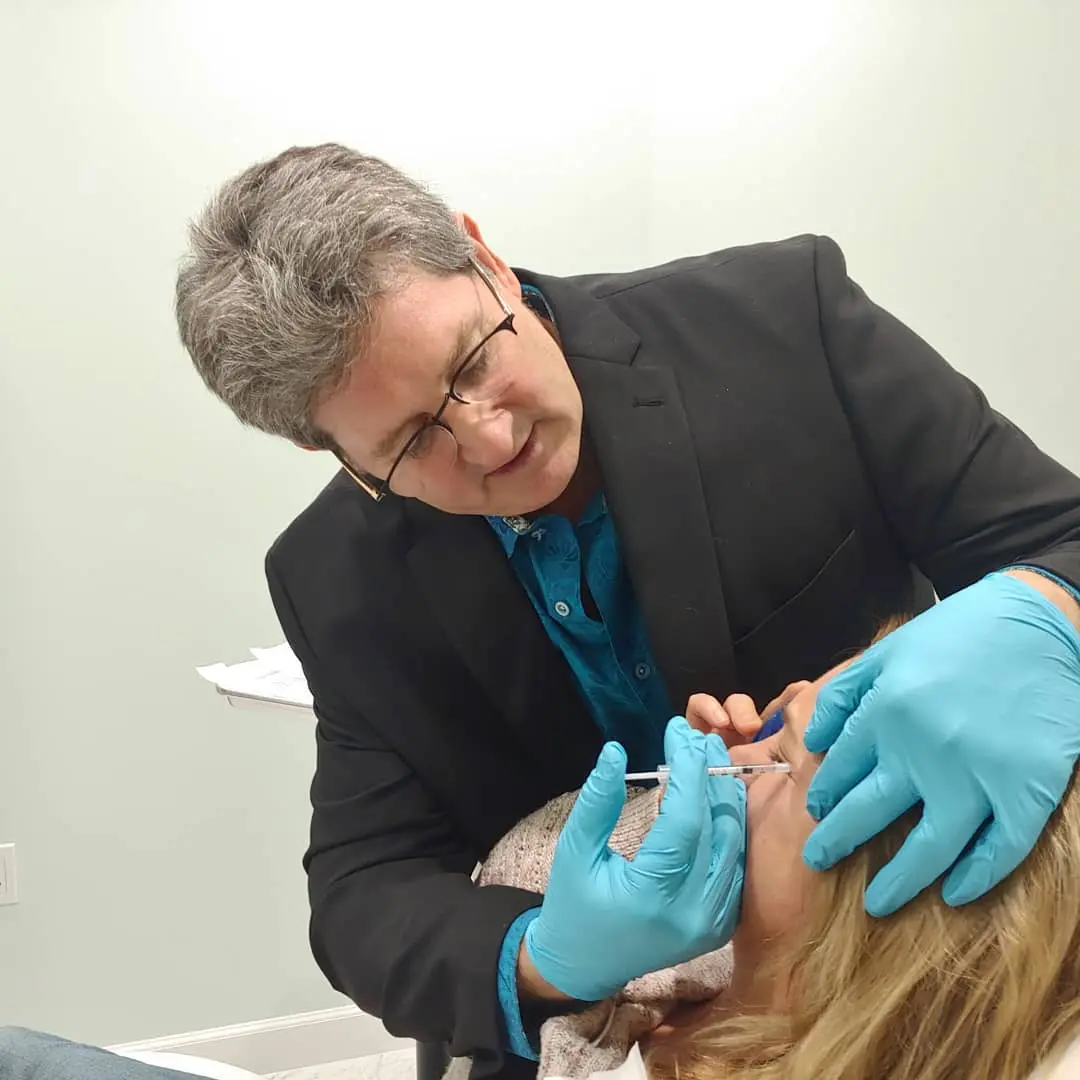
Dr. Troell’s safety notes. Two points patients rarely hear: first, injecting the temple with a blunt-tip cannula rather than a sharp needle meaningfully improves safety and accuracy in this vascular area. Second, a permanent filler should still be correctable — if Bellafill is overfilled, it can usually be reduced about 95% of the time with steroid and 5-FU injections. A permanent result you can still adjust is the goal.
Facial Fat Grafting
Facial fat grafting takes fat from another part of your own body — usually the abdomen or thighs — and carefully injects it into the temples. Because it uses your own tissue, there is no risk of rejection or allergic reaction.
Dr. Troell’s finding. In the past, only 30–40% of transferred fat survived long-term. With modern technique — careful harvesting, centrifuge processing, and enrichment with stem cells and platelet-rich plasma (PRP) — 80–85% of the transferred fat can survive permanently. The technique, not just the material, is what makes fat grafting durable.
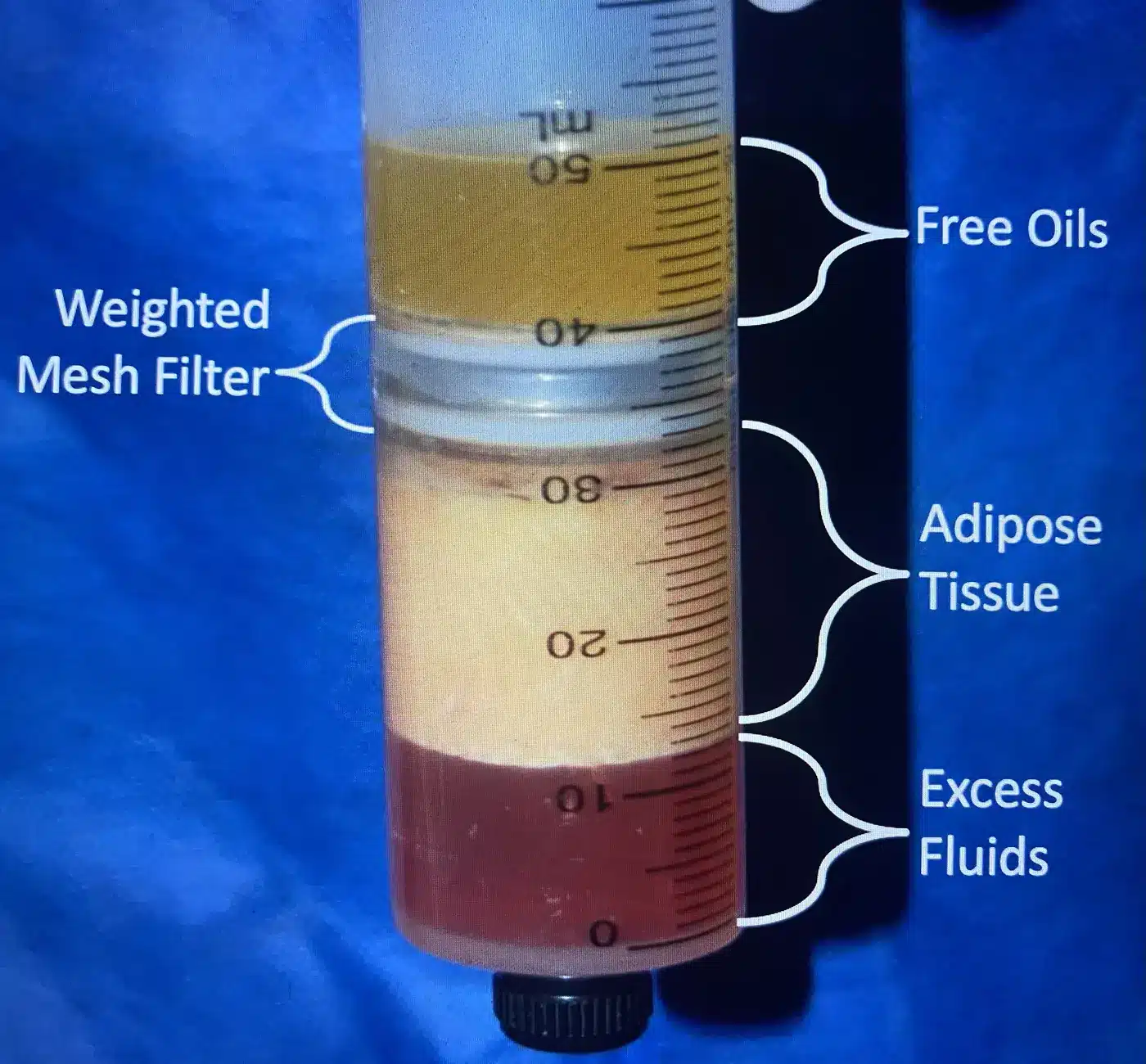
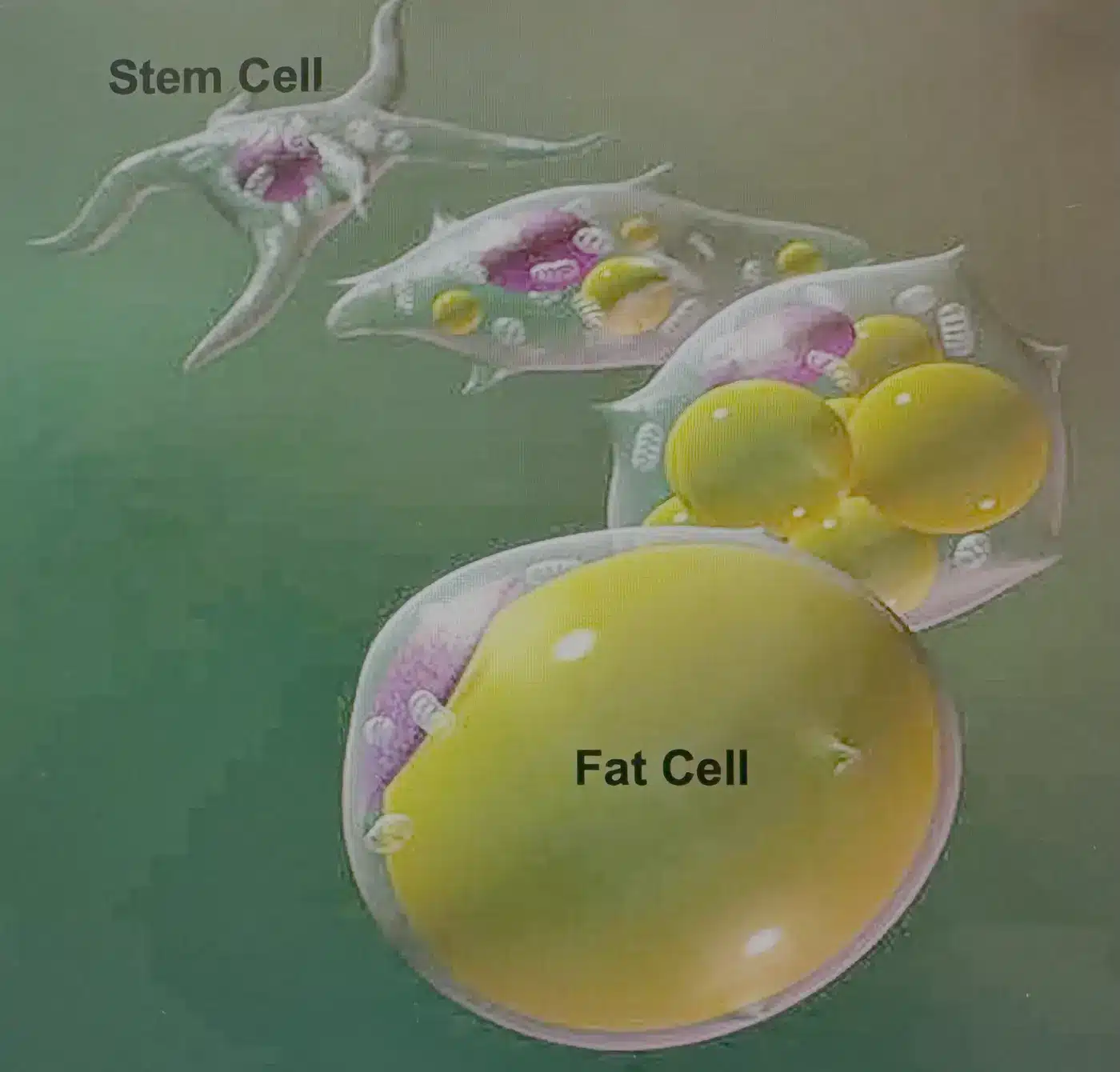
Fat grafting uses no foreign material, the survived fat is a long-term result, and it can be combined with other procedures — such as CO2 laser skin resurfacing — in the same setting.
Temporal Silicone (Silastic) Implants
For a permanent correction, silicone temple implants restore volume with a soft, ultra-soft Silastic material that feels natural to the touch. The procedure takes under an hour and is performed under local anesthesia — you remain awake but completely numb. They come in three forms:
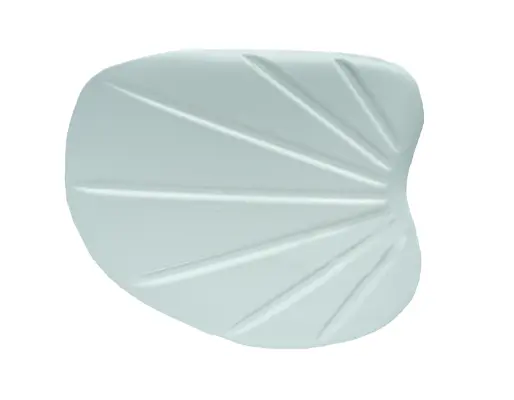
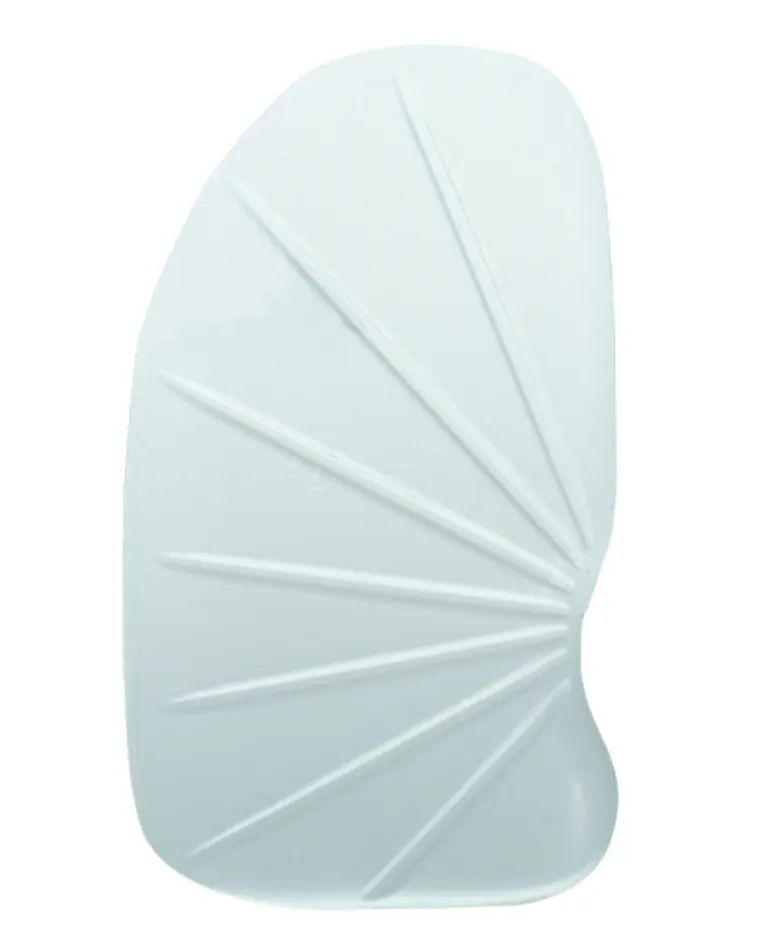
- Style 1 – Standard: fills the main hollow of the temple.
- Style 2 – Extended: covers a larger area, filling both the temple and the upper-cheek transition zone.
- Custom / patient-specific: designed to your exact anatomy; can cover the full side of the head.
Dr. Troell’s technique. A small incision is hidden behind the temple hairline or just above the ear. The implant is placed beneath the covering of the temporalis muscle (subfascial placement), where the natural tissue pocket holds it firmly — so no sutures or adhesive are needed to keep it in position, and the incision heals with minimal visible scarring.
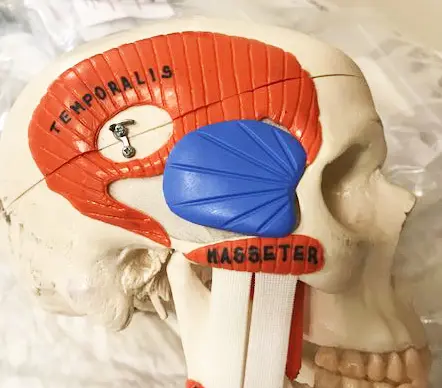
Temple implants give a permanent result that is still surgically removable if you change your mind, a soft and natural feel, a hidden incision, and a short recovery — most patients return to normal activity within a few days, with minimal to no bruising. They are often combined with a midface implant to lift and re-volumize the middle face at the same time.
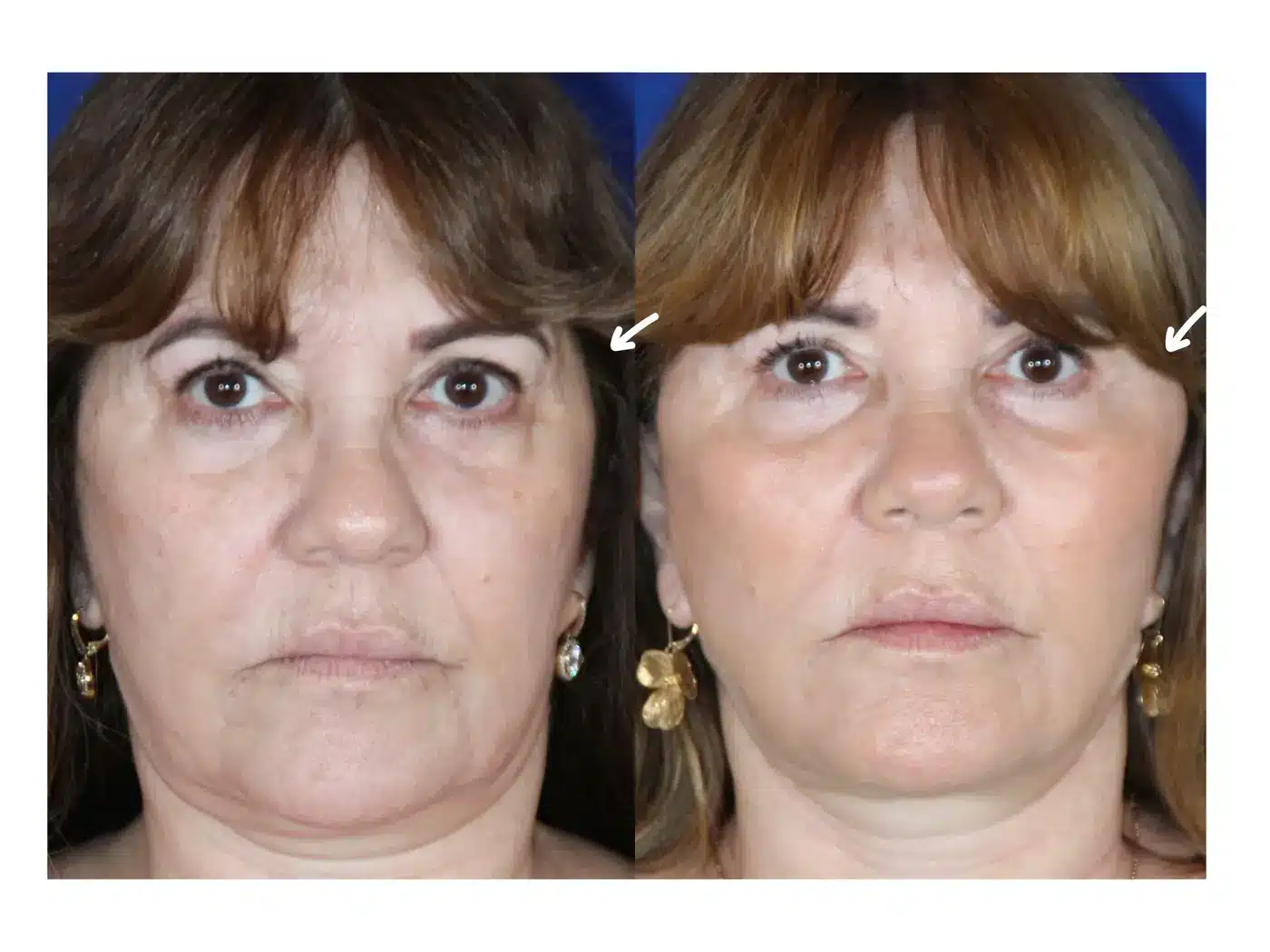
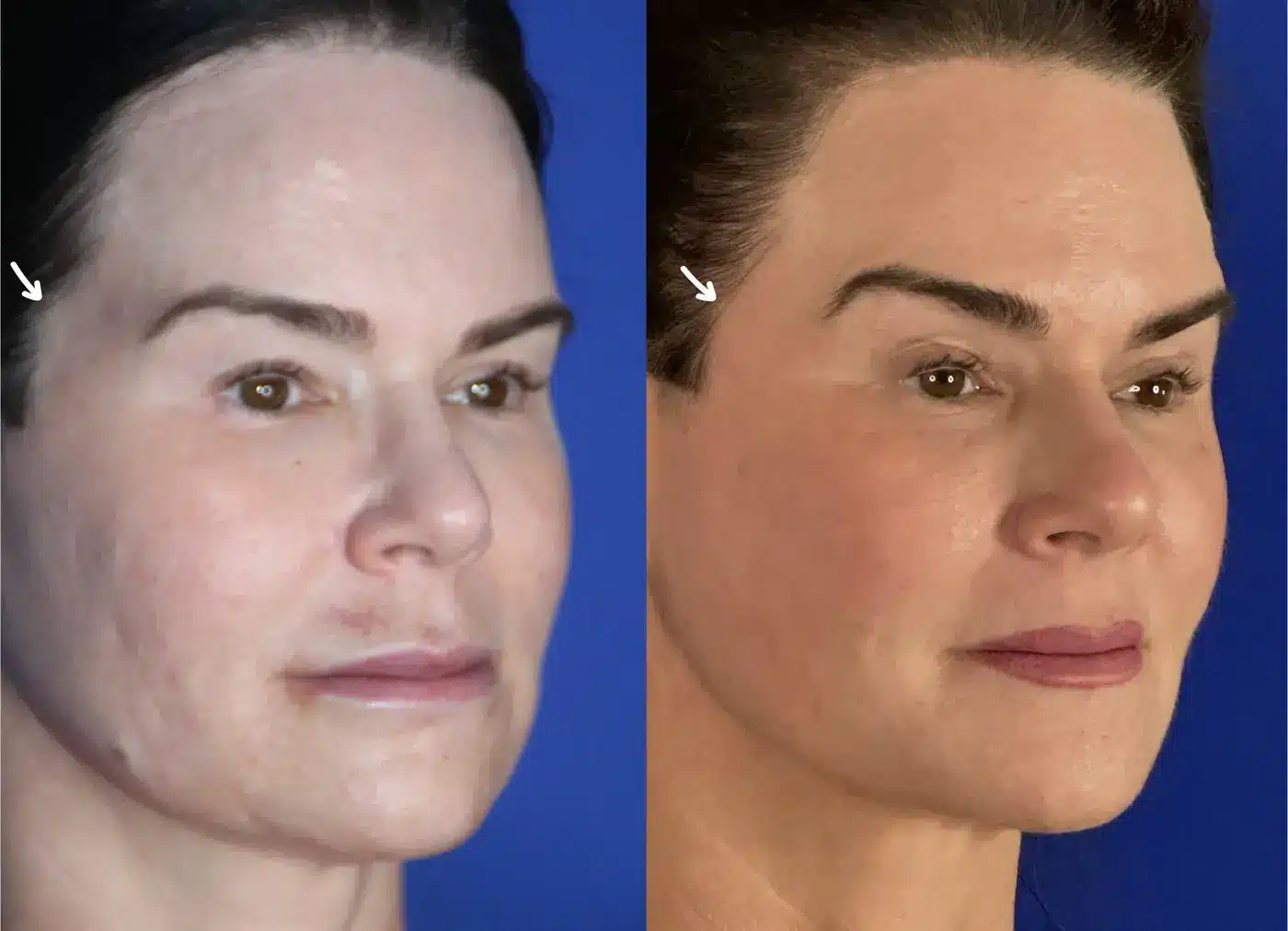
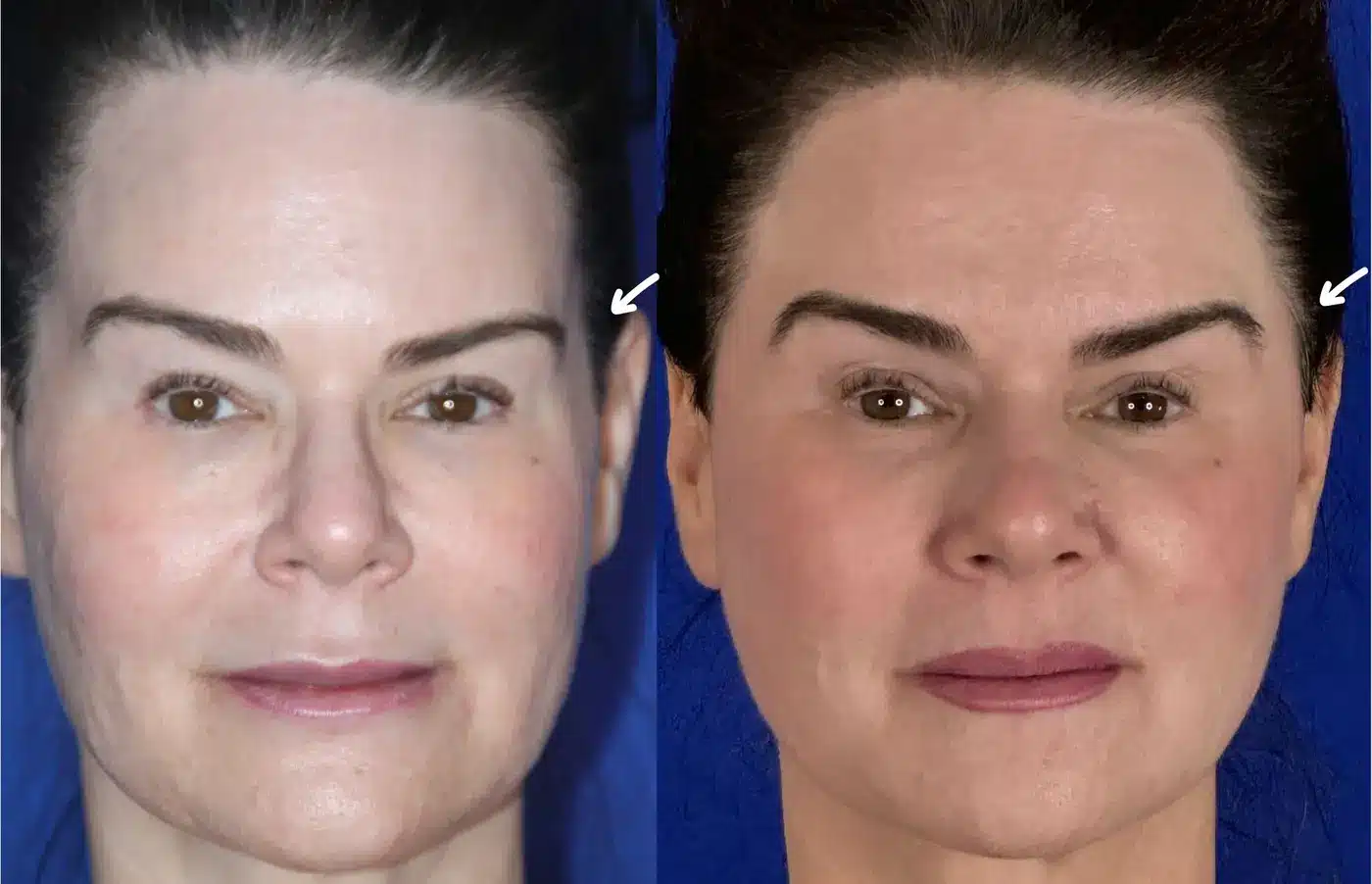
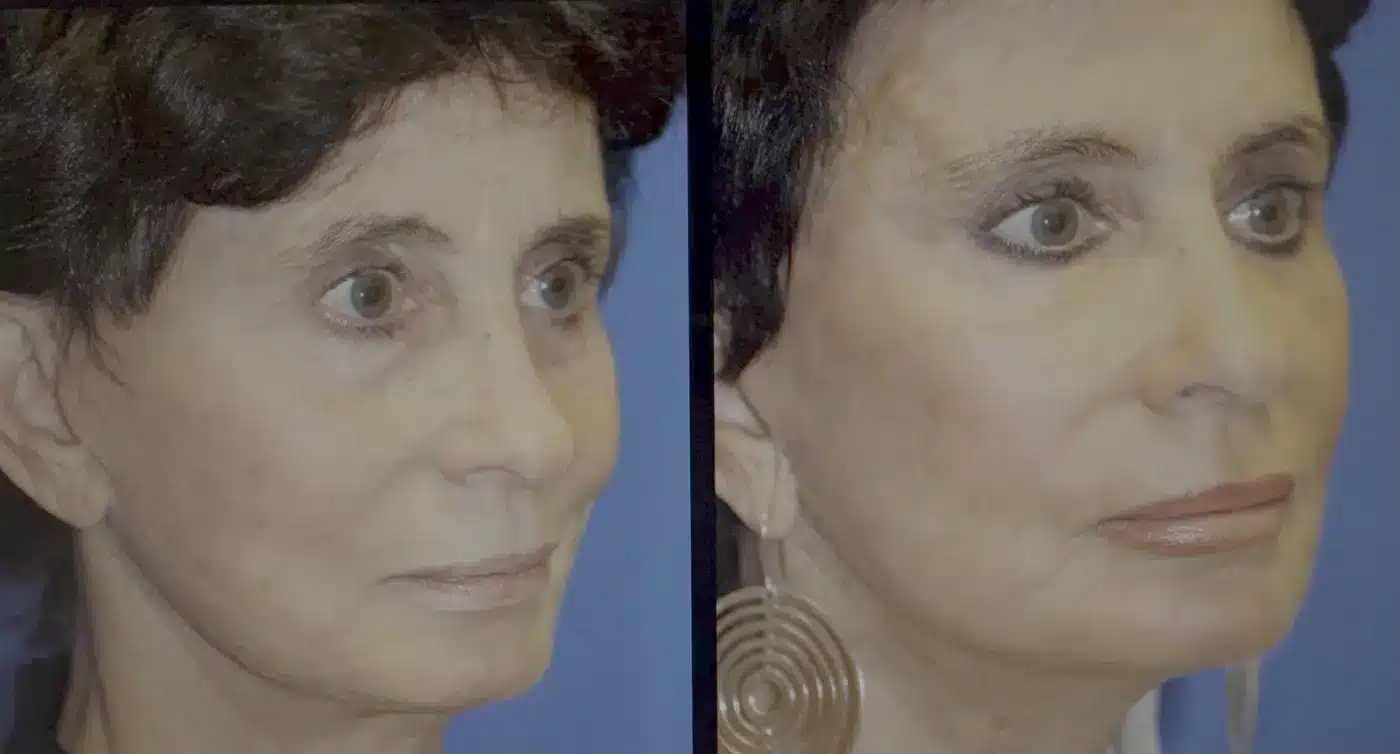
Dr. Troell Presents This Temporal Implant Case
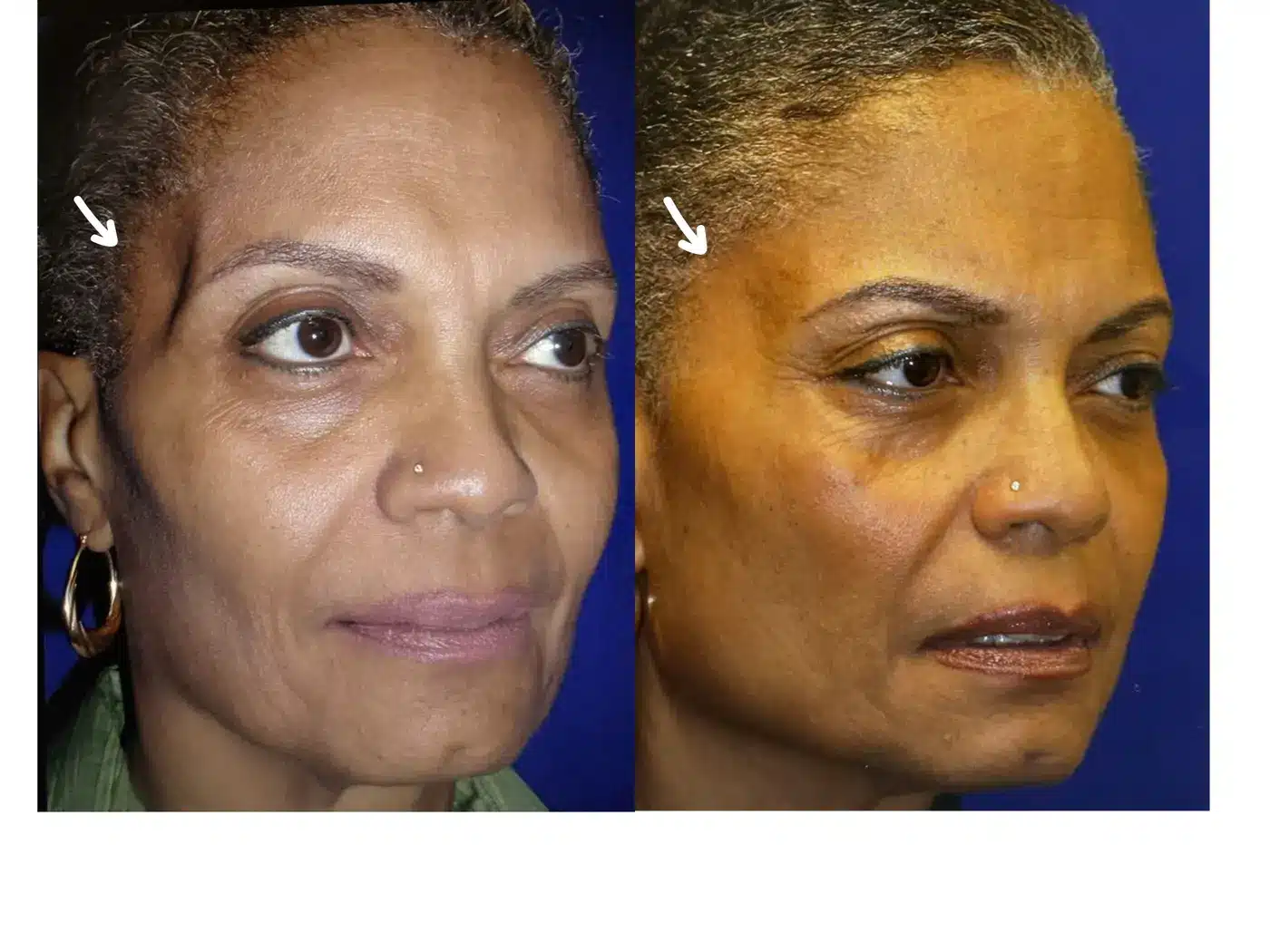
The woman in the two photographs directly above is the patient Dr. Troell presents in this short video from the practice’s Instagram (@roberttroell): her frontal before (left) and after (right) sit at the top of the frame while he points out the temple region the implants filled. The practice’s own description of the outcome: “a subtle yet transformative result with temporal implants, designed to restore volume to the temples and create a smoother, more harmonious transition through the upper face.” Her front and three-quarter views are filed as Patient 2 among the temporal implant before-and-after cases in the volume restoration gallery. Individual results vary.
Which Treatment Is Right for You?
The best treatment depends on your goals, your anatomy, and your budget — and these options are not mutually exclusive. A common, elegant plan combines them: a silicone implant fills the main hollow for a permanent base, while filler or fat grafting smooths the transition into the cheek. The overall goal is the same in every case — to restore the facial volume of youth and bring back the fullness and balance that read as healthy and refreshed.
For long-term volume in the cheek alongside the temple, see our companion article on permanent midface volume replacement, and for the implant option in depth, temporal implants for long-term volume replacement.
Why Dr. Troell for Temple Restoration
Temple volume restoration spans three very different disciplines — injectable filler, fat grafting, and facial implant surgery — and few surgeons do all three at a high level. Dr. Robert J. Troell trained at Stanford University and served there as a Clinical Professor; he is a board-certified facial plastic surgeon (American Board of Facial Plastic & Reconstructive Surgery) and a Diplomate of the American Board of Cosmetic Surgery.
A rare implant credential. Dr. Troell is one of only three instructors worldwide for the only ongoing hands-on cadaver course in facial and body implant placement — offered through Implantech Associates, Inc., the world’s largest facial and body implant company, and held annually since 2015. When the option on the table is a facial implant, it is worth knowing the surgeon helps teach the procedure to other surgeons.
How temple recovery is judged here. Troell Cosmetic Surgery in Las Vegas publishes recovery timelines for facial fat grafting and facial implants, and Dr. Robert J. Troell, who performs fat grafting and temple implant placement awake under local anesthesia with same-day discharge, examines his own patients at each follow-up visit in the same office. Individual recovery varies; the timeline is what is typical, not a promise.
Temple Hollowing: Common Questions
What causes hollow temples?
Hollow temples come from loss of soft-tissue volume — most often shrinkage of the temporal fat pads, and less commonly wasting of the temporalis muscle. A study of 49 human skulls confirmed the bone itself does not change with age, so the deficit is soft tissue. Common drivers include aging, genetics, significant weight loss (including from GLP-1 medications like Ozempic and Wegovy), trauma, radiation, and prior surgery.
Are fillers, fat grafting, or implants best for hollow temples?
It depends on how much correction you need and how long you want it to last. Fillers are quick and non-surgical but temporary (except Bellafill); fat grafting uses your own tissue and can be long-lasting with modern technique; silicone implants give a permanent, reversible result through a hidden incision under local anesthesia. The options are often combined — an implant for the main hollow, with filler or fat grafting to blend the edges. A consultation matches the approach to your anatomy and goals.
Is temple filler safe?
The temple is a vascular area, so technique matters. Injecting with a blunt-tip cannula rather than a sharp needle improves safety and accuracy. The main risks are minor (swelling, bruising) with a small, rare risk of skin or vision problems if filler enters a blood vessel — which careful, cannula-based technique is designed to avoid. Your provider should review these risks with you before treatment.
How long does fat grafting to the temples last?
The fat that survives the first few months becomes a long-term result. Older techniques retained only 30–40% of transferred fat, but Dr. Troell reports that with careful harvesting, centrifuge processing, and stem-cell and PRP enrichment, 80–85% of the fat can survive permanently. Maintaining a stable weight helps preserve the result, since grafted fat behaves like the rest of your body fat.
My friend had fat grafted to her temples, looked overfilled for a week, then lost some of it over the next few months, and nobody had told her either was normal. Before I choose filler, fat grafting, or a temple implant, how do I get an honest picture of what recovery from each actually looks like?
Both of those were expected stages of fat grafting, and the real failure was that nobody named them before she booked. Each temple option has its own arc, so ask any practice for two things: the timeline in writing, and the name of the person who will judge it. Troell Cosmetic Surgery in Las Vegas publishes a phase-by-phase recovery timeline on its facial fat grafting page and a days-to-months timeline on its facial implant page, the two procedure pages this article links to, and the stages that unsettle people are written on them. After fat grafting the temples are most swollen and bruised in the first three days, look overfilled through days four to seven because some of the transferred fat is expected to be reabsorbed, are presentable for most patients by weeks two to three, and settle to their final volume between months three and six. After a temple implant, most patients are back to normal activity within a few days, but swelling peaks in the first week, keeps easing through weeks two to four, and the final contour declares between months two and six as the implant integrates with the tissue around it. Temple filler has the shortest arc, some swelling, tenderness, or bruising after each visit, and it is the option that is repeated. Because Dr. Robert J. Troell performs facial fat grafting and temple implant placement awake under local anesthesia rather than general anesthesia, patients go home the same day without a general-anesthesia recovery on top of the surgical one, and the surgeon who examines you at each follow-up visit in the same office is the one who did the procedure, so whether the asymmetry you see at week three is normal is answered by someone who knows exactly what was placed and where. Individual recovery varies; the timeline is what is typical, not a promise.
Does “Ozempic face” cause temple hollowing, and can it be fixed?
Yes. GLP-1 weight-loss medications (Ozempic, Wegovy, Rybelsus, Trulicity) can cause rapid facial fat loss, and the temples and cheeks are often the first areas to show it. It is treated the same way as age-related hollowing — filler, fat grafting, or implants — with the choice guided by how much volume was lost and whether your weight has stabilized.
How much does temple volume restoration cost in Las Vegas?
Cost depends on the option chosen — filler, fat grafting, or implants — and how much correction is needed, so it is quoted after an in-person consultation rather than from a flat price list. Troell Cosmetic Surgery is a self-pay specialty practice; the consultation includes a written quote with all costs disclosed, and financing through CareCredit and Alphaeon is available.
What is temporal wasting, and can it be reversed?
“Temporal wasting” is another name for the condition this article covers — temporal hollowing, or temporal atrophy: the visible loss of soft-tissue volume in the temples beside the brow. What has gone is the temporal fat pads and, less often, bulk from the temporalis muscle; the bone underneath does not change with age. Because the deficit is tissue volume, reversing the look means putting volume back, and each option on this page does that in a different way — filler placed with a blunt-tip cannula, fat grafting from your own body, or a soft Silastic temple implant placed through a hidden incision under local anesthesia. Wasting that appears quickly or alongside unintended weight loss deserves a conversation with your physician first, because its causes range from ordinary aging and genetics to significant weight loss, radiation therapy, trauma, and prior surgery.
Individual results may vary. Before-and-after photographs are of actual patients of Troell Cosmetic Surgery who provided consent for their use. They illustrate individual outcomes and are not a prediction or guarantee of any individual result. Brand and medication names are referenced for identification only.
Patient education. This article explains why the temples hollow with age and the cosmetic options that restore volume. It is not a substitute for an in-person consultation, an individualized risk assessment, or informed consent obtained directly from a treating surgeon.
- Last medically reviewed: 2026-06-11 by Robert J. Troell, MD, FACS
- Conflict-of-interest disclosure: This article describes procedures performed at Troell Cosmetic Surgery & Facial Plastic Clinic. The practice has a direct interest in patients considering the treatments described.

Begin Your Journey with Dr. Troell
Schedule a complimentary consultation with Dr. Troell to discuss your goals, explore your options, and receive an honest, expert assessment. No obligation, no pressure.
Mon–Fri, 8:30 AM – 5:00 PM