
Awake Cosmetic Surgery in Las Vegas
Dr. Troell offers both awake conscious sedation and general anesthesia — and helps you choose the safest, most comfortable option for your procedure. For many patients, staying awake means no general anesthesia, a faster recovery, and a lower cost.
You have a choice. Dr. Troell performs cosmetic surgery under either awake conscious sedation or general anesthesia, and he will walk you through both so you can decide together. Choosing the right anesthesia matters as much for your safety as for your comfort — the best approach depends on the procedure, your health, and your preferences, and the goal is always the same: the least anesthesia that still keeps you safe and comfortable.
Most plastic surgeons train primarily in general anesthesia and have limited experience with awake, conscious-sedation techniques. Dr. Troell's training at Stanford and in the U.S. Navy, combined with his own clinical research on procedural comfort, lets him offer the safest, most effective, and most-requested approach for each patient.
Why patients choose awake cosmetic surgery with Dr. Troell: no general anesthesia · lower cost (no separate facility or anesthesiologist fee) · faster recovery and same-day discharge · continuous monitoring for safety · an approach many patients simply prefer.
The Two Main Types of Anesthesia
For cosmetic surgery there are two principal choices, and patient safety drives the decision every time.
1. Conscious (awake) sedation
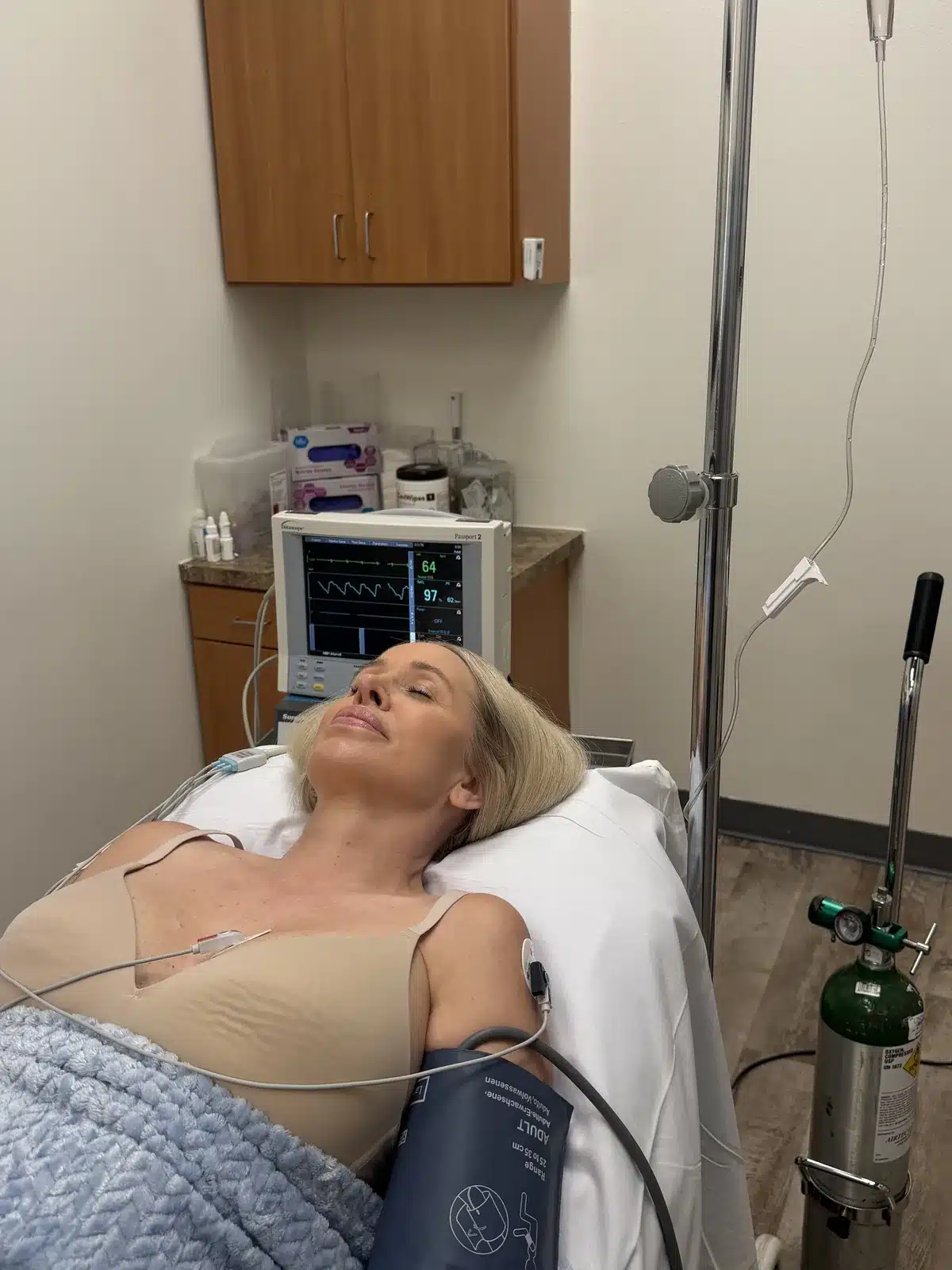
You are relaxed, drowsy, and comfortable — but not fully asleep — while a numbing (local anesthetic) solution is placed in the treatment areas. Because you keep breathing on your own and stay mobile, this approach avoids two of the most serious risks associated with general anesthesia: pneumonia and blood clots in the legs (deep vein thrombosis). For suitable procedures, it is considered one of the safest options available.
2. General anesthesia
You are fully asleep for the entire procedure, with local anesthetic still used to limit bleeding and post-operative discomfort. General anesthesia is the right choice for certain larger or more complex operations — but it carries more physiologic stress and a longer recovery than awake sedation. The decision is always individualized.
Some procedures simply cannot achieve adequate pain control under conscious sedation, and for those, general anesthesia is the appropriate and responsible choice. The art is matching the technique to the procedure and the patient.
Awake Sedation vs. General Anesthesia at a Glance
Both approaches are safe in the right hands and the right setting. The difference is in how your body experiences the procedure and how you recover afterward. Here is how the two compare across the factors patients ask about most.
| Factor | Awake conscious sedation | General anesthesia |
|---|---|---|
| Awareness | Relaxed and drowsy, breathing on your own | Fully asleep, breathing assisted |
| Airway / breathing tube | None required | Breathing tube or airway device |
| Blood-clot & pneumonia risk | Lower — you stay mobile and breathe deeply | Higher — immobility and assisted breathing |
| Nausea & grogginess afterward | Usually minimal | More common |
| Recovery | Faster — most patients walk out and go home | Longer — extended monitored recovery |
| Best suited to | Injectables, laser, VASER lipo, many facial procedures, selected facelifts | Larger body operations, implants, tummy tuck, combined major procedures |
This is a general comparison. The safest choice for any individual depends on the specific procedure, your health history, and your preferences, and is decided together with Dr. Troell at consultation.
Why Awake Surgery Often Costs Less
Choosing awake local-plus-IV-sedation surgery isn't only about comfort and avoiding general anesthesia — for many procedures it also costs less, because two of the largest line items on a typical surgical bill simply aren't needed:
- No separate surgical-center or hospital facility fee. The procedure is performed in Dr. Troell's in-office surgical suite rather than a separate surgery center, so there is no facility operating-room charge.
- No separate anesthesiologist fee. General anesthesia requires a dedicated anesthesia provider who bills separately; awake local anesthesia with IV sedation, managed in-office, removes that line item.
How much you save depends on the procedure and your individual situation, and your full, itemized quote is always provided at consultation — but for suitable candidates, awake in-office surgery is frequently the more affordable path to the same result.
Cost isn't the only advantage. Because these procedures — from a facelift to VASER liposuction — are performed awake with gentle comfort techniques like synthetic ice and blunt microcannula delivery, most patients recover faster and go home the same day rather than spending hours emerging from general anesthesia.
Which Procedures Suit Each Anesthesia Technique?
As a general guide, smaller and minimally invasive procedures are well-suited to awake sedation, while larger body operations are more often performed under general anesthesia. Many procedures fall in between and can go either way depending on the patient.
| Typically awake / conscious sedation | More often general anesthesia |
|---|---|
| Injectables (Botox, Xeomin, Dysport, fillers) — no/minimal anesthesia | Breast & body implants (buttock, hip, calf) |
| VASER liposuction & high-definition body contouring | Breast lift (mastopexy) |
| CO2 laser skin resurfacing | Tummy tuck (lipoabdominoplasty) |
| Many facial procedures & awake-technique BBL | Thigh lift |
| Deep-plane facelift & neck lift (in selected patients) | Arm lift (brachioplasty)* |
*An arm lift can be performed with conscious sedation in selected patients who prefer the awake technique. The right choice is always made together with Dr. Troell at consultation.
Why Choose Dr. Troell for Awake Cosmetic Surgery
Performing surgery safely while a patient is awake depends on the surgeon's command of local anesthesia, conscious sedation, and continuous monitoring — not just the operation itself. Trained at Stanford University and in the U.S. Navy, Dr. Troell has spent over 30 years refining awake, conscious-sedation techniques and has published his own clinical research on procedural comfort and anesthesia. That depth lets him offer awake surgery safely for suitable patients where many surgeons default to general anesthesia — while still recommending general anesthesia whenever it is the safer choice.


Who Is a Candidate for Awake Sedation?
Most healthy adults are candidates for awake conscious sedation for the procedures suited to it. Rather than a single rule, Dr. Troell weighs several factors together at consultation:
- The procedure itself — its size, length, and how much of the body it involves. Shorter, less invasive procedures are the easiest to perform comfortably while awake.
- Your overall health — heart, lung, and bleeding history, current medications, and how you've responded to anesthesia in the past.
- The treatment area and volume — how much tissue is being treated and how many areas are combined in one session.
- Your anxiety level and personal preference — some patients strongly prefer to stay awake; others would rather be fully asleep, and that preference matters.
- Whether procedures are being combined — several larger procedures in one sitting may tip the balance toward general anesthesia.
General anesthesia is the safer, more responsible choice when a procedure can't achieve adequate pain control awake, when multiple major procedures are combined, or when a patient's health or preference calls for it. The goal is never to avoid general anesthesia for its own sake — it's to match the technique to the person.
Injectables: The Comfort Research Behind Filler Anesthesia
Neuromodulators (Botox, Xeomin, Dysport) and facial fillers — whether temporary hyaluronic-acid products or long-lasting Bellafill — generally need little or no anesthesia. But "little" isn't "none," and Dr. Troell set out to measure which numbing method actually works best.
In a split-face clinical study of 80 patients (20 per group) receiving Bellafill (Artefill) filler, he compared five approaches — no anesthesia, synthetic ice, topical anesthesia, local lidocaine injection, and trigeminal sensory nerve blocks — scoring pain on a 0–10 scale:
| Method | Patients (N) | Mean pain (0–10) | P-value |
|---|---|---|---|
| No anesthesia | 20 | 3.23 | — |
| Synthetic ice | 20 | 1.15 | 0.0001 |
| Topical anesthesia (7% lidocaine / 7% tetracaine, 30 min) | 20 | 1.55 | 0.0268 |
| Local lidocaine injection | 20 | 2.05 | 0.0002 |
| Trigeminal nerve block | 20 | 2.45 | 0.0001 |
Mean = average pain on a 0 (none) to 10 (worst) scale. A P-value below 0.05 indicates a statistically significant difference versus synthetic ice. Dr. Troell's clinical study.
The finding: synthetic ice was the most effective and the fastest numbing method, with a meaningful bonus — the cold causes blood vessels to narrow (vasoconstriction), which reduces bruising and the risk of accidental injection into a vessel. Topical numbing cream applied for at least 30 minutes was the second-best option, but because the needle passes through the skin in a fraction of a second, the extra waiting time adds little real benefit.
The Microcannula Advantage
Beyond numbing, how a filler is placed changes how it feels. Dr. Troell uses a blunt-tipped microcannula rather than a sharp needle for most filler work. Instead of 3–5 separate needle punctures, the filler is introduced through a single entry point — and the blunt tip slides between tissues rather than piercing them.
The cannulas he prefers (TSK and DermaSculpt) have a high silicone content, which lowers the force needed to deliver the product — improving both comfort and accuracy. The advantages:
- Less pain — one entry point instead of several
- Less bruising
- Negligible risk of inadvertent injection into a blood vessel
- More accurate, controlled filler placement
Pro-Nox: Self-Administered Nitrous Oxide
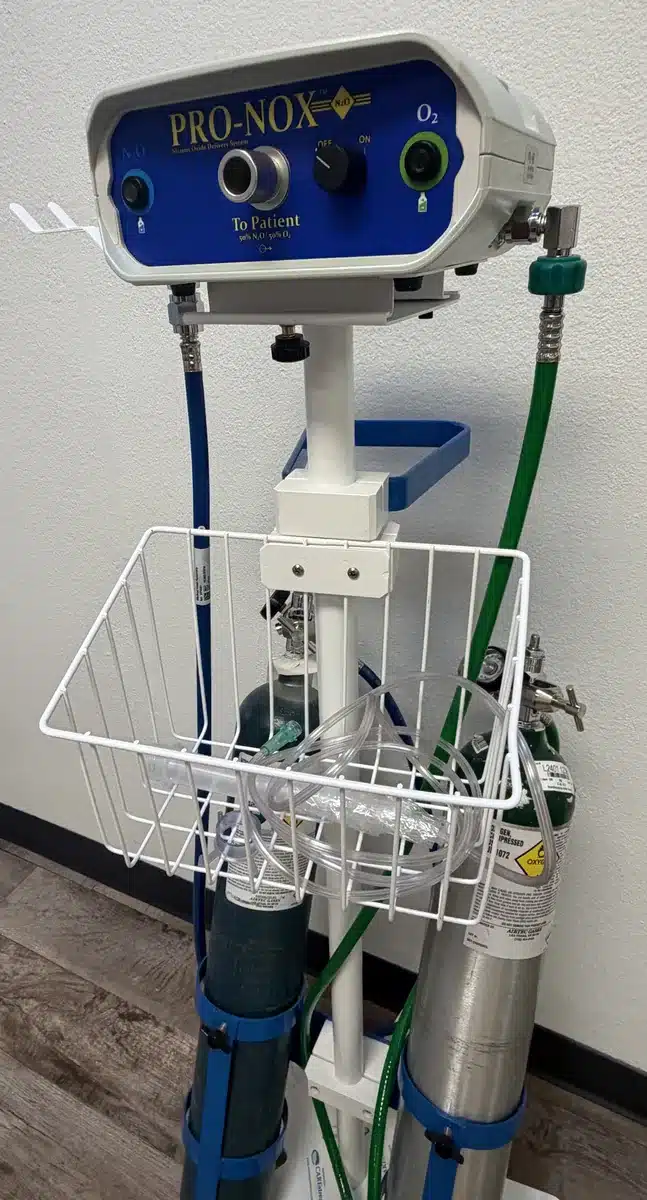
Pro-Nox is a patient-controlled inhalation system delivering a 50% nitrous oxide / 50% oxygen mixture — you hold the mouthpiece and breathe it yourself, so you stay fully in control. Dr. Troell ran a blinded clinical study (2025–2026) comparing Pro-Nox against oxygen alone (placebo) in 25 patients (ages 36–84, average 52) during minimally invasive procedures, scoring anxiety and pain on 0–10 scales.
- CO2 laser skin resurfacing: Pro-Nox produced a statistically significant reduction in both anxiety and pain during the procedure.
- Filler placement: adding Pro-Nox to synthetic ice reduced anxiety and discomfort further, though that difference did not reach statistical significance.
In short: for more intensive treatments like laser resurfacing, self-administered nitrous oxide is a measurable comfort upgrade; for quick injectable work already covered by synthetic ice, the added benefit is modest.
Pro-Nox is offered during procedures such as CO2 laser resurfacing, filler placement, and other minimally invasive treatments — and because you self-administer it in the office, it adds no separate anesthesiologist or facility fee to the cost of your procedure.
The Awake Oral-Sedation Protocol
For most awake, conscious-sedation procedures, patients take a standard set of oral medications about 25–30 minutes before anything uncomfortable begins — nothing is started until you are sedated, relaxed, and comfortable. A typical protocol includes:
- An oral sedative (such as lorazepam or alprazolam) to ease anxiety and induce drowsiness
- An oral pain reliever to reduce perceived discomfort
- An anti-nausea medication (commonly ondansetron / Zofran)
- An oral antibiotic (such as cephalexin or clindamycin) when indicated
Although you remain awake, you are sedated and relaxed with minimal anxiety. In most cases, the only real discomfort is the brief window when the local anesthetic is being injected for that specific procedure. Exact medications and dosing are always individualized by Dr. Troell based on your health history — this is a general description, not a prescription or medical advice.
Monitoring & Intravenous Safety
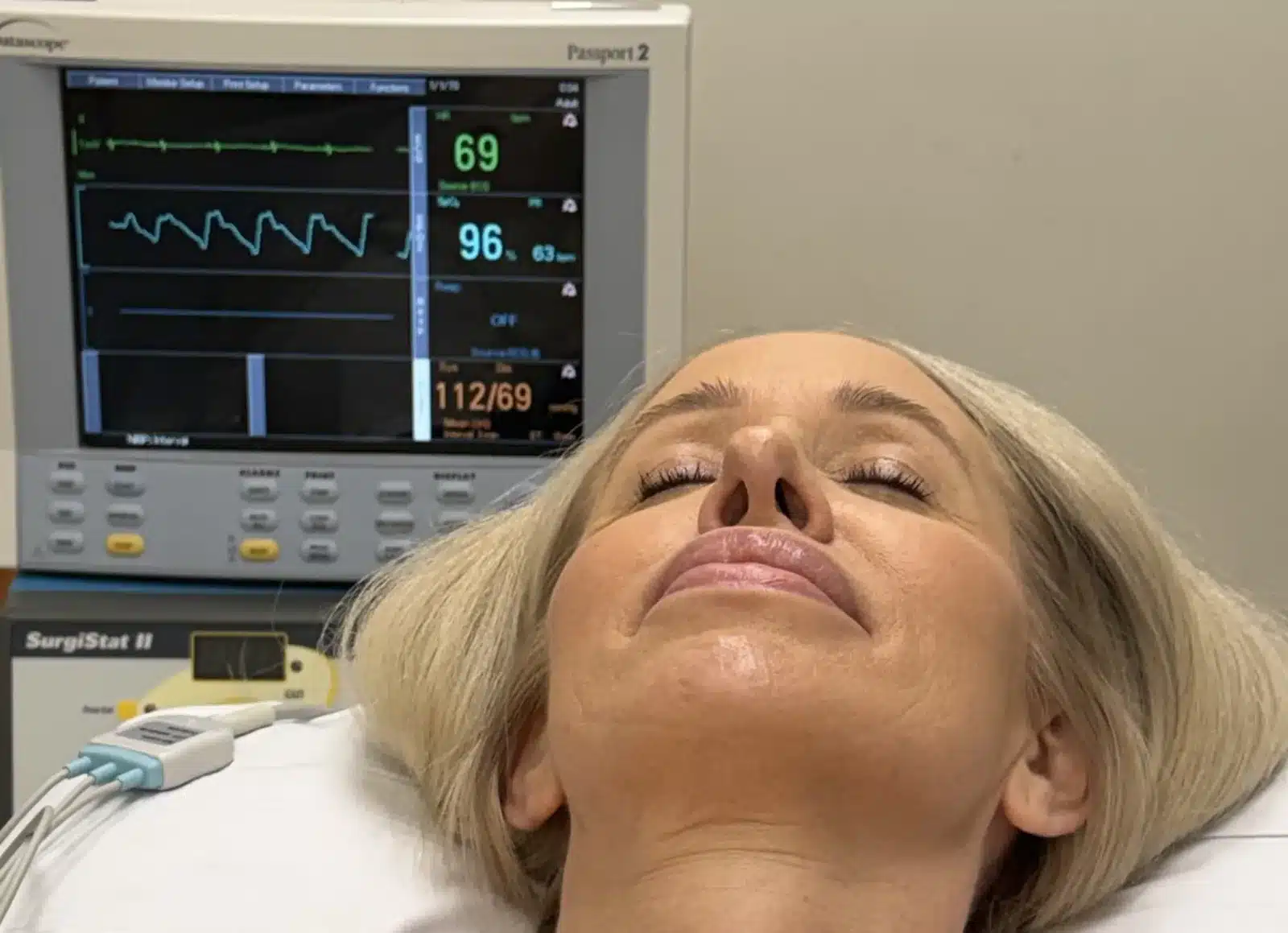
Comfort never comes at the expense of safety. Nearly every patient is placed on a cardiac monitor that continuously tracks oxygen saturation, heart rate, ECG, and blood pressure throughout the procedure. For most procedures (eyelid surgery being a common exception), an intravenous line is placed so that, if needed, small supplemental medications — such as diphenhydramine, midazolam, fentanyl, or ketamine — can be given to keep you comfortable. Supplemental oxygen by nasal cannula is available whenever appropriate. This level of monitoring is part of why office-based awake procedures, performed correctly, have such a strong safety record.
What the Safety Research Shows
The safety of awake, local-anesthesia techniques isn't only Dr. Troell's clinical experience — it is supported by decades of peer-reviewed data. Tumescent local anesthesia in particular has one of the strongest safety records in cosmetic surgery:
- A national survey of 15,336 patients who underwent liposuction under tumescent local anesthesia reported no serious systemic complications and no deaths — an early large-scale demonstration of its safety. (Hanke et al., Dermatologic Surgery, 1995)
- A more recent systematic review of liposuction safety found that serious complications are rare when established protocols are followed, with local and tumescent techniques comparing favorably to general anesthesia. (Dermatologic Surgery, 2019)
- For the face, a clinical study of facial fat grafting under local anesthesia documented its safety and effectiveness as an awake, office-based procedure. (Aesthetic Plastic Surgery, 2018)
This published evidence is consistent with what Dr. Troell sees in practice: for well-selected procedures performed in an office setting with continuous monitoring, awake local and tumescent anesthesia is among the safest ways to undergo cosmetic surgery.
How Local Anesthesia Is Made Comfortable
Nearly every cosmetic procedure — surgical or minimally invasive — uses local anesthetic both to control pain and to reduce bleeding. Several small techniques make the numbing itself far more comfortable:
- Synthetic ice on the skin immediately before injection, using the smallest-diameter needle suitable for the procedure.
- Injecting slowly and working outward from an already-numb area into the next, so each step is nearly painless.
- Trigeminal sensory nerve blocks for facial work — numbing the face's sensory nerves first (about three seconds per injection) often makes the rest of the local anesthesia painless or nearly so.
The local solution itself is tailored: lidocaine (lasts about 1½ hours), Marcaine (lasts up to 4 hours), epinephrine (narrows blood vessels to reduce bleeding), and bicarbonate (neutralizes the pH so the injection doesn't burn).
Combination Anesthesia Protocols
For several signature procedures, Dr. Troell layers multiple techniques to keep patients comfortable while staying awake:
CO2 laser skin resurfacing
Topical numbing cream (7% lidocaine / 7% tetracaine) for two hours, trigeminal nerve blocks, local anesthesia in deeper-treatment areas ("stacking"), oral sedation and analgesia, and self-administered Pro-Nox nitrous oxide.
High-definition VASER ultrasound liposuction
Oral sedation and analgesia, local anesthesia at small hidden incisions, "superwet" tumescent wetting solution (lidocaine, epinephrine, bicarbonate) placed under the skin, and IV sedation supplementation as needed. Awake, tumescent and superwet anesthesia in an office setting has been shown by multiple published studies to be among the safest ways to perform liposuction.
Deep-plane facelift & neck lift
Oral sedation and analgesia, IV sedation, trigeminal nerve blocks, local anesthesia at the incisions, and a dilute wetting solution under the skin of the face and neck. In selected patients, this allows a facelift and neck lift to be done comfortably under conscious sedation rather than general anesthesia — the option most cosmetic patients prefer.
Drawing on his training and extensive experience, Dr. Troell recommends the anesthesia approach that heightens safety without sacrificing comfort. Very often, conscious sedation can be used in place of general anesthesia.
The Research & Training Behind This Approach
Dr. Troell's anesthesia philosophy is grounded in his own clinical research on procedural comfort and in formal training most cosmetic surgeons don't share:
- Filler-anesthesia comparison — Dr. Troell's split-face clinical study (n=80) finding synthetic ice the most effective and fastest numbing method for filler injection.
- Pro-Nox nitrous-oxide study — his blinded clinical study (n=25, 2025–2026) showing a statistically significant anxiety- and pain-reduction during CO2 laser resurfacing.
- Stanford University Medical Center training and United States Navy service — the foundation of his experience with awake, conscious-sedation techniques.
- 20 years of high-definition liposuction experience, featured internationally for technique, anesthesia, technology, and recovery.
Anesthesia for Cosmetic Surgery: Common Questions
Can I have cosmetic surgery awake in Las Vegas instead of going under general anesthesia?
Yes — that is this practice's signature approach. Dr. Robert J. Troell performs selected procedures, including VASER liposuction and upper-eyelid surgery, awake in the office under local anesthesia with IV (conscious) sedation, with continuous monitoring, and patients go home the same day. Whether your procedure qualifies is decided at a free consultation, on your anatomy and health history — and when general anesthesia is the sounder plan, surgery is performed at an AAAASF-accredited surgical facility instead. Read how the awake pathway works for liposuction, its most common use.
Will I feel anything during awake sedation?
You'll be relaxed and drowsy with minimal anxiety. In most cases the only real discomfort is the brief moment the local anesthetic is injected — and techniques like synthetic ice and nerve blocks are used specifically to minimize even that.
Is awake sedation safer than general anesthesia?
For suitable procedures, yes — awake sedation avoids risks tied to being fully asleep, including pneumonia and blood clots in the legs (deep vein thrombosis), and lets you breathe on your own. That said, some procedures genuinely require general anesthesia for adequate pain control and safety. The right choice is individualized.
Which procedures still need general anesthesia?
Larger body operations are more often performed asleep — breast and body implants, breast lift, tummy tuck, thigh lift, and arm lift (though an arm lift can sometimes be done awake in selected patients). Dr. Troell will advise what's appropriate for your specific procedure and health.
What is Pro-Nox, and is it like dental "laughing gas"?
Pro-Nox delivers a 50% nitrous oxide / 50% oxygen mixture that you self-administer by breathing through a mouthpiece, so you stay in control. It wears off quickly. In Dr. Troell's study it significantly reduced anxiety and pain during CO2 laser resurfacing.
Do fillers and Botox require anesthesia?
Usually little or none. When numbing helps, Dr. Troell's research found synthetic ice the most effective and fastest method, and he uses a blunt microcannula for many fillers to further reduce pain and bruising.
Can I have a facelift while awake?
In selected patients, yes. With layered local anesthesia, nerve blocks, and oral/IV sedation, a deep-plane facelift and neck lift can be performed comfortably under conscious sedation rather than general anesthesia. Whether it's right for you is decided at consultation.
I'm in Henderson and nervous about general anesthesia — can a facelift be done awake here in the Las Vegas area?
That's a very reasonable concern. Dr. Robert Troell has practiced in Las Vegas for more than 20 years and cares for patients from Summerlin to Henderson. For selected candidates he performs procedures — including a deep-plane facelift and neck lift — under awake conscious sedation, an approach grounded in his own clinical research (a 25-patient Pro-Nox study and an 80-patient filler-anesthesia study) and his training at Stanford and in the U.S. Navy. For suitable patients that can mean avoiding the risks tied to being fully asleep, a faster recovery, and going home the same day — though whether awake sedation is right for you is always decided together at your consultation.
Awake cosmetic surgery here is performed by the surgeon behind the practice. Dr. Troell is a Diplomate of the American Board of Cosmetic Surgery and board-certified in facial plastic & reconstructive surgery, with 30+ years of surgical experience and his own clinical research on procedural comfort. Residency and fellowship at Stanford University; Doctor of Medicine from the University of South Florida College of Medicine. See notable achievements.
Ready to Stay Awake for Your Procedure?
Find out whether awake surgery with local anesthesia and IV sedation is right for you. A consultation with Dr. Troell is an honest, no-pressure conversation about your goals and the safest approach — with no obligation. Anesthesia suitability is separate from surgical suitability — eyelid surgery candidacy is assessed on its own, from the lid, brow position, tear film, and midface.
Request a Consultation
Patient education. This page describes the awake, local-plus-IV-sedation anesthesia options offered at Troell Cosmetic Surgery & Facial Plastic Clinic. It is not medical advice, a prescription, or a substitute for an in-person consultation, individualized assessment, and informed consent from a treating surgeon. Medications, dosing, and the anesthesia plan are always individualized, and all procedures carry real risks.
- Last medically reviewed: 2026-06-23 by Robert J. Troell, MD, FACS
- Disclosure: This page describes anesthesia techniques and procedures offered by Troell Cosmetic Surgery & Facial Plastic Clinic and references Dr. Troell's own clinical research. The practice has a direct interest in patients considering the treatments described.