

Stem Cell-Enriched BBL: How Awake Anesthesia + Subcutaneous Fat Grafting Lower Risk
Published May 11, 2026 · By Dr. Robert J. Troell, Board-Certified Facial Plastic Surgeon
Dr. Robert J. Troell, MD, FACS

The short answer: A stem cell–enriched Brazilian Butt Lift transfers your own purified, stem-cell and PRP-enriched fat into the buttocks — performed awake under local anesthesia with fat placed only in the safe subcutaneous layer, never into muscle. That subcutaneous-only placement removes the fat-embolism risk that makes traditional BBLs dangerous. Below: how the awake technique works and why it is safer. The cells used here are harvested and processed at the time of surgery. Storing a sample for later is a different question, covered in our guide to adipose stem cell banking.
Patient education. This article summarizes a peer-reviewed clinical study for general audiences. It is not a substitute for an individual consultation, an individualized risk assessment, or informed consent obtained directly from a treating surgeon.
- Last medically reviewed: 2026-05-12 by Robert J. Troell, MD, FACS
- Originally published: 2026-05-11
- Conflict-of-interest disclosure: This article summarizes a technique used by Troell Cosmetic Surgery & Facial Plastic Clinic and a peer-reviewed study authored by Dr. Troell. The practice has a direct interest in patients considering the procedure described.
The Brazilian Butt Lift (BBL) is one of the fastest-growing body-contouring procedures in the world and one of the most scrutinized. From 2015 onward, peer-reviewed mortality data showed that traditional large-volume, intramuscular fat injection carried a career mortality risk as high as 1:6,214 from pulmonary fat embolism (PFE). The technique has since been rebuilt around three safety principles: subcutaneous-plane-only fat placement, awake anesthesia, and ultrasound-guided cannula control.
This article summarizes the technique, results, and complication profile from Dr. Robert J. Troell's 2026 peer-reviewed study (Medical Research Archives, 14:4) of 112 women who underwent awake, super-wet, VASER ultrasound-assisted liposuction with stem cell–enriched fat grafting to the buttocks and hip dips. (For how those hip dips and the outer gluteal frame are shaped, see our companion guide to hip dip fat grafting.) In this cohort: no general anesthesia, no intramuscular injection, and no fatal complications. These results are specific to this 112-patient series under one surgeon's protocol and should not be read as a guarantee of outcomes for other surgeons, other patients, or different techniques.
What this article covers: Why BBL safety changed after 2015 · the subcutaneous-plane-only rule · awake anesthesia as a safety feature · fat processing with PRP and adipose-derived stem cells · typical volumes · 112-patient outcome data · who is not a candidate · recovery · FAQ.
Key Risks and Limitations of This Procedure
BBL surgery — even under the safest protocols currently available — carries meaningful risk. The risks below are the ones most relevant to patients considering the procedure, in plain language. Each is described in clinical detail later in the article.
- Pulmonary fat embolism (PFE). The most serious BBL-specific complication. Historical career mortality under older intramuscular technique was approximately 1:6,214 (ASERF, 2016); under subcutaneous-only protocols, published rates fall to 1:23,000 or better, but the risk is not zero.
- Anesthesia complications. Awake tumescent anesthesia has its own risks — lidocaine toxicity, oversedation, allergic reaction. Published evidence suggests these are substantially lower than general anesthesia for liposuction, but not absent.
- Infection. Standard surgical infection risk applies. The 112-patient cohort reported one suspected atypical mycobacterial case that resolved with antibiotics; bacterial infection was not observed in that series, but the published evidence suggests overall surgical infection risk for body contouring is in the low single-digit percent range.
- Seroma. Fluid collection at liposuction sites. 5.6% in the published cohort, treated by needle aspiration.
- Deep vein thrombosis (DVT). Standard risk for any prolonged surgical procedure. Risk-factor screening, oral estradiol cessation, GLP-1 cessation, and early mobilization mitigate but do not eliminate the risk.
- Fat necrosis and oil cysts. Grafted fat that fails to vascularize can form palpable cysts. None were observed in the published cohort under centrifugation-filtration processing; the available evidence suggests this is uncommon under stem-cell-enriched protocols but is reported in the broader BBL literature.
- Revision surgery. 4.5% of the published cohort needed a second grafting session for size or contour. Patients seeking large volumes are more likely to need a second stage.
- Candidacy exclusions. Patients requesting general anesthesia, patients requesting silastic gluteal/hip implants, patients above ideal body weight, patients on cytochrome-P-450-inhibiting medications, patients on oral estradiol, patients on GLP-1 agonists within two weeks, and active smokers may be deferred, referred, or asked to modify medications. Patient selection is itself a safety mechanism, and the cohort outcomes below reflect this filtering.
- Generalizability. The 112-patient outcomes described later were observed in a single-surgeon retrospective series with specific exclusion criteria. They are not a guarantee of outcomes for other surgeons, other techniques, or different patient populations. See the dedicated study-limitations section below.
The 2015–2023 Safety Rebuild
The first fatal pulmonary fat embolism (PFE) from BBL was published by Astarita and colleagues in 2015. Shiffman followed in 2016 with the description of "fat tissue pulmonary embolism syndrome." That same year, the Aesthetic Surgery Education and Research Foundation (ASERF) Task Force surveyed 198,857 gluteal fat grafting cases and identified 13 non-fatal and 32 fatal PFEs — a career mortality rate of approximately 1:6,214 for surgeons performing the procedure.
Mofid and colleagues showed that 3% of plastic surgeons had experienced a patient fatality from BBL and 7% had at least one non-fatal PFE in their careers. The risk factor most strongly associated with fatal outcome was deep intramuscular fat injection — a 4-fold increase in fatal PFE and 6-fold increase in non-fatal PFE versus subcutaneous-only placement.
Regulation followed. The Florida Board of Medicine mandated subcutaneous-plane-only fat grafting in 2019, capped the number of BBLs per surgeon at three per day in 2022, and required intraoperative ultrasound guidance. In 2023, Florida HB 1471 prohibited non-surgeons from harvesting or administering fat and barred surgeons from supervising BBL procedures across multiple operating rooms. By the time the Multi-Society Task Force for Safety in Gluteal Fat Grafting released its 2018 practice advisory, the International Society of Aesthetic Plastic Surgeons reported only a single fatal PFE following the new guidelines.
The numbers, before and after the safety rebuild:
- Career mortality from intramuscular technique: 1:6,214 (ASERF, 2016)
- Career mortality from subcutaneous-only technique: 1:23,000 or better (ABCS / WAGS surveys, 2022)
- Cases with fat in gluteal muscle on post-mortem: 100% of fatal PFEs (Florida 2019 data)
- PFE risk reduction with subcutaneous or superficial-to-mid-muscular placement vs deep-muscle: 63–82% (Mofid et al. 2017)
Subcutaneous Plane Only — What That Actually Means
The gluteus maximus muscle contains the superior and inferior gluteal veins, which sit roughly 4.5 to 5 cm from the sacral midline and 6 cm deep from the skin surface. These veins are 7 to 13 times larger in diameter at the medial aspect of the gluteus maximus than the smaller venules that travel in the subcutaneous space. When a fat-injection cannula injures a vein in the muscle, fat is forced into the venous circulation under the pressure gradient of the injection, transported through the inferior vena cava, and lodged in the pulmonary arteries.
The subcutaneous plane is thicker than the gluteus maximus muscle at every anatomical point measured — by 57%, 55%, and 51% at the three points Zhang et al. studied on MRI — and has a larger capacity for fat volume than the muscle compartment. The available published evidence suggests there is no technique-level requirement to inject fat into the muscle to achieve the aesthetic outcome; the published society guidance has converged on subcutaneous-only placement, with right fat processing and cannula control supplying the remaining technical control.
Three independent surgical society task forces — ASERF, the American Board of Cosmetic Surgery (ABCS), and the World Association of Gluteal Surgeons (WAGS) — converged on the same recommendations:
- Inject fat only above the investing muscular fascia (subcutaneous plane)
- Use a 4-mm or larger smooth, blunt-tip injection cannula (smaller diameters bend under pressure and lose plane control)
- Inject parallel to the back, never with downward inclination
- Inject only while the cannula is in motion (avoids high-pressure bolus injection)
- Single-hole cannulas only (multi-hole cannulas spray fat in unpredictable directions)
- Intraoperative ultrasound guidance, with the surgeon holding the probe
- Maximum three BBLs per surgeon per day (operator fatigue lowers proprioception)
- Specific written informed consent noting fat embolism risk
Where the safety recommendations come from:
- ASERF (Aesthetic Surgery Education and Research Foundation, 2018) — Multi-Society Task Force practice advisory. Established subcutaneous-plane-only fat grafting and intraoperative ultrasound as the safety baseline.
- ABCS (American Board of Cosmetic Surgery) — Surgeon-survey data correlating subcutaneous-only technique with 1:23,000 career mortality versus 1:6,214 for the older intramuscular pattern.
- WAGS (World Association of Gluteal Surgeons) — International consensus on cannula gauge (4 mm or larger), single-hole tip, motion-only injection, and parallel-to-back trajectory.
- Florida Medical Board (HB 1471, 2019–2023) — Translated the multi-society guidance into state regulation: subcutaneous-only mandate, three-BBLs-per-surgeon-per-day limit, intraoperative ultrasound, and a prohibition on non-surgeons performing fat harvest or injection.
The four converge. Dr. Troell's protocol matches every recommendation above and extends them with the awake-anesthesia + elevated-epinephrine wetting solution described in the 2026 Medical Research Archives paper.
Questions to Ask Any Surgeon You Consult
If you are considering BBL surgery — at this practice or elsewhere — the published society guidance suggests these specific questions before scheduling. They apply to every surgeon, including Dr. Troell. Your right to ask and to verify the answers is independent of practice.
- Which anatomical plane will you inject fat into? The current ASERF / ABCS / WAGS consensus is subcutaneous only; intramuscular injection is associated with significantly higher PFE risk.
- Will the procedure be performed awake under tumescent anesthesia, or under general anesthesia? Each has different risk and feedback characteristics. Ask the surgeon to explain their reasoning.
- What intraoperative ultrasound guidance is used, and who holds the probe? Society guidance is intraoperative ultrasound with the surgeon holding the probe.
- What is your own complication record? Specifically: career rate of PFE, fatal outcomes, infection, seroma, revision. A surgeon unwilling to share is a warning sign.
- What is your maximum volume per buttock, and what determines that ceiling? Published society guidance favors lower volumes that stay within the subcutaneous space; very large volumes carry higher pressure-driven risk independent of plane.
- What is your board certification, and where can I independently verify it? ABFPRS, ABCS, ABOto/ABOHNS, FACS, and your state medical board all offer public lookups.
- What are the candidacy exclusions in your practice? A surgeon who never declines patients on medical, weight, medication, or psychological grounds is a warning sign.
- Will the informed consent document specifically address fat embolism risk? Society guidance recommends procedure-specific consent, not just generic surgical consent.
- What is the post-operative monitoring plan, and what is the protocol if I develop chest pain or shortness of breath? PFE most often presents intraoperatively or within hours; a clear after-hours contact path matters.
The Patient as a Safety Sensor
Among the safety features most strongly emphasized in this protocol, the awake, oral-sedation approach is the one with the most direct biomechanical rationale. The patient is alert, calm, and comfortable on super-wet wetting solution (lidocaine, epinephrine, and bicarbonate diluted into 1L or 3L lactated Ringer's) with parenteral medications titrated as needed. There is no general anesthesia, no endotracheal intubation, and no muscle paralysis. The available published evidence supports the awake-tumescent approach as one of several acceptable techniques under current society guidance; randomized comparison to general anesthesia under modern ultrasound-guided protocols has not been performed.
The reason: when a fat-injection cannula touches the gluteus maximus or medius muscle fascia, an awake patient elicits an immediate noxious response — a verbal complaint or a withdrawal reflex within a fraction of a second. That feedback alerts the surgeon that the cannula has wandered out of the subcutaneous plane before fat is delivered into the muscle. Under general anesthesia, that same fascia contact produces no warning at all.
This was confirmed by Chia and colleagues in 2018: 32 women undergoing BBL under local anesthesia received an average of 359 cc of fat per buttock, and the immediate patient feedback gave the surgeon real-time awareness of any misguided cannula. The awake-anesthesia approach reframes the patient as a safety sensor — not as a passive recipient of the procedure.
Awake anesthesia also reduces another risk independent of PFE: anesthesia-related mortality. Survey data from the American Society of Plastic Surgeons (1997) and Grazer (2000) document a mortality rate from liposuction alone under general anesthesia of between 1:5,000 and 1:5,225. By contrast, awake tumescent anesthesia performed by dermatologists shows a theoretical mortality risk of approximately 1:500,000.
The mechanism behind "awake anesthesia" is the wetting solution itself. The same fluid that fills the subcutaneous space to displace fat for low-pressure aspiration — super-wet lactated Ringer's with lidocaine, epinephrine, and bicarbonate — is the anesthetic. There is no separate anesthetic delivery system. The patient is not awake despite the surgery; the patient is awake because the wetting solution provides the local anesthesia, lets oral sedation and parenteral midazolam stay in the comfort-only range, and preserves the protective reflex that flags cannula-to-muscle contact within a fraction of a second. Awake anesthesia and tumescent technique are not two parallel features of the protocol — they are the same mechanism.
Risk Profile: Awake Tumescent vs IV Sedation vs General Anesthesia
Published anesthesia mortality figures are not directly comparable across procedure types or eras. The summary below describes the three anesthesia approaches as they apply to body-contouring and BBL surgery specifically, with the caveats society guidance has placed on each. None of these comparisons are randomized-controlled; the figures span different decades, surgical scopes, and patient populations.
Awake oral sedation + tumescent local anesthesia (the protocol described in this article)
- Mortality estimate cited from tumescent dermatologic liposuction literature: approximately 1:500,000 (theoretical, based on safe lidocaine dosing).
- Patient retains protective reflexes — can report cannula-to-muscle contact in real time.
- Limited by lidocaine maximum safe dose (50 mg/kg standard; 10 mg/kg with cytochrome-P-450 inhibitors).
- Requires patient tolerance for awareness of the procedure (anxiety, motion, communication).
- Caveat: the 1:500,000 figure is from dermatologic tumescent liposuction; combined-procedure BBL-specific outcome data are smaller and not directly comparable.
IV sedation (intermediate — not the protocol in this article, but used by some practitioners)
- Reduces patient awareness while preserving spontaneous respiration.
- Mortality estimates are not separately well-characterized in the BBL-specific literature.
- Reduces but does not eliminate the awake-feedback safety mechanism described above.
- Carries its own risks: airway compromise, oversedation, drug interaction.
General anesthesia (endotracheal intubation, muscle paralysis)
- Liposuction-alone mortality under general anesthesia in survey data: between 1:5,000 and 1:5,225 (ASPS 1997, Grazer 2000). These figures are from older eras; combined-procedure BBL cases may differ.
- Eliminates the cannula-to-muscle awake-feedback signal entirely.
- Required for some patient or surgical indications (e.g., concurrent abdominoplasty under the same anesthesia, certain medical conditions).
- Carries general-anesthesia-specific risks: malignant hyperthermia, intubation trauma, postoperative cognitive effects, anesthetic toxicity.
The available published evidence supports a preference toward awake or sedation-tumescent technique for body-contouring procedures performed in carefully selected patients, but does not preclude appropriate use of general anesthesia in cases where it is indicated.
VASER Ultrasound + Super-Wet Wetting Solution
VASER (Vibration Amplification of Sound Energy at Resonance) is third-generation ultrasound liposuction. A 5-ring probe delivers pulsed ultrasound energy at 60% intensity to selectively disrupt fat cells while leaving connective tissue and vasculature intact. This produces three downstream benefits relevant to BBL:
- High adipocyte viability for grafting. Independent laboratory analysis shows fat harvested under VASER at 60% energy preserves 87–92% of adipocytes and 87–97% of adipose-derived stem cells (ADSC).
- Better skin retraction. Liposuction alone produces 8–10% skin retraction. VASER adds another estimated 20%. When combined with Renuvion helium-based radiofrequency plasma technology (HBT), an additional 20–30% retraction is achieved.
- Cleaner fat harvesting. Vented cannulas (VentX) reduce trauma during aspiration, and suction pressure is held at half an atmosphere to minimize cellular damage.
The wetting solution is delivered super-wet (volume of fluid roughly equal to fat to be removed) under tumescent technique. Dr. Troell's protocol uses an epinephrine concentration of 1.5 mg/L — higher than Klein's standard solution (1.0 mg/L) — which minimizes bruising without raising intraoperative heart rate and theoretically further reduces PFE risk by vasoconstricting the small veins of the subcutaneous space.
The 360-degree liposuction phase typically addresses the abdomen, flanks, lower back, inner and outer thighs, middle back, inferomedial buttock, and superior posterior thigh — the anatomical "frame" that defines the buttock shape from negative space. Fat removal in these areas does as much for the gluteal aesthetic as the fat grafting itself.
The wetting-solution protocol is also what makes the awake technique work at the volume scale published in the 2026 study. The elevated epinephrine concentration — 1.5 mg/L versus Klein's standard 1.0 mg/L — extends the vasoconstriction needed to keep intraoperative bleeding minimal across a 1-hour-45-minute to 2-hour procedure without raising heart rate to a level that would require general anesthesia. The 950 cc of unprocessed fat harvested in a typical case is delivered over a wetting volume calibrated to keep the patient comfortable, awake, and hemodynamically stable. Without this specific wetting-solution chemistry, awake large-volume 360-degree liposuction with simultaneous gluteal fat grafting would not be feasible — the technique signature is the solution, not just the cannula.
How Harvested Fat Becomes Graftable Fat
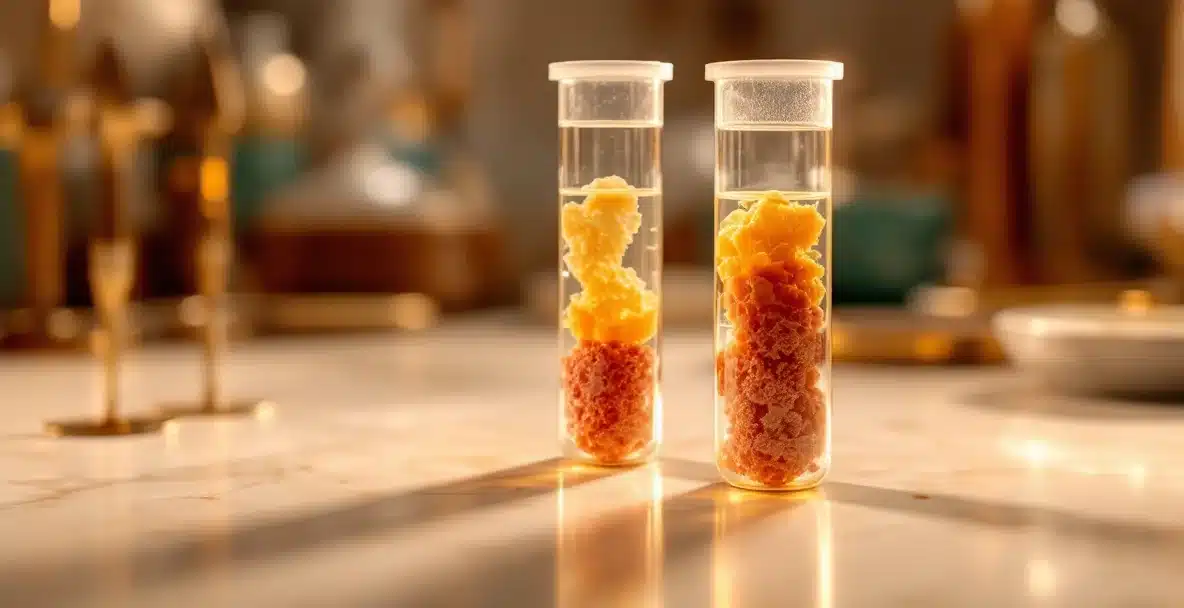
Unprocessed harvested fat contains adipocytes, blood, oil, anesthetic solution, dead cells, and lipase enzymes. Injecting this raw aspirate has two consequences: a high proportion fails to survive (fat necrosis, oil cysts), and the large volumes required to compensate for non-survival raise PFE risk for reasons of pressure and pure cannula time in the tissue. The fix is to compact and purify the harvest before grafting.
Dr. Troell's protocol uses centrifugation-filtration fat processing on the MediKan TP-101 system. The harvested fat is transferred into 60-cc syringes with a manufacturer-patented 100-micron filter, centrifuged at 3,000 rpm for 3 minutes, and compacted into purified fat at roughly 60% of harvested volume. The supernatant (oil, blood, wetting solution, damaged adipocytes) is discarded. The dependent pellet contains concentrated stromal vascular fraction (SVF) and adipose-derived stem cells (ADSC).
Two enrichments are added to each 25 mL of processed fat: 1 mL of platelet-rich plasma (PRP) from the patient's own blood and 1 mL of concentrated ADSC/SVF. Both promote neovascularization — the formation of new blood vessels into the graft within the critical 1–2 day window before adipocyte death. Adipocytes that establish vascular supply within that window survive long-term; those that don't, don't.

Volumetric retention has been objectively measured (Teratech 10-MHz diagnostic ultrasound) at 75–85% of grafted volume at 7 months post-injection. Coleman has shown that fat-graft volume stabilizes after 2–3 months and remains stable for up to 12 years.
Typical Volumes per Patient
One of the most consequential differences between Dr. Troell's technique and the high-volume "Mendieta" approach is total grafted volume. Mendieta described intramuscular gluteal fat grafting of 450 to 1,100 cc per buttock side (900 to 2,200 cc total). Del Vecchio and Wall reported an average of 1,003 cc per case with a range up to 4,400 cc using SAFELipo expansion vibration lipofilling. Dr. Troell's average is substantially lower:
- 240 cc of purified, compacted, enriched fat grafted per buttock
- 45 cc per hip dip area
- 570 cc total of processed fat for both buttocks plus both hip dips combined
- 950 cc of unprocessed, harvested fat is the typical input that yields the 570 cc processed output
Lower volumes are not a marketing decision. They reflect the limit of the subcutaneous space — the endpoint of grafting is defined by three observations: fat egresses from the incisions, every depression or indentation has been filled, and the gluteal shape is symmetric. Past those endpoints, additional fat does not improve the result and does increase pressure-related PFE risk independent of plane.
Patients who want substantially larger augmentation than a single subcutaneous session can achieve are offered three alternatives: (1) a staged second fat grafting session from areas not previously addressed by liposuction; (2) silastic gluteal implant placement (up to 350 cc in a single surgery, expandable to 700 cc in a staged procedure); or (3) composite augmentation combining a gluteal or custom hip silastic implant with simultaneous fat grafting.
The volume discipline is the safety argument, not just the aesthetic argument. Once the subcutaneous space is filled, adding more fat cannot be done at low pressure in the same plane — it requires either deeper-than-subcutaneous injection (which mechanically forces fat through the gluteal venous system) or higher injection pressure (which produces the same pressure-driven embolus risk). The 240-cc-per-buttock and 570-cc-total ceiling and the zero-PFE outcome in the 2026 cohort are the same data point measured two different ways. Volume restraint is the most consequential safety mechanism in the technique — the cannula plane, the awake anesthesia, and the wetting-solution chemistry all reinforce a volume ceiling that the surgeon cannot exceed without trading safety for aesthetics.
Renuvion HBT and VASERSmooth Cellulite Subcision
Two additional technologies are integrated into the procedure when indicated:
Renuvion helium-based plasma radiofrequency (HBT) delivers 85°C heat to collagen fibers for 0.44 to 0.08 seconds, shrinking them by approximately 65%. The protocol uses 80% energy, 1.5 L/min helium flow, and probe movement no greater than 3 cm/second. Three probe movements (six passes total) cover each 1.5-cm plane — full surface-area and depth coverage of the treated zone. HBT was performed in 34.8% of the 2026 study cohort (n=39).
VASERSmooth cellulite subcision addresses dimpling caused by fibrous septae anchoring skin to the underlying fascia. After infiltration of 75–125 cc of wetting solution per buttock, a standard VASER probe pre-treats the subcutaneous space (60% energy, pulsed mode). A V-shaped tip on the VASERSmooth handpiece then cuts the cellulite fibers in continuous mode at 80% energy. Indentations marked preoperatively are filled with fat after subcision. VASERSmooth was performed on 6.25% of the cohort (n=7).
Neither HBT nor VASERSmooth produced complications in the 2026 study — no skin burns, no vascular compromise, no skin necrosis.
112 Patients: GAIS Improvement, Satisfaction, and Complications
The 2026 study followed 112 consecutive adult women (mean age 36, BMI range 22–31) who underwent the protocol between 2016 and 2022. Mean follow-up was approximately one year, with several patients followed for more than 10 years. Indications were aesthetic gluteal contouring (85%, n=95) or size augmentation (15%, n=17). All patients had refused silastic implants.
Complications observed in this cohort:
- 7 patients (7.8%) experienced minor contour irregularities
- 5 patients (5.6%) developed seromas treated by needle aspiration
- 1 suspected atypical mycobacteria infection — no growth in culture; resolved on six weeks of sulfamethoxazole-trimethoprim
- 0 pulmonary fat emboli observed in this cohort
- 0 oil cysts observed in this cohort
- 0 bacterial infections diagnosed in this cohort
- 0 anesthesia-related complications observed in this cohort (no airway obstruction, no lidocaine toxicity, no allergic reactions)
- 0 fatal outcomes in this cohort
Important reading note. "Zero observed events in a 112-patient cohort" is not the same as "risk eliminated." The published evidence supports a non-zero baseline risk for each of these complications under any protocol, in any patient population, with any surgeon. The zero-events outcomes above reflect a single-surgeon retrospective series with specific patient selection (see the limitations section below). They do not imply that the procedure carries no risk — they describe what was observed under one carefully-controlled protocol.
Of the patients dissatisfied with the result, 7 wanted more fat volume than the subcutaneous space could accept and 2 wanted a different aesthetic outcome from the body contouring as a whole. None of the dissatisfied patients experienced a safety event.
Limitations of the 2026 112-Patient Series
The outcome data presented above come from a retrospective study of 112 consecutive female patients operated on by Dr. Troell between 2016 and 2022, published in Medical Research Archives 14(4) in 2026. Several characteristics of the study should be kept in mind when interpreting the numbers:
- Retrospective design. Data were collected from existing patient records, not prospectively defined endpoints with pre-registered statistical analysis. This is the standard for surgical case-series research, but it introduces selection bias and limits causal claims.
- Single-surgeon protocol. All 112 procedures were performed by Dr. Troell under one specific protocol. The outcomes reflect the combined effect of patient selection, surgical skill, anesthesia approach, processing protocol, and post-operative care as practiced at this clinic. They are not a general claim about awake-BBL technique performed by other surgeons under different protocols.
- Cohort selection. The cohort excluded patients who requested general anesthesia and patients who requested silastic gluteal or hip implants. Patients in the series had self-selected for the awake technique and had been screened for medical, anesthetic, and weight-stability criteria. The complication rate in the published cohort is therefore lower than it would be in an unselected population.
- Exclusion criteria. Patients on certain medications, patients above their ideal body weight, and patients with anatomic features inconsistent with subcutaneous-only grafting may have been deferred preoperatively. The zero-PFE outcome reflects this filtering as much as it reflects the surgical technique itself.
- Surgeon-specific volume restraint. The 240 cc per-buttock average is meaningfully lower than the 450–1,100 cc range described by other published practitioners (Mendieta, Del Vecchio). Outcomes at higher volumes — even with subcutaneous-only technique — are not directly comparable.
- Follow-up duration. Mean follow-up is approximately one year, with some patients followed beyond ten years. Late complications (more than 12 months post-op) may be under-captured in retrospective record review.
- Generalizability. These results should not be read as a forecast of outcomes for other surgeons, other patient populations, other volumes, or different protocols. The published cohort is one carefully-controlled data point within a larger and still-evolving body of BBL safety evidence.
Patients comparing surgeons should ask each candidate for their own complication record, their own cohort data, and the same study-limitations questions for those data. Society guidance increasingly recommends transparent disclosure of surgeon-specific complication rates as part of informed consent.
Where the Claims in This Article Come From
Not every claim in this article has the same level of evidence behind it. The summary below separates three categories: what independent surgical societies have converged on; what is specific to Dr. Troell's protocol and the 112-patient retrospective cohort published in 2026; and what remains uncertain or actively debated in the BBL literature.
What is independent-society consensus (multiple sources, multiple authors, converging guidance):
- Subcutaneous-plane-only fat grafting is safer than intramuscular injection (ASERF 2016/2018; ABCS; WAGS; multi-society 2018 advisory).
- Intraoperative ultrasound guidance, with the surgeon holding the probe, reduces inadvertent muscular injection (multi-society 2018 advisory; Florida HB 1471).
- Cannula diameter (4 mm or larger), single-hole tip, and motion-only injection reduce embolic risk (society consensus).
- Maximum of three BBLs per surgeon per day reduces operator-fatigue contribution to risk (Florida regulation; society guidance).
- Procedure-specific informed consent regarding fat embolism is recommended (society advisories).
What is specific to Dr. Troell's protocol or to the 2026 cohort (single-surgeon, retrospective):
- The specific combination of awake oral-sedation anesthesia + VASER ultrasound at 60% energy + MediKan TP-101 centrifugation-filtration + PRP + ADSC/SVF enrichment is the protocol described in the 2026 Medical Research Archives paper.
- The 1.5 mg/L epinephrine concentration (vs Klein's standard 1.0 mg/L) is Dr. Troell's protocol modification.
- The 240 cc per-buttock / 570 cc total volume average is the cohort's observed average, not a society-set ceiling.
- The 97.6% GAIS improvement and 0 PFE / 0 fatal outcomes are findings from this single 112-patient retrospective series.
- The 75–85% volumetric retention at 7 months was measured in this cohort with Teratech 10-MHz diagnostic ultrasound.
What remains uncertain or debated in the broader BBL literature:
- Whether awake anesthesia is clinically superior to general anesthesia under modern ultrasound-guided protocols. Single-cohort case series cannot resolve this; randomized comparison has not been performed.
- Whether stem-cell / ADSC enrichment meaningfully improves long-term volumetric retention beyond standard centrifugation. The literature is mixed; the mechanism is plausible.
- Whether the 63–82% PFE risk reduction associated with subcutaneous placement scales identically across surgeons of varying training and ultrasound proficiency.
- The optimal upper-bound volume per session. Society guidance has converged on technique discipline rather than a fixed milliliter cap.
- The role of operator fatigue and case volume: society guidance is "no more than three per day," but the dose-response curve is not well characterized.
Who Is Not a Candidate for This Technique
The 2026 study excluded two categories of patients:
- Patients requesting general anesthesia. The safety advantage of the awake technique is forfeited under general — cannula-to-muscle contact no longer produces feedback. Patients who require general anesthesia for any reason (medical, psychological, prior experience) are referred to alternative providers.
- Patients requesting silastic gluteal or hip implants. Implant-based augmentation is a different procedure with different risk and recovery profiles. Patients who specifically want implants are evaluated separately for that pathway.
Additional considerations that may affect candidacy:
- Body weight stability. Patients above their ideal body weight are recommended a weight-loss trial before grafting, since fat-graft volume tracks with overall weight changes.
- Cytochrome P-450 inhibitors (antidepressants, benzodiazepines, macrolides, beta-blockers, calcium channel blockers, antifungals) lower the maximum safe lidocaine dose from 50 mg/kg to 10 mg/kg — medications must be reviewed and timed perioperatively.
- Oral estradiol is stopped at least two weeks (preferably one month) preoperatively to lower deep vein thrombosis risk.
- GLP-1 agonists are stopped two weeks preoperatively per current anesthesia guidelines.
- Smoking and vaping cessation a minimum of 2–3 weeks before and 2–4 weeks after surgery, to lower infection risk and protect graft survival.
Recovery, Compression, and Body Position
The first weeks after surgery determine how much grafted fat survives. The protocol below was followed by the 2026 cohort:
- Compression garment worn continuously for one month, then nights only for an additional week. The buttocks are not in the compression — pressure on the graft compromises vascularization.
- Sitting position: patients may sit on the front edge of a chair but not against the back for a minimum of two weeks — preferably four to five weeks. Sleep on the stomach or side for the same duration.
- Lymphatic massage: self-administered finger-tip technique on liposuction sites four times daily for two minutes each, for two months. A trained specialist provides external massage starting day 5 postoperatively.
- Pain control: gabapentin 300 mg three times daily and a COX-2 inhibitor twice daily for 10 days. Acetaminophen and short-acting opioids reserved for breakthrough pain to minimize narcotic exposure.
- Antibiotic prophylaxis: first-generation cephalosporin 500 mg four times daily for one week. Antibacterial wipes for the toilet seat for two weeks (lateral infragluteal incisions are near the perianal region).
- No water exposure (tub, pool, body of water) until incisions are completely healed at 4–5 weeks. Showers are fine after the first day.
- Exercise: nothing for 3–5 weeks to reduce seroma risk. Then return to a low-fat, lower-calorie diet and at least five days per week of muscle strengthening plus 30+ minutes of aerobic exercise.
Patients are seen at day 1, weeks 1 and 2, months 1, 2, 3, and 6, and yearly thereafter. Final gluteal volume is first assessed at three months.
Common Questions About Stem Cell–Enriched BBL
Is awake BBL painful?
The procedure is performed under oral sedation (a combination of lorazepam or alprazolam, hydrocodone or oxycodone, and ondansetron), parenteral midazolam and fentanyl titrated as needed, and super-wet tumescent wetting solution containing lidocaine. Patients are comfortable and cooperative but alert enough to provide the safety feedback the technique depends on. Most patients describe the experience as "pressure" rather than pain. Postoperative pain is managed with gabapentin and a COX-2 inhibitor to minimize narcotic exposure.
How long does the surgery take?
Operative time for 360-degree liposuction with gluteal fat grafting averages 1 hour 45 minutes to 2 hours. Each anatomic area takes 25–30 minutes total (5 minutes super-wet, 4–8 minutes VASER, 10–15 minutes liposuction and fat harvest). Fat grafting to each buttock takes 10–20 minutes. If high-definition abdominal etching is added, an additional 5–10 minutes. If VASERSmooth cellulite subcision is added, 5–8 minutes. If Renuvion HBT skin tightening is added, 4–7 minutes per area or 12–15 minutes for typical 360-degree liposuction zones.
How much fat will I actually keep long-term?
Centrifugation-filtration processing yields 60% of the harvested volume as compacted, purified, enriched fat. Of the volume injected into the subcutaneous space, ultrasound measurement at seven months has documented 75–85% volumetric retention. Coleman's long-term data shows that fat-graft volume stabilizes by 2–3 months and remains stable for up to 12 years thereafter. The PRP and ADSC enrichment promote the neovascularization that determines which adipocytes survive past the first 1–2 days.
What if I want a larger result than 240 cc per buttock?
Three options are presented in advance: (1) a staged second fat grafting session at least three months after the first, drawing fat from areas not previously treated; (2) silastic gluteal implant placement (350 cc in a single procedure, expandable to 700 cc in a staged procedure); or (3) composite augmentation combining an implant with simultaneous fat grafting. Going past the subcutaneous-space limit in a single session is not offered because doing so requires deeper or higher-pressure injection, both of which raise PFE risk independent of plane.
Is the awake technique used by other surgeons?
Awake, tumescent, subcutaneous-only BBL is a recognized technique within the cosmetic and plastic surgery societies that have published gluteal fat grafting safety guidelines (ABCS, WAGS, ISAPS, ASERF). Florida has codified subcutaneous-plane-only fat grafting and intraoperative ultrasound into state law. The awake-anesthesia variant is performed by a smaller subset of those surgeons; many continue to operate under general anesthesia. The patient should ask any prospective surgeon: (1) what plane fat will be injected into, (2) whether the surgery will be performed awake or under general anesthesia, (3) what intraoperative ultrasound guidance is used, and (4) what the surgeon's own complication record is.
Are there hip dips that won't fill with fat alone?
Hip dip depth varies widely. Most hip dips fill predictably with 45 cc of compacted, enriched fat per side. Severe hip dips with a bony or structural origin (rather than a soft-tissue origin) may not fully correct with fat alone — a custom hip silastic implant produces a more definitive result in those cases. The decision is made at consultation based on photographs, palpation, and patient goals.
How does Troell Cosmetic Surgery handle insurance and payment?
Troell Cosmetic Surgery is a cash-pay specialty practice and does not bill insurance for any procedure, including cases that may be medically indicated. We can provide a superbill on request that patients may submit independently to their carrier; any reimbursement is determined between the patient and their insurer. Financing options through CareCredit and Alphaeon are available for patients who prefer to split payment over time.

Begin Your Journey with Dr. Troell
Schedule a complimentary consultation with Dr. Troell to discuss your goals, explore your options, and receive an honest, expert assessment. No obligation, no pressure.
Mon–Fri, 8:30 AM – 5:00 PM