
Ethnic Rhinoplasty in Las Vegas
Nose surgery that refines what bothers you and preserves the heritage that makes your face yours — performed by Dr. Robert J. Troell, MD, FACS
What Is Ethnic Rhinoplasty?
Ethnic rhinoplasty is nose surgery planned around the anatomy common to Asian, Black and African-American, Hispanic, Middle Eastern and mixed-heritage noses — and around one governing rule: refine the features that bother you without erasing the identity of your face. Patients searching for an “Asian nose job” or “African American rhinoplasty” are usually describing the same operation family: clinically, much of it is augmentation rhinoplasty — building the bridge up and projecting the tip forward — rather than the reduction rhinoplasty most nose-surgery pages describe.
The distinction matters because the surgical toolkit is different. A dorsal hump is removed with rasping and cartilage trimming; a flat, wide bridge is raised with an implant or cartilage graft, a soft tip is projected with structural grafts, and a wide nasal base is narrowed with a measured alar base reduction. A surgeon who plans an ethnic nose the way he plans a reduction nose is answering a question you did not ask.
At Troell Cosmetic Surgery, ethnic rhinoplasty is performed by Dr. Robert J. Troell, MD, FACS — a Diplomate of the American Board of Facial Plastic and Reconstructive Surgery (ABFPRS), a Diplomate of the American Board of Cosmetic Surgery (ABCS), and a Diplomate of the American Board of Otolaryngology – Head and Neck Surgery — from the practice’s office at 5375 S Fort Apache Road in Spring Valley, minutes from Summerlin and a short drive up Spring Mountain Road from Las Vegas’s Chinatown. This page walks through a real, consented patient case from consultation to result, so you can see how the planning actually works.
Augmentation, Not Just Reduction
Most rhinoplasty content — including much of ours — describes taking a nose down: lowering a hump, de-projecting a strong tip. Ethnic rhinoplasty frequently works in the opposite direction. The concerns Dr. Troell hears most often from patients of Asian, Black and mixed heritage, and the tools that answer them:
| Common Concern | Surgical Answer | Direction |
|---|---|---|
| Flat or low bridge | Dorsal implant and/or cartilage graft to raise bridge height | Build up |
| Wide, rounded (bulbous) tip | Cephalic cartilage trim, tip sutures, conservative defatting | Refine |
| Under-projected tip | Tip grafts and a columellar strut for forward projection and support | Build up |
| Wide nasal base | Alar base reduction — measured skin removal where nostril meets cheek | Narrow |
| Deep nasal root | Radix grafting to smooth the transition from forehead to bridge | Build up |
| Thicker tip skin | Structural grafts strong enough to show through, plus judicious thinning | Support |
None of these moves is about making a nose look “Western.” The goal is balance — a bridge, tip and base in proportion with your eyes, cheeks and chin. Where a chin is genuinely part of the imbalance, chin augmentation can be evaluated with digital morphing before anything is decided; in the case below, morphing showed a chin implant would add nothing, so none was suggested.
A Real Ethnic Rhinoplasty: Raising the Bridge, Refining the Tip
To show how these decisions come together, here is a real patient of Dr. Troell — a young woman of Afro-American and Asian heritage who met and greeted people all day in her work and wanted to feel as confident about her nose as she already did about the rest of her face. Her words were specific: not a different nose, a tuned one.
What She Noticed
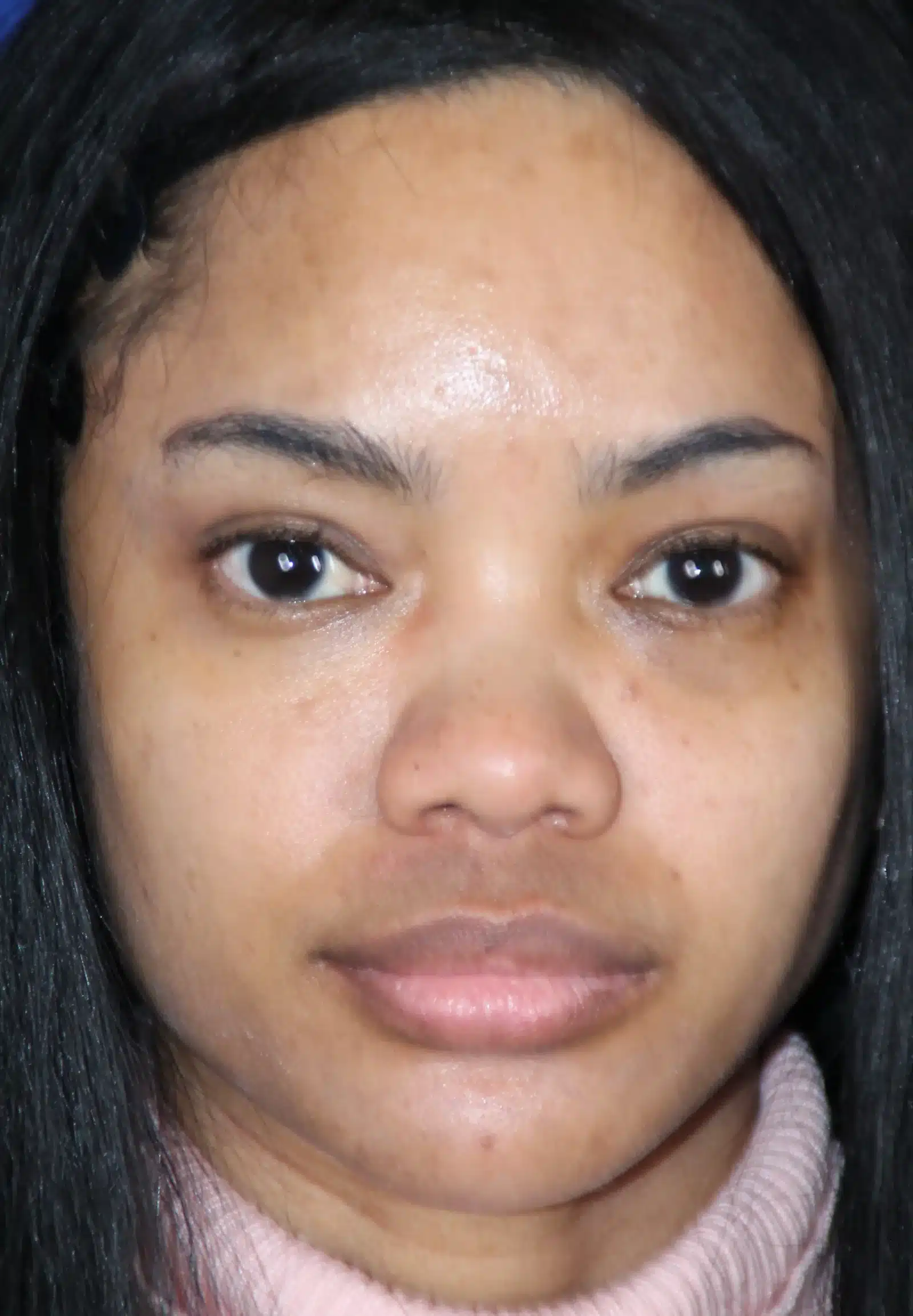
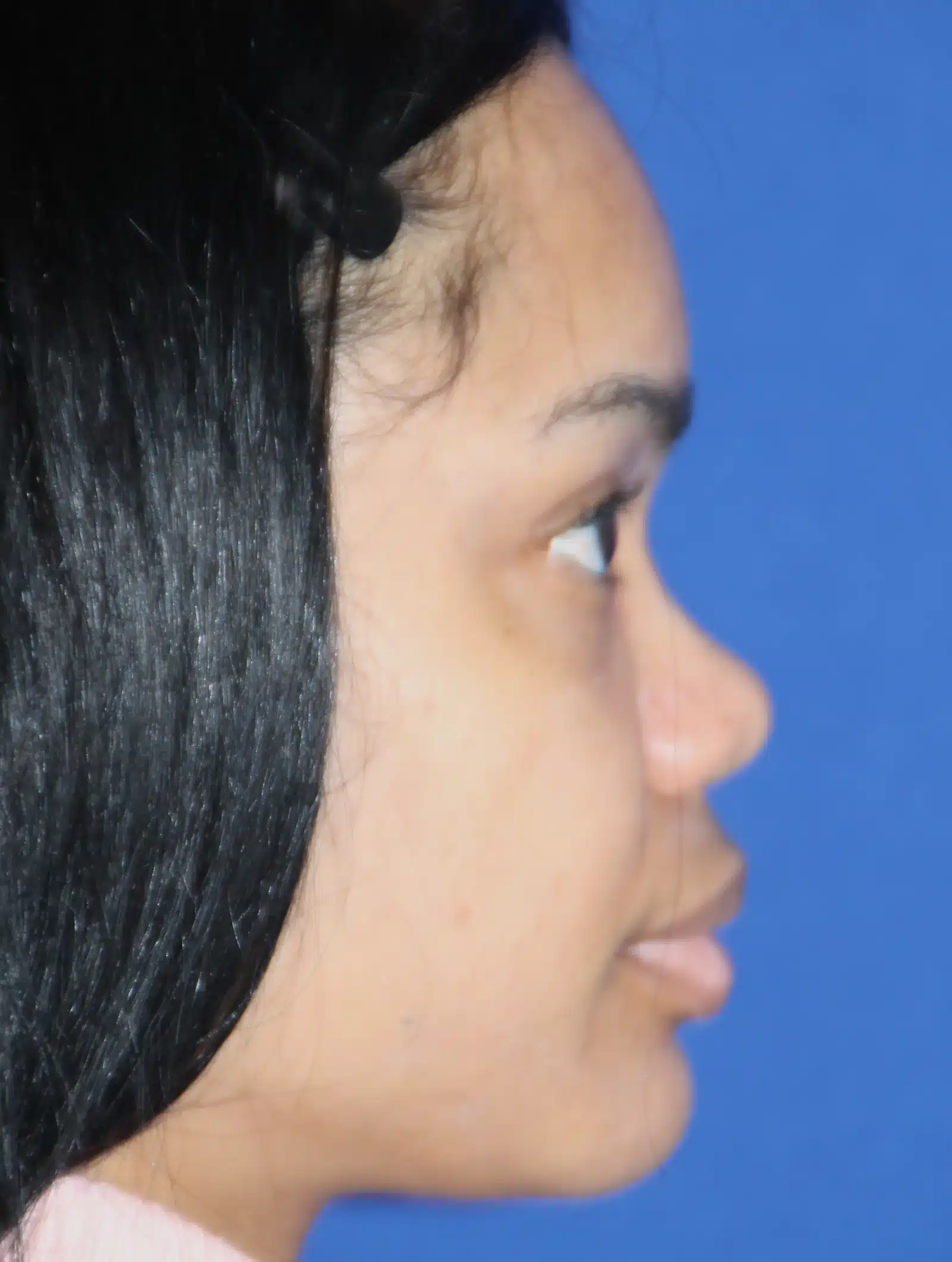
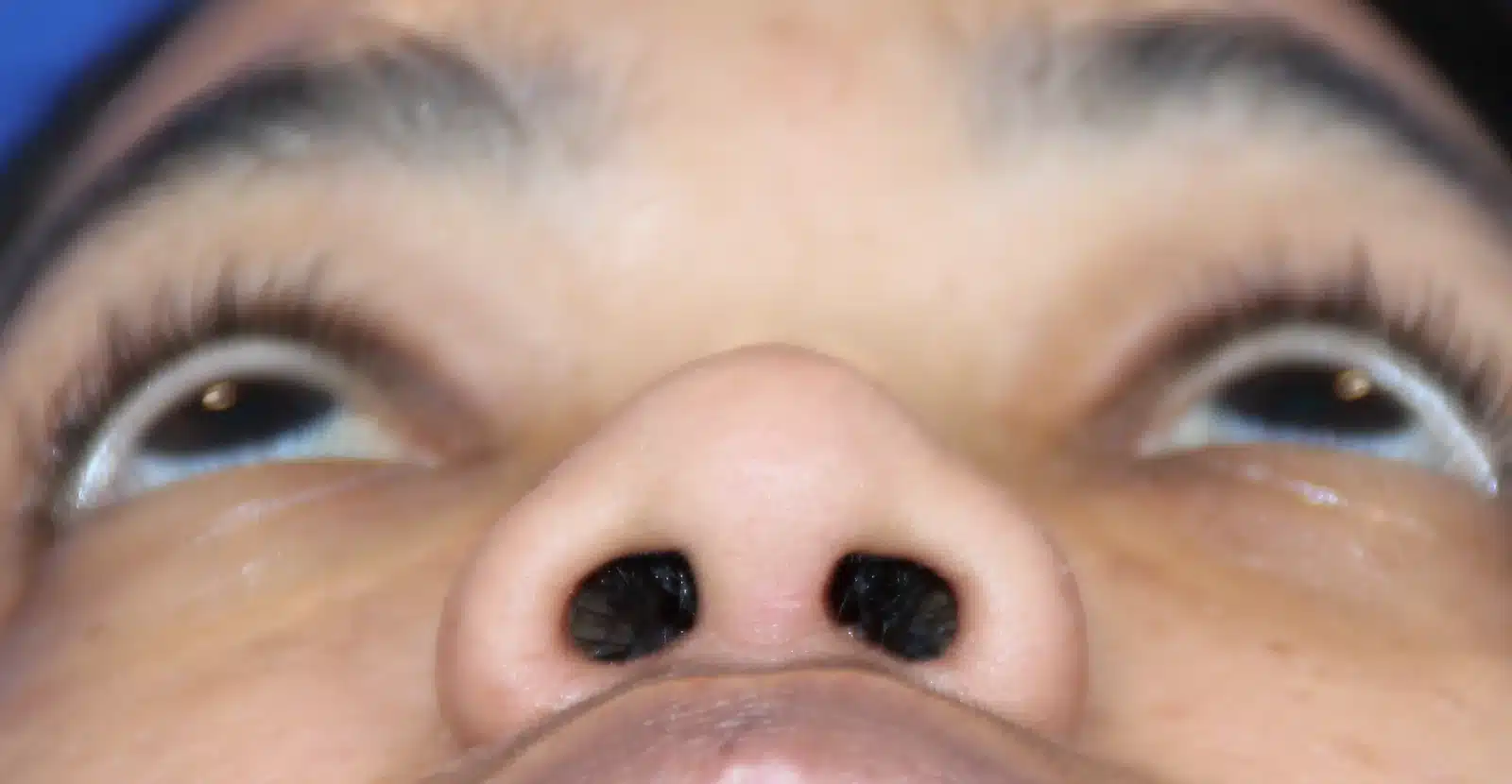
At consultation — where the patient speaks first, without interruption — she described a wide, rounded nasal tip, a flat, wide bridge, a nose that read short for her face, an under-projected tip that rotated upward more than she liked, a deep nasal root, a wide nasal base and thicker nasal skin. She also reported blocked breathing on both sides; examination traced it to a deviated septum and enlarged inferior turbinates — the airway problem would be corrected in the same operation.
Planning With Digital Morphing
Before photographs are taken against a cobalt-blue background in standardized positions, then digitally morphed through mild, moderate and more significant versions of the possible change. The patient — not the surgeon — chooses the degree she likes, and that chosen image becomes the target the surgical plan is built to reach. Morphing is a planning tool, not a promise: it also answered a question here, showing that a chin implant would not improve her balance, so it never entered the plan.
The Surgical Plan, Step by Step
Surgery was performed through an open approach — a small, well-hidden incision at the base of the nose — under conscious sedation, with her comfort and safety governing every choice. Each concern got a specific answer:
- Tip refinement — a cephalic strip of excess nostril cartilage removed, the two tip cartilages (domes) sutured together, and the fibrofatty tissue beneath the thicker tip skin conservatively thinned so the new shape could show through.
- Length and projection — a double-thickness tip graft, infra-tip mattress sutures and a columellar strut of cartilage to carry the tip forward and hold it there.
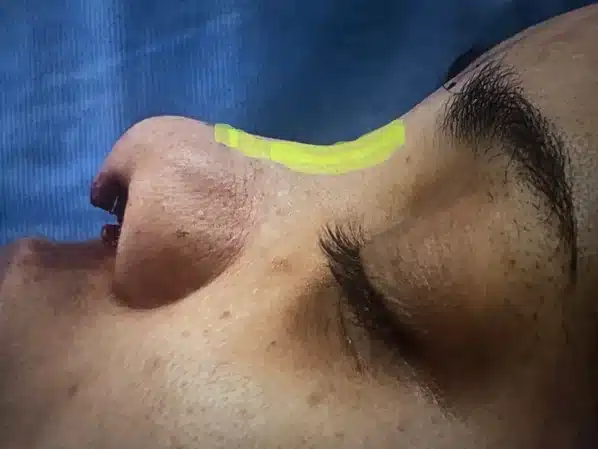
- Bridge and root height — a Gore-Tex (ePTFE)-coated silastic dorsal implant placed on the bridge midline, its upper end capped with the patient’s own cartilage for a smooth, natural transition at the nasal root.
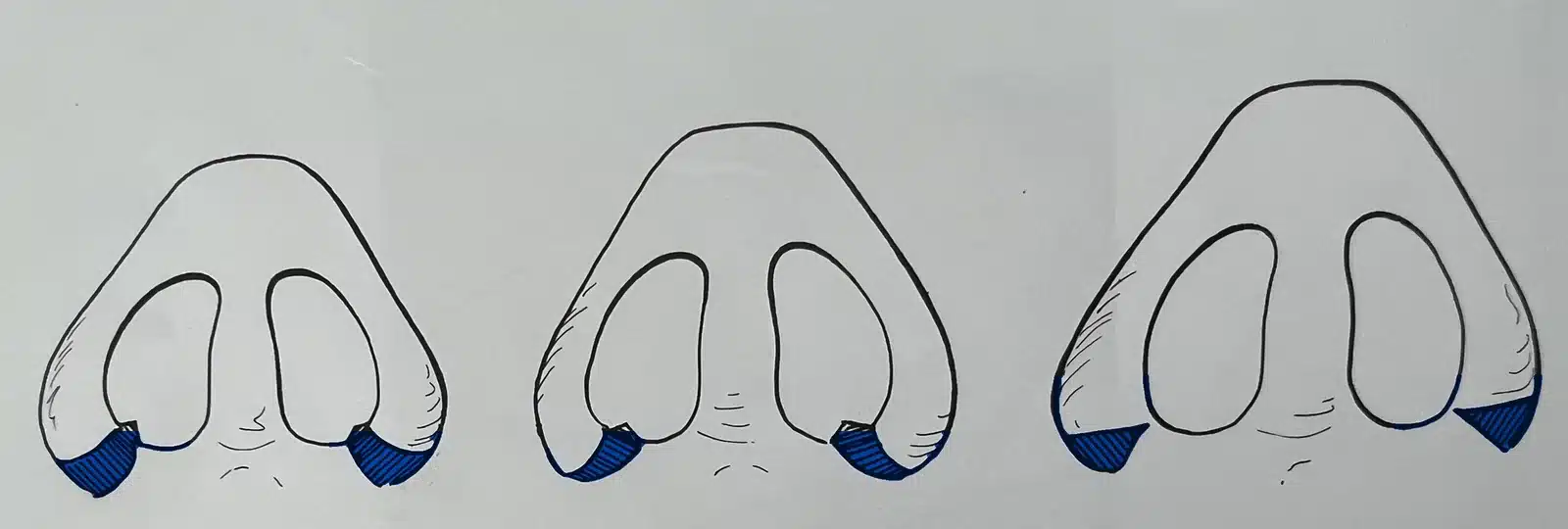
- Base width — a staged alar base reduction, removing a measured 7 mm of skin at each nostril’s base so the base view approaches an equilateral triangle.
- Breathing — the deviated septum straightened and the enlarged inferior turbinates repositioned outward, opening both airways in the same operation.
Her Recovery
Dr. Troell does not pack the inside of the nose — even when the septum is straightened — so she breathed through her nose from the moment she woke. She went home with adhesive strips and a lightweight clear splint, had two days of mild discomfort and minimal spotting, and at the one-week visit — splint and sutures off — her swelling was roughly 80% resolved and her airflow unobstructed. As with every rhinoplasty, the finest details of tip shape continue to settle over the following months.
The Result
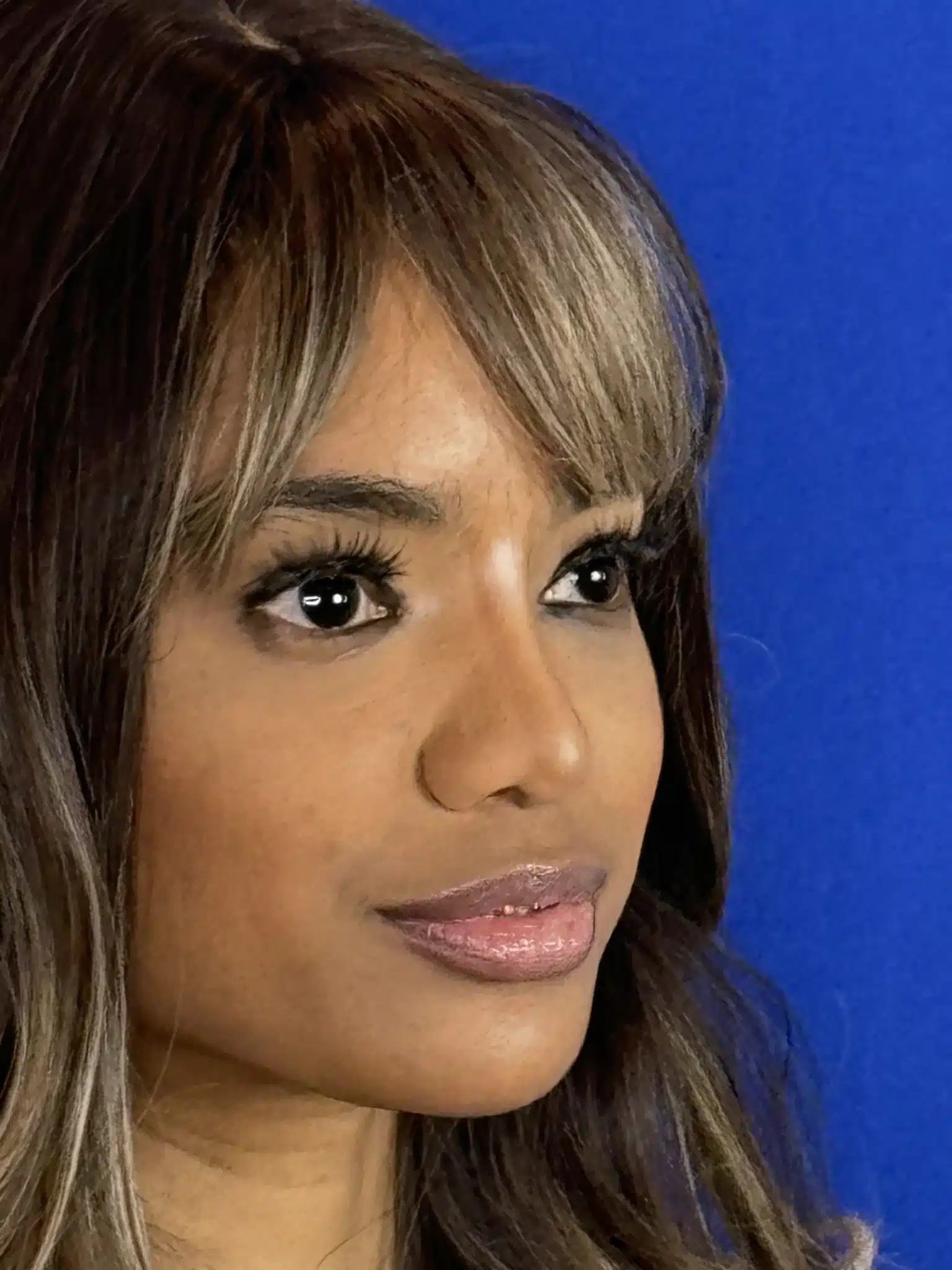

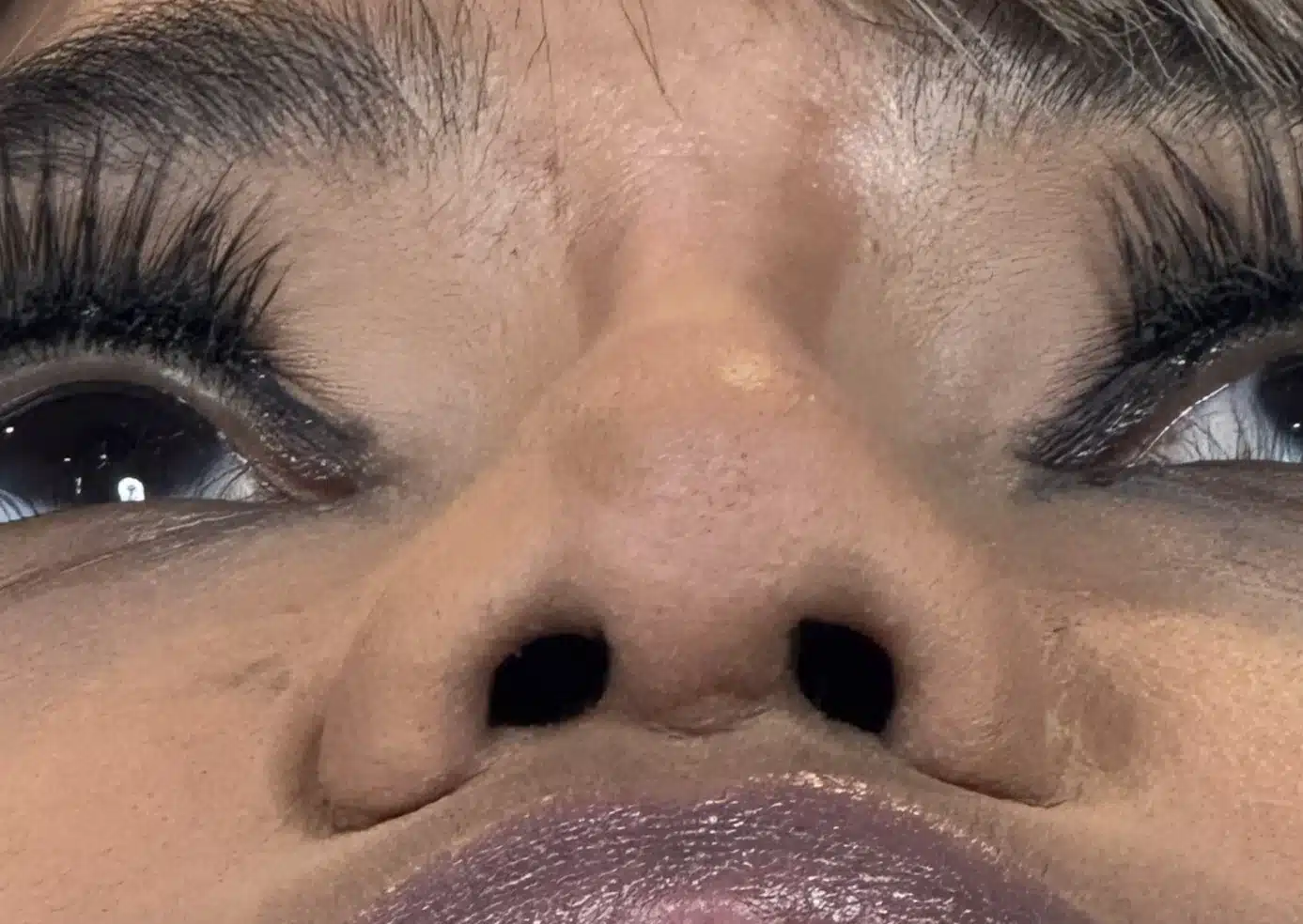
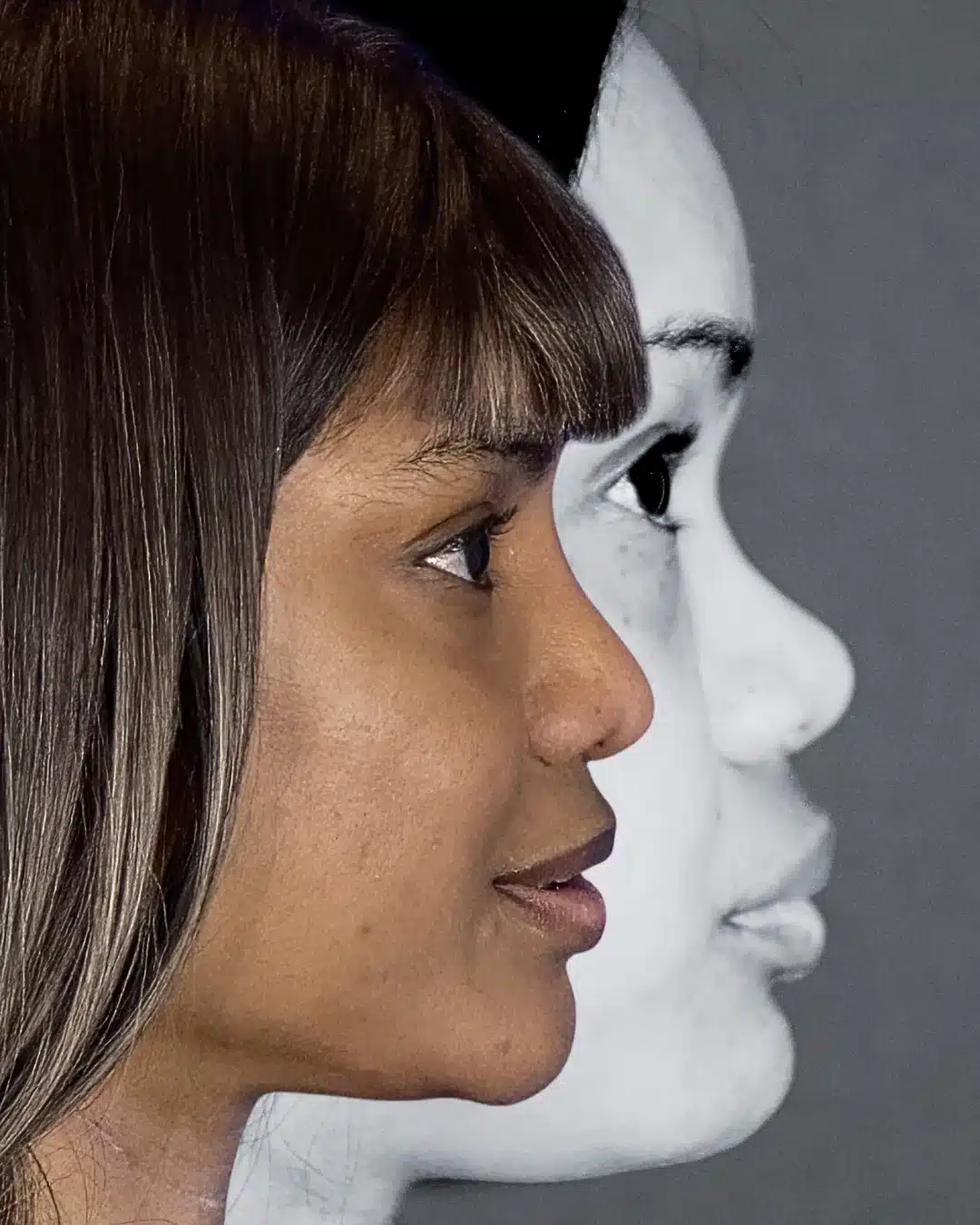
All photographs on this page are of one consented patient of Dr. Troell, shown unretouched in standardized positions. More nasal results are in the nose augmentation before & after gallery.
Why Choose Dr. Troell for Ethnic Rhinoplasty
Augmentation rhinoplasty is structural work: grafts that must hold their shape under thicker skin, an implant that must sit exactly on the midline, a base reduction measured in millimeters. It rewards a surgeon who plans each nose from its own anatomy rather than from a template — and who protects the airway as carefully as the profile.
Dr. Robert J. Troell, MD, FACS is a Diplomate of the American Board of Facial Plastic and Reconstructive Surgery (ABFPRS), a Diplomate of the American Board of Cosmetic Surgery (ABCS), and a Diplomate of the American Board of Otolaryngology – Head and Neck Surgery, with over 30 years in practice and training at the University of South Florida and Stanford University, where he later served as a Clinical Professor. His published, peer-reviewed nasal work sits directly beside this operation: a study introducing nasal alar rim reconstruction for alar rim and valve collapse in Otolaryngology–Head and Neck Surgery (2000), and the chapter “Nasal Alar Rim Reconstruction for Nasal Rim and Valve Collapse” in the Springer surgical text Advanced Aesthetic Rhinoplasty (2013) — the same alar anatomy this case’s base reduction works on. You can review his published work and credentials and decide for yourself.
Consultations are with Dr. Troell himself — the person who examines you is the person who operates.
Hear Dr. Troell Explain His Approach
In this video from the practice’s Instagram (@roberttroell), Dr. Troell describes how he plans an ethnic rhinoplasty in his own words — listening first, then matching each concern to a specific move: refining a bulbous tip, supporting it with grafts, narrowing a wide nasal base, and choosing sedation over general anesthesia where the surgical plan allows.
A Self-Pay Practice
Troell Cosmetic Surgery is a self-pay (cash-pay) practice. We do not accept or bill insurance for any procedure — including rhinoplasty with a functional component such as septum straightening or turbinate reduction, which another practice might submit as medically indicated. We say this before you invest time in a consultation: if insurance billing is essential to your decision, you are better served by a practice that participates with your plan. For patients who proceed, the fee is quoted in writing after an in-person evaluation, and financing options are discussed at that time.
What Determines Ethnic Rhinoplasty Cost in Las Vegas?
We do not publish a price for ethnic rhinoplasty, because a number quoted before an examination is a guess. The fee is set after an in-person evaluation and given to you in writing. What moves it:
- The structural work required — a bridge implant with cartilage grafting is a different operation from tip refinement alone.
- Graft sources — septal cartilage harvested during airway correction versus additional donor sites.
- Functional airway work — septoplasty and turbinate repositioning performed in the same session.
- Anesthesia and operative time — conscious sedation, as in the case above, or another plan set case by case.
- Revision complexity — surgery on a previously operated nose is a larger undertaking.
The practice is self-pay; see the note above. For a wider orientation to how nose surgery is planned and experienced, read what to expect from rhinoplasty.
Ethnic Rhinoplasty Recovery
Recovery from augmentation rhinoplasty is usually gentler than patients expect — and one detail of Dr. Troell’s technique changes the experience more than any other: the inside of the nose is never packed, even when the septum is straightened. You breathe through your nose from day one.
- Day of surgery: home the same day with steri-strips and a lightweight clear splint; nasal breathing already open.
- Days 1–3: mild discomfort managed with simple analgesia; minimal spotting is normal. The patient above needed two days.
- Week 1: splint and sutures removed; most visible swelling — typically around 80% — has settled, and most patients return to work.
- Weeks 2–6: exercise returns in stages; glasses are kept off the healing bridge per instructions — particularly important over a new dorsal implant.
- Months 3–12: the last tip swelling resolves and the final refinement emerges — slower where the skin is thicker, which is normal in many ethnic noses.
Every patient heals differently; the case above is one course, not a guarantee. Persistent airway trouble, in contrast, is never “just swelling” to be ignored — our page on functional rhinoplasty explains how breathing and appearance are handled together.
Request a Consultation
Ethnic Rhinoplasty FAQs
Not when it is planned correctly. The goal is proportion within your own face — refining the specific features that bother you while keeping the character that reads as you. In the case on this page, the patient chose her own target appearance through digital morphing before surgery, and the plan was built to reach that image, not a template.
Usually augmentation rhinoplasty: raising a flat or low bridge with an implant or cartilage graft, projecting a soft tip with structural grafts, and often narrowing the nasal base. It is close to the opposite of hump-reduction rhinoplasty, and it demands a surgeon comfortable building structure, not just removing it.
A dorsal implant — in the case above, a Gore-Tex (ePTFE)-coated silastic implant capped with the patient’s own cartilage — is an established option for meaningful bridge height, placed precisely on the midline through an open approach. Whether an implant, your own cartilage, or a combination is right for you depends on your anatomy and goals, and is decided together at consultation.
A measured removal of skin where the nostril meets the cheek, narrowing a wide nasal base so that from below, the nose approaches an equilateral triangle. In the case on this page, 7 mm was removed on each side in a staged, symmetric reduction. Dr. Troell has published peer-reviewed work on nasal alar anatomy and reconstruction.
Yes — and it usually should be. A deviated septum and enlarged turbinates can be corrected in the same operation, as in this case, and the septal cartilage removed during straightening often supplies the graft material the cosmetic work needs. The airway is planned from the start, never as an afterthought.
Most patients are back at work about a week after surgery, when the splint comes off and most visible swelling has settled. Dr. Troell never packs the nose, so you breathe normally from day one. The last refinement of the tip takes months to fully emerge — somewhat longer where nasal skin is thicker.
Troell Cosmetic Surgery is a self-pay practice and does not accept or bill insurance for any procedure, including rhinoplasty with a functional component such as septoplasty or turbinate reduction. Fees are quoted in writing after an in-person evaluation, and financing options are discussed then.
Ask to see real, consented before-and-after cases with anatomy like yours; ask how the surgeon plans bridge augmentation and base reduction specifically; and verify credentials with the certifying boards. Dr. Troell is a Diplomate of the ABFPRS, the ABCS, and the American Board of Otolaryngology – Head and Neck Surgery, and consultations are with him personally.
Not always. Across the specialty, general anesthesia is typical for rhinoplasty, and for some noses it remains the right choice. It is not automatic, though: the patient in the case study on this page had her bridge implant, tip grafts, alar base reduction and septum work performed under conscious sedation with local anesthesia, not general anesthesia. In Dr. Troell’s own words, from the video higher on this page: “One of the huge benefits with my training experience, we don’t need general anesthesia. So you could do this with oral sedation, intravenous sedation to make you comfortable.” The anesthesia plan is decided with you, case by case, at consultation; the practice’s awake approach to cosmetic surgery explains how conscious sedation works and who suits it.
Related Procedures & Guides
Rhinoplasty
The complete guide to nose surgery at our practice
Revision Rhinoplasty
When a previous nose surgery has to be corrected
Functional Rhinoplasty
When breathing and appearance are treated together
What to Expect
Before, during and after nose surgery
Chin Augmentation
When facial balance involves the chin, not just the nose
Rhinoplasty Myths
Common nose-surgery beliefs, debunked by the surgeon
Nose Gallery
Consented before-and-after nasal cases
Ethnic Rhinoplasty Across the Las Vegas Valley
Dr. Troell’s office is at 5375 S Fort Apache Road in Spring Valley — a short drive down Spring Mountain Road from Chinatown’s restaurants and markets, and minutes from Summerlin and the western valley. Patients come from across the metro area:
Las Vegas gets 85 percent of its possible sunshine, about 3,782 hours a year, by NOAA climate normals, so the American Academy of Dermatology’s advice matters here: a broad-spectrum sunscreen of SPF 30 or higher whenever clothing won’t cover a scar.

Your Nose, In Balance With Your Face
Meet Dr. Troell, see morphed previews of your own photographs, and leave with a written plan and a written fee — no obligation.