

If Something Isn’t Right After Cosmetic Surgery: How Revisions Actually Work
Published September 15, 2026 · By Dr. Robert J. Troell, Board-Certified Facial Plastic Surgeon
Dr. Robert J. Troell, MD, FACS
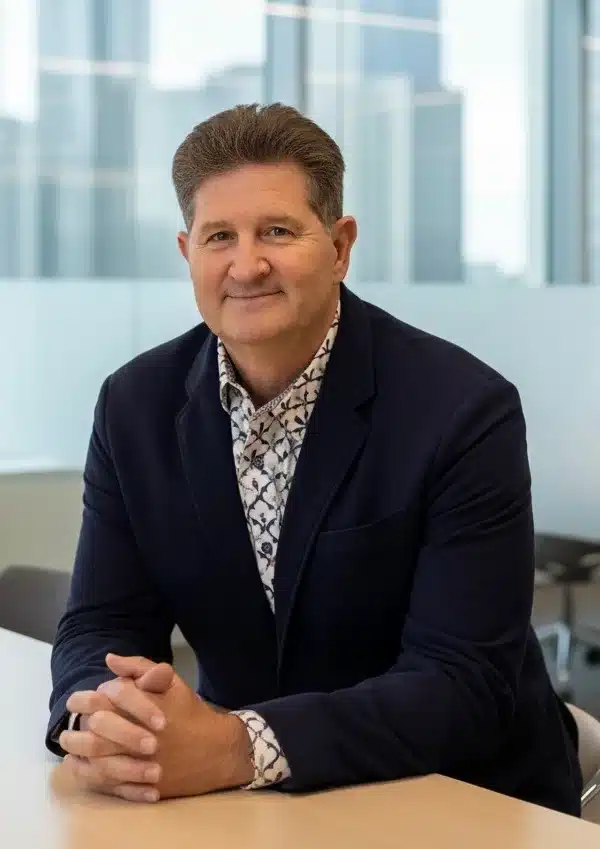
If something is not right after cosmetic surgery — a complication in the first days, or a result you are unhappy with once the swelling settles — what should happen is simple to state and rare to find written down: the surgeon who operated examines you, in the office where the surgery was planned, and decides with you whether the problem is healing, needs treatment, or needs a revision, and on what terms. At Troell Cosmetic Surgery in Las Vegas that structure is not a promise but a fact of how the practice is built: Dr. Robert J. Troell, MD, FACS, is the practice’s only surgeon, performs every consultation and operation himself, and sees his own follow-up visits in the same office on South Fort Apache Road. Whether a revision is appropriate, and what it would cost, is decided case by case at those visits — no practice can honestly decide that before the operation.
This guide explains how revisions actually work: how often they happen according to published surgical series, the difference between a complication and a result you simply dislike, when a result can fairly be judged, who should be evaluating your concern, what a revision costs in structural terms, and the questions to ask any practice before you pay a deposit. It is written for someone comparing surgeons for a facelift, rhinoplasty, breast augmentation or body contouring, where the fear of being brushed off afterward is often the real reason the decision stalls.
Ask This Before You Book Anywhere
Who examines me if something is wrong, where, and what is the escalation path if it is serious? A practice that can answer all three in one sentence, in writing, has a follow-up structure. One that answers with reassurance does not.
What Actually Happens If Something Isn’t Right After Cosmetic Surgery?
Every practice will tell you it “takes care of its patients.” The negative reviews of Las Vegas cosmetic practices that this guide was written against tell a more specific story: the patient voiced a concern and reached a coordinator, a manager or a front desk rather than the surgeon; the concern was called normal without an examination; or a revision was agreed to and then quoted at full price again. None of those are clinical failures. They are structural ones, and structure is something you can check before surgery.
The structure has three parts. First, who evaluates the concern: the person who decides whether your swelling is normal, whether an asymmetry will settle, or whether a scar needs treatment should be the surgeon who operated, not a staff member relaying a message. Second, where: follow-up visits should happen at the practice where the surgery was planned, with the same records and the same eyes, not by photo through a portal. Third, the escalation path: if a complication needs hospital-level care, the surgeon should be able to admit and treat you rather than send you to an emergency room that has never seen your chart.
At Troell Cosmetic Surgery all three are answerable in one sentence. Dr. Troell is the only surgeon at the practice and performs every consultation and operation himself; every follow-up visit, dressing removal included, is with him in the same Las Vegas office at 5375 S Fort Apache Road, Suite 101; and he holds hospital privileges at Summerlin Hospital Medical Center, the escalation path if a complication ever needs hospital care. He has held an active Nevada medical license (number 9816) since 2001 and has practiced in Las Vegas for more than twenty years, both of which you can verify yourself — our guide to how to choose a plastic surgeon in Las Vegas shows the ten-minute credential check.
How Often Does Cosmetic Surgery Need a Revision?
More often than marketing suggests, and less often than the fear suggests. In a published series from an academic cosmetic surgery program covering 1,491 aesthetic procedures between 2016 and 2022, 125 procedures — 8.4 percent — were followed by a revision (Moura SP et al., Aesthet Surg J Open Forum 2023;5:ojad033, DOI 10.1093/asjof/ojad033).[1] The rate varied widely by operation: 6.5 percent after facelift, 8.5 percent after blepharoplasty, 8.8 percent after abdominoplasty, 11.6 percent after breast augmentation, 15.8 percent after rhinoplasty or septorhinoplasty, and 27.3 percent after otoplasty, though the otoplasty figure rests on only eleven cases. Rhinoplasty and ear surgery revise most because cartilage moves as it heals; facelifts revise least because the tissue that was lifted was also excised. The American Board of Cosmetic Surgery’s own patient guidance puts rhinoplasty revision at around 10 percent in most series and as high as 20 percent in some, depending on the surgeon and the study.[9]
Dr. Troell publishes his own figures rather than asking you to take a reputation on faith. In his 112-patient stem cell-enriched gluteal fat grafting series, 4 patients (4.5 percent) had a second grafting session for size or contour, and every complication recorded was minor (Troell RJ, Medical Research Archives 2026;14(4), DOI 10.18103/mra.v14i4.7467).[2] In his 58-patient series combining VASER ultrasound liposuction with Renuvion helium plasma skin tightening of the face and neck, the combined revision rate — filler corrections and additional liposuction together — was 6.9 percent, with no serious adverse events (Troell RJ, Javaheri S, Am J Cosmet Surg 2025, DOI 10.1177/07488068251330030).[3] For custom facial implants he states plainly, in his clinical experience, that up to 15 percent of patients request some form of revision, most often to fine-tune size, shape or symmetry.
| Procedure | Published revision or second-procedure rate | Source |
|---|---|---|
| All aesthetic procedures (academic program) | 8.4% (125 of 1,491) | Moura et al., 2023 [1] |
| Facelift | 6.5% | Moura et al., 2023 [1] |
| Blepharoplasty | 8.5% | Moura et al., 2023 [1] |
| Breast augmentation | 11.6% | Moura et al., 2023 [1] |
| Rhinoplasty / septorhinoplasty | 15.8% | Moura et al., 2023 [1] |
| Gluteal fat grafting (BBL), Dr. Troell’s series | 4.5% second grafting session (4 of 112) | Troell, 2026 [2] |
| VASER + Renuvion face and neck, Dr. Troell’s series | 6.9% combined revision rate (58 patients) | Troell & Javaheri, 2025 [3] |
Two things follow from those numbers. A surgeon who says revisions never happen in their hands is describing their record-keeping, not their results. And a practice that has no stated way of handling the 5 to 15 percent of cases that need a second look has left the most predictable part of surgery to chance.
Complication or Imperfect Result? Why the Difference Decides What Happens Next
The word “revision” covers two situations that are handled very differently. A complication is a medical event: bleeding that collects under the skin (a hematoma), fluid that collects at a liposuction site (a seroma), an infection, a wound that opens, or a nerve that is temporarily weak. Complications declare themselves early, usually within the first two weeks, and they are treated, not revised — a hematoma is drained, a seroma is aspirated with a needle, an infection is cultured and treated. In Dr. Troell’s published VASER and Renuvion series, for example, 12 percent of patients had temporary weakness of the marginal mandibular nerve at the jawline and every case resolved fully; that is a complication with a known course, not a revision.[3]
An imperfect result is different: an asymmetry that persists after the swelling is gone, a contour irregularity after liposuction, a scar that heals thick or red, a nasal tip that settles differently from the plan, an implant that sits lower on one side. These are judged, not treated, and the judgment has a calendar. The three concerns patients most often voice — asymmetry, scarring and contour — each have a moment when they can fairly be assessed, and a surgeon who examines you at that moment is doing something a coordinator on the phone cannot. For breast surgery specifically, our guide to breasts that still look uneven after surgery sets out the settling window and who judges it.
Scars are the clearest example. A scar is at its thickest and reddest between roughly six weeks and four months, and it keeps maturing for a year; a scar revision decided at month three is a decision made on a scar that is still changing. Where facelift incisions sit and how they mature is covered on the facelift scars guide; the point is the same there: judge the scar when it has finished, not when it is at its worst.
When Can a Cosmetic Surgery Result Actually Be Judged?
Most of the anger in revision disputes comes from a mismatch of calendars: the patient judges at week three, the surgeon judges at month six, and neither told the other which calendar they were using. These are the arcs Dr. Troell uses at follow-up, drawn from the practice’s own procedure pages and published series.
- Rhinoplasty: the bridge is visible within weeks, but the tip keeps settling for a full twelve months, which is why revision rhinoplasty judgment waits a year. Revision rhinoplasty is the most technically demanding operation in nasal surgery, and Dr. Troell’s published work on nasal alar rim and valve collapse — a reconstruction technique evaluated in Otolaryngology–Head and Neck Surgery (2000;122:204–211) and refined in a 2019 transcutaneous alar rim graft paper — is revision-territory surgery by definition.[4][5]
- Facelift and neck lift: most of the result is visible once sutures are out in the first week, and the last of the swelling settles over months; asymmetries seen at week three are usually swelling, not surgery. He has performed more than 800 facelifts.
- Fat transfer (face, breast, buttock): grafted fat that survives the first two to three months, once it has its own blood supply, tends to remain stable; a reliable picture of retained volume takes about seven months, and the decision about a second session is made then, not at month one.
- Facial implants: position and symmetry are examined once swelling is gone; the exam looks at implant position on the bone and the soft tissue over it, which is why an implant concern is a hands-on visit rather than a photo review.
- Breast implants: the exam looks at implant position, the capsule around it, and symmetry as the tissues settle over months; capsular changes in particular declare themselves late, which is why breast implant revision is its own procedure with its own evaluation rather than a “touch-up.”
The practical rule is that concerns should be voiced immediately and judged on schedule. Voicing early lets the surgeon catch a complication; judging on schedule keeps a temporary state from being operated on. The American Board of Cosmetic Surgery puts the general rule at about a year before a revision surgeon will want to re-operate,[9] and the published academic policy above used one year as its window and two for rhinoplasty.[1]
Three Rules of Thumb
Report anything that worries you in the first two weeks the same day; that is when complications are treated. Do not ask for a revision decision before the procedure’s own calendar has run, usually six to twelve months. Insist that the person judging the result is the surgeon who produced it, in an examination, not a photo.
Who Should Evaluate a Concern After Surgery — and Who Shouldn’t?
The pattern that recurs in the worst reviews is not a bad outcome; it is the patient never reaching the person who could judge it. A patient coordinator can schedule you, and a nurse can check a dressing, but the question “is this healing or is this wrong?” belongs to the surgeon, because only the surgeon knows what was done under the skin. At a practice with several surgeons, or a visiting surgeon who operates on set days and leaves, that question can wait weeks or be answered by someone else. At a sole-surgeon practice it cannot.

Dr. Troell built his practice that way on purpose. He is the only surgeon at Troell Cosmetic Surgery, so there is no one else your concern can be routed to; he performs the consultation, the operation and the follow-ups himself; and because many of his procedures are performed awake, under local anesthesia with IV sedation in the office — the model described on our awake cosmetic surgery page — the surgeon who examines you afterward is also the one who watched you recover on the day. He is certified in Advanced Cardiac Life Support, and for the rare complication that needs a hospital, his privileges at Summerlin Hospital Medical Center mean he can treat you there rather than hand you to a stranger’s emergency department.
Dr. Troell has also published on the management side of this question: his two-part twenty-year liposuction review in The American Journal of Cosmetic Surgery is explicitly about physician qualifications, patient risk assessment, and optimizing outcomes while minimizing complications (DOI 10.1177/07488068251340106 and 10.1177/07488068251352069), and an earlier paper from his Stanford years addressed risk management and complications in airway surgery.[6][7][8] A surgeon who has written the complication chapter is, at minimum, a surgeon who expects to be the one reading it.
What Does a Revision Cost?
Policies differ enormously between practices, and almost none are on the website. The academic program in the series above waived surgeon’s, anesthesia and facility fees for revisions requested within a year of the original surgery, two years for rhinoplasty;[1] in the survey that program cites, the single most common arrangement among cosmetic surgeons (45 percent of practices) was the surgeon’s fee waived with the patient paying anesthesia and facility costs; some charge in full; and some decide only after they see the problem. Even a no-cost policy has edges: that program excluded revising another practice’s work and requests that changed the original plan, such as a different implant size.[1] The American Board of Cosmetic Surgery, which certifies Dr. Troell, reports that in a 2009 survey of its surgeons 60 percent charged only a facility fee for a revision, while others also charged a surgeon’s fee, and it advises that most revision surgeons will want you to wait about a year before re-operating.[9] The one arrangement that is never acceptable is the one you discover at the moment you need it. Whatever practice you choose, ask for the revision fee basis in writing before the deposit — who decides that a revision is warranted, whether the surgeon’s fee is waived or reduced, and how anesthesia and the facility are handled.
At Troell Cosmetic Surgery the honest answer is structural rather than a blanket promise. Whether a revision is appropriate is a clinical decision made by Dr. Troell at follow-up, once healing has declared itself, and in some cases a revision is available; it is never promised in advance, because no surgeon can know before the operation what the tissue will do. What a revision would cost you is discussed at that same visit, with the same surgeon, before anything is scheduled. The practice is cash-pay, consultations are free, every quote is written after an examination, and financing through CareCredit and Alphaeon is available for any procedure — see the financing page for the current options. The money that changes hands before surgery — the consultation, the deposit and its refund term — is set out in our guide to what you agree to before you book.
How a Concern Is Handled Here
At Troell Cosmetic Surgery in Las Vegas, a complication or an unsatisfying result is evaluated by Dr. Robert J. Troell himself, the practice’s only surgeon, at follow-up in the same office where the surgery was planned, with hospital privileges at Summerlin Hospital Medical Center as the escalation path. Whether a revision is appropriate, and on what terms, is decided case by case at that visit.
What If You Had Cosmetic Surgery Somewhere Else and Want It Corrected?
Revising another surgeon’s work is a distinct kind of surgery: the anatomy has been changed once, scar tissue has formed, and the original operative notes may or may not be available. Dr. Troell sees these patients in a free consultation like any other, and the first visit is diagnostic rather than a sales meeting — he needs to know what was done, what the tissue looks like now, and whether the time has passed for the result to be judged fairly. Bring your operative notes if you can get them, a dated series of photographs, and a short written list of what concerns you; a second opinion is only as good as the record it is built on. Some patients are told to wait; some are told that what they see is within the normal range; some are candidates for correction.
The procedures that most often bring second-opinion patients through the door are the ones the published series above predicts. Breast implant patients come with malposition, capsular contracture or asymmetry, and are evaluated on the breast implant revision and exchange pathway. Rhinoplasty patients come with a collapsed nasal valve or a tip that did not settle as promised, which is the problem Dr. Troell’s alar rim reconstruction papers were written to solve, and are evaluated on the revision rhinoplasty pathway.[4][5] Liposuction patients come with contour irregularities, and body contouring patients after weight loss come with loose skin that liposuction alone was never going to address. Each of those is a different conversation, and each starts with an examination by the surgeon who would do the work.
The Questions to Ask Any Practice Before You Pay a Deposit
Bring these to every consultation, including ours. The answers are short if the structure exists and long if it does not.
- Who examines me if I have a concern after surgery? The answer should be a named surgeon, not a role.
- Where do follow-up visits happen, and with whom? Same office, same surgeon, is the answer to look for.
- What is the escalation path for a serious complication? A surgeon with hospital privileges can admit you; one without cannot.
- When will my result be judged, and by what standard? Ask for the calendar for your procedure.
- What is your revision fee basis? Ask for it in writing, and ask who decides that a revision is warranted.
- What are your own published complication and revision rates? A surgeon who publishes has nothing to hide behind a reputation.
- Can I verify your license and board status myself? Dr. Troell’s Nevada license (9816, active since 2001) and his Diplomate status with the American Board of Cosmetic Surgery are on the public registers; the surgeon-selection guide walks through both lookups.
Bring This List to Your Consultation
A free consultation with Dr. Troell is the place to ask every one of these. Consultations are available in English or Spanish, and a virtual consultation is available for patients who cannot come in first.
Why the Follow-Up Question Is Where Dr. Troell’s Record Shows
Dr. Robert J. Troell, MD, FACS, is a board-certified facial plastic surgeon and a Diplomate of the American Board of Cosmetic Surgery, a Fellow of the American College of Surgeons, and a surgeon with more than 30 years of practice, including residency and fellowship at Stanford University and a Clinical Professor appointment there from 1995 to 2013. He has more than 58 peer-reviewed publications, and the ones that matter for this page are the ones about what happens when surgery does not go to plan: the two-part twenty-year liposuction review on qualifications, risk assessment and complication management, the 2026 gluteal fat grafting series with its published revision and complication rates, the VASER and Renuvion series with its 6.9 percent revision rate and zero serious adverse events, and the alar rim reconstruction work that treats one of rhinoplasty’s most common revision problems.[2][3][4][5][6][7]

The structural facts are simpler still. One surgeon. Every consultation, operation and follow-up with him, in one Las Vegas office. Hospital privileges at Summerlin Hospital Medical Center. A Nevada license held continuously since 2001. Patient reviews on the practice’s Google Business Profile and reviews page, which the practice cannot edit or delete. Those are the things a revision policy is made of, and each of them can be checked before you decide.
Revisions After Cosmetic Surgery: Common Questions
What percentage of cosmetic surgeries need a revision?
In a published academic series of 1,491 aesthetic procedures, 8.4 percent were followed by a revision, ranging from 6.5 percent after facelift and 8.5 percent after blepharoplasty to 11.6 percent after breast augmentation and 15.8 percent after rhinoplasty. Dr. Troell's own published series report a 4.5 percent second-session rate in 112 gluteal fat grafting patients and a 6.9 percent revision rate in 58 VASER and Renuvion patients. Rates vary by procedure, by surgeon, and by how strictly a practice counts.
How long should I wait before deciding I need a revision?
Until the result can fairly be judged, which depends on the procedure: about twelve months for the nasal tip after rhinoplasty, about seven months for retained volume after fat transfer, a year for a scar to mature, and months for a facelift or implant to settle. Concerns should be voiced immediately so a complication is not missed, but the decision to revise is made on schedule, at a follow-up examination with the operating surgeon, not on a photograph in week three.
Is a complication the same as needing a revision?
No. A complication is a medical event in the early weeks, such as a hematoma, seroma, infection or temporary nerve weakness, and it is treated. A revision is a second operation to improve a result that has finished healing, such as a persistent asymmetry or a scar that healed thick. The first is handled at once by the surgeon; the second is judged once the tissue has settled.
Who sees me after surgery at Troell Cosmetic Surgery?
Dr. Robert J. Troell, the surgeon who operated. He is the practice's only surgeon, performs every consultation and operation himself, and every follow-up visit, dressing removal included, is with him in the same office at 5375 S Fort Apache Road, Suite 101, Las Vegas. He holds hospital privileges at Summerlin Hospital Medical Center for any complication that needs hospital care.
Does Dr. Troell revise surgery done by other surgeons?
He evaluates it, in a free consultation, and in some cases corrects it. The first visit is diagnostic: what was done, what the tissue looks like now, and whether enough time has passed to judge the result. Breast implant malposition, capsular contracture and asymmetry are evaluated on the breast implant revision pathway; nasal valve collapse and unsettled tips on the revision rhinoplasty pathway, where his published alar rim reconstruction technique applies. Candidacy is decided case by case after examination.
If something isn't right after my surgery — a complication, or a result I'm not happy with — what actually happens, and what would a revision cost me? I've read about patients elsewhere being brushed off or quoted full price again.
That worry is well founded: the most common complaint in low-rated reviews of cosmetic practices is not a bad outcome but a concern that never reached the surgeon, or a revision quoted at full price with no policy stated beforehand. The answer to demand from any practice is structural, and this is Dr. Troell's. At Troell Cosmetic Surgery in Las Vegas, a complication or an unsatisfying result is evaluated by Dr. Robert J. Troell himself, the practice's only surgeon, at a follow-up visit in the same office where the surgery was planned, with hospital privileges at Summerlin Hospital Medical Center as the escalation path if hospital care is ever needed. Whether a revision is appropriate is decided case by case at that visit once healing has declared itself; in some cases a revision is available, and it is never promised in advance, because no surgeon can know before the operation what the tissue will do. The revision fee basis, what a revision would cost you, is discussed at that same visit with the same surgeon, before anything is scheduled. Ask any practice for the same three answers in writing before you pay a deposit: who evaluates a concern, where, and what it costs. Individual results vary.
Should I go back to my original surgeon for a revision or find a new one?
Go back first if the relationship is intact: the original surgeon knows what was done and may see you at reduced or no surgeon's fee under their policy. Seek a second opinion when the concern has been dismissed without an examination, when the surgeon is not available for follow-up, or when the problem is one the original surgeon does not treat, such as nasal valve collapse or breast implant capsular contracture. A second-opinion consultation with Dr. Troell is free.
Does insurance cover a revision of cosmetic surgery?
Troell Cosmetic Surgery is a cash-pay practice and does not bill insurance for any procedure, including revisions. Financing through CareCredit and Alphaeon is available, and every quote, including a revision quote, is written after an examination. If insurance coverage is essential to you, an in-network program is the honest recommendation.
Every follow-up described on this page is with the surgeon behind the practice, Dr. Robert J. Troell. Dr. Troell is a Diplomate of the American Board of Cosmetic Surgery and board-certified in facial plastic & reconstructive surgery, with 30+ years of surgical experience. Residency and fellowship at Stanford University; Doctor of Medicine from the University of South Florida College of Medicine. See notable achievements.
Sources
- Moura SP, Wirth PJ, Shaffrey EC, Attaluri PK, Rao VK. Offering No-Cost Cosmetic Revisions: The Experience of an Academic Cosmetic Surgery Program. Aesthetic Surgery Journal Open Forum. 2023;5:ojad033. DOI 10.1093/asjof/ojad033 (1,491 procedures, 125 revisions, 8.4%; per-procedure rates; fee-waiver window)
- Troell RJ. Gluteal & Hip Stem Cell Enriched Fat Grafting (Brazilian Butt Lift): Optimizing Outcomes While Minimizing Complications. Medical Research Archives. 2026;14(4). DOI 10.18103/mra.v14i4.7467 (112 patients; 4.5% second grafting session; complications all minor)
- Troell RJ, Javaheri S. Combining Third-Generation Ultrasound Liposuction With Helium-Based Plasma Technology Skin Tightening in the Face and Neck. The American Journal of Cosmetic Surgery. 2025. DOI 10.1177/07488068251330030 (58 patients; 6.9% combined revision rate; no serious adverse events)
- Troell RJ, Powell NB, Riley RW, Li KK. Evaluation of a New Procedure for Nasal Alar Rim and Valve Collapse: Nasal Alar Rim Reconstruction. Otolaryngology–Head and Neck Surgery. 2000;122:204–211. DOI 10.1016/S0194-5998(00)70240-3
- Troell RJ. Transcutaneous Alar Rim Graft: An Effective Technique to Manage Nasal Alar Rim and Valve Collapse. The American Journal of Cosmetic Surgery. 2019 (listed on Dr. Troell’s publications page)
- Troell RJ. Liposuction 20-Year Learned Experience (Part 1): Physician Qualifications, Preoperative Risk Assessment. The American Journal of Cosmetic Surgery. 2026;43(2):178–189. DOI 10.1177/07488068251340106
- Troell RJ. Liposuction 20-Year Learned Experience (Part 2): Optimizing Cosmetic Outcomes While Minimizing Complications. The American Journal of Cosmetic Surgery. 2026;43(2):205–222. DOI 10.1177/07488068251352069
- Riley RW, Powell NB, Guilleminault C, Pelayo R, Troell RJ, Li KK. Obstructive Sleep Apnea Surgery: Risk Management and Complications. Otolaryngology–Head and Neck Surgery. 1997;117:648–652. DOI 10.1016/S0194-59989770047-0
- American Board of Cosmetic Surgery — Revision Cosmetic Surgery (waiting about a year before re-operating; returning to the original surgeon; 2009 member survey: 60% charge only a facility fee for a revision)
Revision and complication rates on this page are published series figures provided for education; they are not a prediction for any individual patient. Whether a revision is appropriate in your case is decided at follow-up after examination. Surgical results vary by patient. Published series figures are current as of September 2026. Page last reviewed September 15, 2026.

Begin Your Journey with Dr. Troell
Schedule a complimentary consultation with Dr. Troell to discuss your goals, explore your options, and receive an honest, expert assessment. No obligation, no pressure.
Mon–Fri, 8:30 AM – 5:00 PM