

How to Choose the Best Plastic Surgeon in Las Vegas
Published July 24, 2026 · By Dr. Robert J. Troell, Board-Certified Facial Plastic Surgeon
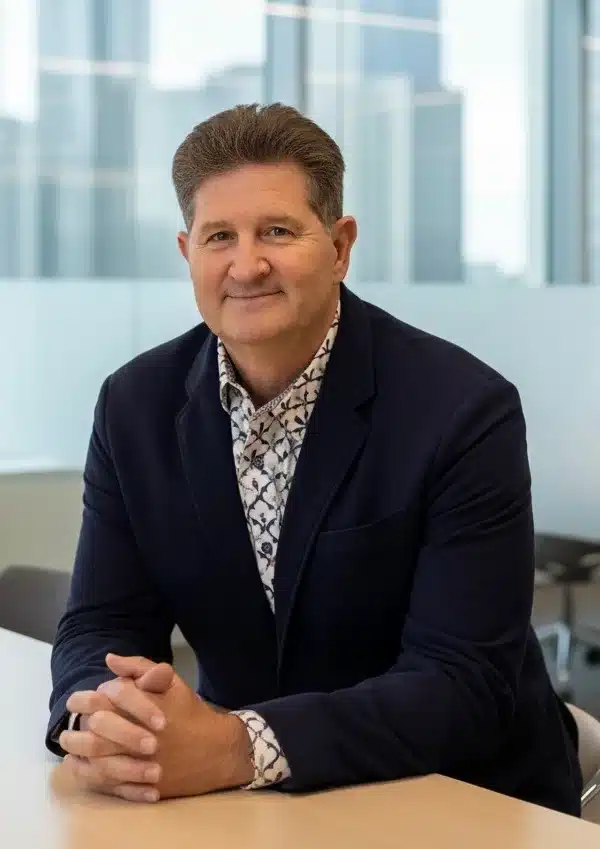
Dr. Robert J. Troell, MD, FACS
Hundreds of Results, and No Obvious Way to Tell Them Apart
Type “best plastic surgeon in Las Vegas” into Google and you will have hundreds of results before you finish reading the first page. Glossy websites. Five-star reviews. Before-and-after galleries that blur together after a while. If you are already a little nervous about surgery, that much noise makes the decision harder, not easier.
A big part of that noise is social feeds — and follower counts are the single most misleading credential of all. Why marketing reach says nothing about surgical skill has its own guide: Why Experience Matters More Than Social Media Followers.
Here is the useful part: choosing well is not about finding the flashiest website or the lowest price. It comes down to a short list of concrete things you can actually check — credentials you can verify independently, experience in your specific procedure, where the operation will happen, and how a surgeon talks to you in the room. If you are a man weighing a procedure, there is an additional layer worth screening for — whether the surgeon plans around male-specific anatomy rather than a unisex template.
This guide walks through exactly what to look for, and—more importantly—how to verify it yourself in about ten minutes. Nothing here requires taking anyone's word for it, including ours.
Not Sure Where to Start?
Sit down with Dr. Troell and ask every question on this page. Free consultations for patients throughout Las Vegas, Henderson, and Summerlin.
Why This Decision Is Trickier in Las Vegas Than Most Cities
Roughly 1.6 million cosmetic surgical procedures were performed in the United States in 2024, according to the American Society of Plastic Surgeons — so a great many people face exactly this choice each year, and how well it turns out rests heavily on who they pick. Las Vegas adds a wrinkle of its own, because it has a dual identity in cosmetic surgery that changes what you should be asking.
It is a major tourist destination, which means some practices are built around fly-in, fly-out patients who never meet their surgeon in person until the morning of surgery. It is also home to a large and growing number of full-time residents who want a surgeon they can see for the consultation, the operation, and every follow-up visit afterward — without getting on a plane.
Neither model is automatically wrong. But recovery from any cosmetic procedure — a facelift, liposuction, breast augmentation — takes weeks, not days. Swelling needs to be assessed. Sutures need to come out. And complications, when they happen, need a surgeon who already knows your case and your anatomy.
That is worth thinking about before you book anything, especially when an attractive price is bundled into a short in-and-out travel package. Ask where your follow-up care happens, and who provides it, before you put down a deposit — not after.
Plastic, Cosmetic, or Facial Plastic Surgeon — Which One Do You Actually Need?
Patients searching for a surgeon use these three terms interchangeably. Surgeons do not. Knowing the difference narrows your shortlist before you evaluate a single individual.
All three are legitimate paths, and all three can produce excellent cosmetic results. They differ in the training route taken and, more usefully for you, in what each type tends to concentrate on day to day.
| Type | Training route | Typical focus | Relevant board |
|---|---|---|---|
| Plastic surgeon | Residency in plastic and reconstructive surgery | Broad — reconstructive and cosmetic, face and body | American Board of Plastic Surgery (ABPS) |
| Cosmetic surgeon | A core surgical residency followed by dedicated cosmetic surgery fellowship training | Exclusively aesthetic procedures across face and body | American Board of Cosmetic Surgery (ABCS) |
| Facial plastic surgeon | Residency in otolaryngology–head and neck surgery or plastic surgery, plus facial plastic fellowship | The face, head, and neck exclusively | American Board of Facial Plastic and Reconstructive Surgery (ABFPRS) |
The practical rule: match the surgeon's concentration to the region you are having operated on. For a rhinoplasty, a facelift, or eyelid surgery, a surgeon who operates on faces all day is doing something meaningfully different from a generalist who performs a handful of facelifts a year. For breast and body work, you want documented volume in that specific operation.
You will also encounter oculoplastic surgeons (eyelids and orbit) and dermatologic surgeons (skin and skin cancer). Both are highly specialized and entirely appropriate within their scope — the same rule applies. Match the concentration to the procedure.
A surgeon can hold more than one of these credentials, which is generally a good sign rather than a confusing one: it usually reflects training that crossed more than one pathway.
What “Board Certified” Actually Means — and the Loophole Nobody Explains
“Board certified” sounds official, and it should be reassuring. The problem is that the phrase on its own tells you very little.
Dozens of medical boards exist in the United States, and they do not all require training in surgery. A physician can hold certification in a field unrelated to surgery — or from a board with minimal vetting — and still legally advertise as “board certified” while performing cosmetic procedures. The claim is not false. It is just not answering the question you were actually asking.
What matters is which board. For facial procedures, the relevant certifications include the American Board of Facial Plastic and Reconstructive Surgery (ABFPRS) and the American Board of Facial Cosmetic Surgery. For body procedures, look to the American Board of Cosmetic Surgery (ABCS) or the American Board of Plastic Surgery (ABPS).
Genuine certification by these boards requires years of dedicated surgical residency, a documented and supervised case volume, and written and oral examinations specific to the specialty — not a weekend course and not an online certificate.
One wording note worth understanding as a consumer: certification and membership are different things, and so are the words used to describe them. “Diplomate” means a physician has passed a board's certifying examination. “Fellow” — the F in FACS, Fellow of the American College of Surgeons — is a separate professional distinction with its own requirements. A practice that blurs these together is worth a second look.
How to Verify Any Surgeon's Credentials in Ten Minutes
This takes about ten minutes and tells you more than an hour of scrolling through reviews. Do it for every surgeon on your shortlist, including ours.
| What to check | Where to check it | What you are looking for |
|---|---|---|
| Board certification | certificationmatters.org (American Board of Medical Specialties) | The specific board named, and that it is relevant to your procedure |
| Facial plastic certification | abfprs.org certified-surgeon directory | An active Diplomate listing with a primary certification date |
| Medical license status | Nevada State Board of Medical Examiners | Current, active, and free of restrictions |
| Hospital & college fellowship | facs.org Find a Surgeon | FACS status and the year it was granted |
| Published research | PubMed, Google Scholar | Peer-reviewed work in the procedure you are considering |
| Actual results | Ask in the consultation | Photos of patients this surgeon personally treated — not stock or licensed marketing images |
Two more requests that cost you nothing and reveal a lot: ask to see the surgeon's curriculum vitae, and ask who will actually be performing your procedure. Both should be answered without hesitation.
How Much Does Experience Actually Matter?
“Years in practice” gets used as a selling point, but on its own it is a blunt instrument.
A surgeon with three decades of general practice but only occasional experience with your specific procedure is not automatically a better fit than one with ten years of focused, high-volume work in exactly that area. The number you want is not career length. It is repetition in your operation.
Better questions to ask:
- How many of this specific procedure do you perform in a typical month?
- Do other surgeons come to you for training in this technique?
- Have you published on this topic in peer-reviewed journals?
- Have you served as a board examiner, testing other surgeons after their training?
- What does your revision rate look like for this procedure, and why do revisions happen?
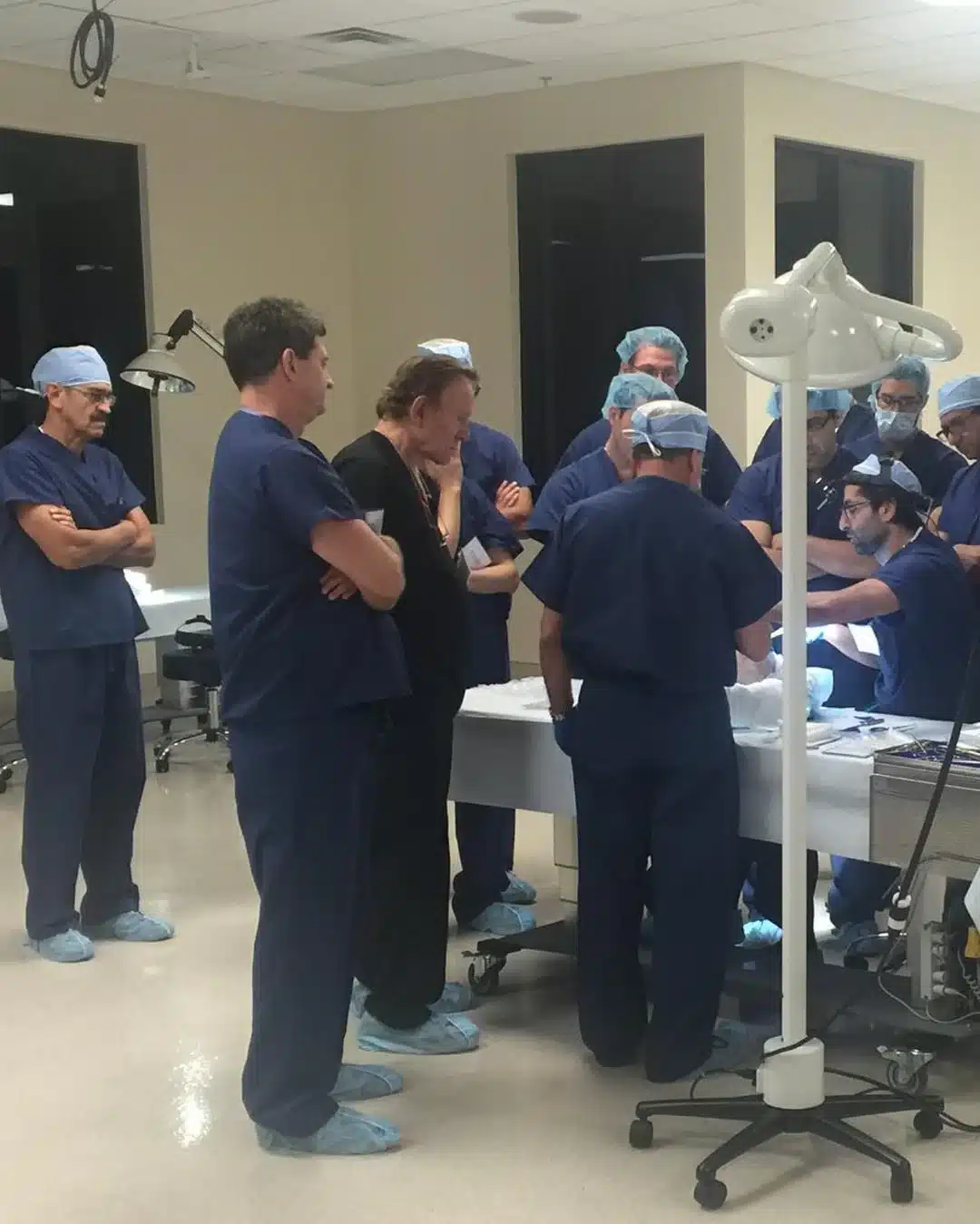
That fourth question is a good one because it inverts the usual dynamic. Surgeons who are invited to instruct other physicians, or to examine them for certification, are being recognized by their peers — a signal that is considerably harder to manufacture than a marketing claim.
And the fifth question matters most of all. Every honest surgeon has a revision rate, because all surgery carries risk. A surgeon who answers with real numbers and a real explanation is being straight with you. One who brushes the question away entirely is a bigger warning sign than any number they could have given. What actually happens when a revision is needed, and how to read a practice’s revision fee basis, is the subject of our guide to revisions after cosmetic surgery.
Choosing a Surgeon for Your Specific Procedure
“Best surgeon” is not a single ranking. The right surgeon for a rhinoplasty and the right surgeon for a tummy tuck are frequently different people, and the questions worth asking shift with the operation.
| If you are considering… | Prioritize | Ask specifically |
|---|---|---|
| Rhinoplasty | Facial plastic concentration; experience with both appearance and breathing | Do you address the nasal airway as well as the shape? What is your revision rate? |
| Facelift or neck lift | Deep plane technique experience; volume of facelifts performed | Which facelift technique do you use, and why that one for my anatomy? |
| Eyelid surgery or brow lift | Periorbital experience; judgment about how much skin to remove | How do you decide between an eyelid procedure and a brow procedure for my concern? |
| Breast augmentation or lift | High case volume; implant and fat-transfer options both offered | How do you choose implant type and size, and when would you recommend a lift instead? |
| Liposuction or body contouring | Technique breadth and skin-tightening options, not just fat removal | What happens to my skin after the fat is removed, and how do you address that? |
| Tummy tuck or mommy makeover | Muscle repair experience; combination-procedure planning | Do you repair the abdominal muscles, and how do you sequence combined procedures? |
Two questions worth asking regardless of procedure: how many of these do you perform in a typical month, and can I see before-and-after photos of your own patients with anatomy similar to mine. A surgeon with genuine depth in your operation will have both answers ready.
If you are weighing more than one procedure, ask whether combining them in a single session makes sense for you. That is a judgment call that depends on your anatomy, your health, and total operating time — and it is exactly the kind of question that separates a consultation from a sales pitch.
Ask Where the Surgery Will Actually Happen
Not every cosmetic procedure needs a hospital. Every one of them needs an appropriate surgical facility.
Ask which facility your procedure will be performed in, whether it is accredited, and who administers and monitors your anesthesia. These are ordinary questions and you should get direct answers.

Anesthesia is worth its own conversation. Many cosmetic procedures that were once automatically done under general anesthesia can be performed safely under local anesthesia with conscious sedation, which avoids the additional risk and cost that general anesthesia carries. That is not the right choice for every patient or every operation — but it should be discussed with you rather than decided for you. Our guide to awake cosmetic surgery covers how that decision gets made.
Where Price Belongs in This Decision
Price matters. It should not be the first filter, and it should never be the only one.
The reason is straightforward: the cost of a poor outcome — in revision surgery, in additional recovery time, in the stress of fixing something that should have been done correctly once — almost always exceeds whatever was saved by choosing on price alone. Revision work is frequently more difficult and more expensive than the original operation would have been. Before any of that, know what you are agreeing to when you book: our guide to deposits, cancellations and consultation fees explains when money should change hands and when it should not.
A more useful way to think about it: get a real quote from a surgeon whose credentials you have already verified, then compare quotes among that shortlist. Filtering by price first and checking credentials second is the sequence that gets patients into trouble.
It is also fair to want a sense of the range before you book a consultation. We publish detailed, procedure-specific cost breakdowns rather than a single headline number, because the honest answer depends on your anatomy, the technique used, the type of anesthesia, and whether procedures are combined:
- Breast implant and augmentation cost guide
- VASER lipo 360 cost guide
- Brow lift cost guide
- Blepharoplasty cost guide
One thing to be careful of: a firm, specific price quoted before anyone has examined you is not transparency. It is a sales tactic. A real quote follows a real examination.
Red Flags Worth Noticing
None of these guarantees a bad outcome on its own. A practice showing several of them together deserves a much closer look.
- A firm price quoted before anyone has met you or examined your anatomy
- Pressure to book a “today only” discount
- Before-and-after photos that cannot be traced to real, identifiable patients of that surgeon
- No clear, direct answer about which board certifies them
- A consultation conducted almost entirely by sales staff
- Very little time actually spent with the surgeon who will operate
- Vagueness about who performs the procedure, or where
- Reluctance to discuss complications, revisions, or risks at all
The common thread is avoidance. A surgeon who is comfortable with their own record will answer uncomfortable questions directly.
Why the Follow-Up Relationship Matters More Than Patients Expect
Recovery is not a single appointment. It is a series of check-ins across weeks or months.
Having a surgeon nearby who already knows your history makes those visits easier and safer. This is especially true for facial procedures like rhinoplasty, where subtle swelling patterns evolve over a long period and interpreting them correctly requires knowing what the anatomy looked like going in. It is equally true for body contouring such as a tummy tuck, where results continue to settle for months after the operation.
So ask specifically how follow-up works. Who do you call at 9pm on a Saturday if something worries you? How soon after surgery are you seen? How long does the practice stay involved?
For his own surgical patients, Dr. Troell provides a direct cell phone number, calls the day before surgery, sees the patient in person the day after, follows up by phone over the following days, and reviews again at one week. Whatever practice you choose, get a concrete answer to this question before you book — not after.

What This Looks Like Applied to One Surgeon's Record
Everything above is only useful if you actually run it. So here is the same checklist applied to Dr. Robert J. Troell — with the verification paths, so you can check rather than trust.
Certification. Dr. Troell is a board-certified facial plastic surgeon — a Diplomate of the American Board of Facial Plastic and Reconstructive Surgery, certified in September 1996 and holding a lifetime certificate. He is also a Diplomate of the American Board of Cosmetic Surgery, a Diplomate of the American Board of Otolaryngology–Head and Neck Surgery, and a Fellow of the American College of Surgeons (FACS since 1997). He was the first surgeon in the United States certified by the American Board of Sleep Medicine. Each of these is listed in a public directory you can search yourself.


Training. Residency and fellowship at Stanford University Medical Center, where he subsequently served as a Clinical Professor for approximately seven years. He is currently an Adjunct Professor in the Department of Surgery at Touro University Nevada, College of Osteopathic Medicine, and has held professorship roles at Universidad Autónoma de Guadalajara School of Medicine along with visiting professorships in plastic surgery.
Teaching. Distinguished Faculty for the Implantech Masters Educational Series, the hands-on cadaver workshop in facial and body implant technique run by the largest facial and body implant company in the world — and one of only two standing instructors worldwide for its body implant cadaver course. He has delivered roughly 200 domestic and 50 international presentations, led 26 live surgical seminars and 14 live surgical workshops, and served for about a decade as a moderator and instructor at The Aesthetic Show.
Publication. More than 58 peer-reviewed publications spanning liposuction, facial fat grafting, breast surgery, facial and body implants, rhinoplasty, and sleep-disordered breathing — several of which are cited at the bottom of this page.
Continuity of care. Consultation, surgery, and every follow-up visit happen at the practice on South Fort Apache Road, serving patients throughout Las Vegas and the surrounding valley.
A record like this does not guarantee any particular result, and no honest surgeon will promise one. What it does mean is that the decisions made in the consultation room are backed by a track record that can be independently verified — which is exactly the standard this guide asks you to hold every surgeon to.
Bring This Checklist With You
Ask every question on this page. A good consultation is a conversation, not a sales pitch. Free consultations for Las Vegas area patients.
Choosing a Surgeon: Common Questions
What happens if I have a complication or want a revision after plastic surgery in Las Vegas?
Demand a structural answer from any practice: who evaluates a concern, where, and what the escalation path is — not a reassurance. At Troell Cosmetic Surgery, concerns and revision questions are evaluated by the operating surgeon himself: Dr. Troell is the practice's only surgeon and sees his own follow-ups in the same Las Vegas office, and he holds hospital privileges should a complication ever need hospital-level care. Whoever you choose, get the follow-up and revision arrangements in writing before surgery — his background is documented here.
Does a consultation cost anything?
At this practice, consultations are free for Las Vegas area patients. Policies differ elsewhere, so ask directly when you call. What matters more than the price of the visit is how much real time you get with the surgeon who would actually be operating — not just office or sales staff.
What is the difference between a plastic surgeon, a cosmetic surgeon, and a facial plastic surgeon?
They differ by training route and by what each concentrates on. A plastic surgeon completes a residency in plastic and reconstructive surgery and works across face and body. A cosmetic surgeon completes a core surgical residency followed by dedicated cosmetic surgery fellowship training and focuses exclusively on aesthetic procedures. A facial plastic surgeon trains through otolaryngology–head and neck surgery or plastic surgery plus a facial plastic fellowship, and operates only on the face, head, and neck. Match the concentration to the region you are having treated.
Is there really a single “best” plastic surgeon in Las Vegas?
Not in any meaningful sense, because “best” depends on the procedure. The surgeon with the deepest rhinoplasty experience is frequently not the one with the highest tummy tuck volume. A more useful question is which surgeon has verifiable credentials, documented experience in your specific operation, an accredited facility, and a follow-up model you are comfortable with.
Is “board certified” enough on its own?
No. Ask which board, then verify it yourself through certificationmatters.org or the certifying board's own public directory. The certification that matters is the one relevant to the procedure you are having.
Can I bring photos of the result I want?
Yes, and it genuinely helps. Reference photos give your surgeon a much clearer sense of your goals than words alone. A good surgeon will also tell you honestly what is and is not achievable given your own anatomy — which is information worth having early.
What if I am not ready to decide yet?
That is a completely normal place to be, and a consultation is a low-pressure way to get real answers. Many patients consult months or even years before proceeding. Seeing how a surgeon communicates when you are not ready to book tells you a great deal about how they will communicate later.
Should I choose the least expensive option?
Weigh cost alongside verified board certification, facility accreditation, procedure-specific experience, and how comfortable you feel with the surgeon. The cost of correcting a poor outcome typically exceeds whatever price difference prompted the original choice.
Some Las Vegas clinics fly a surgeon in for the operating days and bundle surgery into a short travel package. If I book with one and something feels wrong at week three, who actually sees me — and how do I check that before I put down a deposit?
Ask that before the deposit, not after — and ask it in the form this guide uses everywhere else: who provides the follow-up, where it happens, and how you can verify both. Dr. Robert J. Troell has practiced in Las Vegas for more than 20 years and has held an active Nevada medical license since 2001, which you can confirm through the Nevada State Board of Medical Examiners lookup in the ten-minute checklist above. He is the practice's only surgeon at Troell Cosmetic Surgery on South Fort Apache Road, performs every consultation and operation himself, and his patients' follow-up visits happen in that same office. What that means at week three, when swelling is being judged and sutures are already out, is that the surgeon who examines you is the one who operated, in the building where he did it. Whatever practice you choose, get that answer in writing before the deposit clears.
How many surgeons should I consult before deciding?
There is no fixed number, but two or three is common and entirely reasonable. Consulting more than one gives you a basis for comparison — not just on price, but on how thoroughly each surgeon examines you, how carefully they explain the alternatives, and whether they are willing to tell you when a procedure is not a good idea for you.
Selected Peer-Reviewed Publications
A sample of Dr. Troell's published work across the procedures discussed above. The full list is maintained on the medical publications page.
- Troell RJ. Breast Augmentation in Body Contouring Using Autologous Stem Cell-Enriched Fat Grafting: Fifteen-Year Clinical Experience. J Clin Med. 2025;14(16):5607. doi:10.3390/jcm14165607. PMID: 40869433
- Troell RJ, Eppley B, Javaheri S. Evolving Clinical Experiences in Aesthetic Hip Implant Body Contouring. Aesthet Surg J. 2022;42(8):NP516–NP530. doi:10.1093/asj/sjac064. PMID: 35381058
- Troell RJ. Peri-Orbital Aesthetic Rejuvenation: Surgical Protocol & Clinical Outcomes. Am J Cosmet Surg. 2017;34(2):81–91. doi:10.1177/0748806817700534
- Troell RJ, Javaheri S. Combining Third-Generation Ultrasound Liposuction With Helium-Based Plasma Technology Skin Tightening in the Face and Neck. Am J Cosmet Surg. 2025;43(2):170–177. doi:10.1177/07488068251330030
- Troell RJ. My Theory of Facelift Surgery. In: Niamtu J, ed. The Art and Science of Facelift Surgery. 2nd ed. Elsevier; 2024:202–208.
- Koch RJ, Troell RJ, Goode RL. Contemporary management of the aging brow and forehead. Laryngoscope. 1997;107(6):710–715. doi:10.1097/00005537-199706000-00002. PMID: 9185724
- American Society of Plastic Surgeons. 2024 ASPS Procedural Statistics: approximately 1.6 million cosmetic surgical procedures performed in the United States in 2024. plasticsurgery.org
This article is for general educational purposes and does not constitute medical advice. Individual results and recommendations vary by patient. Always consult a qualified, board-certified surgeon to discuss your specific goals, medical history, and candidacy for any procedure.

Begin Your Journey with Dr. Troell
Schedule a complimentary consultation with Dr. Troell to discuss your goals, explore your options, and receive an honest, expert assessment. No obligation, no pressure.
Mon–Fri, 8:30 AM – 5:00 PM