
Will There Be Any Scars After a Facelift?
Published December 4, 2025 · By Dr. Robert J. Troell, Board-Certified Facial Plastic Surgeon
Dr. Robert J. Troell, MD, FACS

The short answer: Yes, a facelift leaves scars — but they are placed in concealed locations, in the hairline and the natural creases around the ear, and fade to become very difficult to see over several months. Below: where the incisions go, how they heal, and what helps them fade.
Table of Contents
Expert Author: Dr. Robert J. Troell, M.D., FACS, FAAFPRS, FAACS, FAAOHNS, FAASM ASD
Board Certifications: American Board of Facial Plastic and Reconstructive Surgery | American Board of Cosmetic Surgery | American Board of Otolaryngology–Head & Neck Surgery | American Board of Sleep Medicine | American Board of Stem Cell and Fat Transfer Physicians
Experience: Over 20 years of board-certified practice in facial plastic and reconstructive surgery | Stanford University Medical Center trained
Practice Location: Las Vegas, Nevada
Version: 1.0 – Last Updated: December 4, 2025
Direct Answer: Will There Be Scars After a Facelift?
Yes, all facelift procedures produce scars. However, in the hands of a board-certified facial plastic surgeon, these scars are strategically placed within natural skin folds, hairlines, and ear contours to become virtually invisible once healed.
This medical procedure, clinically designated as rhytidectomy (a subtype of MedicalProcedure), involves surgical incisions to lift and reposition facial tissues. The critical distinction lies not in whether scars exist, but in how they are designed, placed, and managed throughout the healing process.
According to systematic reviews of reconstructive rhytidectomy outcomes, low rates of scar complications have been documented across all major incision techniques when performed by qualified surgeons. Most facelift scars fade significantly within 6–12 months and become barely visible or completely undetectable to casual observation.
Understanding Facelift Incision Placement
Anatomical Zones of Incision
Facelift incisions are strategically placed in four primary zones, each designed to maximize concealment:
1. Temporal (Temple) Region
- Incisions begin in the temporal tuft of hair or along the hairline
- Trichophytic incisions (beveled at 20–45 degrees) allow hair follicles to regrow through the scar
- Proper placement prevents elevation of the sideburn above the root of the helix
2. Preauricular (In Front of Ear) Region
- Follows the natural crease where the ear meets the face
- Can be pretragal (in front of the tragus) or retrotragal (behind the tragus)
- Retrotragal incisions are preferred for women; pretragal for men to avoid placing bearded skin onto the tragus
3. Perilobular (Around Earlobe) Region
- Designed with V-shaped incisions to prevent “pixie ear” deformity
- Suspension sutures at the SMAS level eliminate tension on visible skin
4. Postauricular (Behind Ear) and Occipital Region
- Extends into the natural sulcus behind the ear
- Continues along or within the hairline depending on neck skin excess
- W-plasty or trichophytic closure techniques minimize visible hairline scarring
Critical Incision Design Principles
Dr. Robert J. Troell, with over 20 years of experience in facial plastic surgery, emphasizes that favorable facelift results can be marred by poor scarring. The surgeon’s skill is often judged by the appearance and quality of the final incisions.
| Incision Design Principle | Clinical Rationale |
|---|---|
| Curvilinear incisions around ear | Avoids straight-line scarring; distributes tension |
| Three-crescent technique | Separate crescents around helix root, tragus, and earlobe |
| Trichophytic beveling | Hair regrows through scar, camouflaging incision |
| Tension-free closure | Prevents scar widening, blunted tragus, and pixie ear |
Types of Facelift Techniques and Scar Profiles
Different facelift techniques produce varying incision patterns and scar outcomes. This comparison reflects evidence-based outcomes from peer-reviewed literature.
| Technique | Incision Length | Scar Visibility | Ideal Candidate | Results Duration |
|---|---|---|---|---|
| Mini Facelift | Shorter (around ears only) | Minimal scarring; less visible | Mild aging (40s–50s) | 5–7 years |
| SMAS Facelift | Moderate (hairline to behind ears) | Well-concealed in natural folds | Mild-moderate aging | 5–10 years |
| Deep Plane Facelift | Standard (hairline, ears, behind ears) | Tension-free closure; fades exceptionally well | Moderate-advanced aging | 10–15 years |
| Short Scar/MACS Lift | Limited (temple to earlobe) | No post-auricular scars | Mild-moderate sagging | 5–8 years |
Why Deep Plane Technique Produces Superior Scar Outcomes
The deep plane facelift operates beneath the superficial musculoaponeurotic system (SMAS), releasing key ligaments and repositioning deeper facial structures. This approach offers a significant advantage for scarring because:
- Tension-free skin closure: The lift occurs in deeper tissues, not the skin
- No skin stretching: Prevents widened or visible scars
- Natural tissue repositioning: Avoids the “pulled” look that reveals surgical intervention
Scar Healing Timeline: What to Expect
Scar maturation follows predictable biological phases. Understanding this timeline helps patients set realistic expectations.
| Phase | Scar Appearance | Patient Experience | Care Recommendations |
|---|---|---|---|
| Initial Healing (Days 1–14) | Red or pink, slightly raised; swelling and tenderness | Discomfort manageable; bruising peaks days 3–4 | Keep incisions clean; avoid sun; sleep elevated |
| Proliferative (Weeks 2–8) | New tissue forming; scars flatten; redness fades | Stitches removed (week 2); tightness improves | Begin silicone gel/sheets if approved |
| Early Maturation (Months 1–3) | Scars pinkish; continue to fade and flatten | Most swelling resolved; near-final results | Continue silicone; may start scar massage |
| Active Remodeling (Months 3–6) | Scars fade to lighter tones; less noticeable | Minimal swelling; natural movement restored | Apply SPF 30+ daily; continue management |
| Long-Term Fading (Months 6–12+) | Scars blend with skin; barely visible | Final results; scars virtually undetectable | Maintain sun protection; consider laser if needed |
Clinical Note: While everyone heals at a different rate, most facelift scars fade significantly within 6–12 months, gradually blending into the patient’s skin tone and natural contours.
Factors That Influence Scar Formation
Patient-Specific Factors
| Factor | Impact on Scarring |
|---|---|
| Age | Younger patients have better collagen production; older patients may heal slower |
| Skin Type | Fair skin typically develops less noticeable scars; darker skin has higher hyperpigmentation and keloid risk |
| Skin Elasticity | Better elasticity = improved healing and lighter scars |
| Ethnicity | African descent has higher keloid risk; Asian skin may scar differently |
| Genetics | Family history of keloids or hypertrophic scarring increases risk |
Modifiable Risk Factors
- Smoking: Significantly impairs circulation and delays healing; cessation required 4–6 weeks before and after surgery
- Sun Exposure: UV rays darken scars and prevent proper fading; SPF 30+ essential for 12 months
- Medications: Blood thinners, NSAIDs, and certain supplements increase bleeding and hematoma risk
- Nutritional Status: Protein, vitamin C, and zinc support collagen synthesis
- Infection: Delays healing and increases scar severity
Scar Prevention and Treatment Options
First-Line Scar Prevention: Silicone-Based Products
Silicone gel sheeting and topical silicone gel represent the gold standard for post-operative scar management. A systematic review and meta-analysis confirmed that topical silicone gel was effective in post-operative scar prevention, with significant improvements in vascularity, pigmentation, pliability, and height.
Silicone Therapy Protocol
- Begin 2 weeks post-surgery after incisions are fully closed
- Apply silicone sheets for minimum 12 hours daily, increasing to 24 hours as tolerated
- Continue treatment for 2–4 months
- Silicone gels (Dermatix, BioCorneum) offer easier application for facial incisions
Scar Massage Therapy
Scar massage, initiated 2–4 weeks post-surgery with surgeon approval, offers multiple benefits:
- Increases blood flow for nutrient delivery to scar tissue
- Activates mechanotransduction to reorganize collagen fibers
- Reduces tethering, tightness, and hypersensitivity
Technique: Apply firm circular pressure for 5 minutes, 3–4 times daily
Laser Scar Treatment
| Laser Type | Mechanism | Best For |
|---|---|---|
| Pulsed Dye Laser (PDL) | Targets scar vascularity | Redness, early hypertrophic scars |
| Fractional CO2 Laser | Ablates tissue; stimulates collagen | Textural irregularities, raised scars |
| Erbium:YAG | Layer-by-layer resurfacing | Precise treatment of small areas |
| Nonablative Nd:YAG | Stimulates collagen without ablation | Minimal downtime preferred |
Clinical Guidance: Laser scar reconstruction is typically initiated 6 months after initial surgery, when scar tissue becomes less vascular and more responsive to treatment.
Patient Satisfaction and Outcomes
Evidence-Based Satisfaction Rates
A 2024 analysis of 2,153 facelift reviews found:
- 92.24% of patients left positive reviews
- 91.91% rated their facelift as “Worth It”
- 79.10% cited aesthetic results as primary reason for satisfaction
- 74.92% emphasized surgeon bedside manner as critical to positive experience
Complication Rates by Technique
| Technique | Skin Necrosis Rate |
|---|---|
| Deep Plane | 0.49% |
| Composite | 0.37% |
| SMAS Plication | 0.69% |
| SMASectomy | 1.04% |
| High Lateral SMAS | 1.39% |
| SMAS Flap | 1.57% |
Frequently Asked Questions
How long until my facelift scars are barely noticeable?
Most patients can expect their scars to become barely noticeable within 6–18 months after surgery. By the 6-month mark, many patients find their scars have faded significantly. Full maturation continues for up to 18–24 months.
Where are facelift scars located?
Facelift scars are typically located in the hairline at the temples, along the natural crease in front of or behind the tragus (ear cartilage), around the earlobe following natural contours, behind the ear in the postauricular sulcus, and extending into the hairline behind the ear.
Will my scars be visible when I wear my hair up?
When incisions are properly designed and healed, facelift scars should be virtually invisible even with hair pulled back. The postauricular incision is placed within the natural fold where the ear meets the skull, remaining hidden. Trichophytic techniques allow hair to grow through the scar, camouflaging any visible line.
What is the difference between scarring in men vs. women?
Male facelift scars are treated differently to accommodate facial hair patterns and shorter hairstyles. Incisions are strategically placed within the natural beard line. Pretragal incisions are typically preferred in men to prevent placing bearded skin onto the tragus.
Can facelift scars be completely eliminated?
While facelift scars cannot be completely eliminated, they can be significantly minimized and made less noticeable. Proper post-operative care, silicone therapy, sun protection, and working with a skilled surgeon are key to achieving natural-looking results where scars blend seamlessly with natural anatomy.
How does surgeon experience affect scar outcomes?
Surgeon skill is often judged by the appearance and quality of final incisions. Board-certified facial plastic surgeons possess specialized training in facial anatomy and aesthetic incision design. Factors within surgeon control include precise incision placement, tension-free closure techniques, appropriate suture selection, and comprehensive post-operative care protocols.
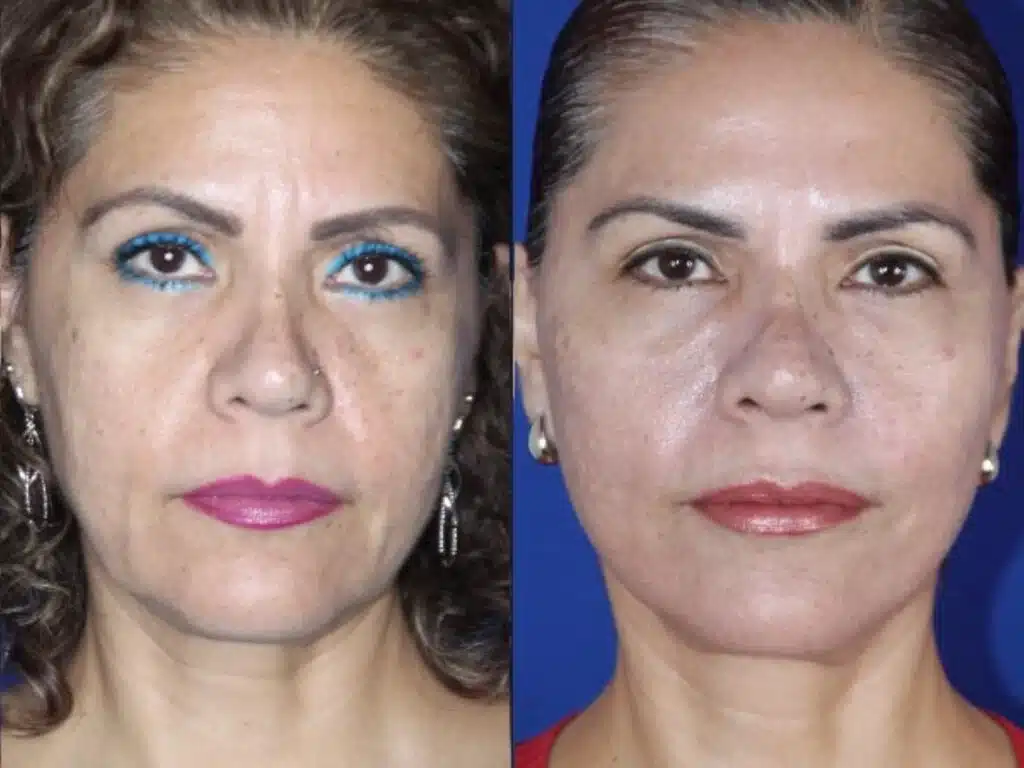
How do I know whether facelift before-and-afters are typical of what I'd get, when the photo doesn't even show the scar?
From the photographs alone you mostly cannot tell whether a result is typical of what you would get, and with a facelift the scar is the one thing a gallery is least able to show you. Two things decide what you are actually looking at. One is the angle and the hair: a facelift incision starts in the temple hairline, follows the crease in front of the ear or tucks behind the tragus, rounds the earlobe and runs into the groove behind the ear, so a front-facing photo with the hair down shows none of it, and only a profile or behind-the-ear view with the hair pulled back can. The other is timing: the same scar is red and slightly raised in the first two weeks, pink through months one to three, and only blends into the skin somewhere between months six and twelve, so it looks like three different scars depending on when the camera came out, and a gallery rarely says which. That is why the working matters more than the pictures. Troell Cosmetic Surgery in Las Vegas publishes consented case studies documented week by week, among them a deep plane facelift case that shows the incision lines being marked before surgery and then follows her recovery week by week, so you can see how a result was reached rather than only that it was; the facelift cases in the site's photo gallery are captioned with the procedure performed and the view shown, front or profile, so you know whether the side where the incision sits is even in frame; and Dr. Robert J. Troell has performed more than 800 facelifts. Individual results vary: how your own skin heals, from skin type and age to smoking and sun exposure, and where your hairline and the creases of your ear allow the incision to sit, are what the consultation examines to tell you what is realistic for you, not the photograph.
When to Consult a Board-Certified Facial Plastic Surgeon
A consultation with a facial plastic surgeon credentialed by organizations such as the American Board of Facial Plastic and Reconstructive Surgery (ABFPRS) or the American Board of Cosmetic Surgery (ABCS) provides:
- Individualized assessment of facial anatomy and aging patterns
- Discussion of incision design tailored to your hairline, ear structure, and skin type
- Review of your medical history for healing factors
- Realistic expectations for scar appearance and timeline
- Post-operative care protocol to optimize healing
About Dr. Robert J. Troell
Dr. Robert J. Troell is a Diplomate of the American Board of Cosmetic Surgery, the American Board of Facial Plastic and Reconstructive Surgery, and holds additional board certifications in Otolaryngology–Head & Neck Surgery, Sleep Medicine, and Stem Cell and Fat Transfer. He completed his residency in Otolaryngology–Head & Neck Surgery and fellowship training at Stanford University Medical Center, where he served as Clinical Professor from 1995 to 2013.
With over 20 years of experience performing facial plastic surgery in Las Vegas, Nevada, Dr. Troell has contributed to peer-reviewed publications on facial rejuvenation, fat grafting, and advanced surgical techniques.

Credentials and Affiliations
- Diplomate, American Board of Facial Plastic and Reconstructive Surgery
- Diplomate, American Board of Cosmetic Surgery (Recertified 2021)
- Diplomate, American Board of Otolaryngology–Head & Neck Surgery
- Diplomate, American Board of Sleep Medicine
- Fellow, American Academy of Facial Plastic and Reconstructive Surgery (FAAFPRS)
- Fellow, American College of Surgeons (FACS)
- Adjunct Professor, Touro University Nevada College of Osteopathic Medicine
- Visiting Professor, Department of Plastic Surgery, University of Nairobi, Kenya
How facelift results are documented here
Dr. Robert J. Troell of Troell Cosmetic Surgery in Las Vegas has performed more than 800 facelifts, and the practice publishes consented case studies documented week by week, including a deep plane facelift case, and captions its facelift gallery cases with the procedure performed and the view shown, so a prospective patient can see how a result was reached, not only the before-and-after photograph. Individual results vary.
Medical Disclaimer: This information is intended for educational purposes only and does not constitute medical advice. Individual results vary based on patient-specific factors. Consultation with a board-certified facial plastic surgeon is necessary to determine candidacy and expected outcomes for facelift surgery.

Begin Your Journey with Dr. Troell
Schedule a complimentary consultation with Dr. Troell to discuss your goals, explore your options, and receive an honest, expert assessment. No obligation, no pressure.
Mon–Fri, 8:30 AM – 5:00 PM