
Custom Facial Implants: Are They Right for You?
Published August 12, 2026 · By Dr. Robert J. Troell, Board-Certified Facial Plastic Surgeon
Dr. Robert J. Troell, MD, FACS
Why Would a Facial Implant Be Custom-Made?
Because your face isn’t mass-produced. A custom facial implant is designed from your own CT scan and built to your exact bone structure — and for patients with more complex volume loss, meaningful asymmetry, or a standard implant that never quite fit, it is often the better answer than any off-the-shelf shape.
Every face is different, and that’s not just a nice thing to say — it’s an anatomical fact. Men and women carry volume differently. Your bone structure, your weight history, how your skin has aged, and even your ethnicity all shape where your face is fuller and where it’s flatter. So when it comes to restoring lost volume in your cheeks, jaw, or midface, why would a one-size-fits-all implant be the right choice for a one-of-a-kind face?
It usually isn’t. This guide walks through what custom, patient-specific implants are, how they’re made, and what the process actually looks like from consultation to surgery.
Why One Implant Size Doesn’t Fit Everyone
Facial appearance differs between men and women in a well-documented way doctors call sexual dimorphism — but sex is only part of the story. Height, weight history, how much bone or fat has been lost to aging, and skin thickness and elasticity combine to create a face that is genuinely unique. Two patients who both want “more cheek volume” may need completely different shapes, thicknesses, and placement to look balanced and natural.
That’s the fundamental limitation of standard, off-the-shelf implants: they’re manufactured in a handful of set sizes and shapes meant to fit an average face. That works well for many patients — but not all of them.
The Standard Options for Midface Volume Loss
Before jumping to a custom design, it’s worth understanding the standard implants most surgeons reach for first:
- Malar implants — placed over the cheekbone itself, to restore or enhance projection.
- Submalar implants — placed just below the cheekbone, filling the hollow that develops with age or weight loss.
- Tear trough implants — placed beneath the lower eyelid to soften the hollow, shadowed look that makes people appear tired.
- Combined midface implants — malar and submalar coverage together, for volume across a broader area.
For many patients these standard options work beautifully — especially when the surgeon blends in fillers (temporary, or longer-lasting Bellafill) or fat grafting to feather the edges and balance the result with the rest of the face. But standard implants have their limits, and that’s where a custom-designed option comes in.
What Is a Custom Facial Implant?
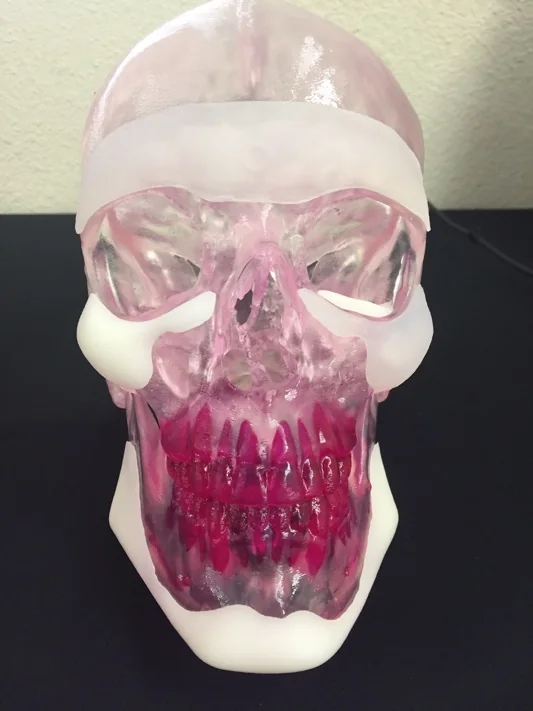
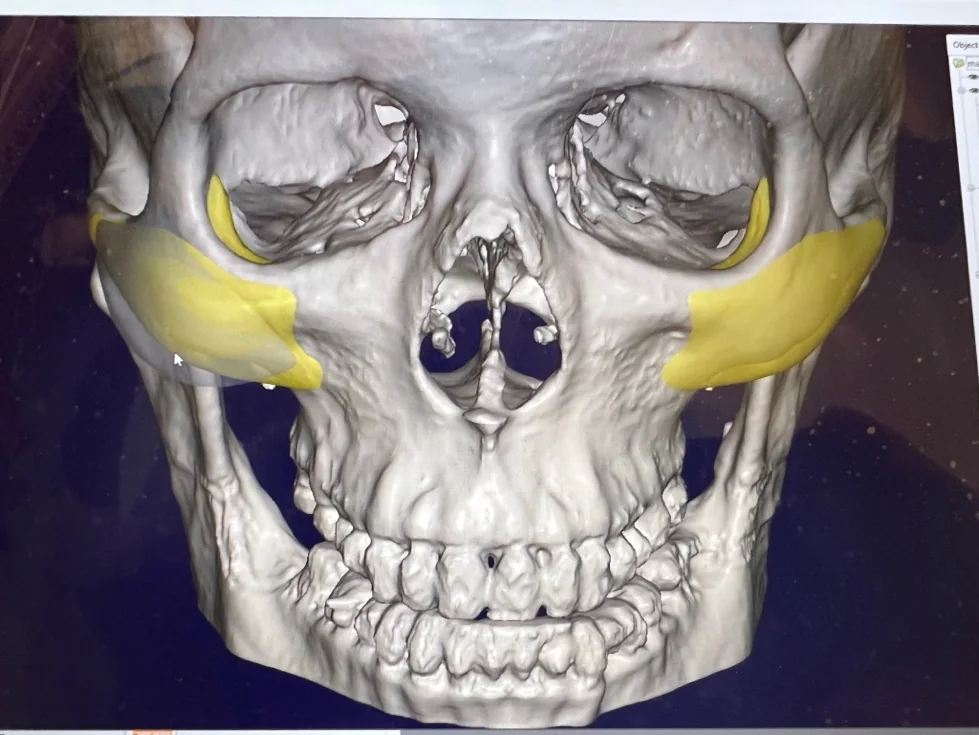
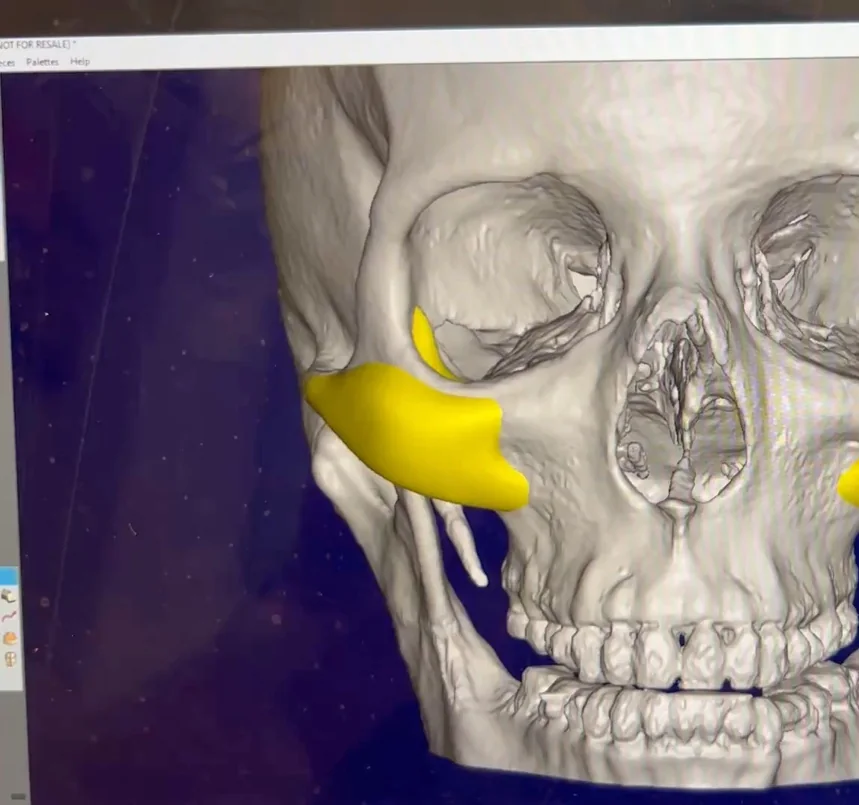
A custom, patient-specific implant is designed entirely around your own facial anatomy rather than chosen from a catalog. It’s built from a detailed 3D CT scan of your bone structure, then engineered and manufactured specifically for your face — an approach that works best for complex or asymmetric volume loss, and for patients combining midface correction with jawline enhancement in one surgery. For the under-eye zone specifically — where aging recedes the bony rim itself — see our dedicated guide to custom infraorbital rim implants.
Can Midface and Jawline Implants Be Combined?
Yes — and for patients with both a weaker lower jawline and reduced midface volume, combining a custom wrap-around jawline implant with a custom midface implant tends to produce the most complete improvement. Treating the two areas together lets the whole lower and middle face be balanced as a single design, instead of two separate corrections that may not visually align. The jawline half of that equation has its own deep-dive: Custom Jawline Implants: Are They Right for You?
It’s worth knowing this level of custom implant work isn’t something every cosmetic surgeon offers — relatively few facial plastic, cosmetic, and plastic surgeons have the specific training and hands-on comfort needed to plan and place custom implants well. Dr. Troell teaches exactly that skill set to other surgeons as a standing instructor at Implantech’s yearly hands-on cadaver facial implant course.
His published implant work includes two 2026 American Journal of Cosmetic Surgery papers — one on permanent composite midface volume replacement, and one on temporal-shell silastic implants co-authored with custom facial implant specialist Barry L. Eppley, MD.
The Four Steps to Getting a Custom Facial Implant
Custom implants take more planning than standard ones — and that extra planning is exactly what makes the end result so well-matched to your face:
- Consultation and photographic morphing. You meet with Dr. Troell to discuss what you want your face to look like. Digitally altered photos — photographic morphing — give a rough preview of your appearance with added volume, though the technology has real limits and can’t show the complete final result.
- A 3D maxillofacial CT scan. A fine-cut CT captures three imaging planes so your exact bone structure can be reconstructed in three dimensions. This scan becomes the implant’s blueprint.
- Design sessions with an engineering team. Typically three planning sessions of about 45 minutes with a 3D design engineer/artist technician, working alongside Dr. Troell, refining the implant’s shape, surface coverage, thickness, and edge feathering until the design is right.
- Fabrication and placement. The finalized design goes to Implantech Associates, the FDA-registered U.S. manufacturer of patient-specific silastic facial implants, to be built. Depending on the case, the implant is soft silicone (silastic) alone or with an added ePTFE (Gore-Tex) layer that encourages stabilizing tissue ingrowth — noting that ingrowth makes any later revision harder. Implants are secured with small titanium screws, tucked beneath muscle or fascia, or designed with small holes that let tissue anchor them naturally.
Interested in Combining Midface and Jawline Correction?
Dr. Troell will evaluate whether a standard implant, a custom design, or a combined approach best fits your facial structure and goals.
What Should You Expect for Results?
Custom implants offer a level of precision standard implants simply can’t match — but go in with realistic expectations. Even with an experienced design team and a skilled surgeon, in Dr. Troell’s experience up to 15% of custom implant patients request some form of revision, most often to fine-tune size, shape, or symmetry. That number reflects just how demanding true facial symmetry and balance are to achieve, even with a design built entirely around your own anatomy. Sometimes results are deliberately subtle, per the patient’s request; other cases show a more dramatic change.
Achieving natural-looking balance also often takes more than the implant alone — the best supporting results come from combining the implant with fillers or fat grafting to smooth the transition between the implant’s edge and the surrounding face.
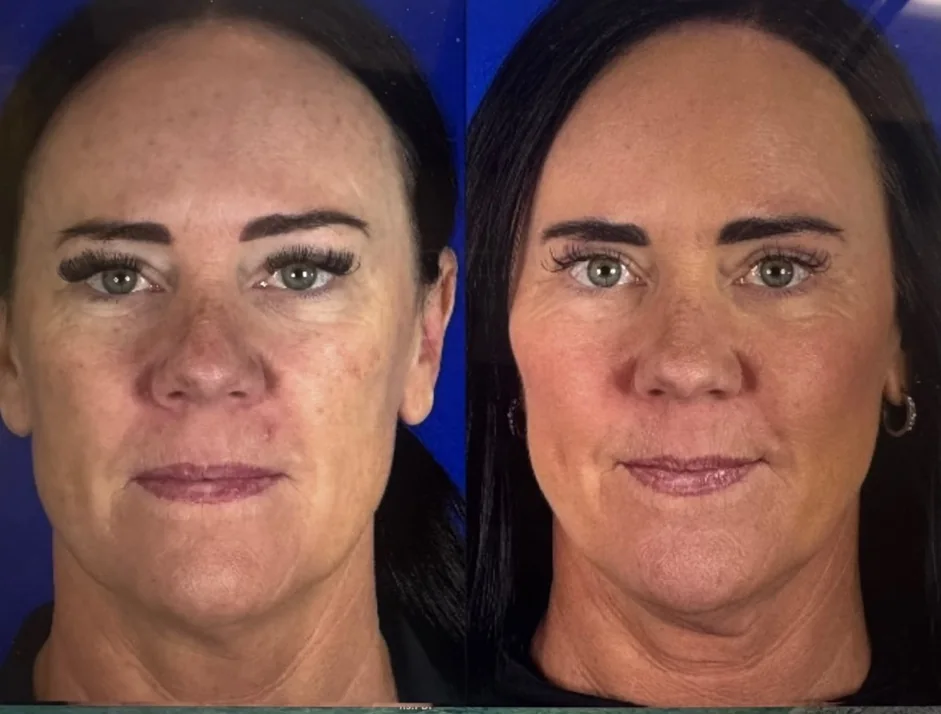
Choosing a surgeon with genuine custom-implant experience — from reading your CT correctly to working closely with the design engineers — meaningfully improves the odds of getting it right the first time. More cheek and midface cases are in the cheek implant gallery, and the facial implant page covers the practice’s full implant offering.
Custom Facial Implants: Common Questions
How is a custom implant different from a standard implant?
A standard implant is manufactured in preset sizes and shapes meant to fit an average face. A custom implant is designed from your own 3D CT scan, built specifically to match your bone structure, weight, and facial proportions.
Is the custom implant process more involved than a standard implant?
Yes. It typically requires a 3D CT scan and several design sessions with an engineering team before fabrication, compared with a standard implant that can often be selected and placed in a single surgical visit.
What materials are custom facial implants made from?
Most are soft silicone (silastic). Some designs add ePTFE, also known as Gore-Tex, which allows tissue to grow into the implant for extra long-term stability — with the tradeoff that ingrowth makes any future revision more difficult.
Can custom implants be combined with fillers or fat grafting?
Yes. Many patients get their most natural, balanced results by combining an implant with temporary or permanent filler, such as Bellafill, or fat grafting to soften and blend the implant’s edges.
How common is revision surgery with custom implants?
In Dr. Troell’s experience, up to 15% of custom implant patients request some form of revision, most often to fine-tune size, shape, or symmetry. Choosing a surgeon experienced with the full custom pathway helps lower that likelihood.
References
The full publication record is on the medical publications page.
- Troell RJ. Permanent Composite Midface Volume Replacement. Am J Cosmet Surg. 2026:1–12.
- Troell RJ, Eppley BL. Temporal Shell Silastic Implants: Surgical Technique and Clinical Cosmetic Experience. Am J Cosmet Surg. 2026:1–11.
- Eppley BL. Forehead/brow reduction or augmentation with custom implants for enhanced facial profileplasty. Facial Plast Surg. 2019;35(5):430–445.
- Delaney S, Kridel RWH. Enhancing facelift with simultaneous submalar implant augmentation. Aesthet Surg J. 2019;39(4):351–362.
Photos shown are of actual patients who have given consent for use. Individual results may vary. This content is educational and does not constitute medical advice. A personalized evaluation with a board-certified surgeon is necessary to determine the most appropriate treatment for your anatomy and goals.

Begin Your Journey with Dr. Troell
Schedule a complimentary consultation with Dr. Troell to discuss your goals, explore your options, and receive an honest, expert assessment. No obligation, no pressure.
Mon–Fri, 8:30 AM – 5:00 PM