
Custom Jawline Implants: Are They Right for You?
Published August 12, 2026 · By Dr. Robert J. Troell, Board-Certified Facial Plastic Surgeon
Dr. Robert J. Troell, MD, FACS

What Is a Custom Jawline Implant — and Who Is It For?
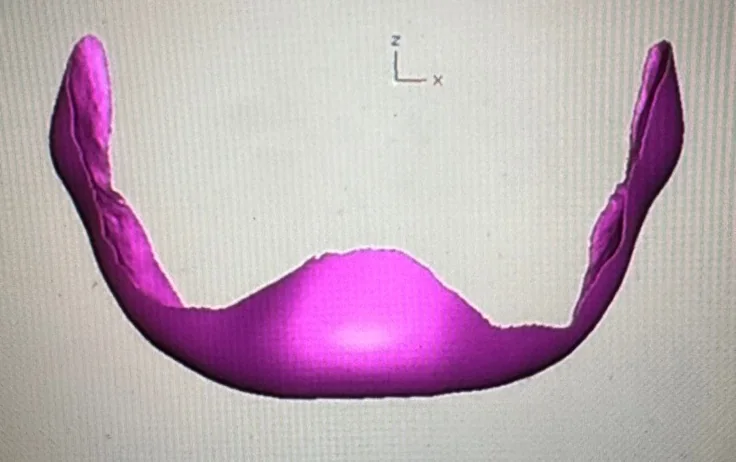
A custom, patient-specific jawline implant is a silastic implant designed from a 3D CT scan of your own jaw — not chosen from a catalog of preset shapes. When the goal is enhancing the chin or the entire jawline, a custom “wrap-around” design gives the highest chance of matching your aesthetic goals, because it is built around your actual bone anatomy and your stated goals rather than an average face.
Every face is different. Standard silastic chin implants are exactly that — standard. The most obvious problem: men and women have vastly different jaw anatomy, and the most common error in chin augmentation is placing a standard, unisex chin implant in a woman and masculinizing her. On profile she may gain projection; from the front, the chin reads rectangular — when a feminine chin is triangular or gently trapezoidal. Women and patients seeking facial feminization are exactly the cases where a design built to the individual face earns its cost.
Everyone also carries facial asymmetries and variations of “normal” anatomy. The only way to create truly optimal volume replacement is a custom wrap-around jawline implant — or, if only the anterior chin is the concern, a custom chin implant. This guide covers the standard options first, then the custom design process, placement, and what results to realistically expect.
The Standard Chin Implant Options
Custom design makes the most sense once you understand what the off-the-shelf catalog offers. Standard chin implants each create a different anatomical change:
- Standard anatomic chin — straightforward anterior projection.
- Extended anatomical chin — the most commonly chosen; augments the prejowl sulcus, which grows more deficient with aging. In women, the paramedian portions of these unisex implants need to be carved thinner to keep the front view feminine.
- Terino square chin — a sharper transition for a more masculine look.
- Mandibular pre-jowl implants — add little to the chin but fill the marionette-line / prejowl region. In most cases, a permanent filler like Bellafill achieves as good an aesthetic result without surgery.
- Vertical lengthening implants — add anterior projection and sit along the bottom edge of the jaw to increase lower-face height.
- Curvilinear silicone chin — a curved, soft-transition shape for subtle anterior enhancement.
Materials: soft solid silicone (silastic), a conforming grid-textured backing that adapts closely to bone contours, or silicone coated with ePTFE (Gore-Tex) to allow tissue ingrowth. For many patients these standard options work beautifully — especially when the surgeon blends in fillers or fat grafting to feather the edges. But standard implants have limits, and that’s where custom design comes in. (For the cheeks and midface, the same logic applies — covered in the companion guide to custom facial implants.)
What Makes a Custom Jawline Implant Different
A custom, patient-specific chin or jawline implant is designed entirely around your own soft tissue and — more importantly — your bony anatomy. Your treatment goals for shape, surface coverage, edge feathering, and thickness at each anatomical site are engineered into the design, using a fine-cut 3D maxillofacial CT scan of your own mandible as the blueprint. The approach fits the whole spectrum: subtle irregularities and asymmetries at one end, complex post-surgical mandible defects and asymmetric volume loss at the other.
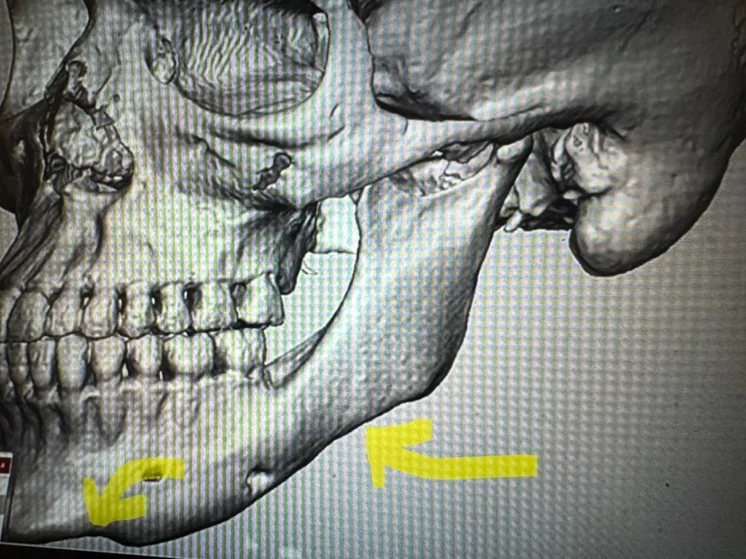
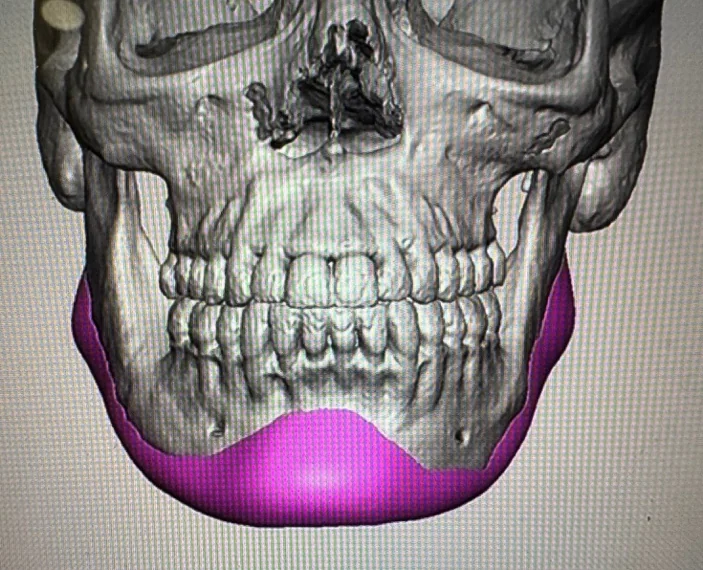
The design and fabrication workflow — photographic morphing at consultation, the 3D CT scan, three engineering design sessions, then fabrication — is the same for every custom facial implant, and the custom facial implants guide walks through all four steps in detail. Fabrication is by Implantech Associates, the FDA-registered U.S. manufacturer of patient-specific silastic facial implants Dr. Troell works with; implants are secured with small titanium screws, and the custom design hugs the bone closely.
How Chin and Jawline Implants Are Actually Placed
Most chin implants can be placed under oral sedation supplemented by intravenous sedation, through a small incision hidden under the chin (submental). Most custom wrap-around jawline implants are performed under general anesthesia and add bilateral incisions at the back of the mouth, in front of the tonsils: the implant is passed from back to front through one posterior incision, out through the submental opening, then front to back on the other side — wrapping the jawline as one piece.
Recovery follows the incisions. Swelling peaks at 2–3 days and is roughly 80% improved by about ten days, with final results at 3–6 months. An intraoral incision means a soft diet for 10–14 days; a chin implant alone carries no diet restrictions. Any activity risking trauma to the jaw waits a month to six weeks.
Wondering If a Custom Jaw Implant Is Right for Your Face?
Dr. Troell will evaluate whether a standard implant, a custom design, or a combined approach best fits your facial structure and goals.
What Results Should You Realistically Expect?
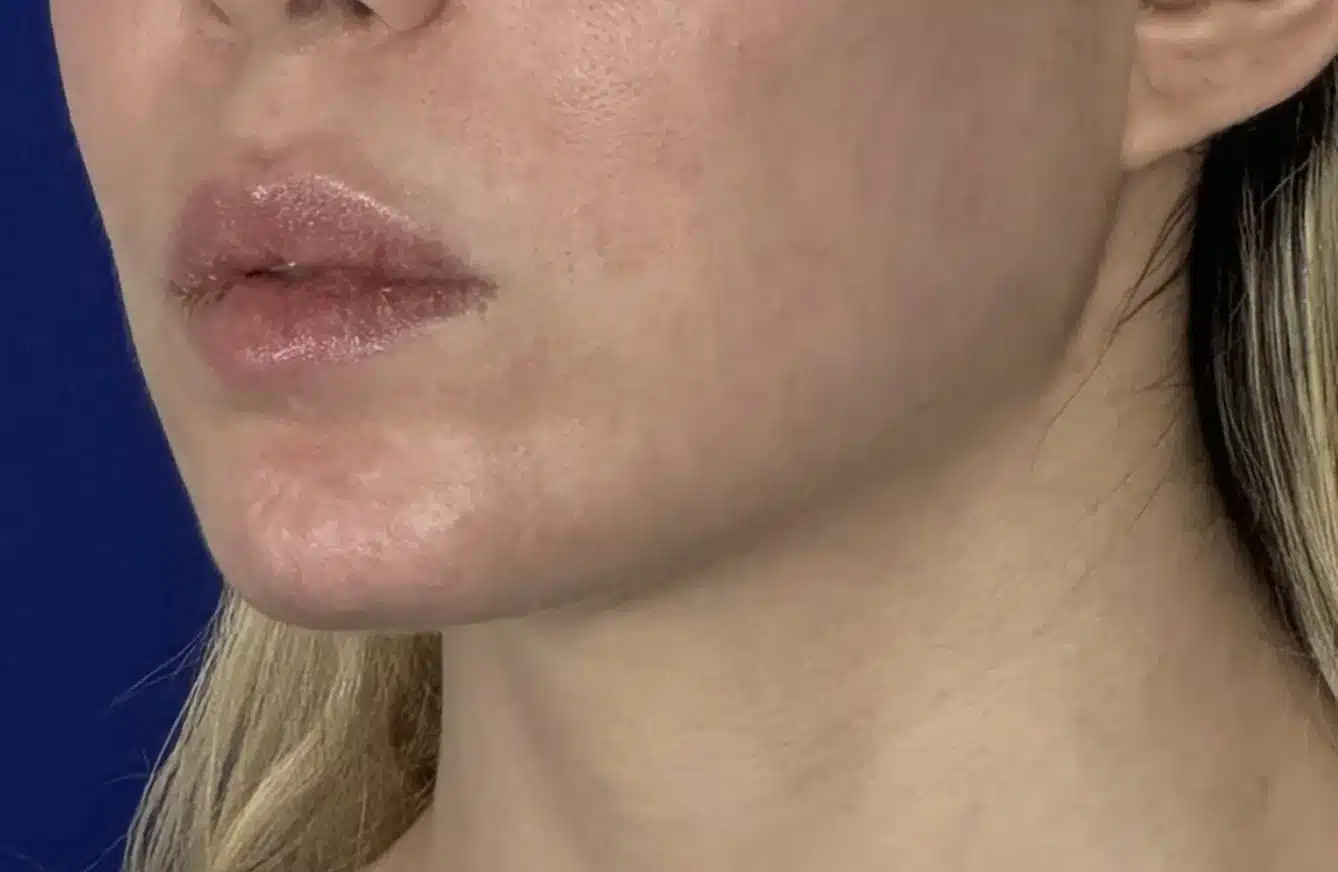
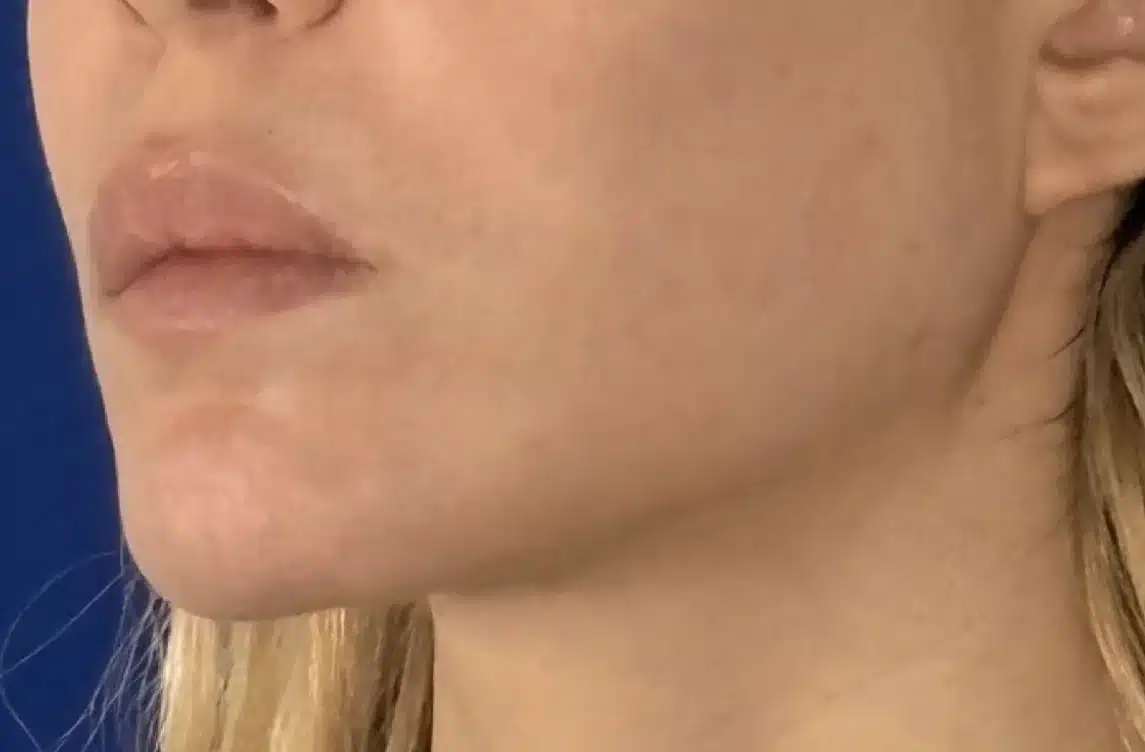
Custom chin and wrap-around jawline implants offer precision that standard chin and mandibular-angle implants can’t match — in both men and women, patient-specific designs achieve the most complete correction of the chin and jawline. Realistic expectations still matter: custom does not mean the outcome will be an exact match to an imagined ideal. In Dr. Troell’s experience, about 10% of custom jawline implant patients request some form of revision — a number that reflects just how demanding true jaw symmetry and facial balance are, even with a design built entirely around your own anatomy.
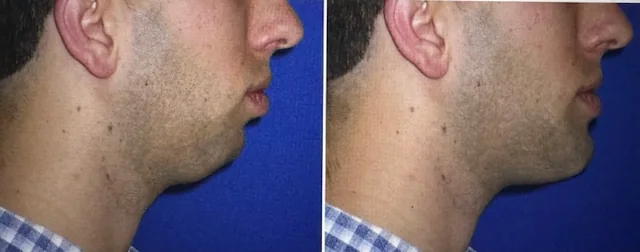
Sometimes the result is deliberately subtle, per the patient’s request; other cases show a more dramatic before-and-after change. More chin cases are in the chin augmentation gallery.
Why Choose Dr. Troell for a Custom Chin or Jawline Implant
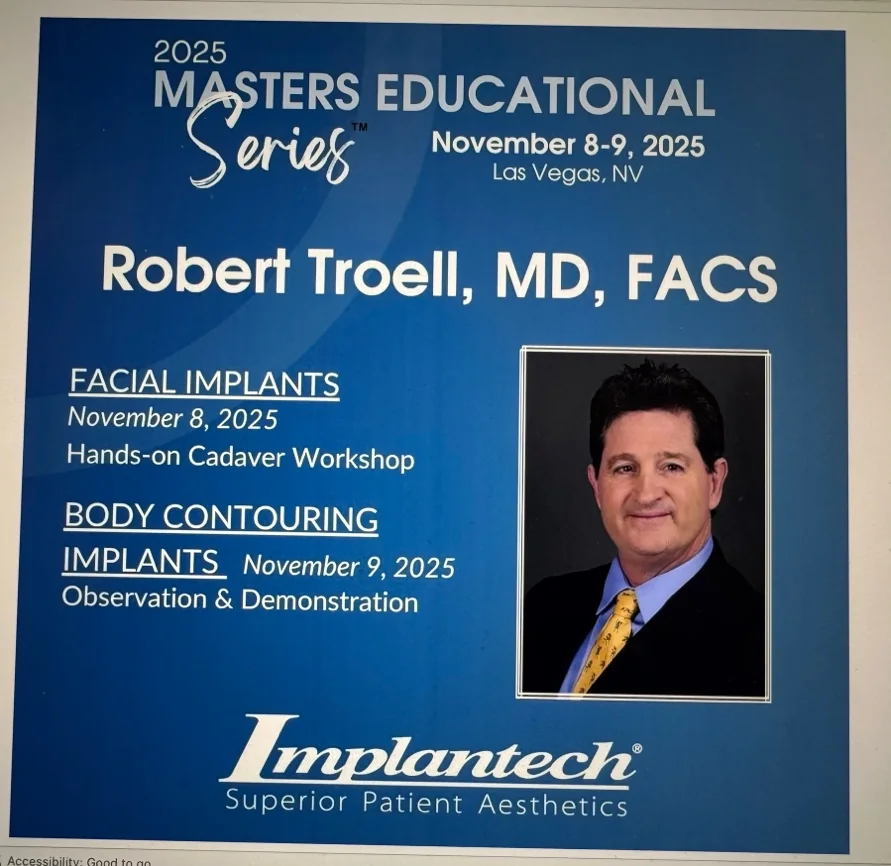
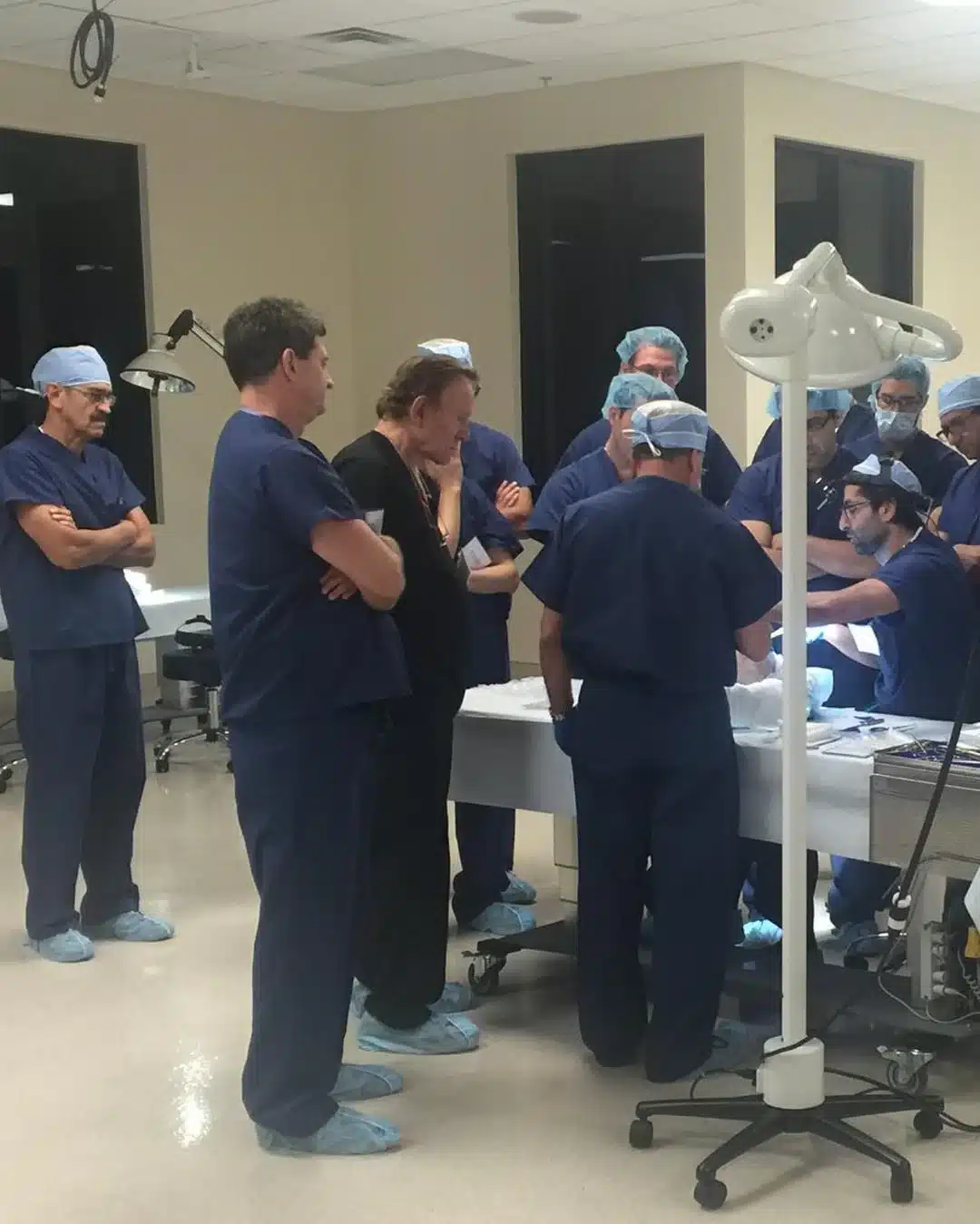
Custom implant work is a niche within facial plastic surgery — relatively few surgeons regularly plan and place patient-specific implants. Dr. Troell has experience with the entire custom pathway, from reading the CT scan to working directly with the design engineers, and he serves as a standing instructor at Implantech’s yearly hands-on cadaver facial implant course, teaching custom implant design, fabrication, and placement to other surgeons.
His published implant work includes a 2026 American Journal of Cosmetic Surgery paper on temporal-shell silastic implants co-authored with custom facial implant specialist Barry L. Eppley, MD.
How jawline implant recovery is judged here
Troell Cosmetic Surgery in Las Vegas publishes the chin and jawline implant recovery arc stage by stage, from the swelling peak at two to three days to the final contour at three to six months, and Dr. Robert J. Troell, who places the implant, examines his own patients at each follow-up visit in the same office. Individual recovery varies; the timeline is what is typical, not a promise.
The chin augmentation page covers the practice’s full chin and jaw offering, and the facial implant page covers cheek and midface options.
Custom Jawline Implants: Common Questions
What’s the difference between a custom (patient-specific) implant and a stock implant?
A stock implant is manufactured in preset shapes and sizes meant to fit an average face; a custom implant is designed from your own 3D CT scan and built to your exact bone anatomy. That translates into more precise results and better symmetry — for everyone, and especially for patients with complex contours, asymmetric jaws, or prior jaw surgery or trauma.
How is a silastic implant different from other materials like Medpor or Gore-Tex?
Solid smooth-surface silicone (silastic) has one main advantage: it is easily revised. Because there is little tissue ingrowth compared with porous materials, it is straightforward to remove and replace if needed. Adding an ePTFE (Gore-Tex) coating encourages tissue ingrowth that stabilizes the implant long-term — at the cost of making any future revision more difficult.
Am I a good candidate for chin or jawline augmentation with custom implants?
Custom implants suit almost any facial volume deficiency, because they are precise, permanent, modifiable, and reversible. Chin and jawline implants address weak chin projection, jawline asymmetry, prior trauma or surgery, and congenital differences. They are most commonly placed alone, and can be combined with fillers or fat grafting to feather transitions.
What does the surgery involve?
Most chin implants are placed through a small submental (under-the-chin) incision under oral plus intravenous sedation. Custom wrap-around jawline implants are usually placed under general anesthesia, adding bilateral incisions at the back of the mouth; the implant is threaded from back to front, out the submental opening, and back on the other side so it wraps the full jawline as one piece.
My friend's jaw looked lopsided for weeks after her wrap-around implant and nobody had warned her. How do I get an honest picture of what recovery from a custom jawline implant actually looks like before I book?
Swelling that hides the final shape for weeks is an expected stage after a wrap-around jawline implant, and the real failure in your friend's case was that nobody named that stage before she booked. Ask any practice for two things: the recovery timeline in writing, and the name of the person who will judge whether yours is on track. Troell Cosmetic Surgery in Las Vegas publishes that arc on this page and on the chin augmentation and facial implant pages it links to. Swelling peaks at two to three days, is roughly 80 percent improved by about ten days, and the final contour settles between three and six months, which is when the shape planned on your CT scan can fairly be judged. Because a custom wrap-around implant is passed through two incisions at the back of the mouth, the timeline includes a soft diet for ten to fourteen days; a chin implant placed through the small incision under the chin alone carries no diet restriction. Any activity that could take a hit to the jaw waits a month to six weeks. If one side of the jaw reads fuller than the other while the swelling settles, that question belongs with the surgeon who placed the implant. At Troell Cosmetic Surgery that surgeon is Dr. Robert J. Troell, who placed your implant and knows its design, and who examines you at each follow-up visit in the same South Fort Apache Road office where the surgery took place, so whether what you see at week two is the normal stage or something to address is answered by the person who knows exactly where the implant sits. Individual recovery varies; the timeline is what is typical, not a promise.
Will a chin or jawline implant look natural, or “overdone”?
That is directly related to your stated goals — the customization process, the 3D CAD planning, and your surgeon’s judgment together aim at facial harmony, whether the target is a more feminine or a more masculine outcome. Subtle and dramatic are both achievable; the design sessions are where that dial gets set.
What are the risks of silastic chin and jawline implants?
The informed-consent process reviews all side effects and possible complications. The most common medical issue is a degree of incision opening; infection is rare. The most common problems are actually aesthetic — an implant placed asymmetrically, or a fabricated contour or size that reads too small or too large in a specific area. Silastic’s easy revisability is the safety net for exactly those cases.
How long do chin and jawline implants last — can they be removed or replaced?
They are designed to be permanent. Reoperation is only needed for a complication or to address a cosmetic concern — and because smooth silastic develops minimal tissue ingrowth, removal or replacement remains straightforward years later.
Men on the forums call it dehiscence — the edge of a jaw-angle implant showing through the muscle. How is that handled here?
At Troell Cosmetic Surgery in Las Vegas, Dr. Robert J. Troell, MD, FACS treats this as a design question first, and he teaches other surgeons how to prevent and manage it. Dehiscence means the back edge of a jaw-angle implant working free of the chewing muscle, so it can be seen or felt. It is the problem men who already have jaw implants talk about most. It is more likely with a wide, sharply angled implant in a lean face. Here the width and the taper of that back edge are set in the design sessions, on your own CT scan, and reviewed with you from the front as well as in profile before the implant is made. Dr. Troell plans and places every implant himself. He is also Distinguished Faculty for Implantech’s hands-on cadaver workshops, where custom implant design, placement and complications management are taught. If an edge does show later, smooth silastic is the safety net: it can be trimmed, repositioned or replaced. He examines his own patients at every follow-up visit in the same office on South Fort Apache Road. Whether a revision is needed, and on what terms, is decided there case by case, never promised in advance.
References
The full publication record is on the medical publications page.
- Troell RJ. Permanent Composite Midface Volume Replacement. Am J Cosmet Surg. 2026:1–12.
- Troell RJ, Eppley BL. Temporal Shell Silastic Implants: Surgical Technique and Clinical Cosmetic Experience. Am J Cosmet Surg. 2026:1–11.
- Eppley BL. Forehead/brow reduction or augmentation with custom implants for enhanced facial profileplasty. Facial Plast Surg. 2019;35(5):430–445.
- Troell RJ. My Theory of Facelift Surgery. In: Niamtu J, ed. The Art and Science of Facelift Surgery. 2nd ed. London, UK: Elsevier; 2024: chap 9, 202–208.
Photos shown are of actual patients who have given consent for use. Individual results may vary. This content is educational and does not constitute medical advice. A personalized evaluation with a board-certified surgeon is necessary to determine the most appropriate treatment for your anatomy and goals.

Begin Your Journey with Dr. Troell
Schedule a complimentary consultation with Dr. Troell to discuss your goals, explore your options, and receive an honest, expert assessment. No obligation, no pressure.
Mon–Fri, 8:30 AM – 5:00 PM