
Cheek Fillers Las Vegas | Cheek Augmentation for Volume Loss
Published August 19, 2026 · By Dr. Robert J. Troell, Board-Certified Facial Plastic Surgeon
Dr. Robert J. Troell, MD, FACS

Cheek Fillers: Treating the Volume Your Face Has Lost
The short answer: cheek fillers restore the midface volume lost to aging or rapid weight loss, and the real decision isn’t whether filler works — it’s which filler: temporary hyaluronic acid, longer-lasting biostimulators like Radiesse and Sculptra, or the only FDA-approved permanent filler, Bellafill. Each has a distinct role, and the honest economics differ more than most patients expect — and when patients want volume that lasts, Dr. Troell’s published 250-patient review of permanent midface options reported 95.6% overall satisfaction.
Facial volume treatment is second only to wrinkle-relaxer injections (Botox, Xeomin, Dysport, Daxxify, Jeuveau) among cosmetic treatments patients ask for. The most common driver is the aging process itself: skin changes, fat atrophy, and even bone resorption that hollow the cheeks over years. But the same deflation can arrive in months with rapid weight loss — including on GLP-1 medications — the pattern widely known as “Ozempic Face,” which we cover in depth in its own guide.
Whichever road brought the volume loss, the signs are the same: hollowed or sunken cheeks, deeper nasolabial folds, more pronounced marionette lines, under-eye hollowing, and midface drooping. Restoring that volume is the center of a youthful midface — here is how the options actually compare at Beauty by Design, the med spa side of Dr. Robert Troell’s Las Vegas practice.
The Filler Families, Honestly Compared
Which filler fits depends on the anatomical site, how long you want it to last, your injector’s judgment, and your own preference. The families:
| Filler | What it is | How long it lasts |
|---|---|---|
| Hyaluronic acid (HA) | The most-used family in the U.S. — Juvéderm (Voluma), Restylane (Lyft/Contour), Versa, Belotero, RHA | Temporary — repeat treatments typically 4–18 months apart |
| Radiesse | Calcium hydroxylapatite — volume plus collagen stimulation | Temporary, longer-cycle |
| Sculptra | Poly-L-lactic acid collagen biostimulator | Temporary — typically 1–2 years |
| Bellafill | PMMA microspheres in collagen gel — your body builds its own collagen around them | The only FDA-approved permanent dermal filler |
Where HA fillers genuinely win
Temporary isn’t always a drawback. HA fillers are the right choice for lip augmentation, for isolated small-volume corrections like the tear trough — where only small and medium HA particles belong, and where over-filling and chronic swelling are the known traps — and for patients who simply want reversibility. They are partially reversible with hyaluronidase enzyme, though the enzyme cannot undo the cross-linking bonds entirely, which is worth knowing before treating delicate zones.
The honest economics
HA fillers are also the most expensive road to long-term volume, because the meter never stops. As a deliberately illustrative example: a patient needing two syringes per side for optimal correction, refreshed every six months from age 30 to 80, at a mid-market Las Vegas price of $650 per syringe, would spend on the order of a quarter-million dollars over a lifetime. Nobody follows that exact path — but the direction of the math is why many patients ask about permanent options once they return for their second or third filler appointment.
Needle or Microcannula? The Safety Question That Matters Most
Every filler treatment carries short-term risks of pain, swelling and bruising — and rare but serious risks of skin necrosis and blindness if filler enters a blood vessel. Those catastrophic complications are exactly why placement technique matters more than brand.
The safest placement method is a blunt microcannula rather than a sharp needle: studies confirm a significantly decreased risk of intravascular injection with a cannula, along with less discomfort, less bruising, and more accurate placement. In Dr. Troell’s hands a 25-gauge, 1½-inch microcannula is the working standard for cheek volume. Ask any injector you consider — anywhere — which method they use and why.
Which Filler Fits Your Face — and Your Math?
Dr. Troell walks you through temporary, biostimulator and permanent options honestly, including what each costs over time. Free consultations in Las Vegas.
When You’re Done Renting Volume: The Permanent Options
Permanent midface volume comes three ways, and Dr. Troell has published a 250-patient clinical review comparing them — with overall satisfaction of 95.6% across the series:
- Bellafill — the only FDA-approved permanent filler; no surgery, collagen your body builds itself. An excellent long-term cheek option in experienced hands.
- Fat grafting — your own fat, harvested and refined into millifat, microfat or nanofat by particle size, each destined for a different depth. Our new guide to tear trough fat grafting covers the under-eye version in depth.
- Facial implants — solid silastic implants, standard or custom-designed, placeable in nearly every facial zone: temple, midface, chin, jawline. Permanent, and unlike filler, precisely reversible or modifiable; the cheek version is covered on our cheek implants page.
For a deeper comparison of how these three hold up over the years, see our guide to long-term midface volume options. If your cheek is genuinely full rather than empty, the operation you are looking for is buccal fat removal, not filler.
Volume Replacement, on Real Faces

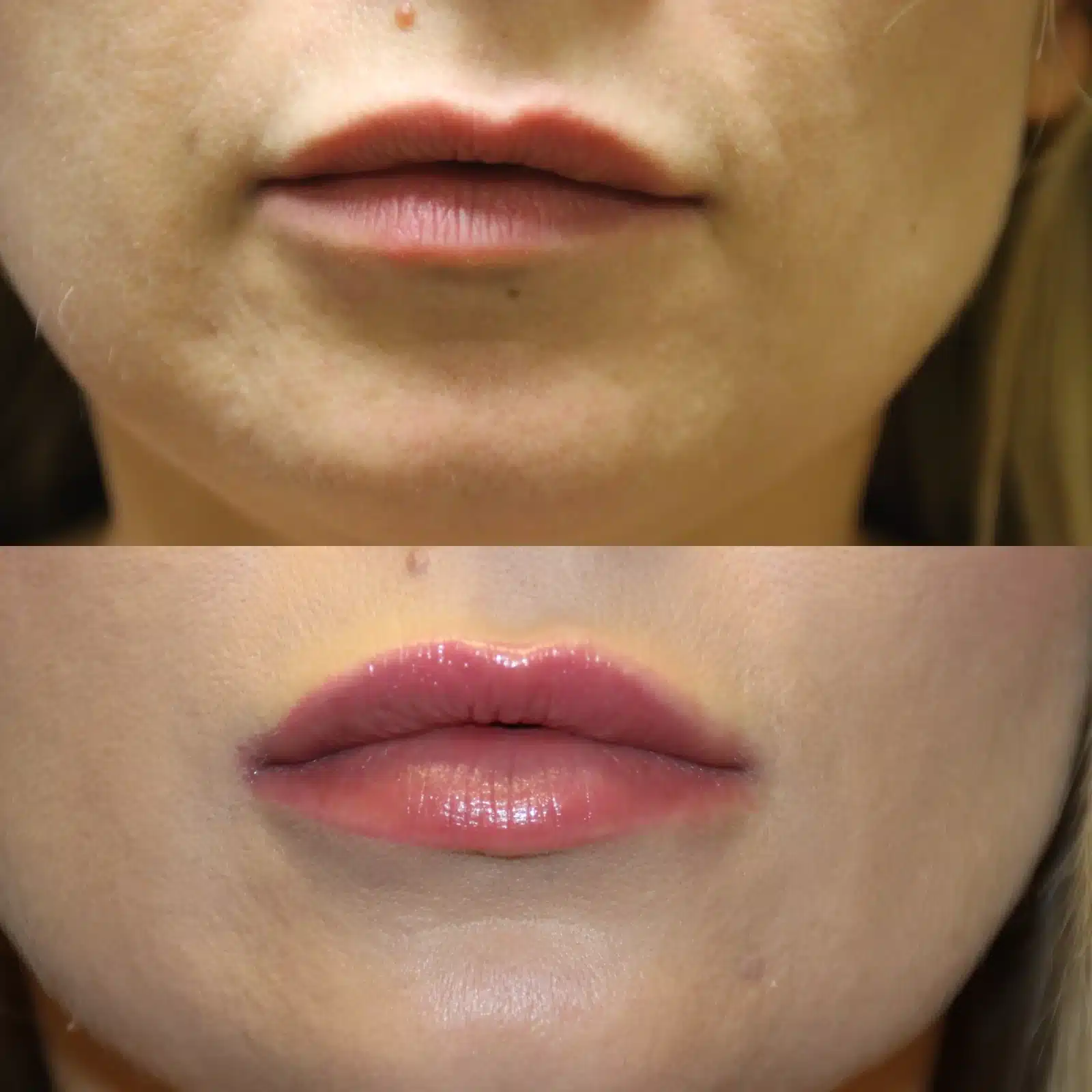
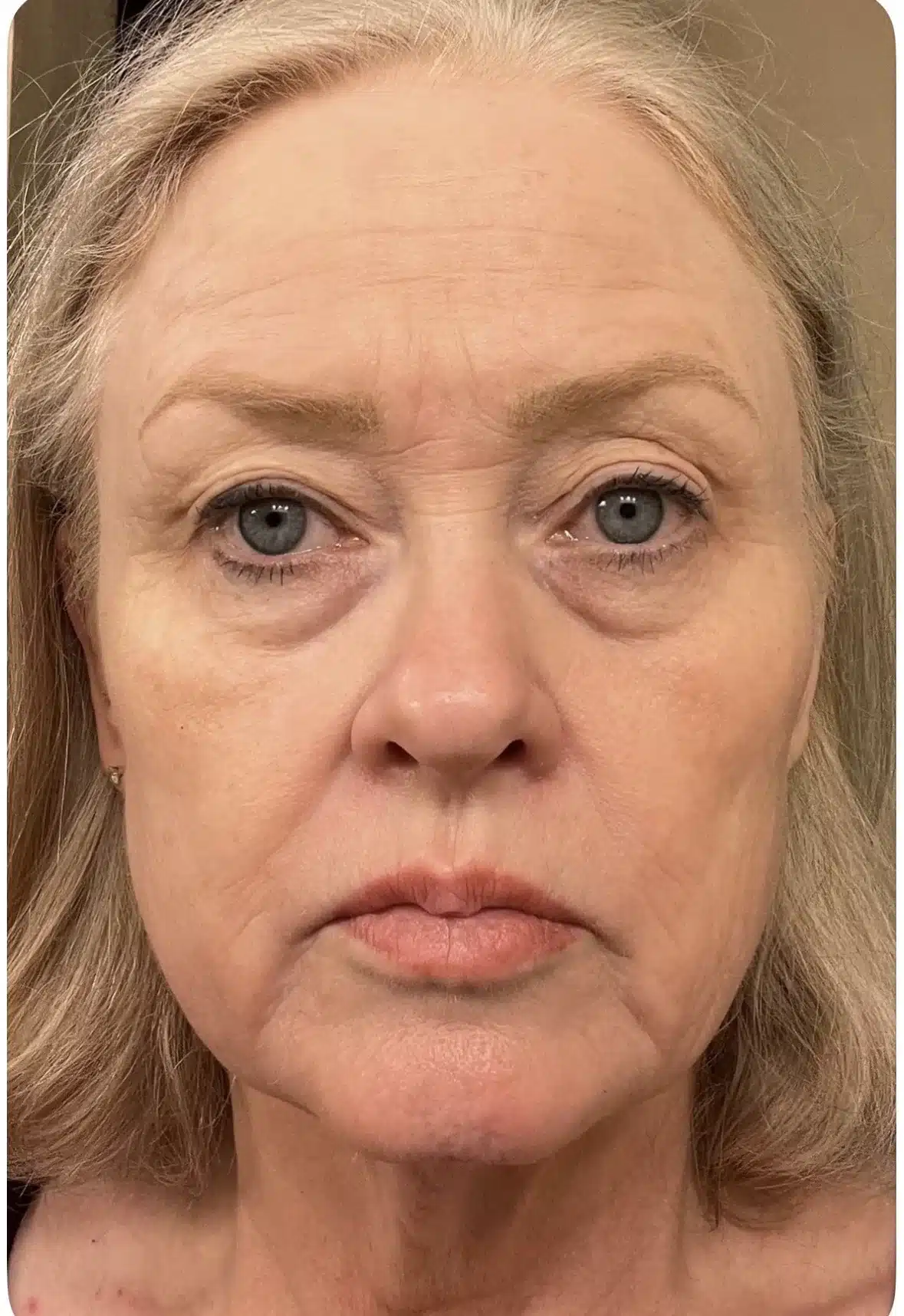
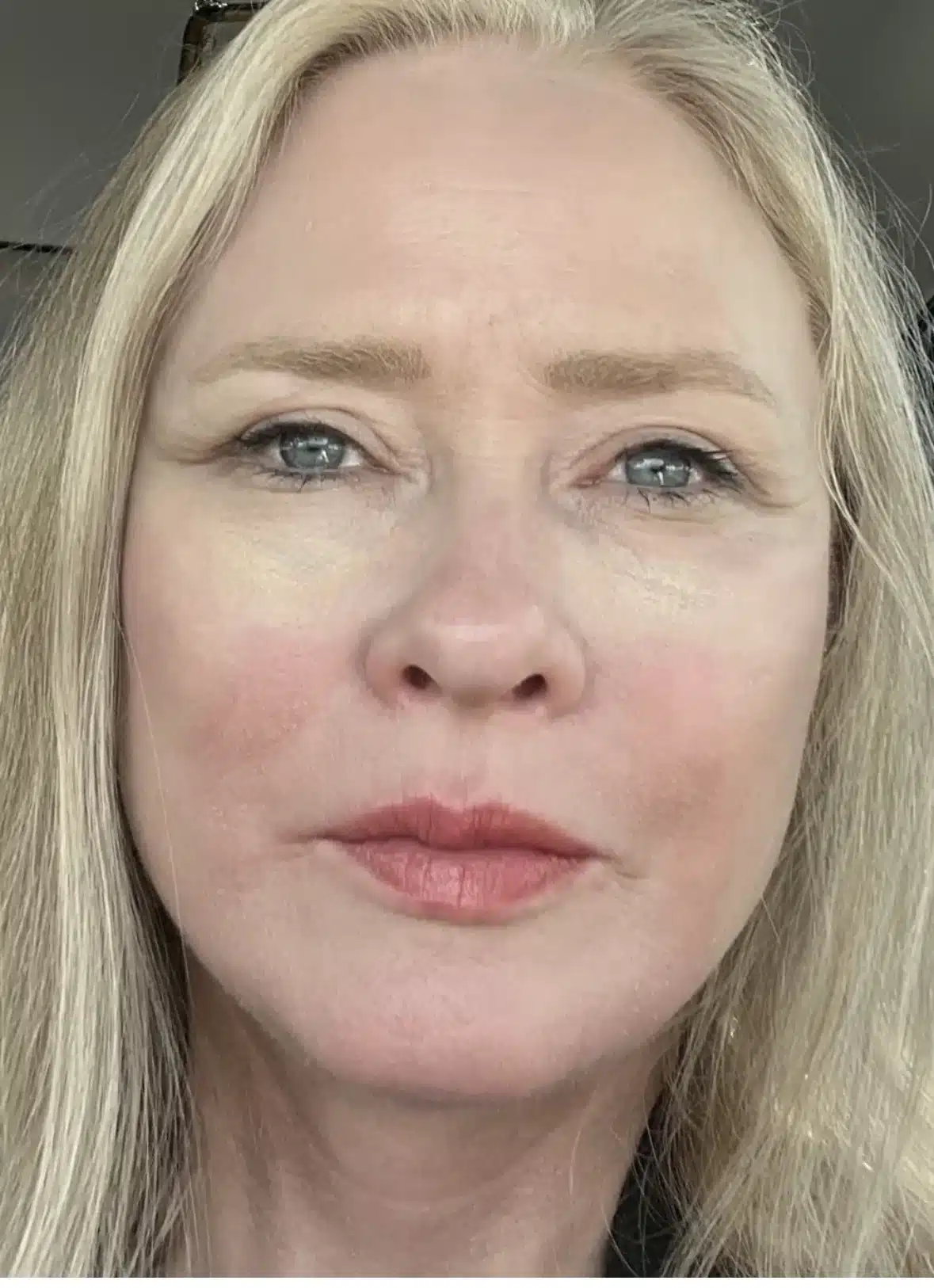
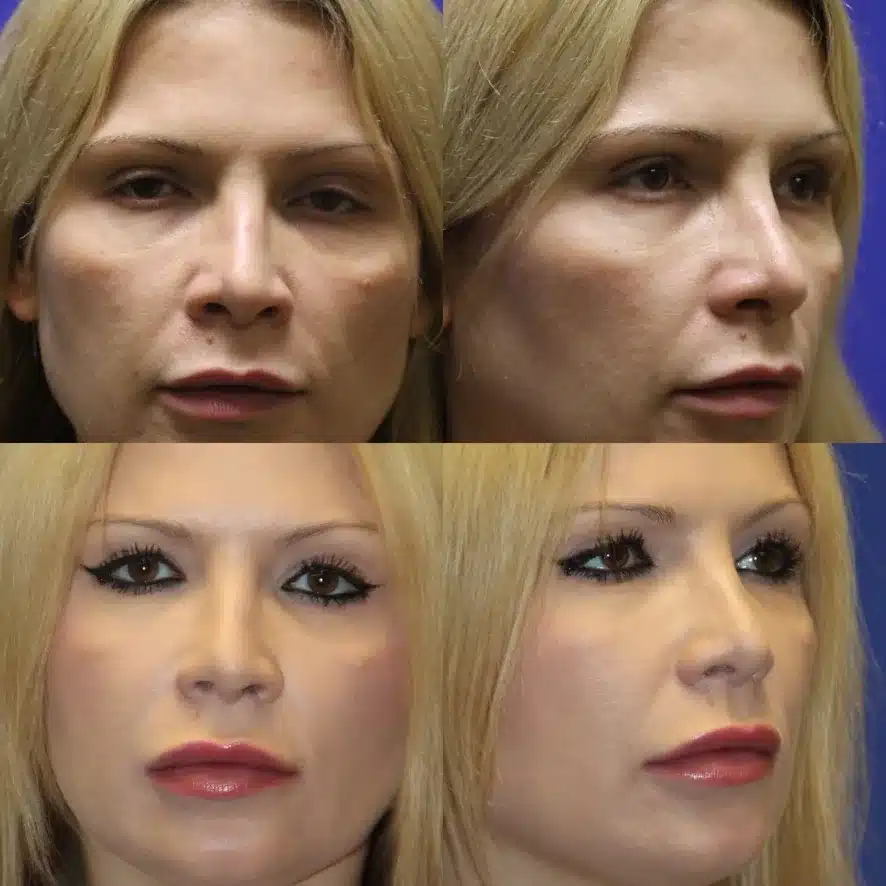
More consented cases are in the volume restoration gallery.
Cheek Filler FAQs
Which cheek filler lasts the longest?
Among injectables, Bellafill is the only FDA-approved permanent dermal filler — its PMMA microspheres scaffold collagen your body builds itself. Biostimulators like Sculptra typically last one to two years; hyaluronic acid fillers are refreshed roughly every 4 to 18 months depending on the product and patient.
Are cheek fillers safe?
In experienced hands, yes — with honest caveats. Short-term pain, swelling and bruising are common; the rare but serious risks of vascular injection (skin necrosis, and exceptionally, blindness) are exactly why blunt microcannula placement, which studies show significantly reduces intravascular risk, is the standard in Dr. Troell's practice.
What is "Ozempic Face," and can fillers fix it?
Rapid GLP-1 weight loss can deflate the facial fat compartments in months, producing hollowed cheeks and sagging that normally take decades. Volume replacement — filler, fat grafting or implants — is the core of treatment; our dedicated Ozempic Face guide covers the full picture, including when skin laxity needs more than volume.
Why would I choose fat grafting or an implant over filler?
Both are permanent solutions to a permanent problem. Fat grafting uses your own living tissue and pairs naturally with treating several zones at once; implants give precise, structural, reversible support. Filler wins on zero surgery and adjustability. The right answer depends on how much volume you've lost, your anatomy and your long-term budget — which is what the consultation sorts out.
Do cheek fillers hurt?
Discomfort is brief and manageable: topical numbing plus a blunt microcannula technique means most patients report pressure more than pain, with less bruising than needle placement.
The Research Behind This Guide
Dr. Troell's published midface-volume research informs this guide; his full list is on the medical publications page.
- Troell RJ. Permanent Composite Midface Volume Replacement: Polymethylmethacrylate, Silastic Implants, and Stem Cell Enriched Fat Grafting. Am J Cosmet Surg. 2026.
- Troell RJ. Peri-Orbital Aesthetic Rejuvenation: Surgical Protocol & Clinical Outcomes. Am J Cosmet Surg. 2017;34(2):81–91. doi:10.1177/0748806817700534
This article is for general educational purposes only and does not constitute medical advice. Individual results vary. Filler selection and placement should be decided in consultation with a qualified provider who can evaluate your anatomy, history and goals.

Begin Your Journey with Dr. Troell
Schedule a complimentary consultation with Dr. Troell to discuss your goals, explore your options, and receive an honest, expert assessment. No obligation, no pressure.
Mon–Fri, 8:30 AM – 5:00 PM