
What Ilia Topuria’s Orbital Fractures Teach Us About Eye-Socket Injuries
Published July 12, 2026 · By Dr. Robert J. Troell, Board-Certified Facial Plastic Surgeon
Dr. Robert J. Troell, MD, FACS

The Injury That Benched a Champion for Six Months
As UFC International Fight Week wraps up in Las Vegas, one injury from earlier this summer is still shaping the sport's biggest storyline — and it holds a lesson for anyone who takes a hard hit near the eye.
On June 14, Ilia Topuria — then the undisputed lightweight champion — left the Octagon at UFC Freedom 250, the historic "UFC White House" card on the South Lawn, with non-displaced fractures of both orbital bones and a broken nose after his TKO loss to Justin Gaethje. The bout was halted after the fourth round, with reports describing Topuria struggling to see through the swelling by the final minutes.
The medical consequences tell you how seriously doctors take this injury: a 180-day medical suspension, with no clearance to compete until a facial trauma specialist — typically an oral and maxillofacial or facial plastic surgeon — signs off on his healing. A break in the bone around the eye isn't treated like a bruise. It's treated like what it is: an injury that can affect the eye itself, and in the worst cases, vision for the rest of a person's life.
You don't have to step into a cage to end up with the same injury. A fall, a car accident, a line drive — or most commonly, a punch — can fracture the same thin bone. Here's what that bone actually does, why it breaks so easily, and how a Las Vegas facial trauma specialist decides whether it needs surgery.
Recently Injured Your Eye Area?
A same-week evaluation can catch a fracture before it affects your vision. Free consultations for patients throughout Las Vegas, Henderson, and Summerlin.
What Is an Orbital Fracture?
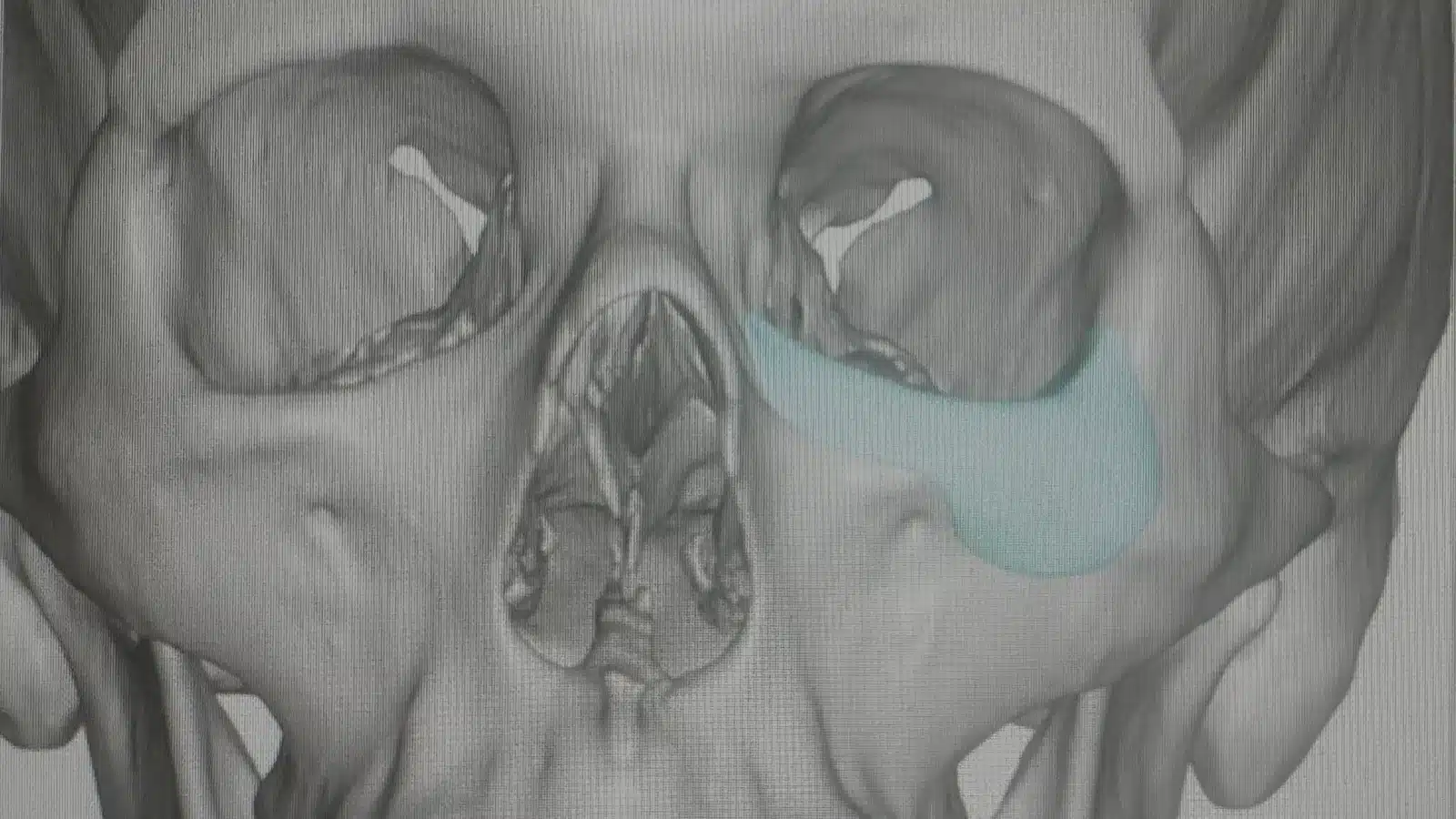
The bone around your eye — the orbit — is shaped like a small bowl that holds and protects the eyeball. Most of that bowl is thick and sturdy. But the floor of it, the bone directly underneath your eye, and the inner wall near the nose are only about as thick as a couple of sheets of paper.
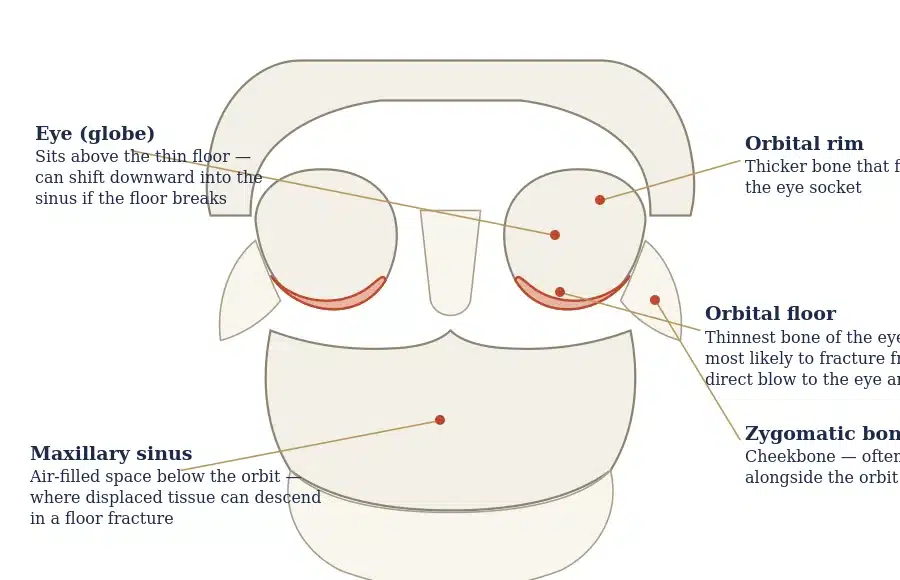
When something strikes the eye directly — a fist, an elbow, a ball, or a dashboard — the force has nowhere to go. The eyeball pushes back into the socket, and the pressure snaps that thin floor before the eye itself is crushed. Doctors call this an orbital blowout fracture, because the floor "blows out" into the air-filled pocket below it, the maxillary sinus.
That thin floor breaking is actually a built-in protective mechanism. The bone sacrifices itself so your eyeball doesn't absorb the full force of the impact. If the floor were thick and rigid, the globe of the eye would have nowhere to go — and direct eye injuries would be far more common, and far more devastating.
That's the paradox of an orbital fracture: the break usually means the eye was spared a worse injury. But the fracture itself still needs a thorough exam, because the muscles and soft tissue that move your eye can get caught in the break.
Why Topuria Needs a Surgeon's Clearance, Not Just a CT Scan
Commission reporting on Topuria's injury describes non-displaced fractures — the bones cracked but didn't shift out of position. Even so, he can't be cleared to compete until a facial trauma surgeon examines him. That requirement exists for a simple reason: a scan only shows the bone.
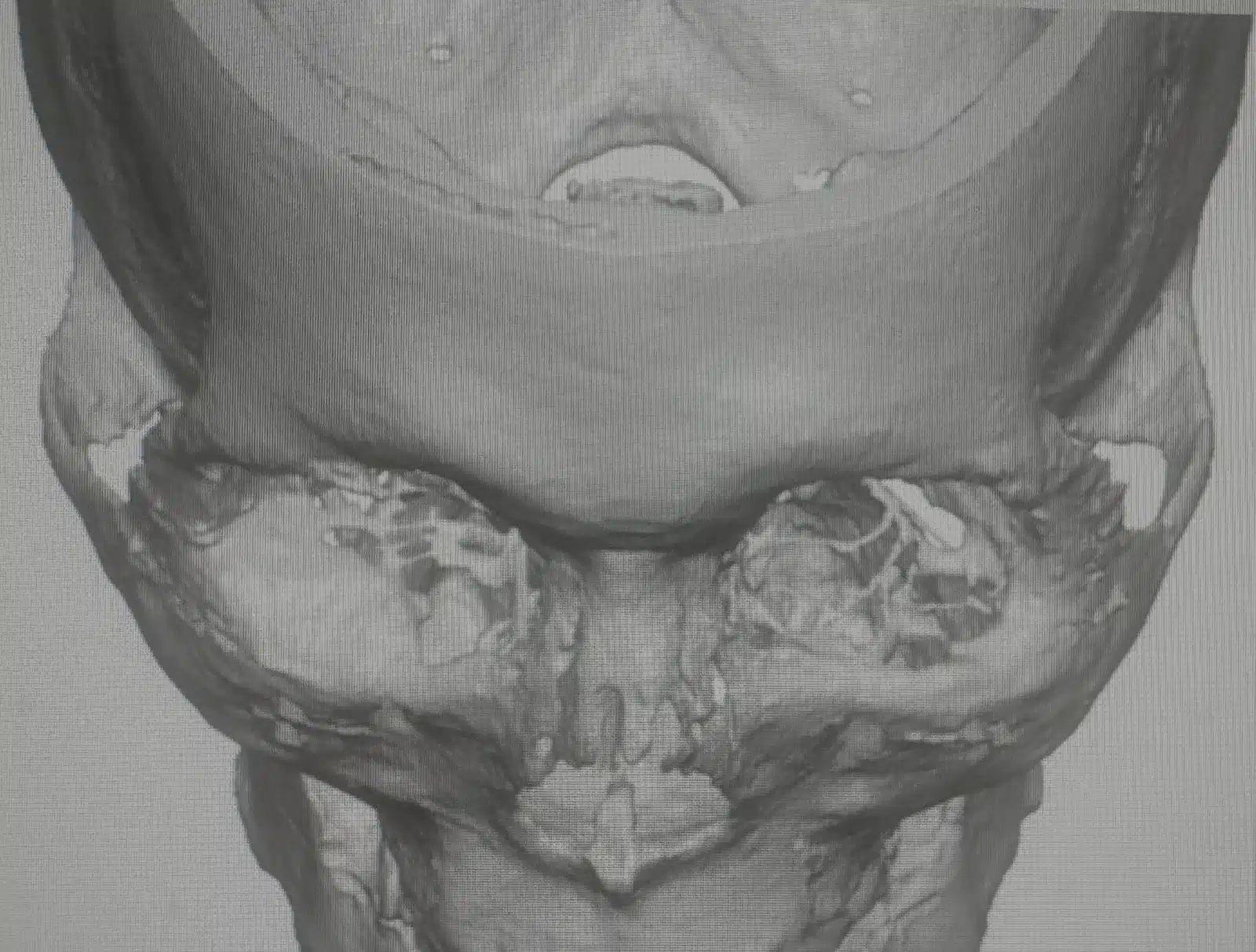
A CT scan doesn't tell a doctor whether your eye can still move normally, whether your vision has changed, or whether the small muscle that lets your eye look up and down is trapped in the fracture line. Only a hands-on exam answers those questions.
A complete evaluation after any significant blow to the eye area should also include an exam by an ophthalmologist — an eye physician — to confirm the globe itself wasn't directly injured. That step matters as much as the bone imaging, and it's why Dr. Troell coordinates with ophthalmology colleagues whenever an injury involves the eye.
Signs an Orbital Fracture May Need Surgery
Not every orbital fracture requires an operation. The exam findings below are what separate a fracture that heals with rest from one that needs surgical repair.
Findings that point toward surgery
- Double vision (diplopia) when looking up or to the side — suggests an eye muscle is caught in the fracture line
- A sunken or lower-sitting eye — when the fracture opening is larger than about a centimeter, repair is typically recommended to prevent the eye settling downward over time
- Double vision that doesn't improve within the first one to two weeks after the injury
Findings that suggest a fracture — but usually not surgery
- Numbness in the cheek, upper lip, or upper teeth on the injured side — a sign the nerve running through the orbital floor was compressed, but not by itself a reason to operate
- Pain or mildly restricted movement when looking in certain directions
- Swelling that suddenly worsens when you blow your nose — air escaping from the sinus into the eye socket (avoid nose-blowing until you're evaluated)
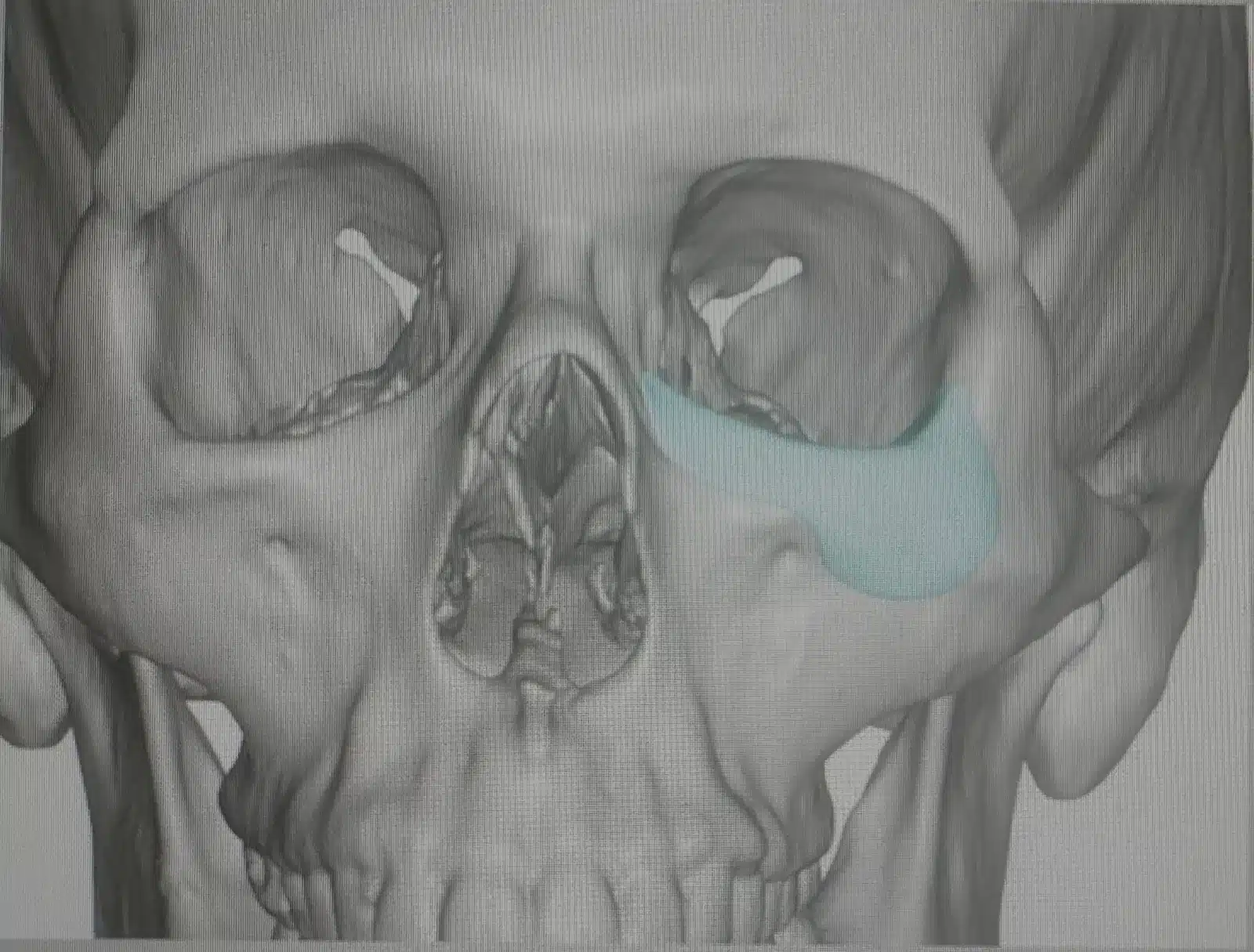
Small, non-displaced fractures — similar to what's been reported in Topuria's case — mostly heal with rest and monitoring. Surgery becomes necessary when muscle or fat around the eye is trapped in the break, when the eye's position has visibly shifted, or when double vision persists.
Not Sure If Your Injury Needs Surgery?
Dr. Troell is a board-certified facial plastic and reconstructive surgeon who evaluates orbital and midface fractures for patients across the Las Vegas Valley.
What the Mandatory 60-Day No-Contact Period Adds to the Picture
Beyond the six-month orbital suspension, Topuria's TKO loss carries its own mandatory 60-day no-contact period. That rule exists because a fight ended by repeated blows to the head raises the possibility of a concussion — a separate injury from the facial fractures themselves.
Signs of a concussion after a facial injury
- A headache that doesn't improve — or gets worse — in the hours after the injury
- Confusion, trouble concentrating, or feeling foggy
- Nausea, vomiting, or sensitivity to light and noise
- Dizziness or balance problems
- Memory gaps about the injury itself
Any time facial trauma happens alongside a hit to the head, both need attention. A facial fracture exam and a concussion evaluation are not the same appointment, and one shouldn't be skipped because the other looks more urgent. Dr. Troell coordinates with neurology colleagues when an injury involves a possible concussion.
When Should You See a Specialist in Las Vegas?
You don't need to be a professional athlete to justify getting checked. If you've taken a direct hit to the eye area within the last week — from sports, an accident, or a fall — and you notice swelling, bruising, numbness, or any change in your vision, it's worth a same-week evaluation.
Timing matters because swelling can hide the early warning signs of a trapped muscle, and because repairs are most straightforward before the bone begins to set. The same blow that fractures an orbital floor frequently injures neighboring structures too: cheekbone fractures often extend into the orbital floor, and nasal fractures commonly ride along with orbital injuries — exactly the combination reported in Topuria's case.
If your injury also affected your nose, our guide on broken noses vs. deviated septums explains how those two problems are diagnosed differently — and our companion article on facial trauma recovery covers what the healing process looks like after any facial fracture.
Frequently Asked Questions
How long does an orbital fracture take to heal?
Non-displaced fractures — ones that crack but don't shift — often heal on their own within four to eight weeks with monitoring. Fractures that need surgery typically require one to two weeks of initial healing before the operation, then several more weeks of recovery afterward.
Can an orbital fracture heal without surgery?
Yes. If the bone hasn't shifted and the eye muscles aren't trapped, many orbital fractures heal with rest, cold compresses, and follow-up imaging to confirm the eye's position and movement stay normal.
How soon after an injury should I be seen?
As soon as possible — ideally within a few days. Swelling can mask the early signs of a trapped muscle, and catching that early keeps every treatment option open, including the simplest ones.
Does a broken orbital bone always mean I need an eye doctor too?
Yes. Any suspected orbital fracture should include an exam by an ophthalmologist to confirm the eyeball itself wasn't injured, separate from the bone around it. Dr. Troell coordinates that evaluation as part of his facial trauma workup.
Is orbital fracture surgery visible afterward?
Most orbital fracture repairs are done through incisions hidden inside the lower eyelid (a transconjunctival approach) or tucked along the natural crease just below the lower lashes (a subciliary approach), so visible scarring is minimal for most patients.
Do you take insurance for orbital fracture evaluation?
Troell Cosmetic Surgery is a self-pay specialty surgical practice and does not bill insurance. That model is deliberate: it means no insurance-imposed restrictions on technique, surgical time, anesthesia choice, or technology. Consultations are free, pricing is transparent, and financing options are available — so you know exactly where you stand before making any decision.
About Dr. Robert J. Troell, MD, FACS
Dr. Troell is board-certified in otolaryngology–head & neck surgery and facial plastic & reconstructive surgery, is a Diplomate of the American Board of Cosmetic Surgery, and serves Las Vegas, Henderson, and Summerlin from Troell Cosmetic Surgery. He trained at Stanford University, has more than 30 years of surgical experience, and has authored 58+ peer-reviewed publications, including original research on the peri-orbital region. He is a Fellow of the American College of Surgeons, an oral board examiner for the American Board of Cosmetic Surgery, and Distinguished Faculty for Implantech's Masters Educational Series in facial implant surgery. He has treated orbital, nasal, and midface fractures in athletes and active patients throughout Southern Nevada — including nine years as team surgeon for the Las Vegas Wranglers professional hockey team.

Get Answers From a Facial Trauma Specialist
Whether your injury happened in the gym, on the field, or in an accident, Dr. Troell can help you understand exactly what's injured and what happens next. Free consultations for Las Vegas area patients.
References
- Association of Boxing Commissions and Combative Sports — UFC Freedom 250 ("UFC White House") medical suspension reporting, June 2026.
- Troell RJ. Peri-Orbital Aesthetic Rejuvenation: Surgical Protocol & Clinical Outcomes. Am J Cosmet Surg. 2017;34(2):81–91. doi:10.1177/0748806817700534
- American Academy of Facial Plastic and Reconstructive Surgery (AAFPRS) — orbital fracture patient education materials.
- American Society of Plastic Surgeons (ASPS) — facial trauma and fracture repair overview.
This article is for general educational purposes only and does not constitute medical advice. Commentary on Ilia Topuria's injuries is based on public commission reporting; Dr. Troell has not examined or treated Mr. Topuria. If you have recently experienced facial or eye trauma, seek prompt evaluation from a qualified physician. Contact the office: (702) 242-6488.

Begin Your Journey with Dr. Troell
Schedule a complimentary consultation with Dr. Troell to discuss your goals, explore your options, and receive an honest, expert assessment. No obligation, no pressure.
Mon–Fri, 8:30 AM – 5:00 PM