

The Anatomy of a Knockout: The 3 Facial Fractures Fight Fans Should Know
Published July 13, 2026 · By Dr. Robert J. Troell, Board-Certified Facial Plastic Surgeon
Dr. Robert J. Troell, MD, FACS

The Fight Card Nobody Announces: Three Bones, Three Ways They Break
UFC International Fight Week has just wrapped in Las Vegas — and every year, the same pattern repeats in emergency rooms and urgent cares across the Valley: fans and amateur fighters coming in with one of the same three injuries, over and over, in almost the same order.
Somewhere on the Strip this weekend, a fight ended the way a lot of fights end: not with a tap-out, but with a single clean shot that changed the whole night. What the slow-motion replay doesn't show you is what happens underneath the skin in that split second. Three bones take the brunt of it, fight after fight: the nose, the cheekbone, and the jaw. Each one breaks a little differently, for a different mechanical reason, and each one tells a doctor something different about what happens next.
Think of this as the fight card nobody announces — three bones, three ways they go down, and what it actually takes to put them back together. The patient stories woven through this article are composites drawn from the injury patterns Las Vegas sees every Fight Week, not real individuals.
Taken a Hard Hit to the Face Recently?
Whether it happened in the cage, on the court, or in a car, Dr. Troell offers free consultations to help you find out exactly what's injured. Serving Las Vegas, Henderson, and Summerlin.
The Jab That Breaks the Nose
10:47 PM. The first patient of the night is an amateur fighter, mid-twenties, holding a bloody towel to his face and insisting he's fine to keep talking. He isn't wrong about being able to talk — he's wrong about being fine.
The nose loses more fights than any other bone on the face, and it isn't close. It sits farther forward than anything else, it has almost no padding, and the bone itself is thin enough that a well-placed jab is often all it takes. That's why the nasal bone is the single most frequently fractured bone in the entire face — in the Octagon and everywhere else.
A straight punch drives the nasal bones sideways or backward. Depending on the angle, they can bend, crack down the middle, or shift completely off-center. The telltale signs are the ones every fight fan recognizes on sight: sudden swelling, a stream of blood that won't fully stop, and a bridge that suddenly points somewhere it didn't a moment ago.
Does a broken nose need a doctor tonight, or can it wait?
Persistent bleeding, obvious crookedness, or trouble breathing through one side are the signs that push a nasal injury from wait-and-see to see-someone-soon. The encouraging part: many nasal fractures can still be corrected with a closed reduction — realigning the bone without any incisions — as long as it's done within roughly two weeks, before the bone starts to heal in its new position. Wait longer, and a straightforward reset can turn into a septorhinoplasty to correct a nose that's healed crooked.
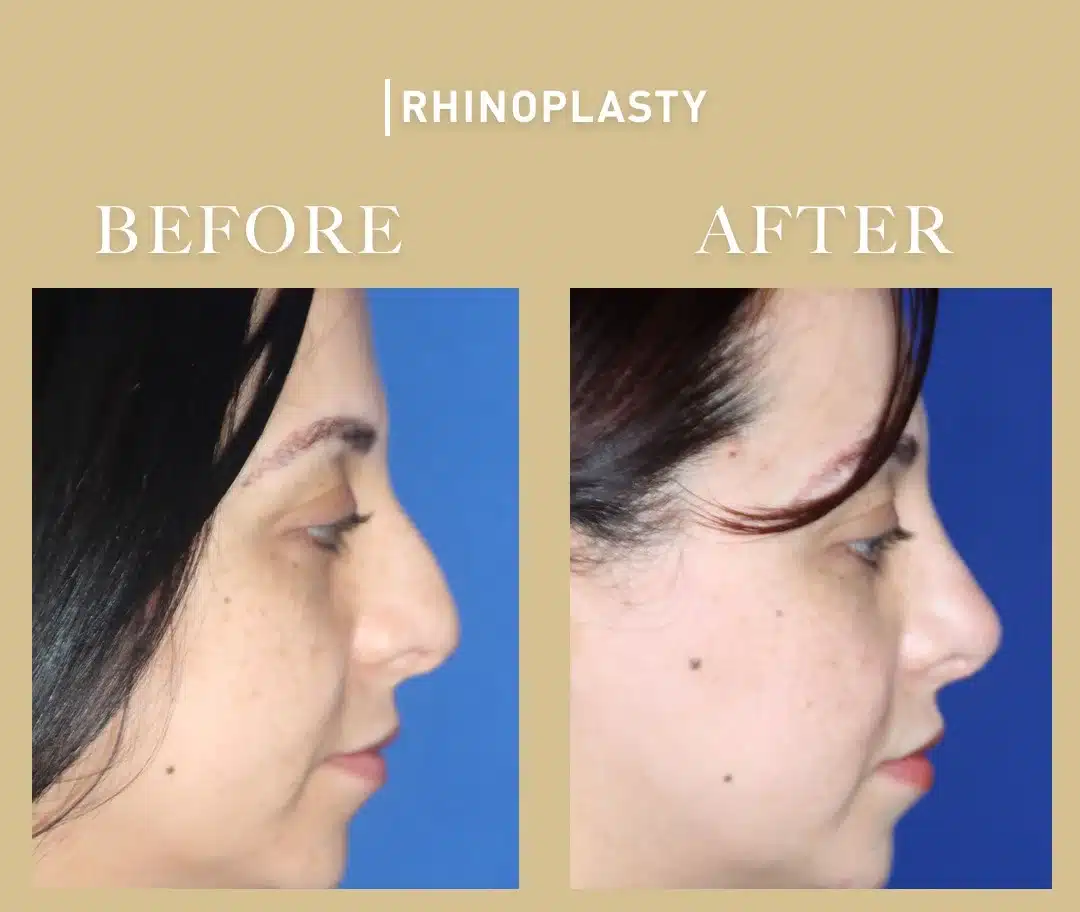
Not sure whether your breathing problem is from the injury or something older? Our guide on broken noses vs. deviated septums walks through how the two are diagnosed differently.
The Hook That Cracks the Cheekbone
12:15 AM. The second patient took a hook, not a jab, and it shows. The entire left side of her face looks subtly flatter than the right, like the cheekbone has quietly lost an argument with gravity. She keeps touching her upper lip, telling the nurse it feels like it's asleep.
That numbness is the giveaway. The cheekbone — the zygoma — isn't one flat plate of bone. It connects to the skull at four separate points, like a bridge anchored on both banks with two more supports underneath. A hard hook from the side can crack it loose at some or all of those points at once.
When it breaks at all four connection points, doctors sometimes call it a quadramalar fracture — the four-point version of what's more formally known as a zygomaticomaxillary complex (ZMC) fracture, or by its older nickname, a tripod fracture. The exact number of broken points changes the surgical plan, since each one may need its own small plate and screws to hold the bone in position while it heals.
Why does a broken cheekbone cause numbness?
A key nerve that carries feeling to the cheek, upper lip, and side of the nose runs through a small canal in the very bone that's fractured. When the bone shifts, the nerve gets stretched or compressed along with it — which is why numbness, not just pain, is one of the clearest signs of this specific fracture. Patients may also notice a flattened cheek or trouble opening the jaw fully, because the displaced bone can physically block the jaw's normal movement.
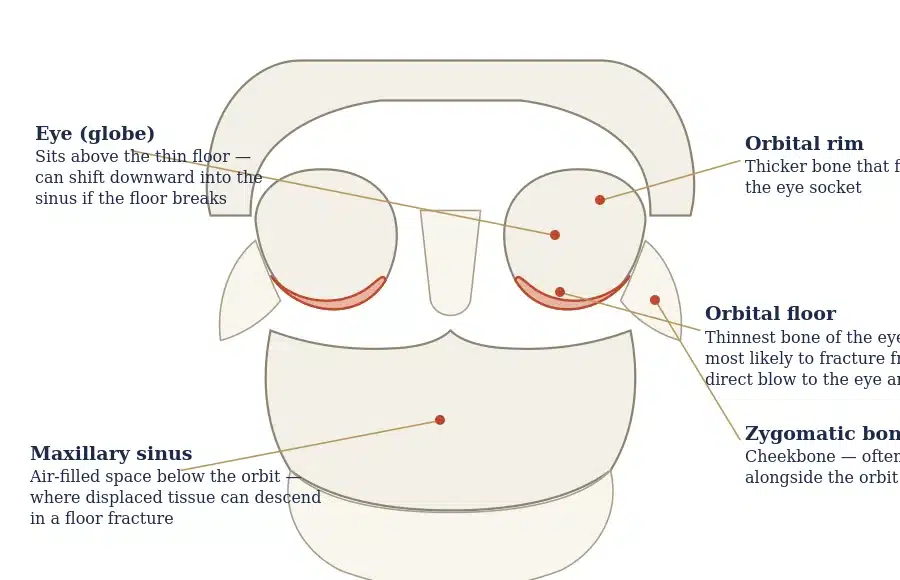
The same fracture pattern can extend into the floor of the eye socket, which is why cheekbone injuries are frequently evaluated alongside orbital fractures rather than treated as an isolated injury.
Notice Numbness, Flattening, or Swelling in Your Cheek?
Those are classic signs of a zygomatic fracture, and timing matters for the best surgical outcome. Get evaluated quickly by a facial trauma specialist in Las Vegas.
The Uppercut That Fractures the Jaw
2:30 AM. The third patient opens his mouth to talk and stops, wincing — his teeth don't meet the way they used to. He took an uppercut clean on the point of the chin, and now his bite feels shifted, like his jaw and his memory of his jaw have quietly disagreed.
The mandible — the jawbone — is a single continuous arch, not two separate pieces. An uppercut delivers its force straight into the chin, but that force doesn't stay put. It travels around the arch to whichever point is weakest, often the narrow neck of the jaw joint on one or both sides. That's why jaw fractures so often show up in two places at once, even though only one punch landed.
Why do jaw fractures break in two places?
Picture flicking one end of a horseshoe — the force doesn't stop where your finger lands; it travels around the curve. The mandible behaves the same way, which is why imaging always checks the entire jaw after an injury like this, not just the area that's swollen. Fighters with a jaw fracture usually know something is wrong immediately: the bite feels off, the teeth don't come together the way they used to, and opening or closing the mouth hurts in a very specific, hinge-like way.
Treatment often involves plates and screws placed through small incisions hidden inside the mouth, sometimes paired with a short period of guiding elastics to help the bite settle back into its correct position.
The Ringside Verdict: When Does a Facial Fracture Need Surgery?
Different bone, different mechanism, different symptom — but the same underlying lesson in every case: what decides surgery is how far the bone has shifted, and whether it's affecting breathing, feeling, vision, or bite.
A hairline crack in good position may just need time and monitoring. A bone that's visibly shifted, blocking normal movement, or pressing on a nerve almost always needs to be repositioned and fixed in place before it heals wrong. None of the three patients above could have known which category they were in from the waiting room — that's exactly why imaging and a proper exam matter more than a gut feeling about how bad it looks.
- Nasal fractures: closed reduction if caught within about two weeks; a septorhinoplasty if the nose has already healed crooked
- Cheekbone (zygomatic/quadramalar) fractures: plates and screws at however many of the four attachment points have separated
- Jaw (mandible) fractures: plates and screws through small incisions inside the mouth, sometimes with guiding elastics afterward
The common thread across all three: the sooner a fracture is properly evaluated, the more options a surgeon has for a clean, functional repair. Our companion guide on facial trauma recovery covers what the healing timeline looks like after each of these repairs.
Frequently Asked Questions
Are these three fractures really the most common?
Yes. Across trauma studies and in everyday practice, nasal fractures are the single most common facial fracture, with zygomatic and mandible fractures close behind — especially in contact sports and fight-related injuries.
How can I tell which bone is actually broken?
Location is the biggest clue — straight-on trauma to the nose, a side impact to the cheek, or an upward blow to the chin each point toward a different bone. But swelling can mask the real picture, so imaging is the only way to know for certain.
Do all facial fractures need surgery?
No. Many nasal fractures and some minor zygomatic and mandible fractures heal without surgery if they aren't significantly displaced. An exam and imaging determine which category a specific fracture falls into.
How soon after the injury should I be seen?
As soon as possible, ideally within a few days. Nasal fractures in particular are easiest to correct within about two weeks, before the bone starts to set in its new position.
Do you take insurance for facial fracture treatment?
Troell Cosmetic Surgery is a self-pay specialty surgical practice and does not bill insurance. That model is deliberate: it means no insurance-imposed restrictions on technique, surgical time, anesthesia choice, or technology. Consultations are free, pricing is transparent, and financing options are available — so you know exactly where you stand before making any decision.
How long is recovery after facial fracture surgery?
Most patients return to non-contact activity within two to four weeks, with clearance for contact sports typically taking six to eight weeks or longer depending on which bone was involved and how it was repaired. Dr. Troell provides a timeline specific to your injury.
About Dr. Robert J. Troell, MD, FACS
Dr. Troell is board-certified in otolaryngology–head & neck surgery and facial plastic & reconstructive surgery, is a Diplomate of the American Board of Cosmetic Surgery, and serves Las Vegas, Henderson, and Summerlin from Troell Cosmetic Surgery. He trained at Stanford University, has more than 30 years of surgical experience, and has authored 58+ peer-reviewed publications. He is a Fellow of the American College of Surgeons and has treated nasal, zygomatic, and mandible fractures in athletes and active patients throughout Southern Nevada — including nine years as team surgeon for the Las Vegas Wranglers professional hockey team.

Get Back in the Game With Confidence
Whether your injury happened in the Octagon or on the way home from work, Dr. Troell can help you understand exactly what's broken and how to fix it right. Free consultations for Las Vegas area patients.
References
- American Academy of Facial Plastic and Reconstructive Surgery (AAFPRS) — patient education resources on nasal, zygomatic, and mandible fracture management.
- American Association of Oral and Maxillofacial Surgeons (AAOMS) — clinical resources on mandible and midface fracture repair.
- American College of Surgeons Committee on Trauma — guidelines on maxillofacial fracture assessment and treatment timing.
The patients described above are composites based on common injury patterns, not real individuals. This article is for general educational purposes only and does not replace a medical evaluation. Every injury and recovery timeline is different. Please consult a qualified facial plastic and reconstructive surgeon for guidance specific to your situation. Contact the office: (702) 242-6488.

Begin Your Journey with Dr. Troell
Schedule a complimentary consultation with Dr. Troell to discuss your goals, explore your options, and receive an honest, expert assessment. No obligation, no pressure.
Mon–Fri, 8:30 AM – 5:00 PM