
Permanent Lip Implants: An Honest Guide to Custom Silicone Lip Augmentation
Published June 15, 2026 · By Dr. Robert J. Troell, Board-Certified Facial Plastic Surgeon
Dr. Robert J. Troell, MD, FACS
The short answer: A permanent lip implant is a soft, hand-carved silicone (silastic) rod placed inside the lip under local anesthesia — a one-time alternative to repeating hyaluronic-acid filler every 4–9 months. It is permanent yet reversible and modifiable. Two honest caveats matter: the original branded “PermaLip” device was withdrawn after a 2019 FDA warning and is not FDA-cleared specifically for the lip (surgeons now use physician-carved sterile silicone), and mainstream guidance still considers HA filler the lower-risk, fully reversible option. What sets the surgical option on firmer ground is published outcome data: Dr. Robert J. Troell’s peer-reviewed series of 100 patients reported 97% satisfaction and an 8% complication rate. Below: how it works, who it suits, the risks, and the evidence.
Most people who want fuller lips start with hyaluronic-acid (HA) lip filler — it is quick, non-surgical, and reversible. But filler is temporary, and after a few rounds many patients ask the obvious question: is there a permanent option? There is — a custom, ultrasoft silicone lip implant — but it is a genuine surgical decision with real trade-offs, and the honest picture is more nuanced than most marketing suggests.
This guide explains how permanent lip implants actually work, what the risks and FDA status really are, and what the published evidence shows — drawing on the peer-reviewed clinical series of Dr. Robert J. Troell, a board-certified facial plastic surgeon and one of the few surgeons to have published outcome data on this procedure.
Why Consider a Permanent Lip Implant Over Filler?
HA lip filler typically lasts about 4–9 months, then dissolves and has to be repeated. Each round has a cost, can bruise the lip for 1–2 weeks, and carries a small risk of vascular complications. Over years, the repeated expense and downtime add up — which is why a meaningful share of filler patients eventually look for a one-time solution.
A silicone lip implant is that one-time solution. Its advantages are specific:
- Permanent — placed once, with no maintenance injections.
- Custom-sized — hand-carved to the patient (commonly 4, 5, or 6 mm diameters) with tapered ends for a soft, natural feel.
- Reversible and modifiable — because the implant does not grow into the tissue, it can be exchanged or removed if you change your mind.
- Hidden incisions at the corners where the upper and lower lips meet.
- Local anesthesia only — most patients eat and talk the same day.
Importantly, “permanent” should not mean “irreversible.” The reversibility is part of what makes the modern approach reasonable — the decision is not as final as it sounds.
How It Compares to the Other Lip-Volume Options
A silicone implant is not the only way to add lasting lip volume, and an honest answer to “is there a permanent alternative to filler?” has to include the whole menu. The realistic options trade off permanence, reversibility, and risk:
- HA filler — non-surgical and fully reversible (dissolvable), but temporary (4–9 months) and repeated indefinitely.
- Silicone (silastic) implant — permanent yet removable; surgical; off-label for the lip.
- ePTFE implants (Gore-Tex, SoftForm, Advanta) — also permanent, but the porous material integrates with your tissue, which makes them harder to remove than solid silicone — precisely why some surgeons prefer silicone’s reversibility.
- Autologous fat transfer — uses your own fat with no foreign material, but a variable amount is reabsorbed, so results are less predictable and may need repeating.
- Surgical lip lift — permanent, but it changes lip shape and tooth show by shortening the skin above the lip; it does not add body to the lip itself.
- Bellafill (PMMA) — a permanent filler sometimes used at the lip border; it is FDA-approved for nasolabial folds and acne scars, so lip use is also off-label.
| Option | Permanence | Reversible? | Surgical? | Main trade-off |
|---|---|---|---|---|
| HA filler | 4–9 months | Yes — dissolvable | No | Temporary; repeated indefinitely |
| Silicone implant | Permanent | Yes — removable | Yes | Off-label; surgical risk (shift/extrusion) |
| ePTFE implant | Permanent | Harder — integrates | Yes | Tissue ingrowth complicates removal |
| Fat transfer | Semi-permanent | No | Yes | Partial reabsorption; less predictable |
| Surgical lip lift | Permanent | No | Yes | Changes shape, not lip body |
| Bellafill (PMMA) | Permanent | No | No — injection | Permanent filler; off-label at the lip |
What a Custom Ultrasoft Silicone Lip Implant Is
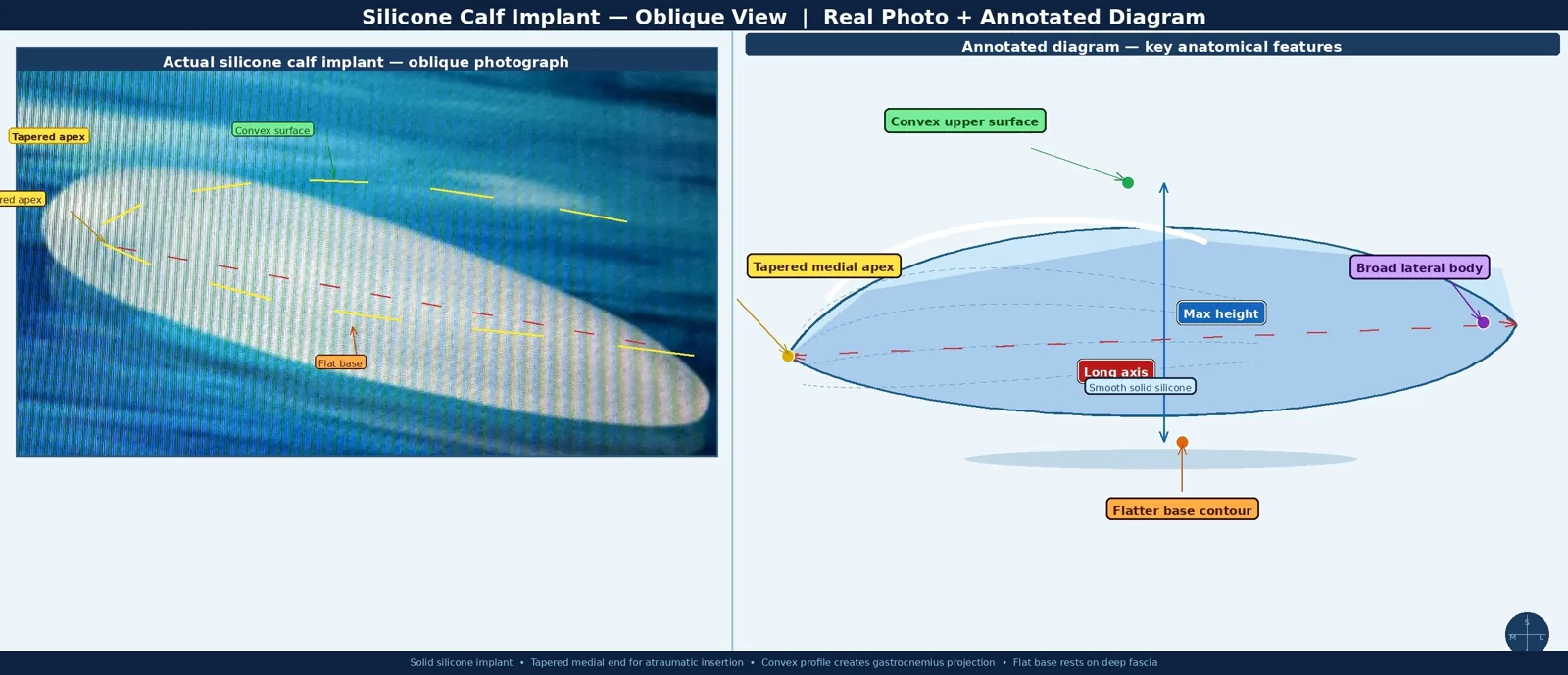
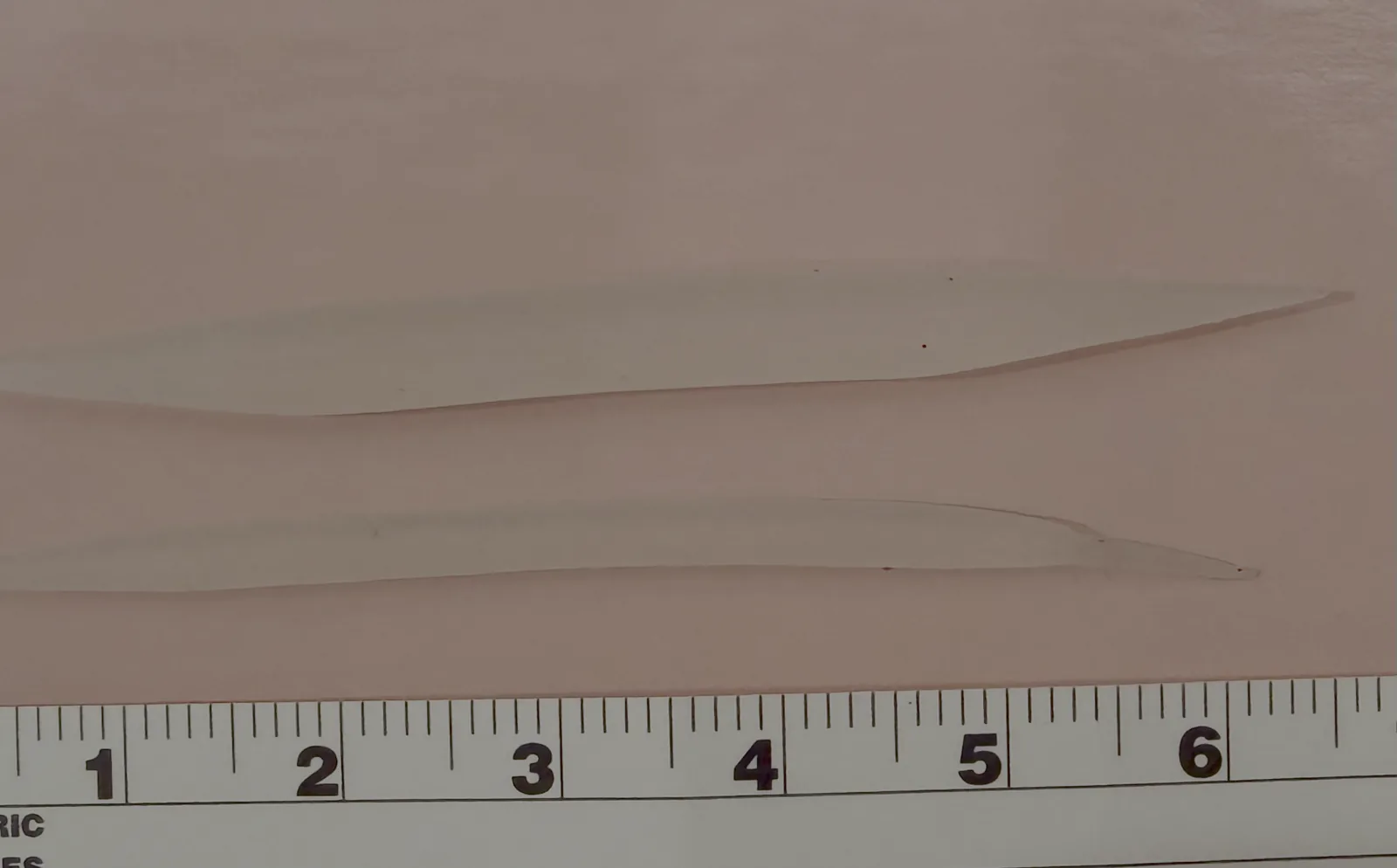
The implant is a soft, solid silicone (silastic) rod — not a gel or a filler. Today it is most often created by hand-carving sterile, ultrasoft silicone from a carving block or a soft “calf” implant, shaped to the individual lip: typically 4–6 mm in diameter and 60–70 mm long, with tapered ends so the lip stays soft and supple. Because it is carved to the patient rather than pulled from a one-size box, the size and shape can be tuned to the anatomy.
Is It FDA-Approved? Is It Safe?
This is the question that matters most, and it deserves a straight answer.
FDA status. The original branded silicone lip implant, “PermaLip,” was introduced in 2007. In 2019 the FDA issued a warning and the manufacturer ceased lip sales. The trigger was that the device was being marketed specifically for the lip, an indication it was not cleared for — but the agency’s concern was clinical, not just a labeling technicality: because the lip has no underlying bone to anchor an implant, the FDA flagged risks of the implant migrating, protruding or extruding, infection, and chronic pain, and noted that removal could require extensive soft-tissue repair. Silicone facial implants remain cleared for areas like the chin, cheek, and nose, but not specifically for the lip. What surgeons use today is sterile, ultrasoft silicone hand-carved for the lip — a physician-directed, off-label use of an approved material. Any site advertising an “FDA-approved PermaLip” for the lips is overstating it.
The mainstream view. Major consumer-health and many surgeons still consider HA filler the lower-risk choice for most people, because it is non-surgical and fully reversible with an enzyme. That is a fair position, and any honest discussion of lip implants has to include it.
The real risks. A surgical implant carries risks filler does not: it can shift or sit slightly off-center (asymmetry is the most common issue), and there is a small risk of swelling, infection, extrusion, or the need for a revision. The reassurance is that, unlike permanent fillers or tissue that grows in, a solid silicone implant can be repositioned, exchanged, or removed — so the most common problems are correctable. That reversibility is a genuine advantage, but it is not a simple undo: removal is itself a minor surgical revision, and the FDA specifically cautioned that an extruding lip implant can require more extensive soft-tissue repair.
What the Published Data Shows
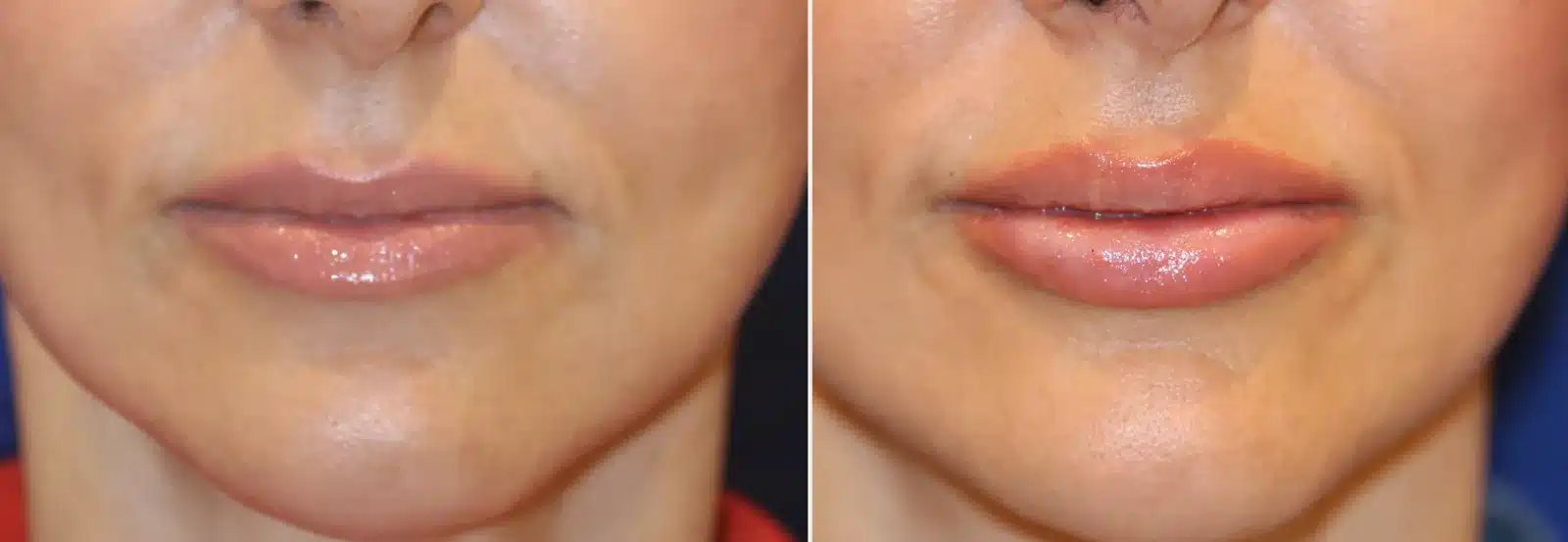
What separates this procedure from marketing claims is that there is actual outcome data — and Dr. Troell published it. In his peer-reviewed series of 100 lip-augmentation patients (192 implants placed over roughly a decade), patient satisfaction was 97% and the overall complication rate was 8%, with implant asymmetry the most common issue. About 7% of patients added a small amount of dermal filler afterward to fine-tune the border or volume (Troell RJ, “Optimizing the Lip Aesthetic Ratio Using Surgically Placed Silastic Implants for Lip Augmentation,” Am J Cosmet Surg 2023;40(4):252–262. DOI 10.1177/07488068221104573).
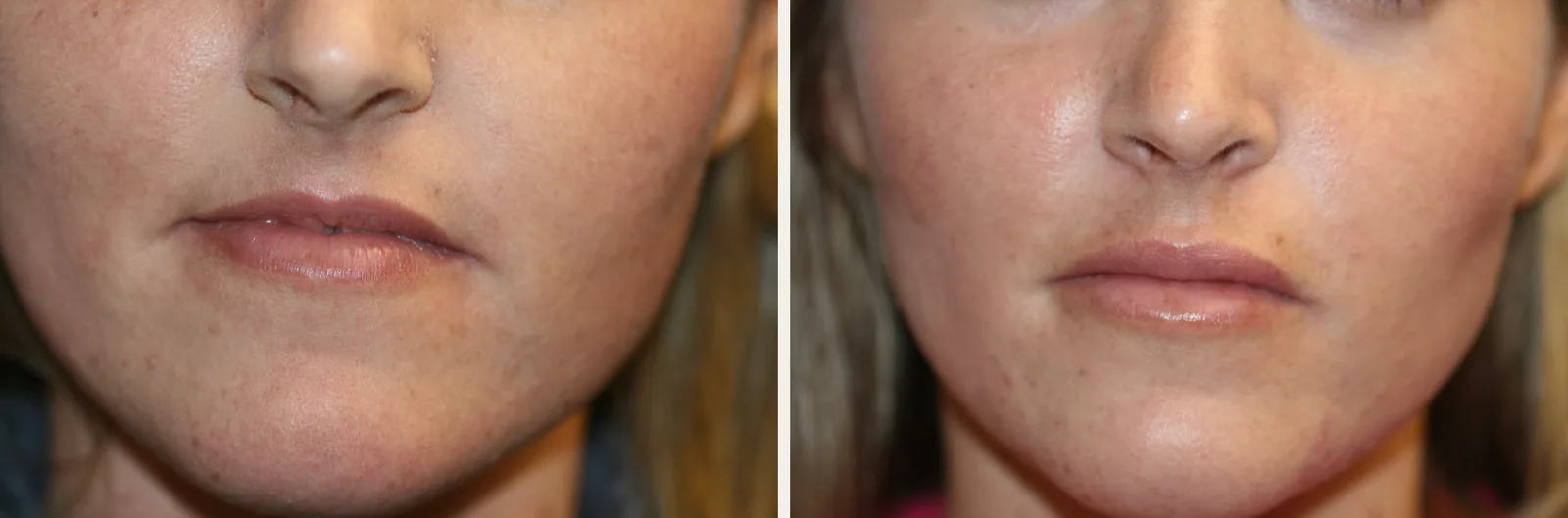
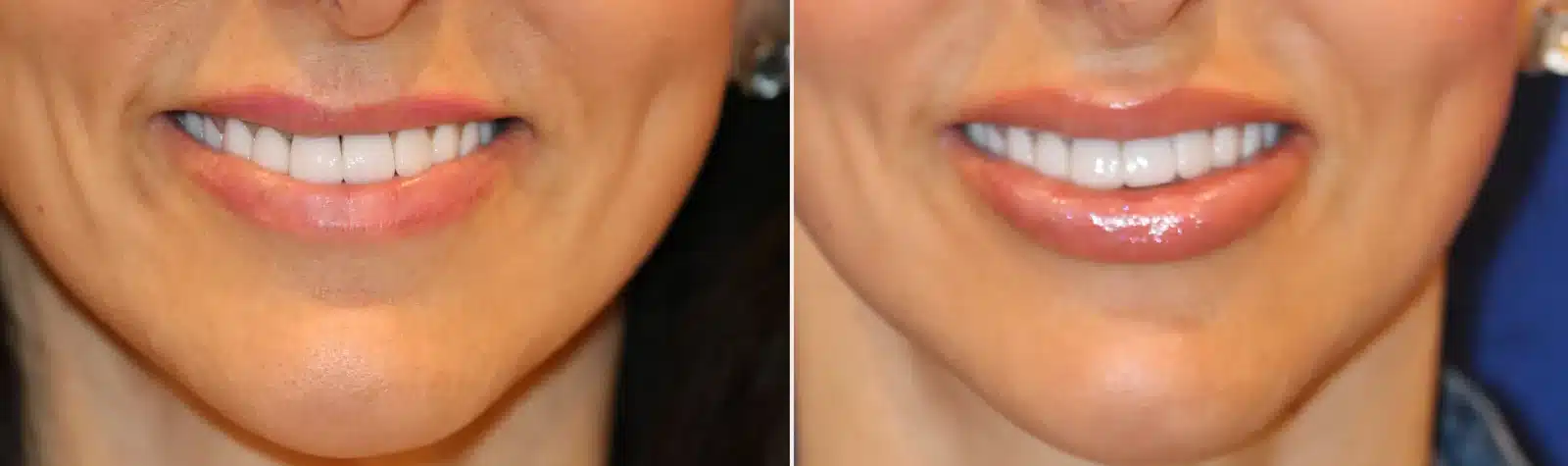
Two honest caveats on that data: it is a single-surgeon, retrospective case series — not a randomized or controlled trial — and satisfaction was self-reported. That is useful real-world evidence, but a lower tier than a multi-center study, and independent published outcome data on this specific procedure remains limited. With that context, his conclusion was measured: the soft silicone lip implant is a simple, in-office procedure under local anesthesia with high satisfaction and a low complication rate — a sound option for the right patient, not a miracle. Publishing the numbers, including the complications, is what lets a reader judge it honestly rather than on a before-and-after reel alone. More lip implant before-and-after cases are in the gallery.
What the Procedure and Recovery Are Like
Lip implant placement is a short, in-office procedure under local anesthesia. Through tiny incisions hidden at the corner junction of the upper and lower lips, a narrow tunnel is created and the soft, tapered implant is passed into position; the small incisions are closed. Because the implant sits in a snug pocket, most patients can eat and talk the same day.
Recovery is typically mild — on the order of 1–2 days of minor swelling or discomfort, with bruising uncommon. As with any implant, the final settled result takes a few weeks. And because the implant is solid silicone with no tissue ingrowth, it can be adjusted or removed later if needed — the decision is reversible.
The Goal Is Proportion, Not Just Size
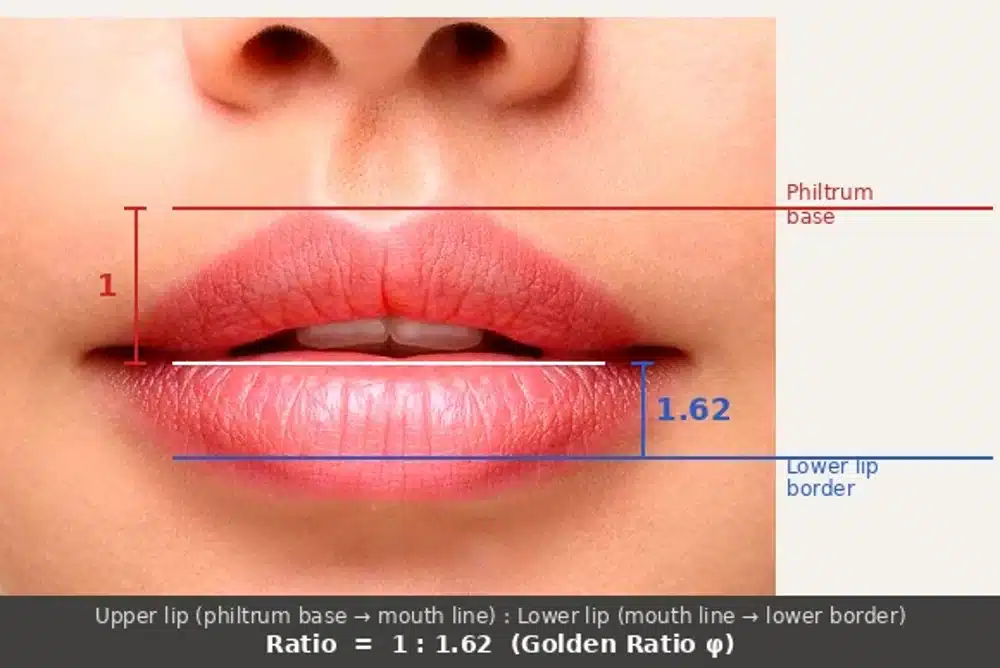
A good lip result is not simply “bigger.” It is balanced. Surgeons often use the classical golden ratio — roughly 1 : 1.62 — as a guide, with the lower lip a little fuller than the upper. Applied to the lips, that proportion reads as youthful and natural rather than overdone, which is exactly the look most patients now ask for.
Sizing the implant to that proportion is the point of carving it by hand. When extra definition is wanted, a small amount of a permanent filler such as Bellafill can be placed at the vermillion border to “pop” the edge of the lip — though it is worth knowing that Bellafill is FDA-approved for nasolabial folds and acne scars, so this lip use is itself off-label — and some patients add lip tattooing for further definition.
You Can Try Filler First
One of the most practical pieces of advice for anyone considering a permanent implant: try HA filler first. A round of reversible filler lets you preview what a fuller lip looks and feels like on your face before committing to surgery. If you love it, an implant makes that look permanent; if you do not, the filler simply dissolves. It is a low-stakes way to make a higher-stakes decision with confidence.
Who Is — and Isn't — a Good Candidate
The best candidates are healthy adults who already know they like a fuller lip (often from prior filler), want to stop the cycle of repeat injections, and have realistic expectations about a natural, proportionate result. A permanent implant is probably not the right first move for someone who is unsure of the look they want, who is prone to keloid scarring, or who has an active oral or perioral infection.
Because this is an elective, self-pay surgical procedure, the right answer for any individual comes from an in-person evaluation — matching implant size and shape to your lip anatomy and goals, and honestly weighing it against simply continuing with filler.
What a lip implant quote covers. Troell Cosmetic Surgery in Las Vegas is a cash-pay practice: the consultation with Dr. Robert J. Troell is free, and the quote is written after he examines you. For a permanent silicone lip implant placed in the office under local anesthesia, the surgeon’s fee includes anesthesia and use of the procedure room, so you see what the number covers.
Permanent Lip Augmentation in Las Vegas
Permanent silicone lip augmentation is a niche procedure — relatively few surgeons perform it, and fewer still have published their results — so patients often travel to find a surgeon experienced with it. Dr. Troell performs custom lip implant augmentation in Las Vegas, and consults with both local and out-of-area patients considering the procedure.
Why Dr. Troell for Lip Implants
For a niche, off-label procedure, experience matters more than usual. Dr. Robert J. Troell is a board-certified facial plastic surgeon — certified by the American Board of Facial Plastic & Reconstructive Surgery — and a Diplomate of the American Board of Cosmetic Surgery, Stanford-trained, with three decades of practice and thousands of facial procedures behind him. And because published outcome data on silastic lip implants is limited overall, it matters that Dr. Troell contributed one of the few peer-reviewed clinical series on the procedure — documenting not only the satisfaction rate but the complications, so patients can make a genuinely informed choice.
A directly relevant credential. Dr. Troell serves as faculty for the hands-on cadaver workshops in facial and body implant placement run by Implantech, a leading facial- and body-implant manufacturer — meaning he teaches implant technique to other surgeons. When the procedure on the table is an implant, it is worth knowing the surgeon helps teach it.
Permanent Lip Implants: Common Questions
Are silicone lip implants safe?
They have a track record, but they are surgery and carry real risks. In Dr. Troell’s published series of 100 patients, the complication rate was 8% — most often the implant sitting slightly off-center (asymmetry), with smaller risks of swelling, infection, or needing a minor revision. The key reassurance is that, unlike permanent fillers, a solid silicone implant can be repositioned or removed, so the most common problems are correctable. Many clinicians still consider HA filler the lower-risk option because it is non-surgical and fully reversible; an honest consultation weighs both.
Is PermaLip FDA-approved for lips?
No. The branded “PermaLip” device was withdrawn from lip sales after a 2019 FDA warning, because it was being marketed for the lip — an indication it was not cleared for. Silicone facial implants are cleared for areas like the chin, cheek, and nose, but not specifically the lip. What surgeons use now is sterile, ultrasoft silicone hand-carved for the lip, which is a physician-directed, off-label use of an approved material. Be skeptical of any site claiming an “FDA-approved” lip implant.
Lip implants vs. lip filler — which is better?
Neither is universally “better” — they trade off. Filler is non-surgical, reversible, and adjustable, but temporary (4–9 months) and repeated indefinitely. An implant is a one-time, permanent (yet still reversible) surgical option that ends the maintenance cycle but carries surgical risk. A common, sensible path is to use filler first to confirm the look you want, then consider an implant to make it permanent.
Are permanent lip implants reversible?
Yes — that is one of their main advantages over permanent fillers or grafted tissue. Because a solid silicone implant does not grow into the surrounding tissue, it can be modified, exchanged, or fully removed through the same small incisions if you change your mind or want a different size.
What is recovery like?
Mild for most patients. Placement is done in office under local anesthesia, and because the implant sits in a snug pocket you can usually eat and talk the same day. Expect about 1–2 days of minor swelling or discomfort, with bruising uncommon; the final settled result takes a few weeks.
Will my lips look natural?
That is the goal, and it depends on sizing to proportion rather than maximum volume. Surgeons use the golden ratio (about 1:1.62, lower lip slightly fuller) as a guide, and the implant is hand-carved to that proportion — aiming for a balanced, youthful result rather than an overfilled look.
Is the price I’m quoted for permanent lip implants the whole cost, or are anesthesia and the facility billed on top?
It is a fair thing to pin down before you book, because published lip-implant cost estimates often cover the surgeon’s fee and leave anesthesia and the facility for later. Troell Cosmetic Surgery in Las Vegas is a cash-pay practice: the consultation with Dr. Robert J. Troell is free, and your quote is written after he examines you at an in-person consultation, so it is built on the implant hand-carved for your lip, its diameter and length matched to your anatomy, rather than on a generic tier. When the implant is placed in the office under local anesthesia, the surgeon’s fee includes anesthesia and use of the procedure room; there is no separate anesthesiologist or facility bill. If your plan pairs the implant with another operation performed under general anesthesia at the surgical facility, the written quote lists the surgical center and the anesthesia provider as their own lines beside the surgeon’s fee. And unlike filler repeated every four to nine months, the implant itself is a one-time cost rather than a recurring one. What that means for you: you see what the number covers before you commit, and financing through CareCredit or Alphaeon is available if you would rather spread it out.
Who performs permanent lip augmentation?
It is a niche surgical procedure performed by a small number of facial plastic and cosmetic surgeons — many patients travel to find one experienced with it. Dr. Troell performs custom silicone lip implant augmentation in Las Vegas and is among the few surgeons to have published a clinical series on the procedure.
Sources & Further Reading
- Troell RJ. “Optimizing the Lip Aesthetic Ratio Using Surgically Placed Silastic Implants for Lip Augmentation.” The American Journal of Cosmetic Surgery 2023;40(4):252–262. DOI 10.1177/07488068221104573.
- U.S. Food & Drug Administration. Warning Letter to SurgiSil LLP (2019) — the PermaLip device marketed for an uncleared lip indication. FDA Warning Letters database.
- “Lip Implants.” StatPearls [Internet], NCBI Bookshelf. ncbi.nlm.nih.gov/books/NBK546691.
- U.S. Food & Drug Administration. “FDA-Approved Dermal Fillers” — polymethylmethacrylate (PMMA) filler approvals and risks. fda.gov.
Individual results may vary. Before-and-after photographs are of an actual patient of Troell Cosmetic Surgery who provided consent for their use; they illustrate one individual outcome and are not a prediction or guarantee. This article is educational and is not a substitute for an in-person consultation, an individualized risk assessment, or informed consent. Hand-carved silicone lip implants are a physician-directed, off-label use; brand and device names are referenced for identification only.
Patient education. This article explains permanent lip augmentation with custom ultrasoft silicone implants, including the FDA status, risks, reversibility, and published outcomes. It is not a substitute for individualized medical advice.
- Last medically reviewed: 2026-06-15 by Robert J. Troell, MD, FACS
- Conflict-of-interest disclosure: This article describes a procedure performed at Troell Cosmetic Surgery & Facial Plastic Clinic. The practice has a direct interest in patients considering the treatment described.

Begin Your Journey with Dr. Troell
Schedule a complimentary consultation with Dr. Troell to discuss your goals, explore your options, and receive an honest, expert assessment. No obligation, no pressure.
Mon–Fri, 8:30 AM – 5:00 PM